
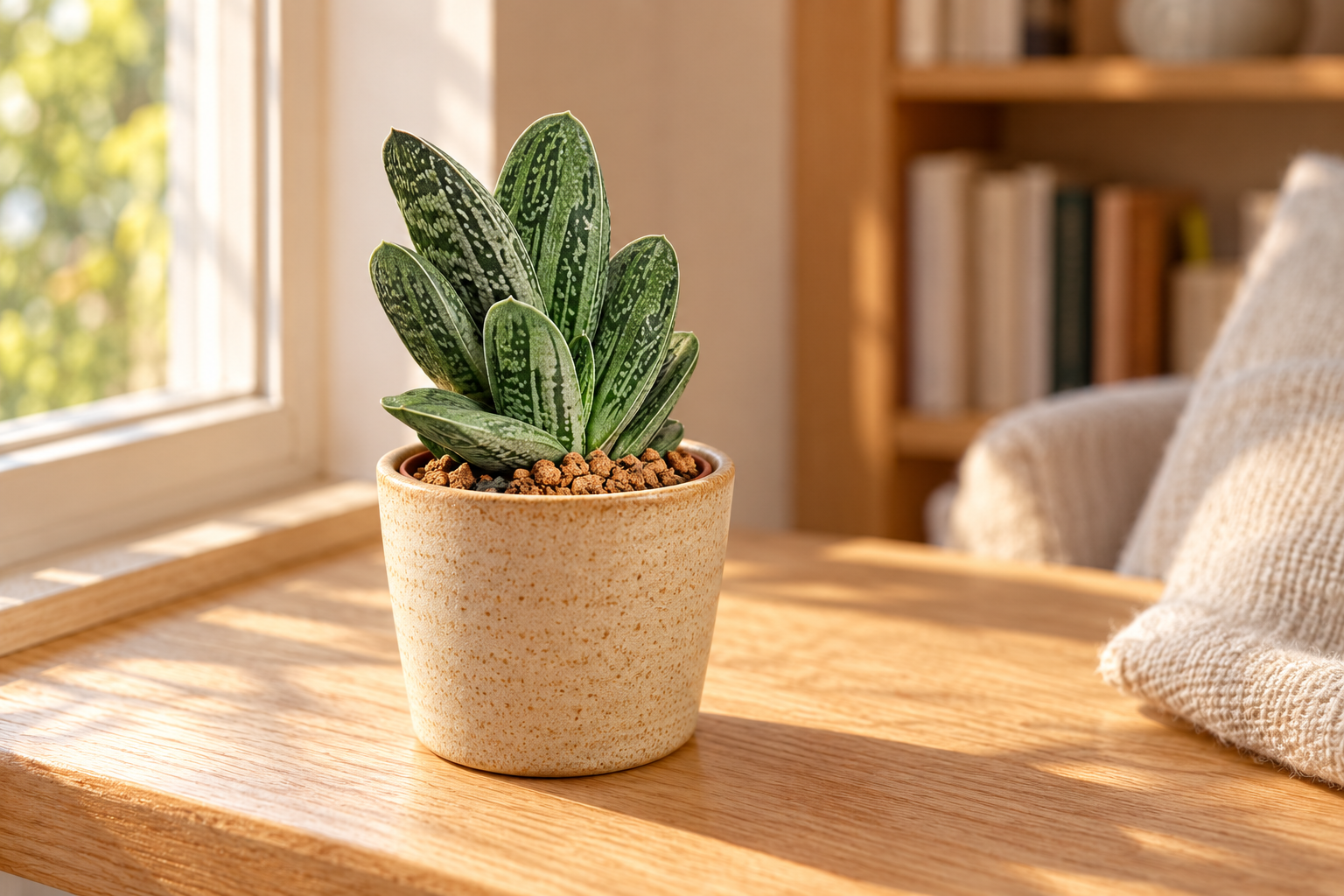
This plant at Exotenherz
Check the shop offer for current availability, price and what is included.
Product details, availability and delivery information are provided in the shop offer.
Your care table
| Topic | What to do | Why it helps |
|---|---|---|
| Light | Bright to partially shaded; cautiously test direct midday sun behind glass. | Light shows the markings, but abrupt strong sun can stress leaves. |
| Watering | Water thoroughly, then let upper and middle growing-medium layers dry well. | Fleshy leaves store water; permanent wetness weakens roots. |
| Drainage | Only use containers with drainage and remove water from decorative pots. | A small root ball quickly stays too wet in standing water. |
| Growing medium | Use a loose well-drained succulent mixture. | Air in the root zone and quick drainage matter more than a large pot. |
| Feeding | Feed sparingly and diluted during visible growth. | The compact plant needs no heavy nutrient dose. |
| Winter | Keep bright and frost-free; water less often when growth slows. | Reduced light and slower evaporation extend drying time. |
| Repotting | Repot only with dense roots or spent growing medium. | An oversized container retains unnecessary moisture around a small root ball. |
| Inspection | Occasionally check leaf bases and the root collar. | Regular inspection catches mealybugs and soft patches early. |
Check the compost and pot weight. The care table explains how far the compost may dry.
Water only when needed. The water should reach the root ball without spilling over the rim.
Remove surplus water from the saucer or cachepot. Then return the plant to a suitable position.
A small gasteria with a distinctive surface
‘Little Warty’ rewards a close look. Light, slightly raised spots and stripes sit on dark-green tongue-shaped leaves. Young plants often seem arranged in two rows; over time additional leaves and offsets may join into a small cushion. The striking surface belongs to the variety and does not indicate leaf disease. The Exotenherz offer is a young plant in a 6.5 cm pot at around 15 cm total height. It suits a windowsill or bright shelf, rather than being a large specimen plant. Each individual plant’s shape may differ slightly from the photograph.
The right place is bright and calm
We like placing a gasteria where it receives plenty of daylight, without immediately leaving it for hours in hot midday sun after a darker transport day. A bright east- or west-facing window is a good start. At a very sunny south window we watch foliage first and gradually introduce more direct sun. In summer it can stand sheltered outdoors if rainwater reliably drains from the pot and nights stay mild. Bring it indoors before cold nights. Despite tolerance of gentler light, a permanently dark place is not a good long-term solution.
Watering starts by looking inside the pot
Thick leaves retain water. The root ball decides, not the weekday: if soil is still clearly moist, we wait. Once it has dried well, water so it flows through the root zone, then allow the pot to drain completely. Otherwise, especially in a decorative pot, liquid can remain unnoticed at the bottom. Limp leaves alone are no reliable sign of thirst; damaged roots can also disrupt supply. When uncertain, first inspect growing medium, root collar and drainage before giving more water.
Small pot, airy growing medium
A loose succulent mixture with mineral components suits gasteria. It should absorb water but then let air return to roots. A drainage hole matters more than an especially attractive container. The 6.5 cm pot need not automatically be replaced after purchase. Only when roots fill it heavily or the growing medium becomes compacted do we choose a slightly larger container. In the warm growing season, a measured diluted feed according to product instructions is sufficient. Handle fleshy leaves gently when repotting; a broken leaf will not reattach in the same place.
Seasons without a rigid watering schedule
In the brighter half of the year a small pot usually dries faster. In winter the same root ball may remain moist much longer with less light and a cooler room. We therefore do not reduce water by a fixed calendar, but adjust intervals to actual conditions. The houseplant does not tolerate frost. Bright frost-free overwintering preserves compact shape better than a dark corner. Older well-established plants may flower: small tubular flowers sit on a stalk above foliage. They are not a guaranteed feature of the offered young specimen.
What leaves tell you
Light warty markings are normal. Soft dark leaf bases, however, deserve attention: first check for water standing in the decorative pot or growing medium staying wet too long. Dry tips do not automatically mean lack of water; sun, mechanical damage and root stress may also play a part. Occasionally look between leaves for mealybugs. Offsets may develop later; only separate them during repotting if they already have their own roots and a stable size. We especially like this gasteria’s slow development: with patience each new leaf is a little change.
One plant, several views
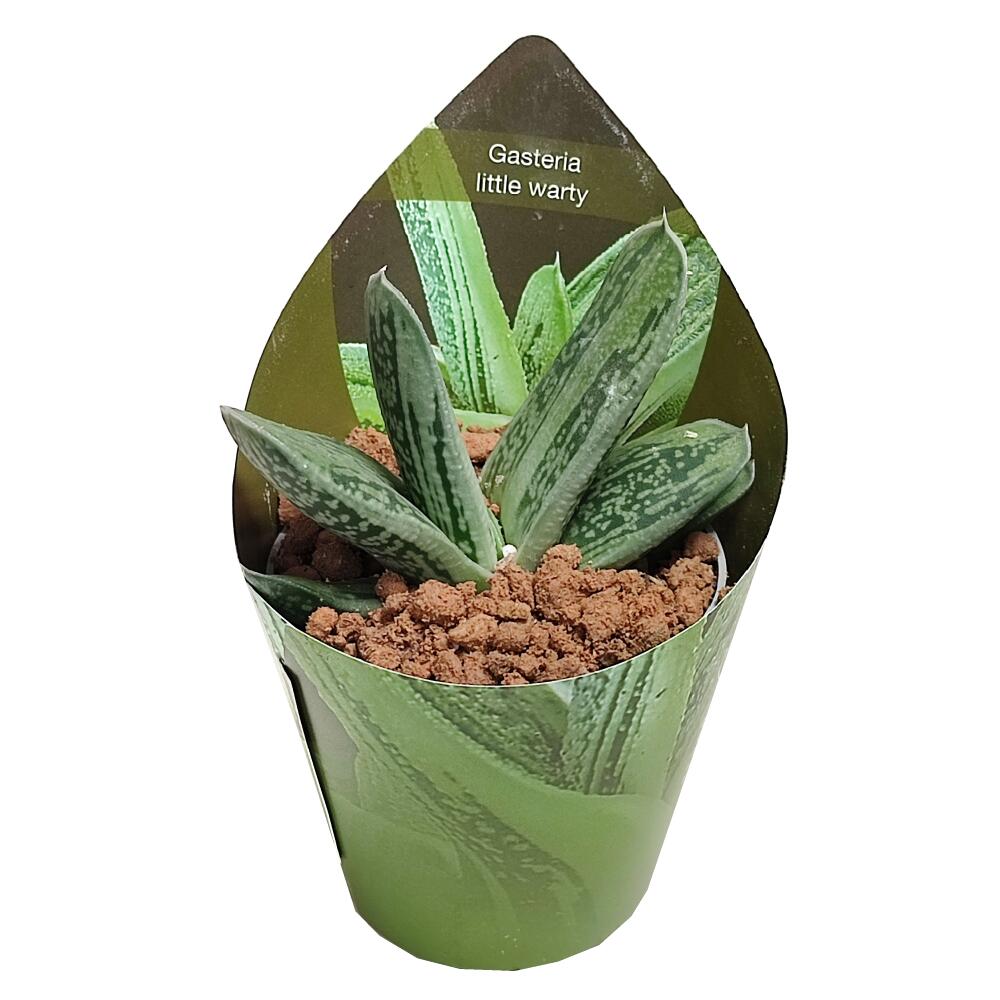
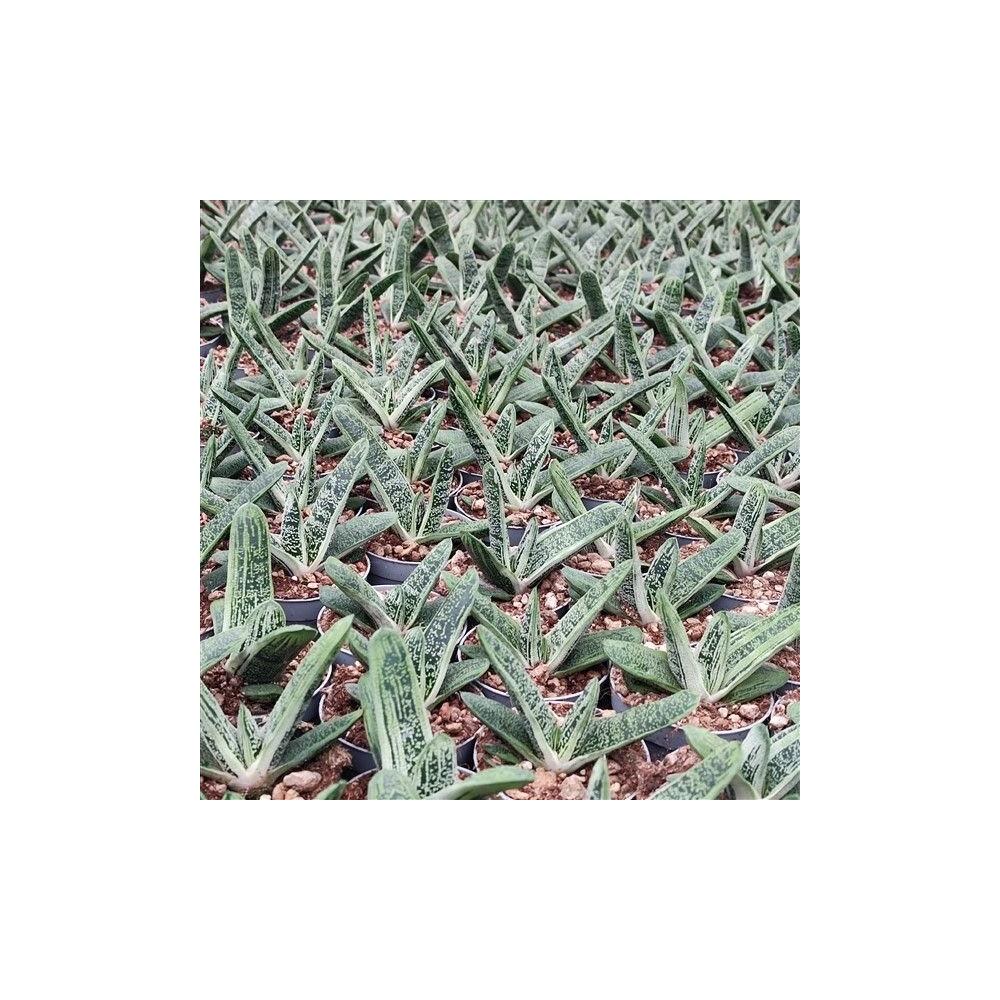
Good to know
Are the light markings damage?
No. Light, partly raised dots and stripes belong to ‘Little Warty’. Soft dark areas at the base, however, are a reason to inspect the root ball.
How often should I water?
There is no reliable fixed weekly rhythm. Water after the growing medium dries well and remove drained water from the decorative pot.
Can it go outdoors in summer?
Yes, in a sheltered position after gradual sun acclimatisation and only with mild nights. Bring indoors before frost or prolonged rain.
Must I repot immediately?
No. The small 6.5 cm pot suits initially if drainage and growing medium are sound. Repot only with dense roots or compacted soil.
Does ‘Little Warty’ flower indoors?
An established plant may form flower stalks. Flowering on the young plant offered is neither expected immediately nor included in delivery.
Sources and editorial note
- Product, delivery size and original images: Exotenherz
- Royal Horticultural Society: Gasteria ‘Little Warty’, plant profile and culture
Product size, availability and original images checked on 30 September 2026 in the German shop offer. Morphology and culture compared with the Royal Horticultural Society plant profile. Adapt care to actual position and plant condition.