
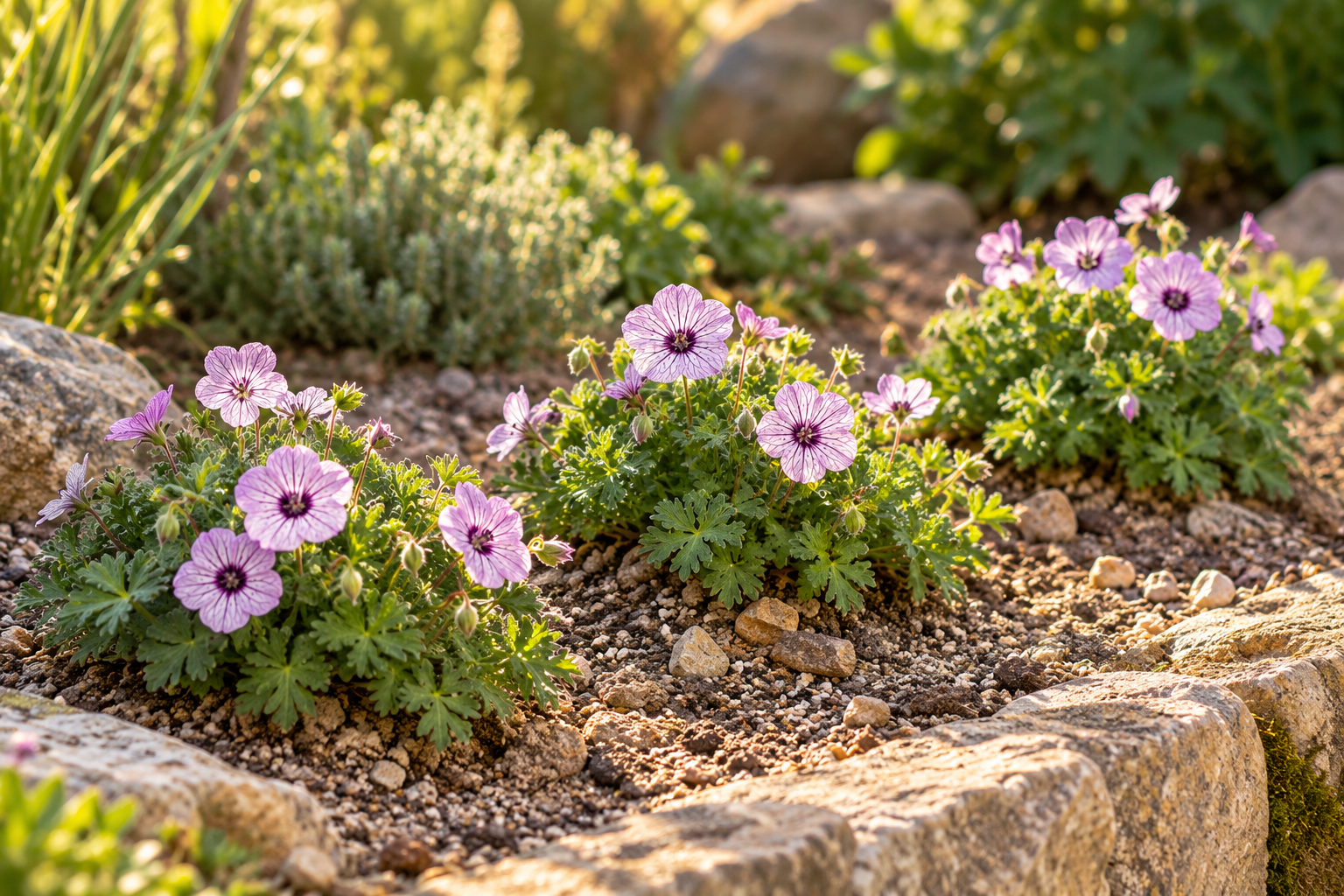
This plant at Exotenherz
Check the shop offer for current availability, price and what is included.
Product details, availability and delivery information are provided in the shop offer.
Your care table
| Topic | What to do | Why it helps |
|---|---|---|
| Position | Plant in sun to light partial shade. | Light and an open place encourage compact growth and flowers. |
| Soil | Prepare well-drained soil, ideally with mineral structure. | Low cushions dislike long-lasting wetness. |
| Planting time | Preferably spring or autumn; potted stock in frost-free soil. | Mild soil and available moisture ease establishment. |
| Spacing | Allow around 25–30 cm between planting points. | The variety may later develop approximately 30 cm width. |
| Watering in | Water thoroughly after planting and inspect the root ball in the first year. | Even robust perennials first need contact with surrounding soil. |
| Summer | Check root-zone moisture in prolonged drought. | A young 9 cm root ball dries faster than an established cushion. |
| Pruning | Gently remove faded stems and old foliage. | This keeps cushions tidy and can encourage fresh foliage and further flowers. |
| Winter | Keep drainage free and avoid unnecessary winter wetness. | Well-drained soil protects roots against prolonged winter wetness. |
For young plants, feel the soil directly at the root ball. The surface and deeper soil may have different moisture levels.
Water thoroughly after planting; later, water according to the soil, weather and establishment rather than a fixed calendar.
Avoid standing water. For plants in containers, also check that water runs out of the drainage hole.
A small cranesbill worth a second look
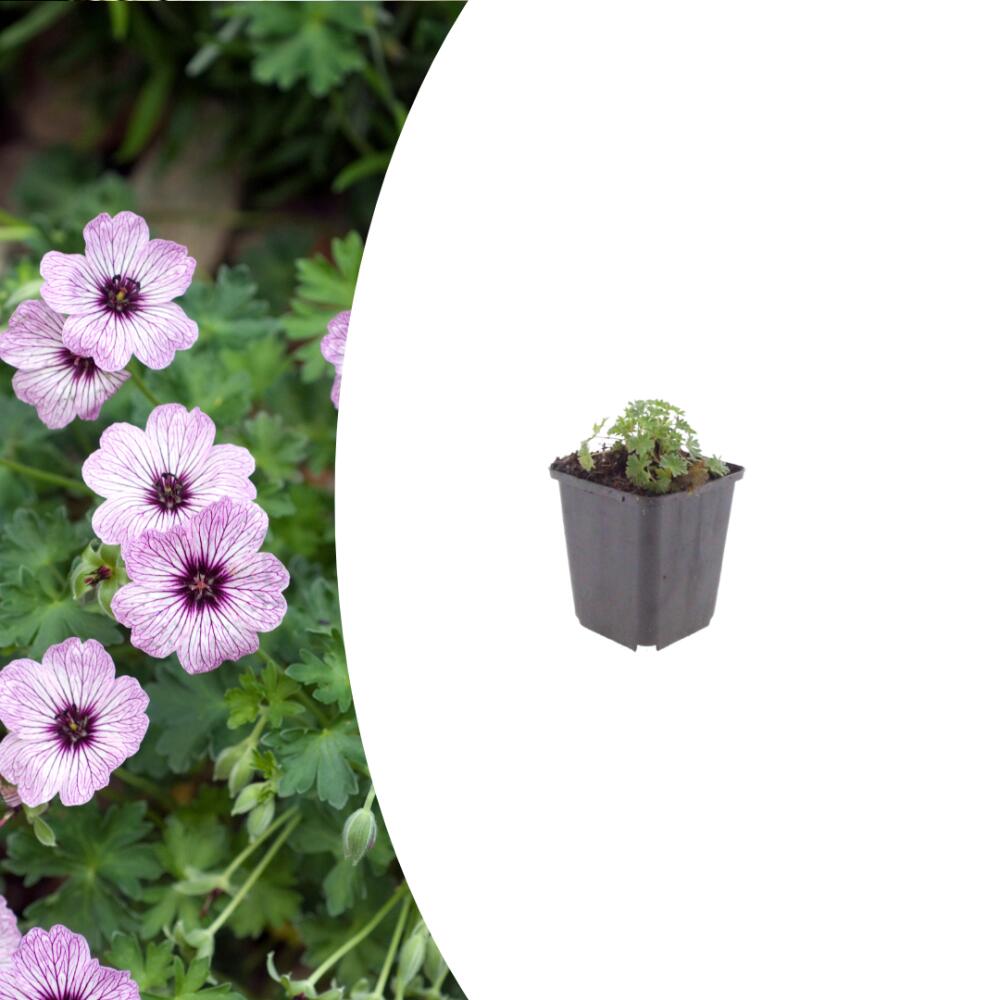
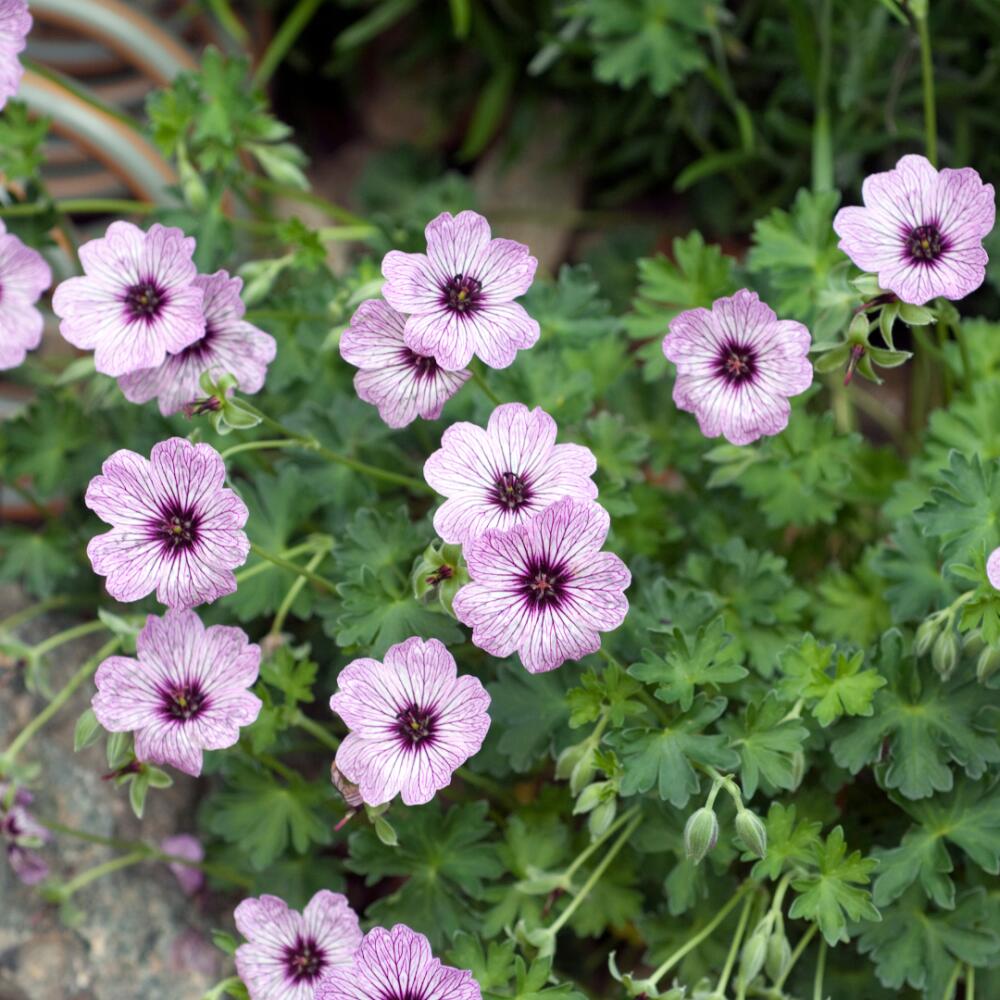
Ballerina needs no great height to stand out. Low grey-green foliage forms small cushions from which pale-pink flowers rise. Fine purple veins run to a dark centre; close up you see how precise the pattern is. We like planting at a bed edge or between stones where small flowers are not overlooked. The shop shows a young plant in a 9 cm pot at around 10 to 25 cm delivery height. An established Ballerina stays around 15 cm tall and grows more outwards. The later cushion is therefore different from its condition immediately after unpacking.
Light and drainage decide the position
A sunny to lightly shaded place with well-drained soil suits this low perennial. In a heavy bed we loosen the planting zone and ensure water cannot remain in a compacted hollow. A gravel or rock garden can work if roots do not dry completely before establishment. We set the root ball at about its previous depth, gently firm soil and water thoroughly. Moving from small pot to garden deserves particular attention: surrounding soil appears moist while the original root ball may already be dry.
Plant with spacing so cushions can develop
For garden design we calculate not from the narrow 9 cm pot but around 30 cm later spread per plant. Spacing around 25 to 30 cm gives cushions room and may let them loosely join later. For larger gaps between individual plants, plant farther apart. Pictures of flowering cushions are examples of a later development stage; the shop offers sets of 6, 12, 24, 48 or 60 young plants. This distinction particularly matters in a picture of a finished planting.
Support flowers without constantly cutting
Fine-veined flowers appear mainly from late spring to early summer. Further flowers may follow depending on weather and care. We remove faded stems when they cover the small cushion; old foliage can also be gently taken out. Radical pruning on a fixed date is unnecessary. We look for new leaves and enough remaining light. The variety is perennial. Foliage may decline in winter and the form arises again from the rootstock in spring.
Allow a year for establishment
Spring or autumn are comfortable planting times because soil is usually moist enough and not overheated. Container plants may also be set at other times if soil is not frozen or waterlogged; summer planting needs particular water attention. Afterwards we regularly check moisture at the root ball and water deeply when needed. Only once roots explore surrounding soil does the plant respond more calmly to dry days. A general watering count helps less than inspecting soil and leaves.
Recognise small problems in time
If growth remains sparse, first check genuine brightness and whether soil dries after rain. Yellow soft leaves in wet ground need a different response from dry edges in heat. In containers we also inspect drainage holes and empty saucers. Cranesbills may occasionally show leaf spots or feeding damage; remove individual affected leaves and observe subsequent development. For a small variety, calm care often beats a series of quick interventions. A good position and free-draining root area are the best foundation for many new flowers.
One plant, several views
Good to know
How tall does Ballerina become later?
The RHS describes the variety as a low cranesbill around 15 cm tall. The exact shop offer states around 10–25 cm delivery height, which must be distinguished.
What colour are its flowers?
Pale pink to pink with conspicuous dark purple veins and a dark centre.
When does it flower?
Mainly late spring to early summer; further flowers depend on weather and care.
What spacing should I plan?
Around 25–30 cm between plants as a guide, since a cushion can spread approximately 30 cm wide.
When should I plant the cranesbill?
Spring or autumn are favourable. Potted plants may also be planted at other times in frost-free, non-waterlogged soil, then need appropriate aftercare.
Sources and editorial note
- Exotenherz: shop variant, photos and delivery height
- Royal Horticultural Society: Geranium (Cinereum Group) 'Ballerina', form and care
- RHS Plants: Ballerina, around 15 cm height and 30 cm width
- Royal Horticultural Society: planting perennials and choosing spacing
The Exotenherz offer includes several set sizes. The shop states a 9 cm pot and approximately 10–25 cm delivery height per plant. Expected height and width of the established variety come from the RHS specialist description; actual growth and flowering depend on position and weather. Delivery contents and current availability are given in the shop for the selected set size.