
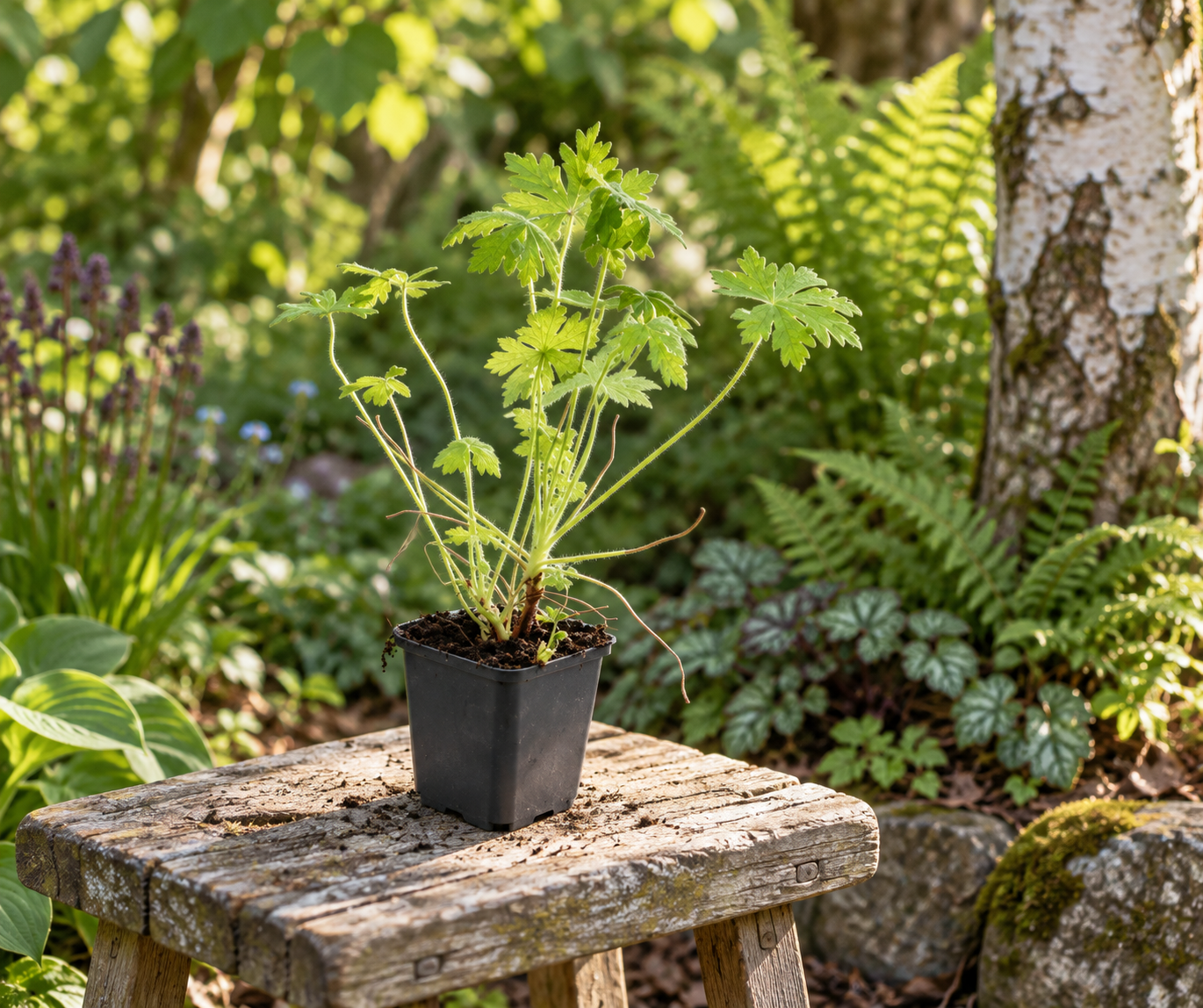
This plant at Exotenherz
Check the shop offer for current availability, price and what is included.
Product and delivery details are given in the individual offer.
Your care table
| Topic | What to do | Why it helps |
|---|---|---|
| Light | Choose a sunny to partly shaded bed edge. | Tree roots and dense leaf canopy change water supply. |
| Soil | Prepare well-drained soil. | Strong rhizomes do not need a permanently wet position. |
| Start | Moisten the ball, set at previous height and water in. | Roots initially use only the small potted ball. |
| Water | Supply deliberately while establishing; then assess soil and weather. | Later drought tolerance develops only after rooting in. |
| Spread | Check edges beside paths and small neighbours. | Rhizomes connect planting points and expand the area. |
| Pruning | Remove spent stems and troublesome older leaves as needed. | Healthy foliage remains part of the effect after flowering. |
| Division | Divide healthy larger plantings in spring or suitable autumn. | Rooted rhizome pieces can begin a new planting. |
| Container | Provide larger root space and free drainage. | The 9-cm sales pot is for starting, not lasting spread. |
Check the compost and pot weight. The care table explains how far the compost may dry.
Water only when needed. The water should reach the root ball without spilling over the rim.
Remove surplus water from the saucer or cachepot. Then return the plant to a suitable position.
A leaf cushion with its own aromatic note
Geranium macrorrhizum carries soft-looking deeply lobed leaves. Careful touching reveals their aromatic smell. Pink to purplish pink flowers stand above on branched stems. Five petals, noticeable stamens and reddish calyces make the small flowers interesting close up. The species offered here has no cultivar name. This portrait therefore promises neither Czakor’s exact colour nor Ingwersen’s Variety’s pale flowers. This species view is especially useful when planning a natural garden area without adopting traits from a similarly named cultivar photograph.
An area slowly develops from separate pots
The young plant stands in a 9-cm pot at roughly 10–25 cm total height including pot. Later flower stems can stand much higher above foliage; about 30–45 cm guides a developed garden planting. Strong rhizomes grow sideways, form new roots and carry more shoots. Initially separate spots thus connect. An older planting can reach roughly 60 cm width per plant and continue merging. A narrow gap between sensitive neighbours is therefore different from a generous group at a shrub edge. Plan the intended area first, then the orderable set size.
Look at actual soil beside woody plants
Sun and partial shade suit the species. Beneath an open crown can be pleasant, but canopy intercepts rain and large roots draw moisture from the same soil. Established cranesbill’s ability to withstand temporarily drier conditions does not yet help a freshly planted pot. Check more than whether the spot is shaded. Is soil loose or is there a compacted constantly dry layer? An edge moved slightly outward can ease the start. Permanent waterlogging is no better a basis than a hole staying filled long after every rainfall.
Distribute pots before planting
The offer gives about 30 cm spacing as guidance for a group. Set pots on prepared ground and view them from the path too. This shows where foliage will reach an edge and where small neighbours need room. Moisten the ball, gently release the pot and set at previous height. Soil should touch sides without burying the leaf base deeply. Then water thoroughly. Spring is a good starting point; frost-free early autumn can also suit if ground remains workable and not permanently wet.
Rhizomes do not replace a watered start
While rooting in, check moisture directly at the ball. A moist bed some centimetres away does not prove the small delivered ball absorbed water. Water slowly and thoroughly as needed so the whole root zone is reached. Gradually the plant uses more ground space and responds differently to dry days. More water is still not the right response to every leaf change. One ageing leaf among fresh green needs different judgment from an entire wilting group. Check soil, new shoots and weather before adding feed or water.
Leaf structure remains after flowers
Flowering belongs mainly to late spring and summer. Lobed leaves can then remain a quiet connection between woody plants and perennials. Selectively remove troublesome spent stems and unattractive old leaves. A still attractive planting does not need complete cutting merely because of a calendar date. If rhizomes extend too far into neighbouring space, remove rooted edge pieces and reorganise. Healthy divisions can move elsewhere in spring or suitable autumn. Establishment supply begins again there even when the mother plant was already well rooted.
Accompany the changing year
Leaves can turn reddish in autumn; how much green remains through winter depends on location and weather. Mark young spots so they stay visible when tidying. In spring gently remove old remains and wait for new growth. Cold and changing moisture affect container roots more strongly than garden ground. A larger outdoor container with free drainage and a sheltered stand is therefore more sensible than lasting culture in the small sales pot. The leaf cushion needs time and space; later ease results from a suitable garden and an attentive start.
One plant, several views
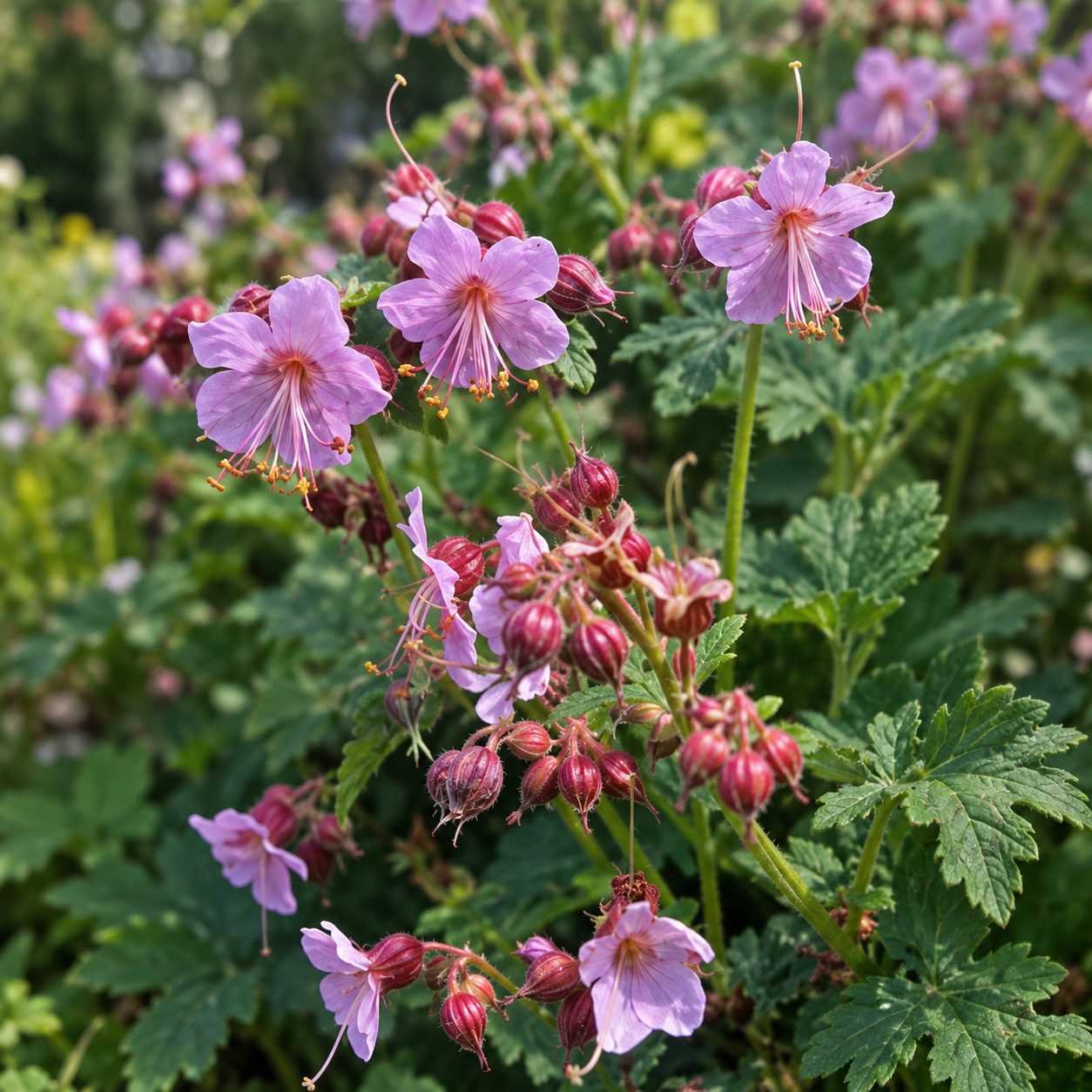

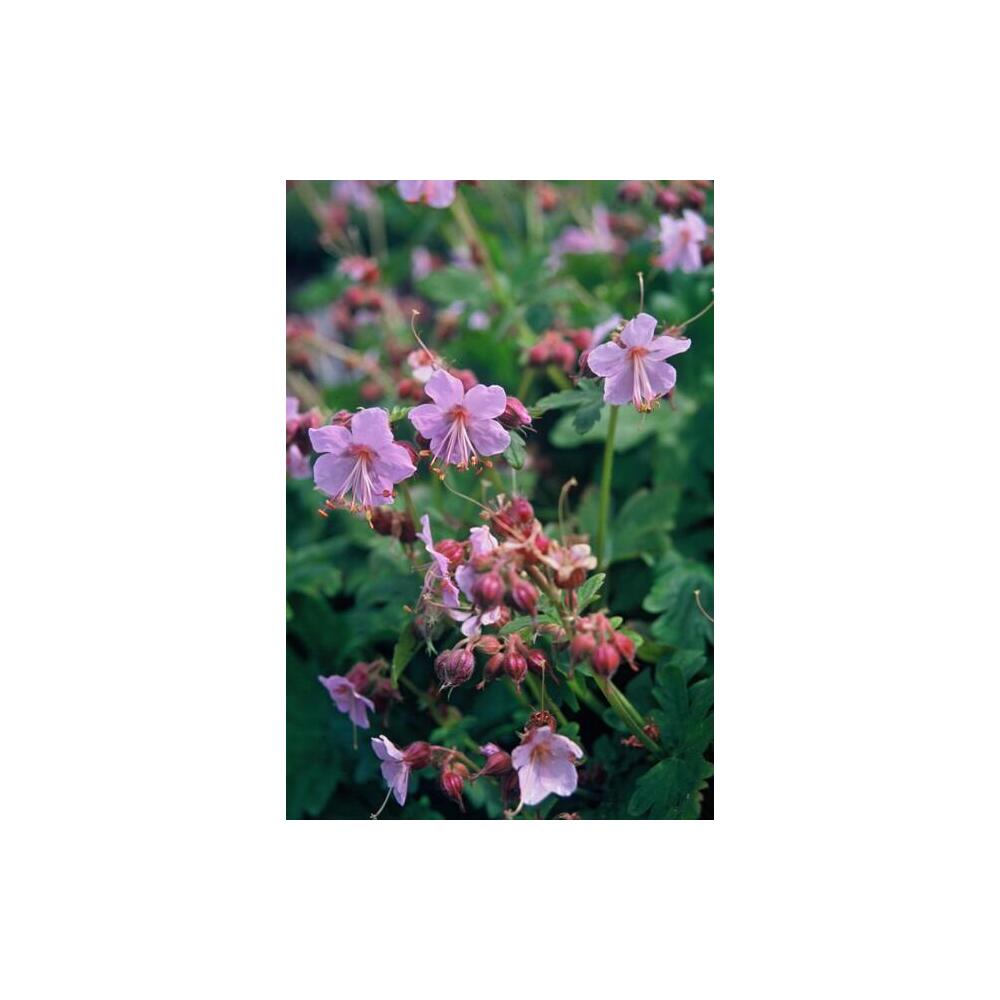
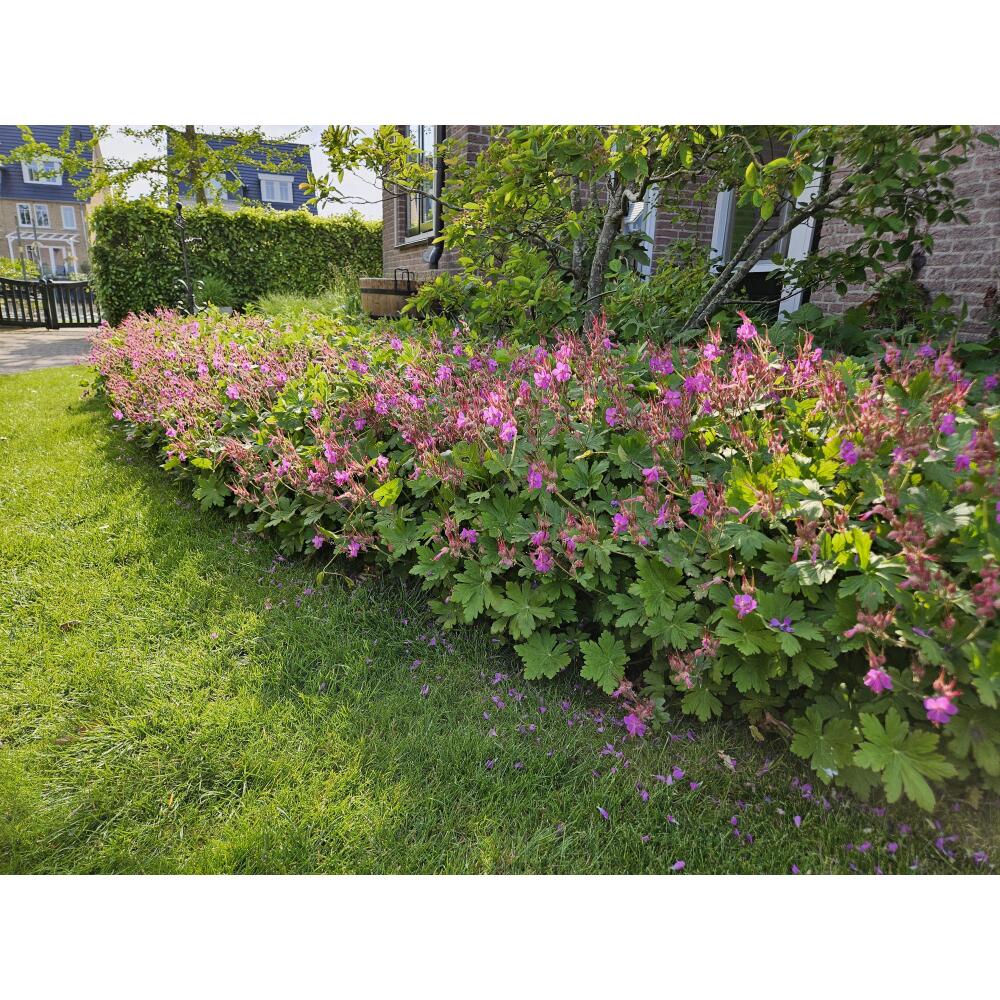
Good to know
Is this a named cultivar?
No. The offer names Geranium macrorrhizum without cultivar. Colour traits of other cultivars are not promised.
Is the species perennial?
Yes, a perennial garden plant widening through strong rhizomes.
When does it flower?
In late spring and summer; position and weather influence progress.
How high does the planting grow?
Roughly 30–45 cm with flowers as guidance; delivery height describes something different.
Does it need water beneath woody plants?
Especially while establishing. Shade and later drought tolerance cannot replace supply to the young ball.
Can I divide the area?
Yes, healthy rooted rhizome pieces can be replanted in spring or suitable autumn.
Sources and editorial note
- Exotenherz: currently read parent offer (03.10.2026)
- Exotenherz: currently orderable child offer (03.10.2026)
- Kew: species description and rhizomes (accessed 03.10.2026)
- Morton Arboretum: species profile, growth and cultivation (accessed 03.10.2026)
Identity, parent offer and selectable child offers publicly read on 03.10.2026. Specialist sources directly read; quantity variants belong to this one portrait. Species offer without cultivar name; existing Czakor, Ingwersens, Bevans and Spessart are independent cultivars. Kew and Morton directly read through web.open; local HTTP403 not treated as missing botanical verification.