

This plant at Exotenherz
Check the shop offer for current availability, price and what is included.
Product and delivery details are given in the individual offer.
Your care table
| Topic | What to do | Why it helps |
|---|---|---|
| Light | Choose sun or bright partial shade with clear leaf surfaces. | Neighbours should not overgrow the low perennial. |
| Soil | Use moderately fertile draining soil without standing water. | Small compact growth needs aired roots. |
| Planting time | Use mild spring or early autumn days in frost-free ground. | The young perennial can root evenly then. |
| Spacing | Check 30–40 cm as horticultural bed-edge guidance. | Desired closure and neighbours determine final spacing. |
| Water | Check young balls and deliberately moisten during drought. | Later drought tolerance does not start in the delivered nursery pot. |
| Feed | Supply only as needed in moderately fertile beds. | Heavy feeding cannot replace suitable soil structure. |
| Pruning | Remove spent stems and old leaves, preserve fresh basal foliage. | New shoots gain space; repeat flowering remains possible. |
| Division | Divide older planting in spring if needed and water in. | Strong pieces can develop at prepared sites. |
| Winter | Preserve perennial bases, check drainage and protect small containers. | The deciduous plant rests; living roots and buds remain important. |
For young plants, feel the soil directly at the root ball. The surface and deeper soil may have different moisture levels.
Water thoroughly after planting; later, water according to the soil, weather and establishment rather than a fixed calendar.
Avoid standing water. For plants in containers, also check that water runs out of the drainage hole.
Finely divided foliage makes the edge interesting
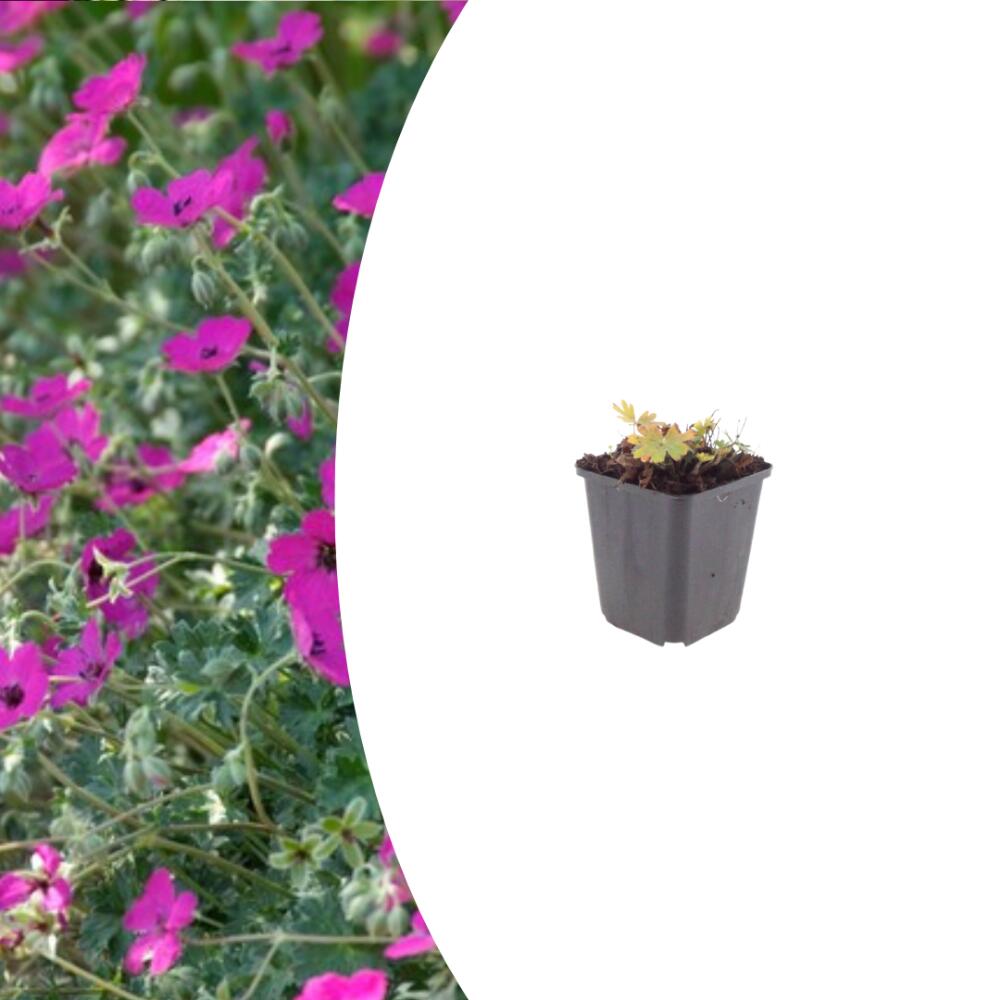
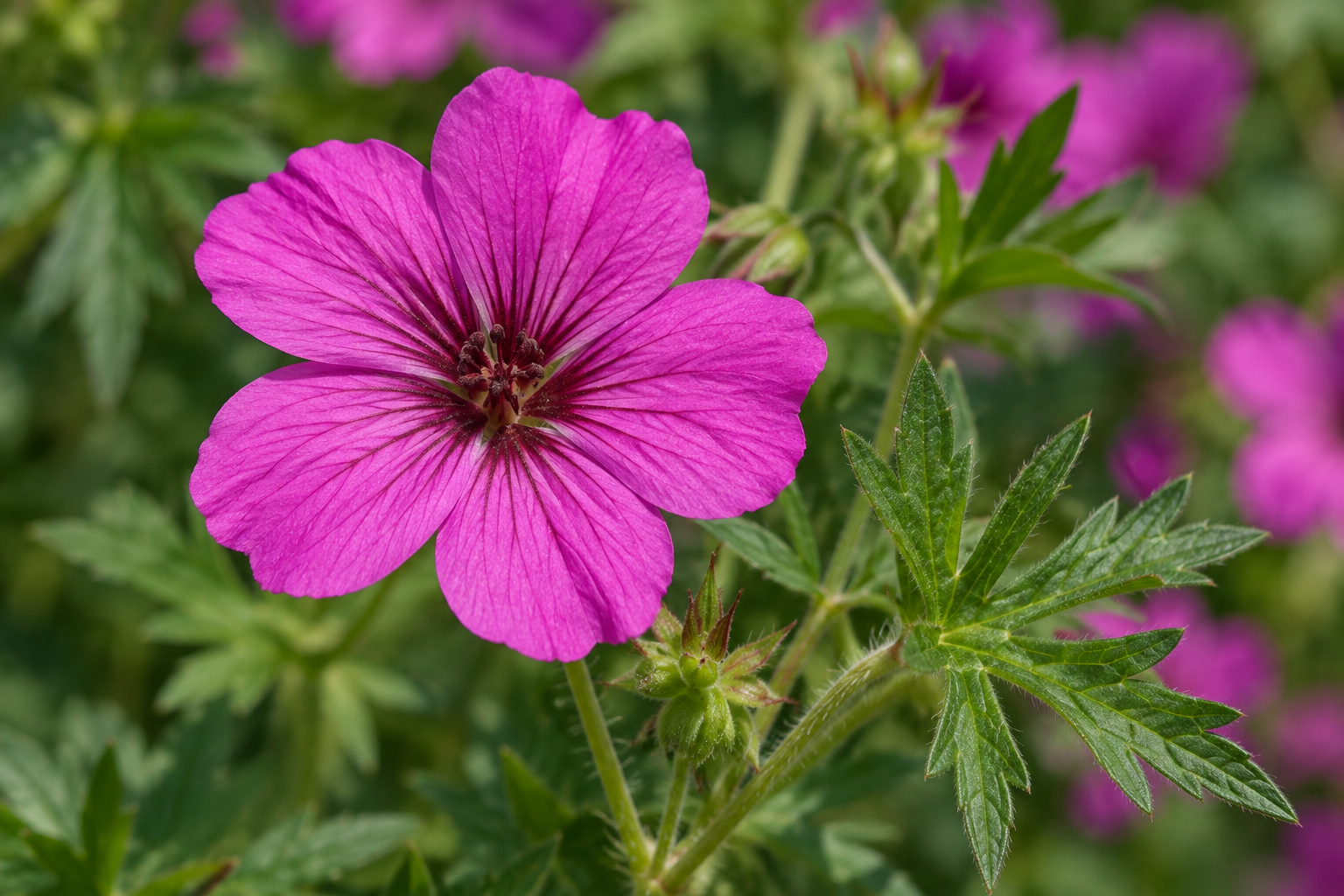
Max Frei’s character can already be recognised in its leaves. Dark green surfaces are deeply divided into narrow lobes. Purplish pink flowers with five petals and darker veins open above in summer. The documented Geranium sanguineum cultivar grows compactly into tufts with spreading rhizomes. About 15 cm height guides cultivar habit; generally larger species heights do not automatically describe this small form. At an accessible bed edge not just flowers but also the leaf pattern matters between flowering phases.
A young perennial may initially be small and quiet
The current offer has plants in 9-cm pots at roughly 10–25 cm total height including pot. Set choice determines quantity. The original shows the small young potted plant alongside a later flower example. Delivery may therefore be sparsely leafy or flowerless, particularly outside growth and flowering time. Check the ball and living base after unpacking instead of comparing it to mature summer cushions. Cranesbill here belongs to perennial garden Geranium; balcony Pelargonium often called geraniums are another plant group with different culture habits.
Combine sun with draining root room
Max Frei grows in sun or bright partial shade. A sunny bed edge or loose planting between stones can suit if soil beneath stays draining. Gravel alone does not make compacted wet ground suitable. The cultivar handles moderately fertile soil; lasting standing water is unfavourable. Do not choose a spot where taller neighbours completely cover low foliage. It needs its own small light and root space. A warm position is plausible for the later perennial, but the young pot must still be kept from drying completely while establishing.
Build the low edge from separate balls
Plant preferably on mild spring or early autumn days when ground is frost-free and workable. Gently remove the pot, set the ball at previous height and water thoroughly. About 30–40 cm between plants is horticultural guidance for a low bed edge, not fixed shop information. Actual spacing depends on how loose the planting should stay and intended neighbours. An immediately closed carpet cannot be assured. Initially keep room between young balls clear of competition and observe leaf and rhizome development.
Assess drought differently only after rooting
Drought tolerance is described for established bloody cranesbill. A newly set plant from a small 9-cm pot has no roots in a larger ground space yet. Check the original ball and supply deliberately in drought rather than assume future toughness immediately. Moisture checks and drainage stay important permanently in containers. Feed only as needed in moderately fertile beds; abundant supply is no aim itself for the small leaf cushion. Lower water need in older planting also does not mean pruning, competition and spreading edges need no attention.
Make room for fresh leaves after flowers
When flower stems and older leaves become unattractive, remove them to encourage new growth. Look carefully where fresh leaves already emerge from the base and do not cut them too. A further flowering flush is possible but not promised. Older over-dense or patchy planting can be divided in spring: strong pieces with living buds and roots go to prepared places and are watered in. This is a cultural measure for developed planting, not an immediate step for every new delivery. Sharp clean scissors and well-supplied soil help more than frantic extra feeding.
Accompany deciduous growth through the seasons
Max Frei is a perennial deciduous plant. Leaves can age and discolour in autumn; in winter it retreats. The small potted cushion is then not judged by matching a fresh summer photograph. Gently remove clearly dead remains and leave the base undamaged. Maintain drainage in beds; protect small containers from hard freezing and check dryness on frost-free days. Spring shoots indicate activity. With unusual deposits or poorly developed leaves, assess moisture, competition and plant health together before a blanket care change.
One plant, several views
Good to know
Is Max Frei a balcony geranium?
No. Geranium sanguineum 'Max Frei' is a perennial garden plant. Balcony Pelargonium belong to a different group.
Why does delivery look smaller than the flower photograph?
Each 9-cm pot at about 10–25 cm total height including pot describes a young perennial. Flower imagery shows developed summer planting, not a promise for current delivery stage.
How tall does this cultivar grow?
Around 15 cm guides compact cultivar growth. Position, flower stems and season alter visible appearance; larger general species heights cannot simply be adopted.
How many plants does the offer contain?
The currently selected set quantity decides. Confirmed quantities belong to the same cultivar, not additional identities.
Does it need little water after planting?
Check the small original ball carefully. Established drought tolerance cannot replace establishment supply.
What helps after flowering?
Remove old flower stems and unattractive leaves without damaging fresh basal shoots. New foliage and flowers may follow, but repeat bloom cannot be guaranteed.
Sources and editorial note
- Exotenherz: parent offer read directly, delivery dimensions and original gallery (03.10.2026)
- Specialist reference: geranium-max-frei (read directly 03.10.2026)
- Specialist reference: geranium-nc (read directly 03.10.2026)
- Exotenherz: checked 6-plant child offer directly (03.10.2026)
- Exotenherz: checked 12-plant child offer directly (03.10.2026)
- Exotenherz: checked 24-plant child offer directly (03.10.2026)
- Exotenherz: checked 48-plant child offer directly (03.10.2026)
- Exotenherz: checked 60-plant child offer directly (03.10.2026)
Identity and independent profile checked against canonical 642 and shared/isolated portraits and orders. Parent offer and all associated child offers directly read on 03.10.2026 with clear URL/file hashes. Delivery and later growth height separated; sets not counted additionally. Specialist sources directly read. Text and image comparison checked separately; PDF and page acceptance bound to actual file hashes. No publication acceptance: Root checks shared page build.