
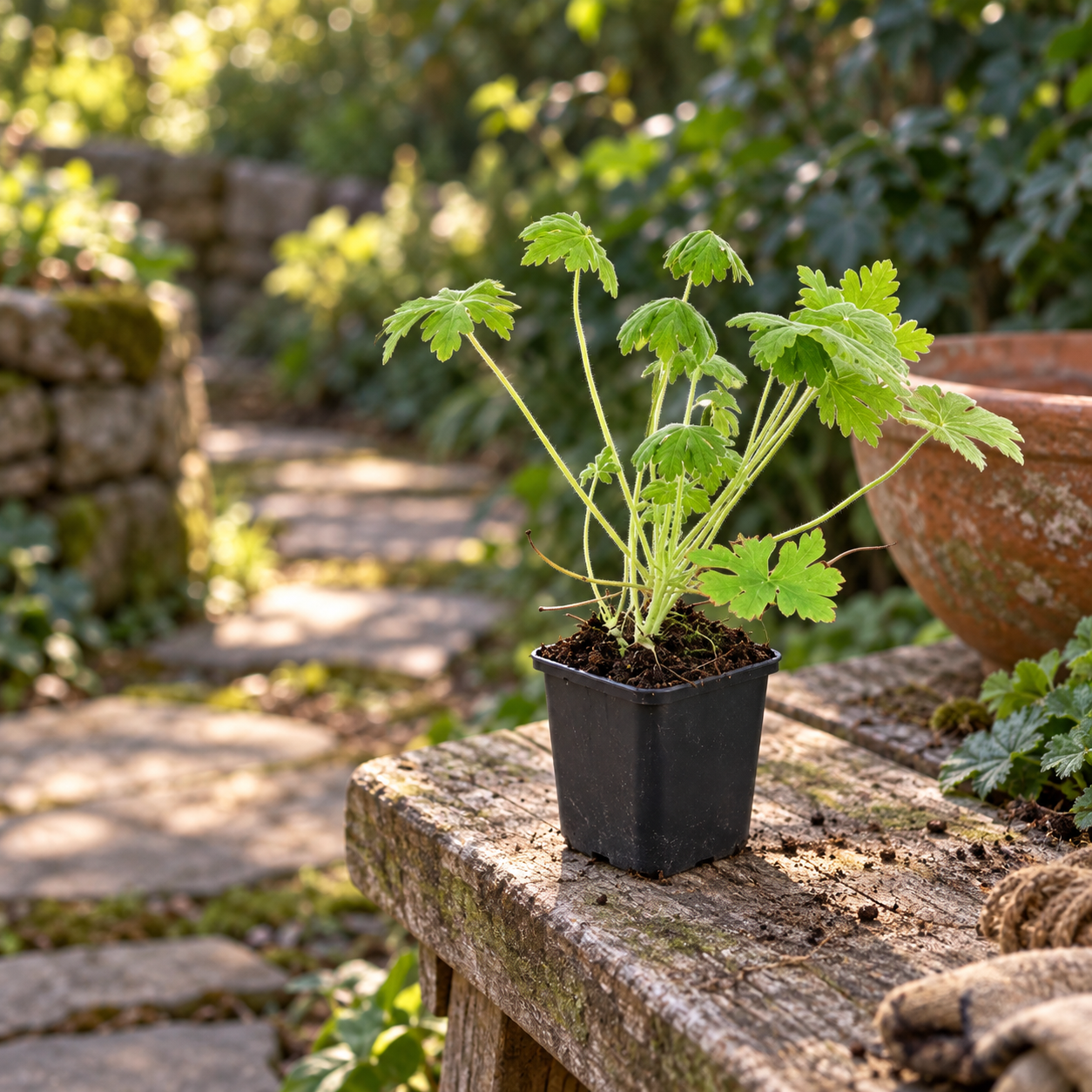
This plant at Exotenherz
Check the shop offer for current availability, price and what is included.
Product and delivery details are given in the individual offer.
Your care table
| Topic | What to do | Why it helps |
|---|---|---|
| Light | Choose sun, partial shade or suitable garden shade. | Shade-tolerant plants also need supply while establishing. |
| Planting | Set moistened balls at previous height in loose ground. | Young roots need soil contact, not deeply buried leaf bases. |
| Water | Water thoroughly as needed during establishment. | Older drought tolerance does not mean small delivery pots may stay dry. |
| Soil | Choose well-draining garden soil without lasting standing water. | Prolonged wetness can burden even robust perennials. |
| Feed | Do not routinely feed heavily; assess soil and growth as needed. | Many perennial geraniums need no frequent extra supply in suitable ground. |
| Pruning | Selectively remove old flower stems and damaged leaves. | Healthy semi-evergreen foliage is not completely cut away by default. |
| Spread | Check edges and divide older strong planting if needed. | Groundcover needs room without crowding small neighbours. |
| Winter | Observe foliage and shelter potted balls outdoors. | Semi-evergreen does not guarantee unchanged foliage every winter. |
Check the compost and pot weight. The care table explains how far the compost may dry.
Water only when needed. The water should reach the root ball without spilling over the rim.
Remove surplus water from the saucer or cachepot. Then return the plant to a suitable position.
White flowers with a red counterpoint
Spessart’s effect comes from small details combined. White to very pale pink flowers stand above soft lobed foliage; dark red calyces and buds give a fine coloured background. Flowers look airy, not a large compact ball. Leaves deserve another look too: aromatic, they can develop reddish autumn tones. A low stone boundary, open shrub edge or quiet perennial area reveals the combination well. The German shop name describes a Geranium macrorrhizum perennial here, not a balcony Pelargonium with a similar everyday name.
A small pot begins the planting
Sets consist of young plants in 9-cm pots; roughly 10 to 25 cm total height includes pots. Developed Spessart can reach around 40 cm height and half to one metre width over several years. This garden development is not delivered. The shop gives around 30 cm spacing and roughly twelve plants per square metre. Place pots on the area first and check proximity to small perennials and paths. Gaps initially remain. An original flowering-area photograph shows later possibilities, not assured size when unpacked.
Do not confuse dry shade with a dry start
Spessart tolerates different light conditions including suitable shaded garden positions. Established planting can also handle drier conditions. Beneath a shrub young plants still need water because roots and crown intercept part of the rain. Check ground where the ball will sit and keep watering accessible. Draining soil matters more than a constantly wet hollow. Plan light and water together: partial shade with regularly checked establishment differs from an unchecked dry corner behind dense woody growth.
Plant calmly and thoroughly
Container perennials can go into suitable frost-free ground; spring or early autumn are often pleasant windows. On heavy winter-wet soil spring is more favourable than late autumn planting. Moisten the ball before unpotting, set at previous level and press loose soil lightly. Water slowly afterwards. In following weeks check moisture at the former pot ball and supply thoroughly as needed. Small daily splashes do not reliably reach all roots. A drought-tolerant species description should not tempt you to leave the young 9-cm ball to itself.
Accompany flowers without restarting everything
Flowers appear from late spring to around midsummer. Weather and position affect progress. After main bloom selectively remove old stems and unattractive leaves so fresh parts remain visible. Complete cutting bare is not automatically necessary for this semi-evergreen cultivar. Possible further flowers are not promised. First assess soil, growth and leaf condition; many garden cranesbills do not need frequent heavy feed in suitable ground. More fertiliser replaces neither missing ball moisture nor sensible drainage.
Soft leaves and clear bed boundaries
Spessart can form a connected area over time. This suits below larger neighbours but needs a recognisable boundary near smaller weaker perennials. Occasionally check edges and remove unwanted pieces before they establish firmly in neighbours. Older strong planting can be divided if needed; new divisions also must root in and receive moisture checks. Reddish autumn leaves alone do not prove disease. Compare season, soil moisture and fresh leaves. This avoids needless cutting or simultaneous changes in several care steps.
Remain a garden perennial even in an outdoor container
A sufficiently large outdoor container with holes can show flowers and aromatic foliage. The small sales pot offers little long-term buffering. Check rooting and move if needed into a suitable larger container or bed. Remove saucer water. Shelter outside in winter and check dryness on frost-free days. Semi-evergreen foliage changes with weather; it need not look identical each winter. Selectively remove dead parts in spring and observe new shoots. This allows a clear restart without precautionarily removing all healthy foliage.
One plant, several views

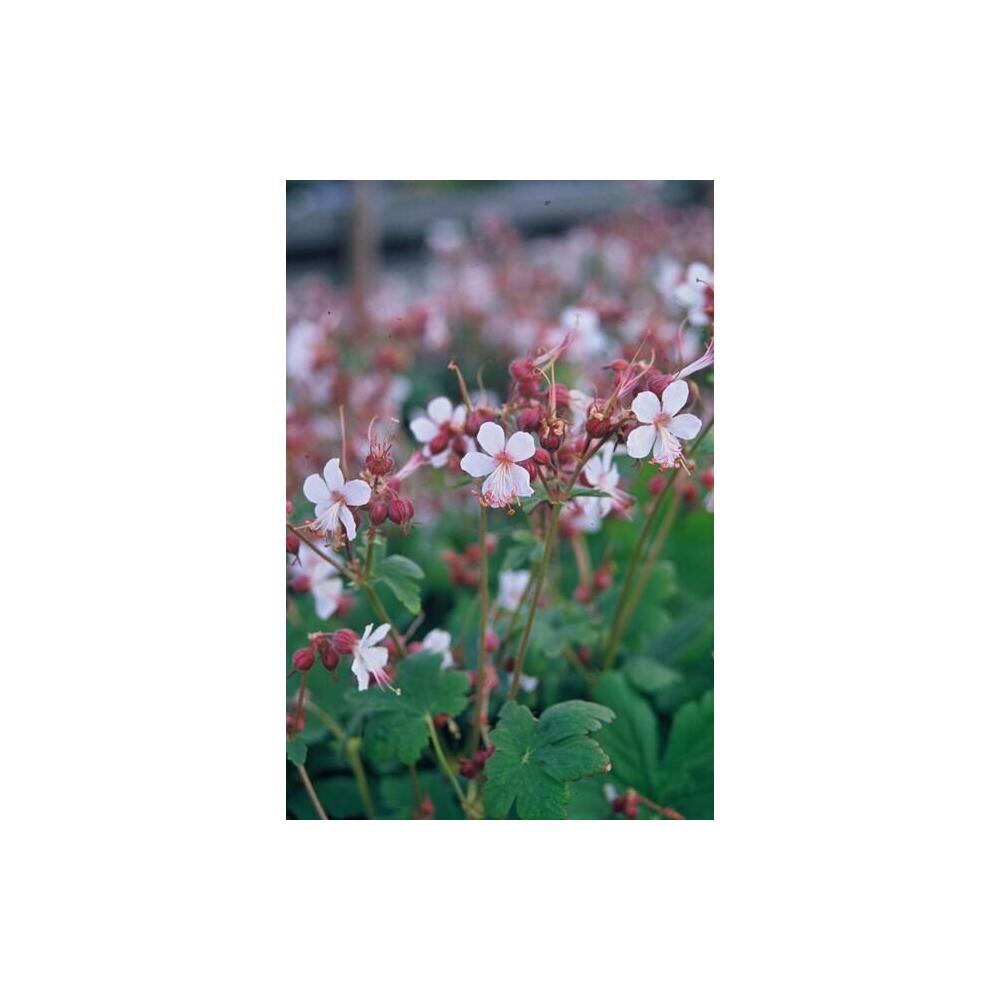
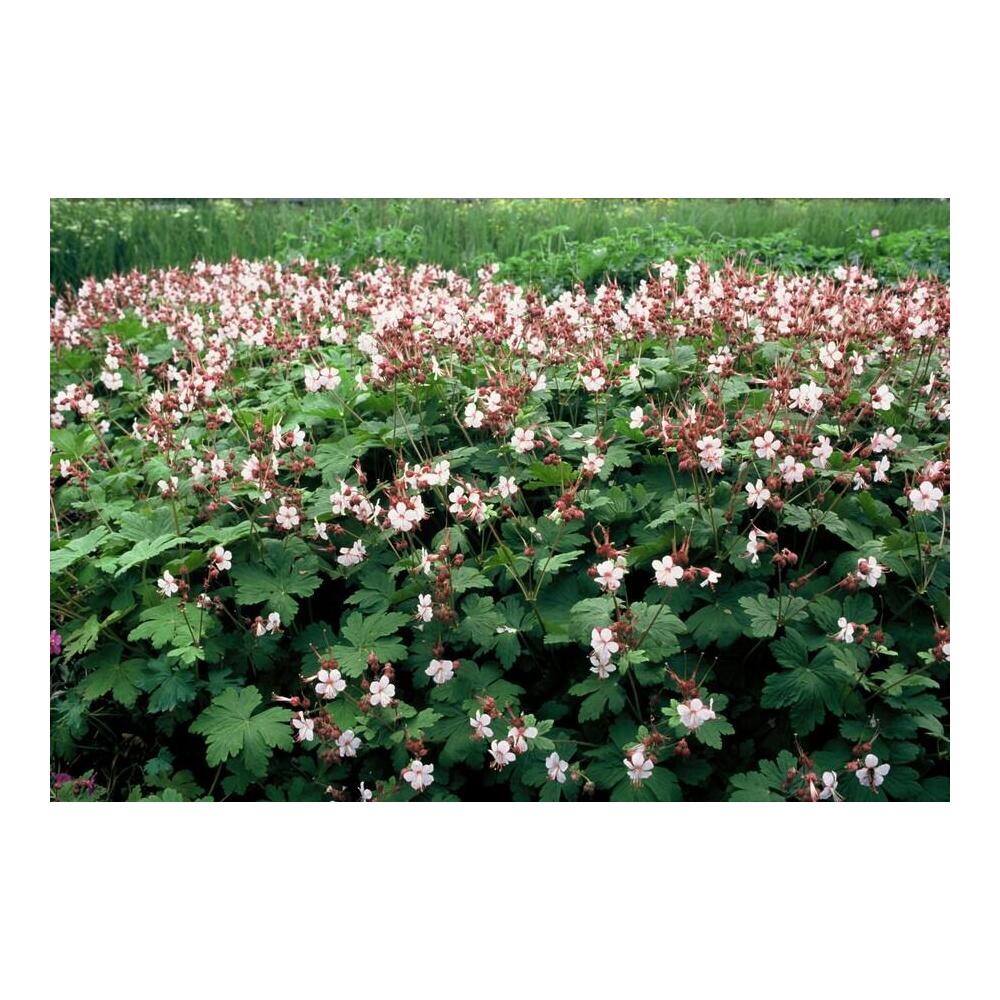
Good to know
Are the flowers white or pink?
Spessart can have white to very pale pink flowers. Dark red calyces and buds are typical parts of the whole.
Is Spessart a geranium for balcony boxes?
It is a perennial from Geranium. Pelargonium often called geraniums are botanically different.
Does it tolerate dry shade immediately?
Established planting tolerates drier conditions. Young plants first need appropriate watering directly at the ball.
How tall and wide does it become?
Around 40 cm high and about 0.5–1 m wide in developed planting as RHS guidance. Delivery dimensions describe only young plants.
Must everything be cut after flowers?
Not automatically. Selectively remove old stems and damaged leaves, accounting for healthy semi-evergreen foliage.
Are red autumn leaves a problem?
Reddish autumn colour belongs to possible cultivar appearance. Also judge fresh leaves, moisture and season.
Sources and editorial note
- Exotenherz: offer and original photographs (03.10.2026)
- RHS: Geranium macrorrhizum Spessart – cultivar profile (03.10.2026)
- RHS: garden geranium – planting and care (03.10.2026)
- Exotenherz: checked 6-plant child offer (03.10.2026)
- Exotenherz: checked 12-plant child offer (03.10.2026)
- Exotenherz: checked 20-plant child offer (03.10.2026)
- Exotenherz: checked 40-plant child offer (03.10.2026)
- Exotenherz: checked 60-plant child offer (03.10.2026)
Shop offer, product number, availability and originals directly checked on 03.10.2026. Specialist sources directly read. RHS cultivar profile and care guide directly read: white/pale pink with dark calyces, semi-evergreen, 40 cm, 0.5–1 m. Drought tolerance not equated with low care. Child-offer direct links checked; 20 and 40 sets unorderable at check. Original gallery unchanged; stamped photographs not publicly used.