
This plant at Exotenherz
Check the shop offer for current availability, price and what is included.
Check the selected shop offer for price, availability and delivery contents.
Your care table
| Topic | What to do | Why it helps |
|---|---|---|
| Light | Plan for sun to bright partial shade. | An open bed edge offers different conditions from a very dark place beneath dense trees. |
| Soil | Use moderately fertile, well-drained soil. | The low clump needs a healthy root zone without standing water. |
| Planting | Moisten the root ball, plant at its previous height and water in. | The young plant needs good contact with surrounding soil. |
| Spacing | Leave about 30 cm between plant centres as shop guidance. | Later foliage spreads beyond the small nursery pot. |
| Water | Check newly planted specimens in dry weather and water as needed. | A small root ball dries differently from an established garden planting. |
| Fertiliser | Feed moderately in spring if there is a genuine need. | More fertiliser replaces neither a suitable position nor careful planting. |
| Cutting back | Cut back spent stems and unattractive foliage appropriately. | Fresh foliage and further flowers can renew the planting. |
| Division | Divide healthy larger clumps in spring if needed. | Rooted pieces retain the cultivar and can be planted elsewhere. |
For young plants, feel the soil directly at the root ball. The surface and deeper soil may have different moisture levels.
Water thoroughly after planting; later, water according to the soil, weather and establishment rather than a fixed calendar.
Avoid standing water. For plants in containers, also check that water runs out of the drainage hole.
Small flowers that change the bed edge
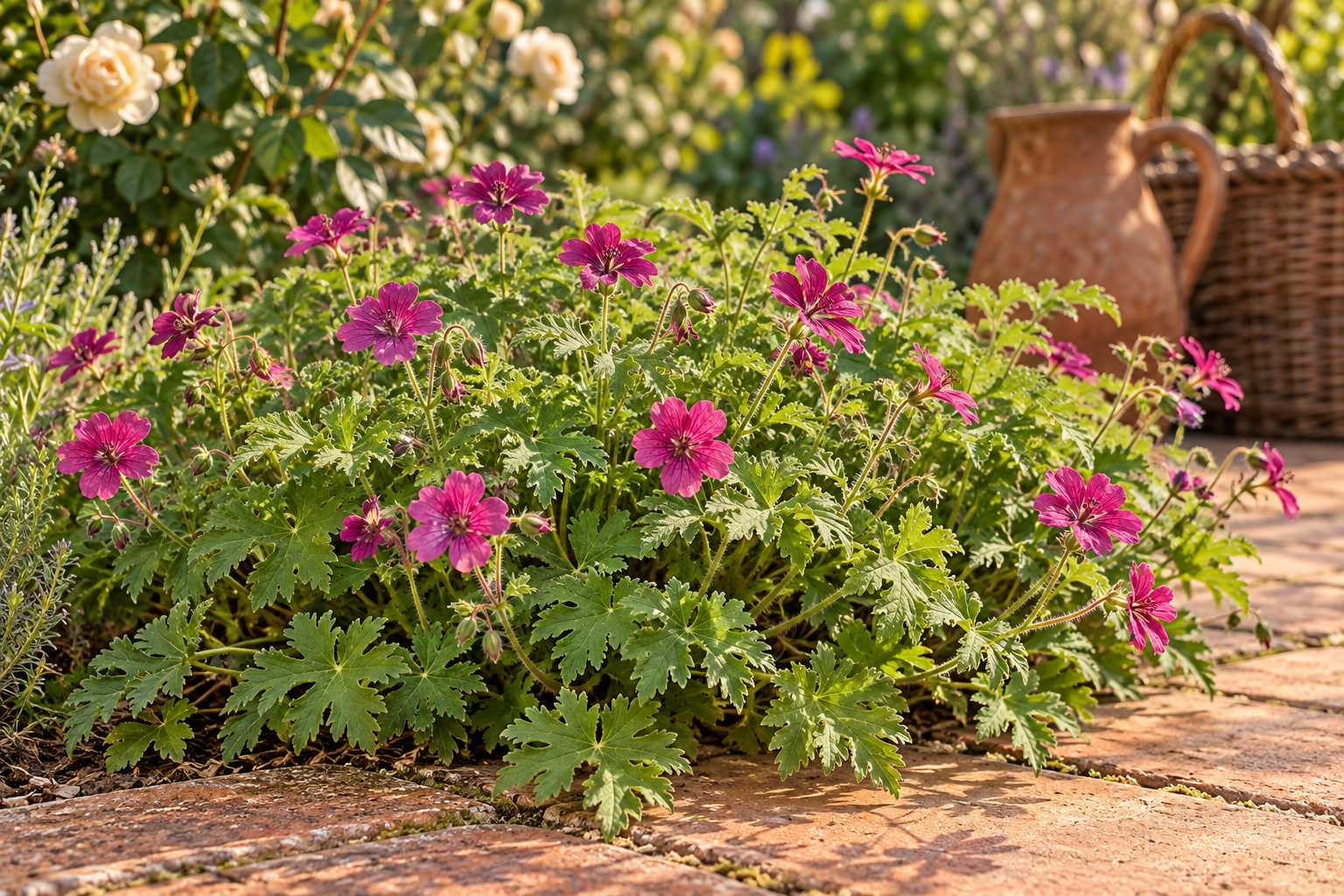
Tiny Monster needs no tall flower stalk to attract attention. Pink to reddish-purple flowers open over a low green clump. Close up, you can see their darker veins and five open petals. Finely divided foliage lets air and light pass between the flowers. I particularly like this loose connection at a terrace edge: the plant remains a perennial and does not look like a rigid edging. At ordering time, however, the picture starts smaller. Set plants arrive in 9 cm pots with a height of approximately 10–25 cm according to the offer, not as a finished closed flowering carpet.
The small monster grows mainly outwards
The name plays on the contrast between low height and a widening planting. Tiny Monster often reaches about 20–30 cm, although cultivation can change that. Deeply divided leaves sit on slender stalks; later growth connects beyond the small pot root ball. The shop calls the cultivar Geranium sanguineum Tiny Monster; botanically it is also listed as Geranium Tiny Monster. For care, the cultivar matters; for ordering, the specific quantity set and its product number matter. It is a perennial deciduous cranesbill, not an ordinary balcony pelargonium used only as a summer window-box plant.
Plan the edge with the later planting in mind
An area planting becomes more attractive when you first look at the shape of the bed. Should Tiny Monster follow a straight edge, stand beneath loose rose foliage or trail between other low perennials? I would arrange the small pots before planting and view the group from a distance. The shop gives about 30 cm centre to centre, approximately twelve plants per square metre, as guidance. This is a planning aid, not a requirement to fill every spare centimetre densely at once. I also leave neighbouring plants their space. A low clump may later shade the soil, but initially it does not replace careful removal of competing growth.
The first summer depends on the small root ball
At planting, the root ball is moistened and set at its previous height. Afterwards, I water onto the soil and check that it makes good contact. For small delivery plants especially, this beginning matters more than the later easy-care label. The root ball can be dry while the surface beside it still looks fresh. In sun and wind I therefore look more closely. Permanent water in a planting hollow is nevertheless no help. Young roots need soil that offers moisture and releases excess water. A suitable frost-free planting time and a few attentive checks make this difference visible in everyday gardening.
Many flowers do not mean a fixed flowering calendar
Tiny Monster can flower from late spring into early autumn. How dense and how long the display actually is depends on the plant, position and weather. I would therefore describe it as a cranesbill capable of flowering for a long period, without promising a fixed number of open flowers every summer day. If individual stems have finished flowering or the foliage becomes unattractive, the planting can be cut back appropriately. Fresh foliage and more flowers may follow. A quiet phase is also part of the garden picture. It is not automatically a reason to add more fertiliser or keep soaking the soil regardless of its condition.
Look first when something changes
A few older leaves among fresh green growth tell a different story from an entirely drooping clump. I look at the distribution of the change, the soil and the past few days. Has it rained for a long time, or did the planting position dry strongly? Is there a striking marking on the leaves, or are only individual older stems affected? Such observations help before choosing measures. Air between perennials and careful watering onto the soil are good gardening practice. The aim is not to treat the plant constantly. A suitable position and attention to its specific condition usually suggest more useful next steps.
A deciduous clump remains a perennial in winter
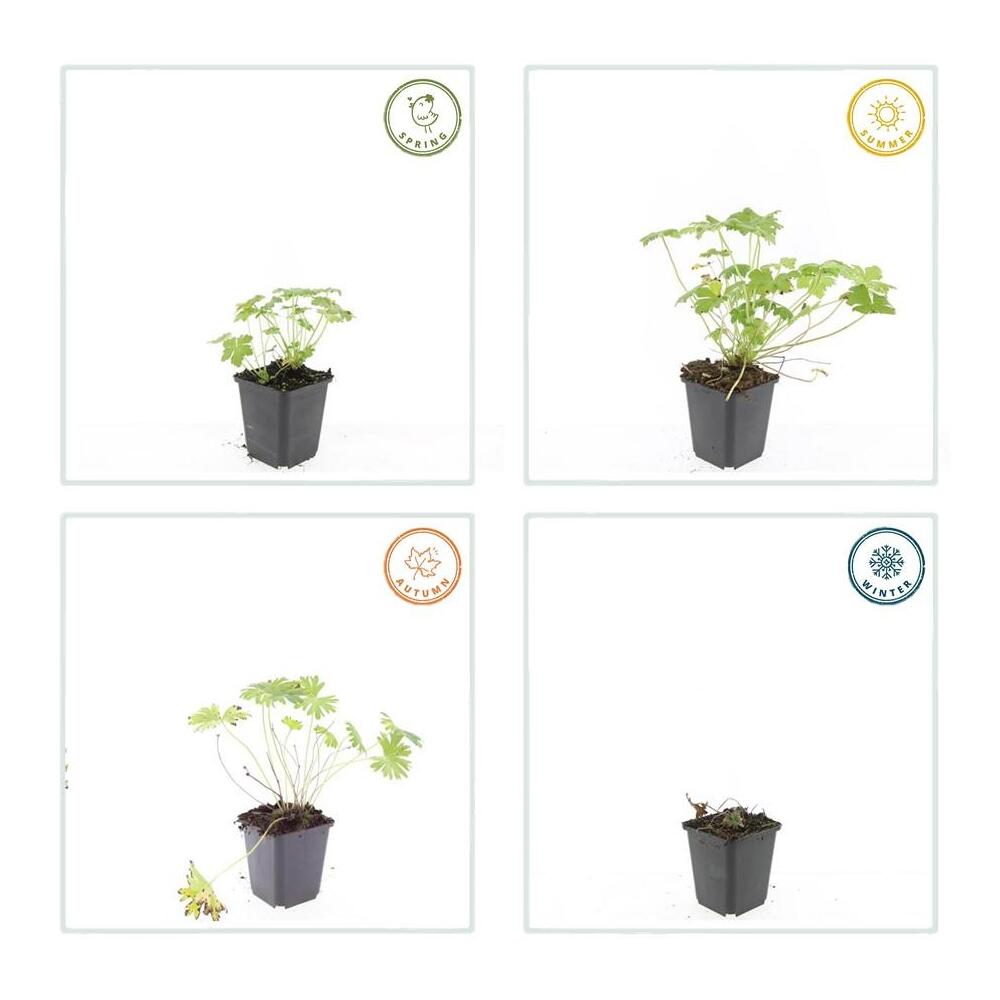
When the garden becomes colder, the foliage changes; Tiny Monster is deciduous. The seasonal original shows this young potted plant at different stages. A dormant winter root ball therefore cannot be compared with a flowering summer clump. In spring the base of the plant becomes interesting again: new shoots appear there. Healthy larger plantings can be divided as needed and the rooted pieces replanted. Containers offer more restricted conditions than the garden. If you initially keep a young set plant in a pot, check drainage and root-ball moisture especially carefully rather than equating bed care with pot care.
One plant, several views

Good to know
How tall does Tiny Monster grow?
The cultivar stays low, often about 20–30 cm. Position and cultivation may change its height; delivery height is listed separately.
Is the cultivar perennial?
Yes, a deciduous garden cranesbill. Foliage may retreat during the cold season.
What colour are the flowers?
Pink to reddish-purple, with darker veins. Different light can change the shade slightly.
How much spacing do I need?
About 30 cm between plant centres, or approximately twelve plants per square metre according to shop guidance.
Does it suppress every weed?
A later dense planting can shade the soil. Especially while establishing, competing growth must still be monitored and removed.
Should I cut back after flowering?
Spent stems and unattractive leaves can be cut back. This may encourage fresh growth and further flowers.
Is the garden picture the delivery stage?
No. It shows a later flowering clump. The offers contain young set plants in 9 cm pots, approximately 10–25 cm according to the shop.
Sources and editorial note
- Exotenherz: five available quantity sets, delivery size and spacing (01.10.2026)
- RHS: exact Tiny Monster cultivar, growth and care (01.10.2026)
- RHS: planting and caring for hardy geraniums (01.10.2026)
- Iowa State University: perennial geraniums and cultivar comparison (01.10.2026)
All five child sets 6/12/24/48/60 checked directly and available. Shop name Geranium sanguineum Tiny Monster retained; RHS accepts Geranium Tiny Monster and lists sanguineum as a synonym. Low growth about 20–30 cm, potentially taller depending on position; no weed-elimination guarantee. Shop spacing about 30 cm, approximately twelve plants per m² as offer guidance. Original 7 advertising-free, original 6 seasonal overview without environmental stamp. Visual acceptance: low loose clump, deeply divided green foliage and open pink reddish-purple flowers with darker veins appropriate. Warm garden light, no advertising stamps.