
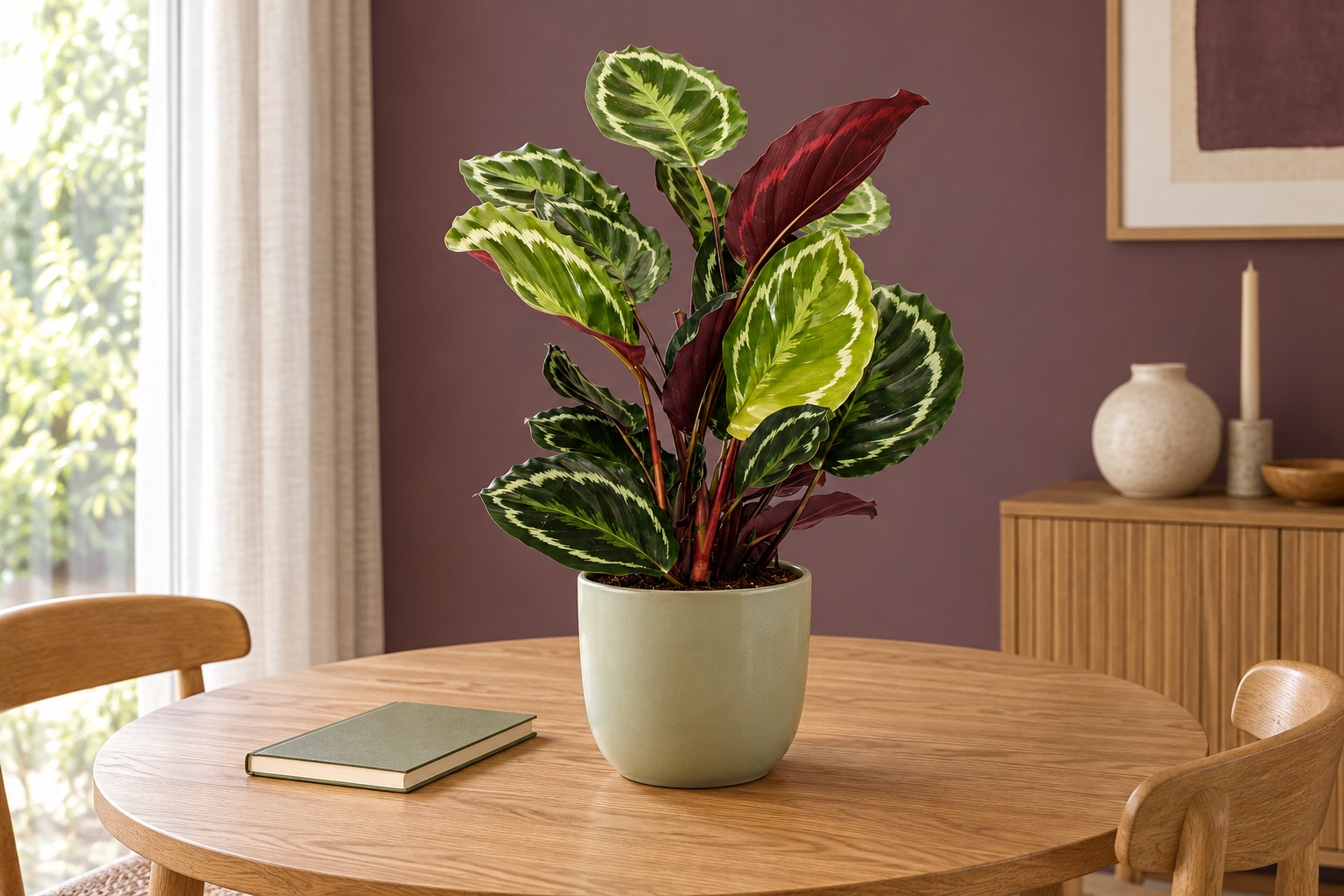
This plant at Exotenherz
Check the shop offer for current availability, price and what is included.
The linked shop is in German. Product details, availability and delivery information are provided in that shop.
Your care table
| Topic | What to do | Why it helps |
|---|---|---|
| Light | Bright indirect light to bright partial shade. | Protect the leaf pattern from hot direct sunshine. |
| Water | Keep the root ball slightly moist, allowing the surface to dry a little. | Remove remaining water and avoid complete drying. |
| Water quality | Suitable room-temperature water as low in salts as possible. | Avoid cold water and a high salt load. |
| Compost | Humus-rich, airy mixture with good drainage. | Moist roots still need oxygen. |
| Climate | Even warmth and higher humidity. | Avoid cold draughts and large temperature swings. |
| Feed | Feed sparingly during growth according to the product instructions. | Consider pre-fertilised compost and the winter rest period. |
| Leaves | Remove dust carefully and leave young rolled leaves undisturbed. | Preserve healthy patterned leaf surfaces. |
| Checks | Distinguish normal leaf movement from lasting curling. | Assess the root ball, room climate and pests together. |
Check the compost and pot weight. The care table explains how far the compost may dry.
Water only when needed. The water should reach the root ball without spilling over the rim.
Remove surplus water from the saucer or cachepot. Then return the plant to a suitable position.
A medallion on every leaf
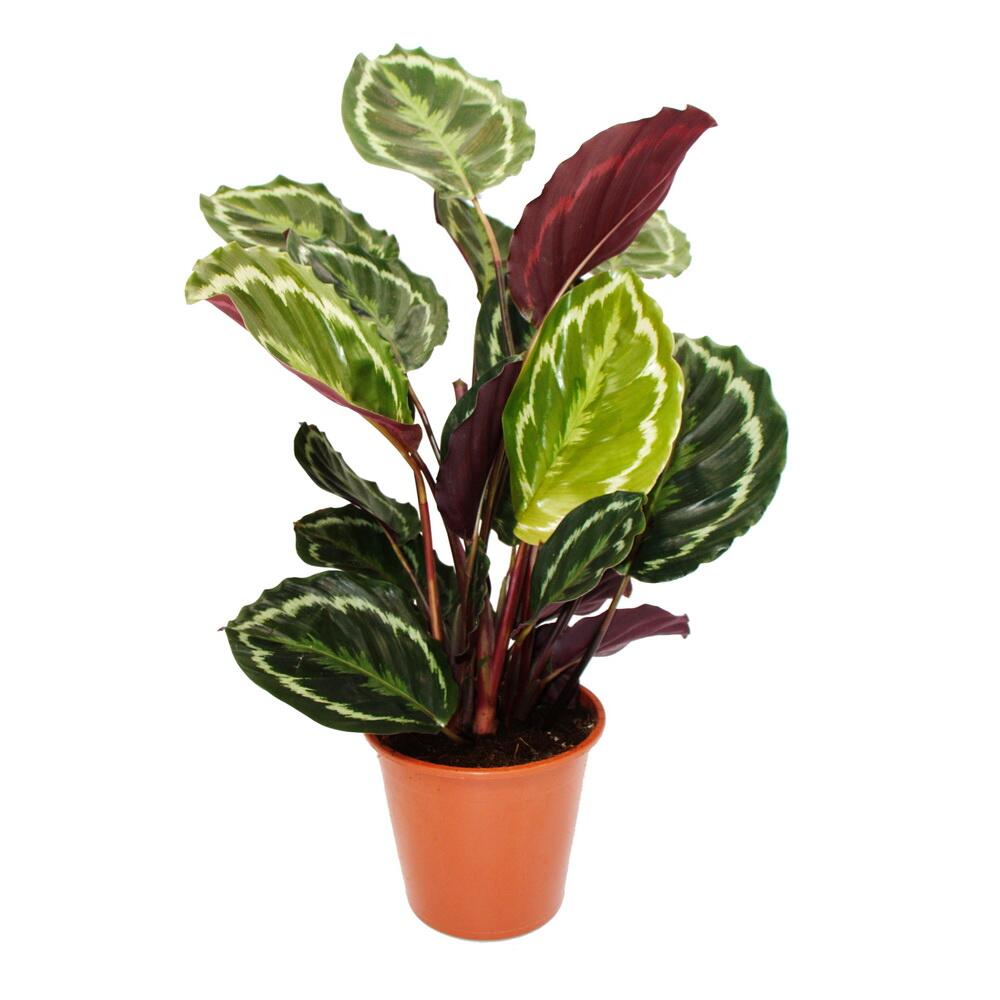
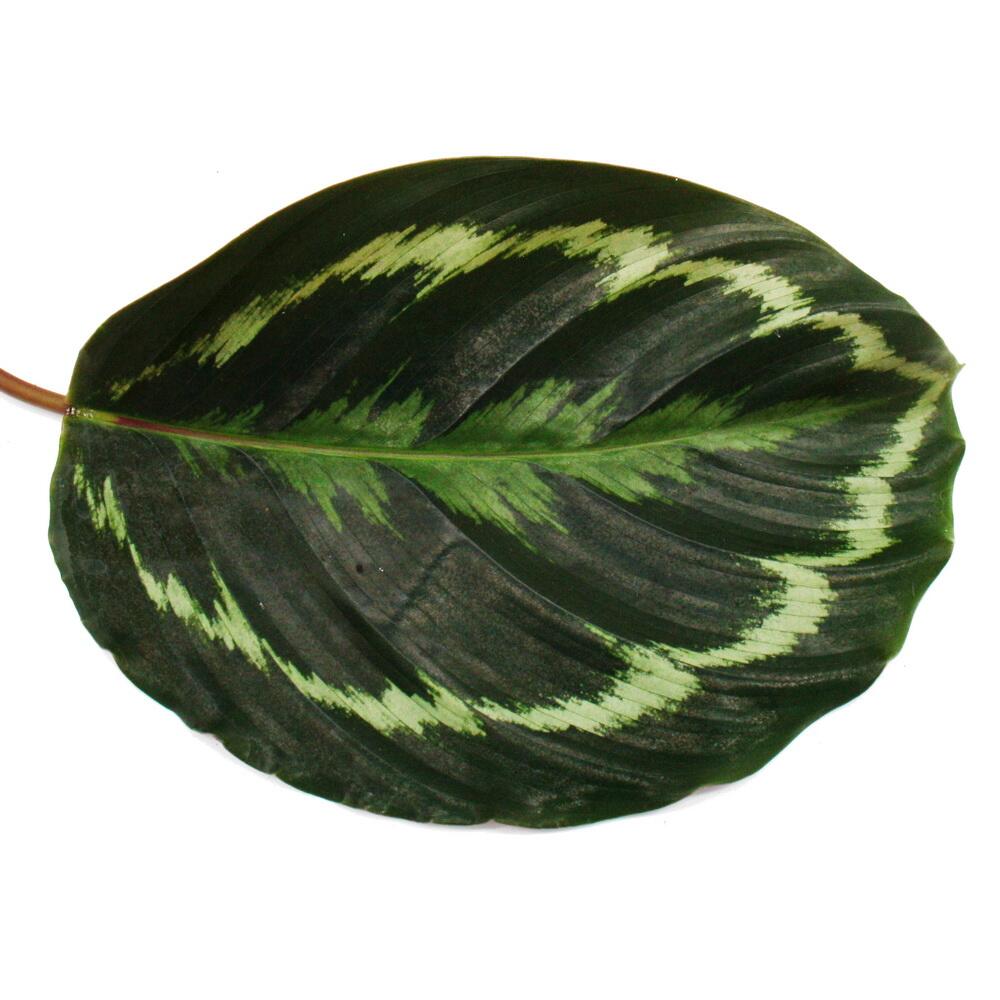
The broad oval leaves carry pale, feather-edged markings on a background of varying greens. Dark-purple undersides provide a strong contrast. The shop offers the plant as Calathea roseapicta Medaillon. The RHS lists the cultivated form as Goeppertia veitchiana Medaillon and gives Calathea Medallion as a synonym. These different trade and specialist names are explained together here. The portrait remains based on the specific leaf pattern shown in the shop offer.
Leaf age and movement provide variety
Young leaves may differ in colour from fully mature ones. The prayer plant also changes its leaf position throughout the day, revealing more or less of the purple back. These normal differences are part of its appeal. The offered form reaches approximately 70–80 cm in overall height in a 19 cm pot. A sufficiently large, bright tabletop allows a good view of the pattern, provided the leaves have space and the plant does not need to be moved constantly.
Provide an even tropical room climate
Choose a warm position with bright indirect light or bright partial shade. Avoid hot direct sun and cold draughts. Stable indoor temperatures around 18–24 °C provide a sensible guide for growing this prayer plant. Higher humidity can support leaf quality, particularly in heated rooms. A hygrometer helps assess it. Provide gentle air exchange without placing the plant in a cold airstream; persistently wet leaves are not the intended goal.
Give room-temperature water according to need
The root ball should remain evenly slightly moist. Let the surface dry a little and then water the compost as needed. The water should not be cold and should contain as few salts as possible. Remove excess water from the outer pot. Demand usually falls in winter; an unchanged summer routine can then waterlog the roots. If leaves remain rolled, check moisture and room conditions first. Not every change in leaf position calls for immediate additional watering.
Airy compost and restrained feeding
A humus-rich, loose mixture with good moisture retention and drainage helps supply the root zone evenly. Repot when roots have clearly filled the pot, without choosing unnecessarily large containers. During growth, feed sparingly according to the product instructions and take existing fertiliser into account. Remove dust gently with a soft damp cloth, supporting the leaf from below. Do not pull young rolled leaves open. Large healthy clumps can be divided, but this requires sufficiently rooted divisions and favourable growing conditions.
Assess care problems across the whole position
Brown edges, yellow leaves or lasting curling can have different causes. Check root moisture, water quality, temperature and humidity together. Inspect undersides for spider mites, mealybugs or other sap-feeding pests. Distinguish pale feather-like patterns from newly developing spots. Following an adjustment, new healthy leaves reveal progress; old brown areas remain damaged. The plant does not need its surroundings redesigned daily, but a suitable stable position and attentive observation.
One plant, several views
Good to know
Why is Medaillon given different names?
The shop uses a widespread attribution to roseopicta; the RHS lists Medaillon under Goeppertia veitchiana. The search names are recorded together.
Are the red undersides damage?
No, purple undersides belong to the pictured cultivated form.
Can the plant stand on the dining table?
Yes, if there is enough indirect light, space and a quiet position. It should not need to be carried back and forth constantly.
Does it need water every day?
No. Check the root ball; frequency and quantity depend on moisture, light and temperature.
Sources and editorial note
- Product and delivery contents: Exotenherz
- NC State Extension: plant profile
- Royal Horticultural Society: plant and care information
Sources checked: 15 September 2026. Product information and the contents of delivery follow the linked shop offer. Care advice was checked against the cited specialist sources and should still be adapted to the plant’s condition, position and season.