
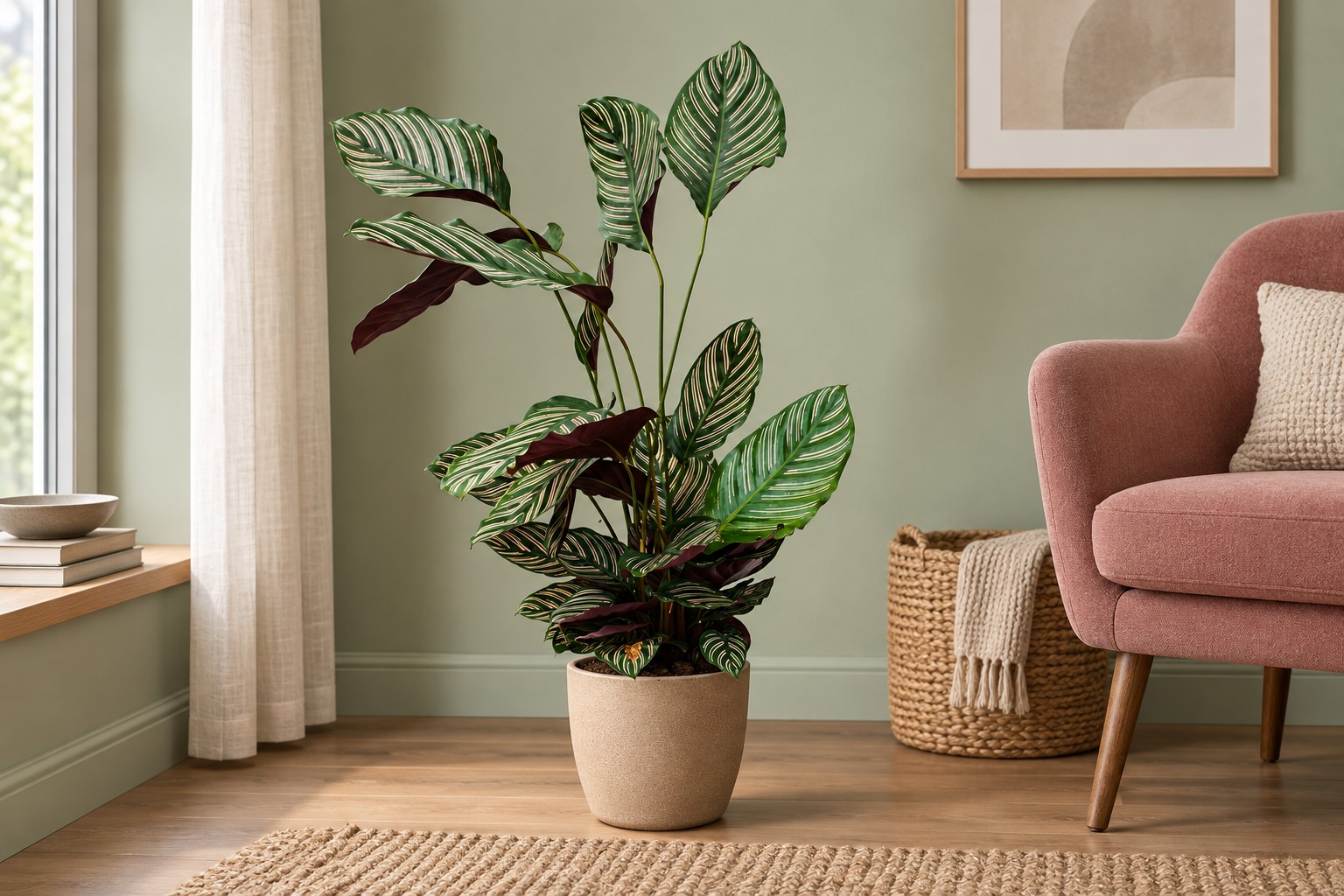
This plant at Exotenherz
Check the shop offer for current availability, price and what is included.
The linked shop is in German. Product details, availability and delivery information are provided in that shop.
Your care table
| Topic | What to do | Why it helps |
|---|---|---|
| Light | Bright partial shade or indirect light. | Darker positions do not mean rooms without light. |
| Water | Keep evenly slightly moist, allowing only a little surface drying. | Avoid large swings between dry and wet. |
| Compost | Humus-rich, airy mixture with good drainage. | Hold moisture without sealing roots away from air. |
| Feed | Feed sparingly during growth according to the product instructions. | Consider existing fertiliser and possible salt build-up. |
| Temperature | Keep evenly warm, with around 18–24 °C as a guide. | Protect from cold draughts and sudden changes. |
| Humidity | Combine higher humidity with gentle air movement. | Avoid persistently wet leaves in still corners. |
| Leaf care | Remove dust gently and preserve healthy surfaces. | Do not force young leaves open. |
| Observation | Distinguish normal daily movements from lasting curling. | Check the root ball and room climate if changes persist. |
Check the compost and pot weight. The care table explains how far the compost may dry.
Water only when needed. The water should reach the root ball without spilling over the rim.
Remove surplus water from the saucer or cachepot. Then return the plant to a suitable position.
A pinstripe pattern with natural variation
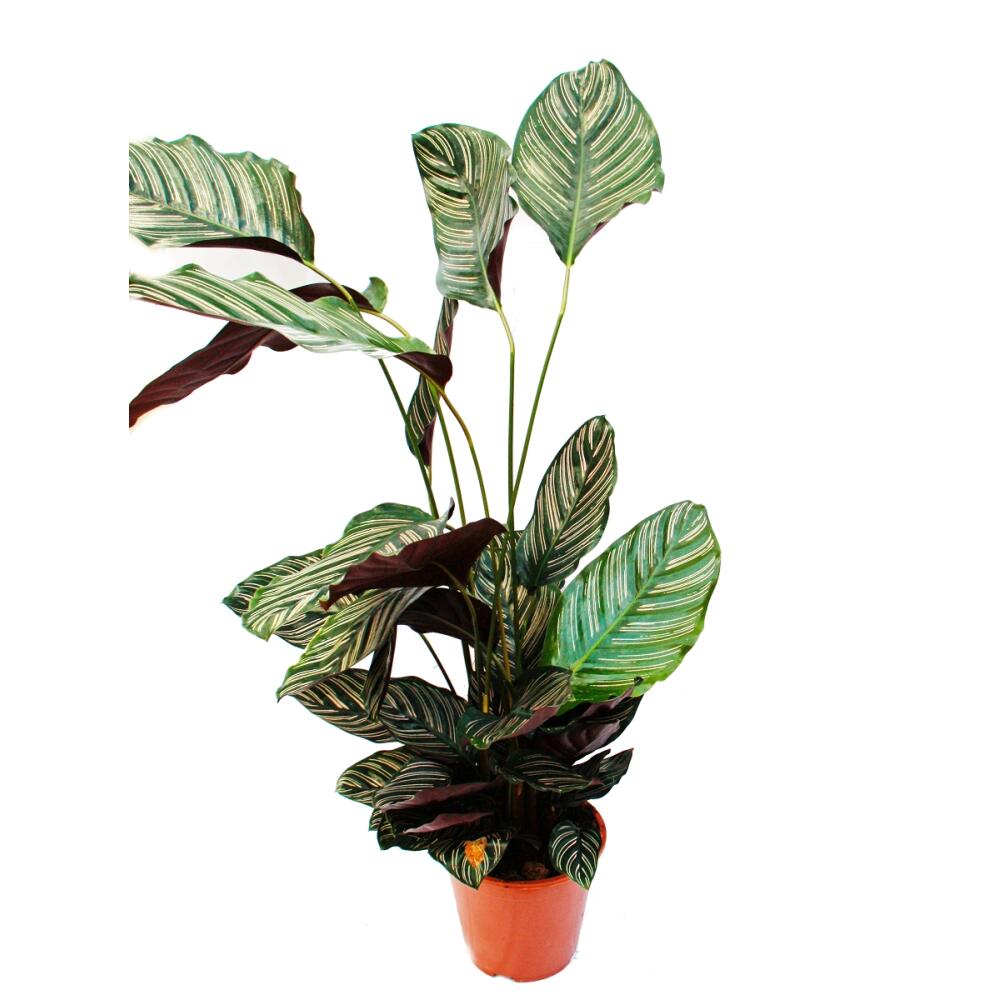
The oval leaves of Goeppertia ornata carry fine, pale lines on a green background. Young leaves can look lighter; as they mature, the green darkens and the contrast changes. The backs show purple to burgundy tones. The species belongs to the Marantaceae family and is still usually called Calathea ornata. According to the specialist profile used, its natural origins lie in Colombia and Venezuela. Its decorative leaf pattern makes flowers almost secondary to its indoor appearance.
Leaves move throughout the day
Watching the plant in the morning and evening can reveal changes in leaf position. Prayer plants respond to the daily rhythm; their mobile leaf joints allow the surfaces to sit differently depending on conditions. This is initially a normal feature. Leaves that remain strongly curled or limp should still be checked. The offered plant measures approximately 70–90 cm in a 19 cm pot. Free space around its varying petiole heights displays both the striped upper surfaces and, occasionally, the dark undersides.
Shadier does not mean without daylight
The shop description mentions darker positions. A sensible interpretation is bright partial shade without hot direct sun, rather than a windowless corner. Provide enough indirect daylight and even warmth around 18–24 °C. Cold draughts and large temperature changes can affect leaf quality. Slightly higher humidity suits the plant, but still air and persistently wet foliage are unfavourable. Particularly in winter, look at conditions right beside the plant instead of judging only the room temperature in the middle of the room.
Maintain moisture without large swings
Let the surface dry slightly while the root ball remains sufficiently moist. Then water the compost slowly as needed and remove excess water. Complete drying and standing water are both unsuitable. Suitable low-salt water and restrained feeding make sensitive prayer plants easier to grow. In winter, intervals between waterings may increase. A pot still moist inside does not need another thorough watering simply because pale, dry crumbs are visible on the surface.
Preserve the leaf pattern and let roots establish calmly
A humus-rich, airy mixture that retains moisture well supports the root ball. Repot when space is genuinely needed, choosing a pot that is only suitably larger. Feed sparingly during growth according to the fertiliser instructions, taking freshly pre-fertilised compost into account. Remove dust with a soft, slightly damp cloth and gently support the leaf. Large healthy clumps can be divided during a good growing period. Allow a newly delivered plant to root and settle in first before adding further interventions.
Understand rolling leaves correctly
Daily leaf movement differs from permanently rolled edges caused by water stress or unsuitable room conditions. Check the root ball, temperature, light and humidity together. Leaves remaining wet for a long time and limited air movement can encourage spots. Regularly inspect undersides and petiole bases for thrips, spider mites or mealybugs. After correcting care, new healthy leaves show progress more clearly than old damaged edges. Patience and a stable position help maintain the fine lines across many new leaves.
One plant, several views
Good to know
Why do the leaves sit differently in the evening?
Prayer plants change their leaf positions with the daily rhythm. This can be normal and should be distinguished from lasting wilting.
Does it really need a dark position?
It likes sheltered indirect light to partial shade. Complete darkness is unsuitable.
Are the stripes painted on?
No, they are part of the natural leaf pattern. Their strength and colour can vary with leaf age and between plants.
How can I recognise improvement after care problems?
Mainly by healthy new leaves and stable growth. Edges that are already brown will not turn green again.
Sources and editorial note
Sources checked: 15 September 2026. Product information and the contents of delivery follow the linked shop offer. Care advice was checked against the cited specialist sources and should still be adapted to the plant’s condition, position and season.