

This plant at Exotenherz
Check the shop offer for current availability, price and what is included.
The linked shop is in German. Product details, availability and delivery information are provided in that shop.
Your care table
| Topic | What to do | Why it helps |
|---|---|---|
| Light | Indirect light to bright partial shade. | Hot sunshine damages sensitive leaf surfaces. |
| Water | Keep evenly slightly moist, allowing the surface to dry a little. | Avoid repeated root-ball drying and constant wetness. |
| Water quality | Use suitable water as low in salts as possible. | Sensitive tips can react to unsuitable irrigation water. |
| Compost | Humus-rich, airy mixture with good moisture retention. | Roots need air despite regular watering. |
| Feed | Feed sparingly during growth according to the product instructions. | Consider salt accumulation and existing fertiliser. |
| Climate | Even warmth and higher humidity. | Avoid cold draughts and dry positions close to heaters. |
| Leaf care | Clean the velvety surface very carefully. | Do not rub firmly or use leaf-shine products. |
| Winter | Continue checking; usually water less. | Little growth does not mean a completely dry rest. |
Velvet changes the impression of green
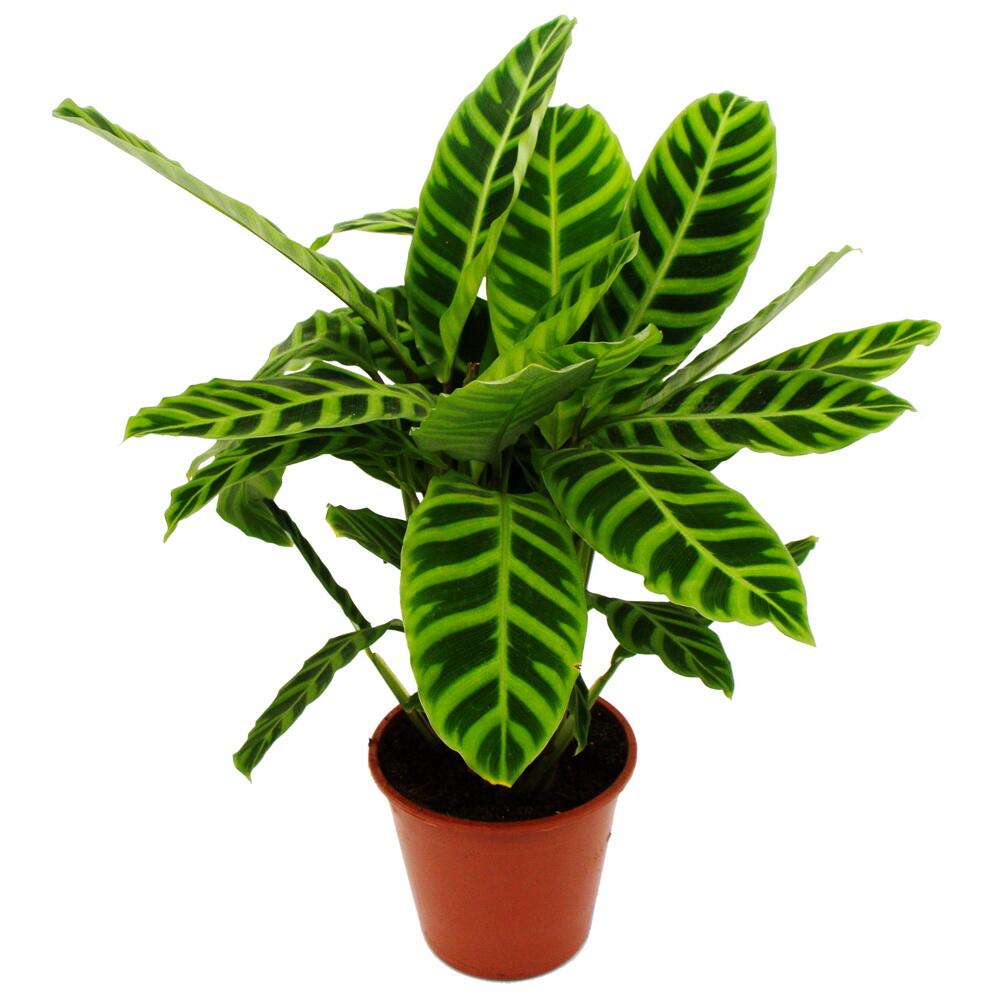
The zebra prayer plant carries broad dark and lighter green stripes on elongated oval leaves. Their velvety surface changes in appearance with the angle of the light. It belongs to the Marantaceae family and is botanically called Goeppertia zebrina; Calathea zebrina remains the familiar trade name. The leaves sit on long stalks above a clump-forming rootstock. Small, inconspicuous flowers are possible, but rarely become a feature indoors.
A lively crown for gentle light
The selected offer measures approximately 70–80 cm in a 19 cm pot. Its crown already looks dense, but it remains a young potted plant. Leaves may sit differently in the morning and evening because the plant responds to the daily rhythm. Give them room to position themselves freely. A low, broad bench offers a good view of the pattern and surface. Harsh direct sun would cancel out this positional advantage; the light should reach the plant softly and with enough brightness.
Keep warmth and humidity reliable
A bright to partially shaded indoor position without cold draughts is suitable. Even temperatures around 18–24 °C provide a guide. Higher humidity supports attractive leaf quality, particularly during the heating season. Check actual conditions at the plant’s position rather than assuming that a warm room automatically provides suitable conditions. Permanently wet foliage is no substitute for a good room climate. Gentle air exchange prevents moisture from lingering on the velvety surfaces.
Pay attention to the root ball and water
Keep the compost evenly slightly moist without waterlogging it. The surface may dry a little; complete root-ball drying should not happen repeatedly. Water the compost slowly and allow excess to drain. Suitable rainwater as low in salts as possible, or appropriately treated water, can help sensitive tips. Consumption often falls in winter. A rolled leaf does not necessarily mean more water is needed: dry air or damaged wet roots are also possible causes.
Velvety foliage needs a gentle hand
Use a loose, humus-rich potting mixture that retains moisture and stays well aerated. Repot carefully when roots have clearly filled the pot, choosing an appropriate next size. Feed sparingly during growth according to the product instructions. Remove dust from the velvety leaves very carefully, without firm rubbing or leaf-shine products. Young rolled leaves unfold by themselves. Larger healthy clumps can be divided during good growing conditions; let a newly delivered or stressed plant establish stable roots first.
New leaves reveal care quality
Dry air, unsuitable water quality or inappropriate root moisture can cause brown edges. Areas that have already died will not turn green again. Pay particular attention to new growth after a considered improvement. Regularly inspect undersides for spider mites, mealybugs, aphids or scale insects. Spots on leaves that have stayed wet for a long time and normal changing shades of green are different findings. Calm care with a few targeted adjustments helps more than daily changes to water quantities, fertiliser and position.
One plant, several views

Good to know
Is the surface really velvety?
Yes, the distinctive leaf surface belongs to the zebra prayer plant and should be treated carefully.
Is it the same zebra plant as a haworthia?
No. Similar common names are used for botanically very different plants.
Why does the foliage move?
Leaf position changes with the daily rhythm. Lasting curling or wilting should be checked separately.
How can I tell whether care has improved?
By healthy new leaves and stable growth. Old brown edges do not recover.
Sources and editorial note
Sources checked: 15 September 2026. Product information and the contents of delivery follow the linked shop offer. Care advice was checked against the cited specialist sources and should still be adapted to the plant’s condition, position and season.