
This plant at Exotenherz
Check the shop offer for current availability, price and what is included.
Link to the offer in German. Check the shop for the current price, availability and delivery contents.
Your care table
| Topic | What to do | Why it helps |
|---|---|---|
| Light | Sunny, warm and sheltered. | Light supports ripening and well-developed shoots. |
| Water | Regularly supply young plants in the root area. | Rain often fails to reach beneath roof overhangs. |
| Soil | Nutrient-containing, loose and well-drained. | Avoid persistent waterlogging. |
| Support | Set up a stable trellis or strong wires early. | Later shoots and grapes need support. |
| Fertiliser | According to soil supply and actual need. | Overly lush growth does not automatically improve fruit ripening. |
| Pruning | Retain the framework and renew fruiting wood selectively. | Winter and summer care serve different purposes. |
| Health | Check regularly despite fungal resistance. | Regent is not completely disease-free. |
| Winter and harvest | Protect small containers and carefully pick ripe healthy grapes. | Young shoots are sensitive to late frost. |
Check the compost and pot weight. The care table explains how far the compost may dry.
Water only when needed. The water should reach the root ball without spilling over the rim.
Remove surplus water from the saucer or cachepot. Then return the plant to a suitable position.
A known grape variety with its own history
Regent is a grape variety bred at Geilweilerhof from Diana and Chambourcin. It belongs to the grape family and is usually sold as Vitis vinifera Regent; the breeding also includes ancestors from other Vitis species. Its dark blue grapes are especially known in red wine growing. In the garden, climbing growth, summer foliage and later fruits can be enjoyed together. The variety is not equivalent to seedless large-berried table grapes. Fruit size, seeds and flavour are its own features.
Two young vines for a long-term planting
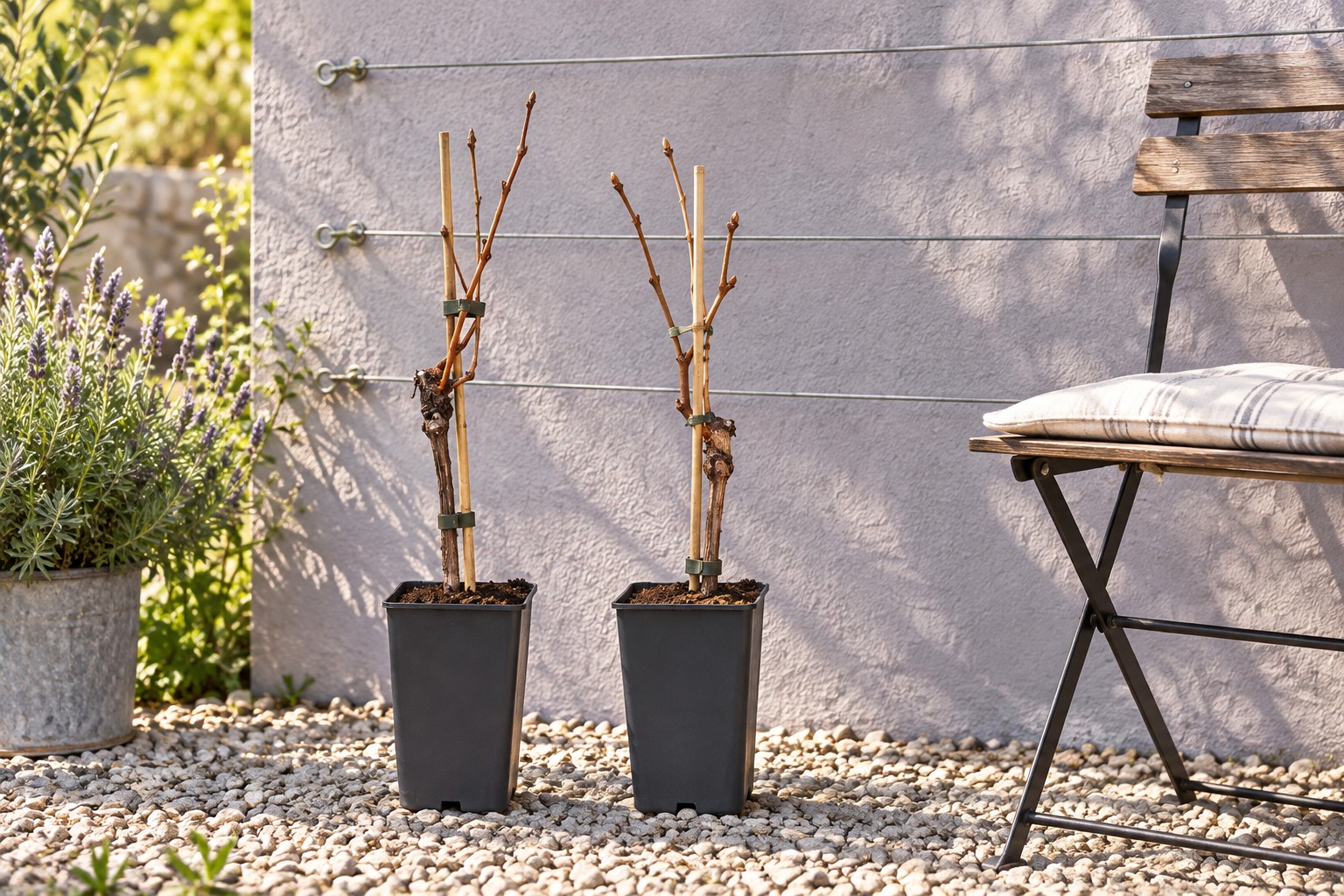
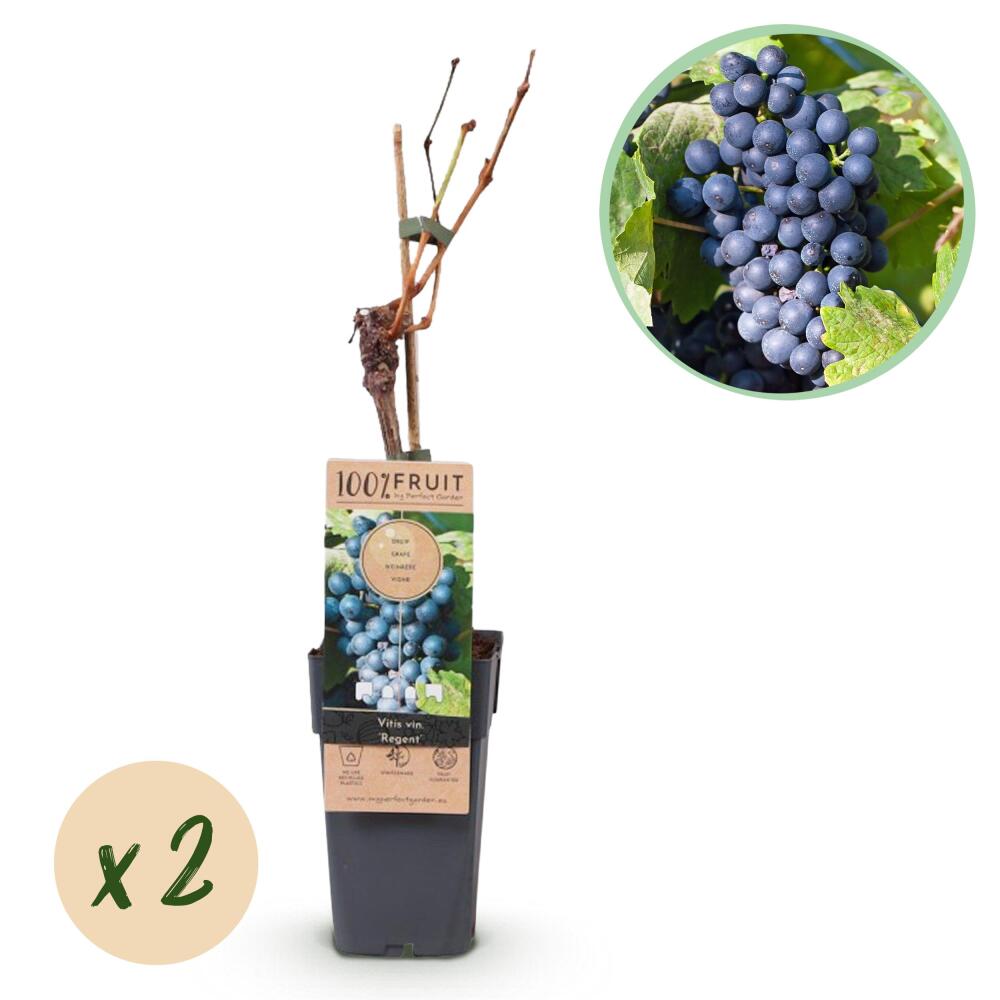
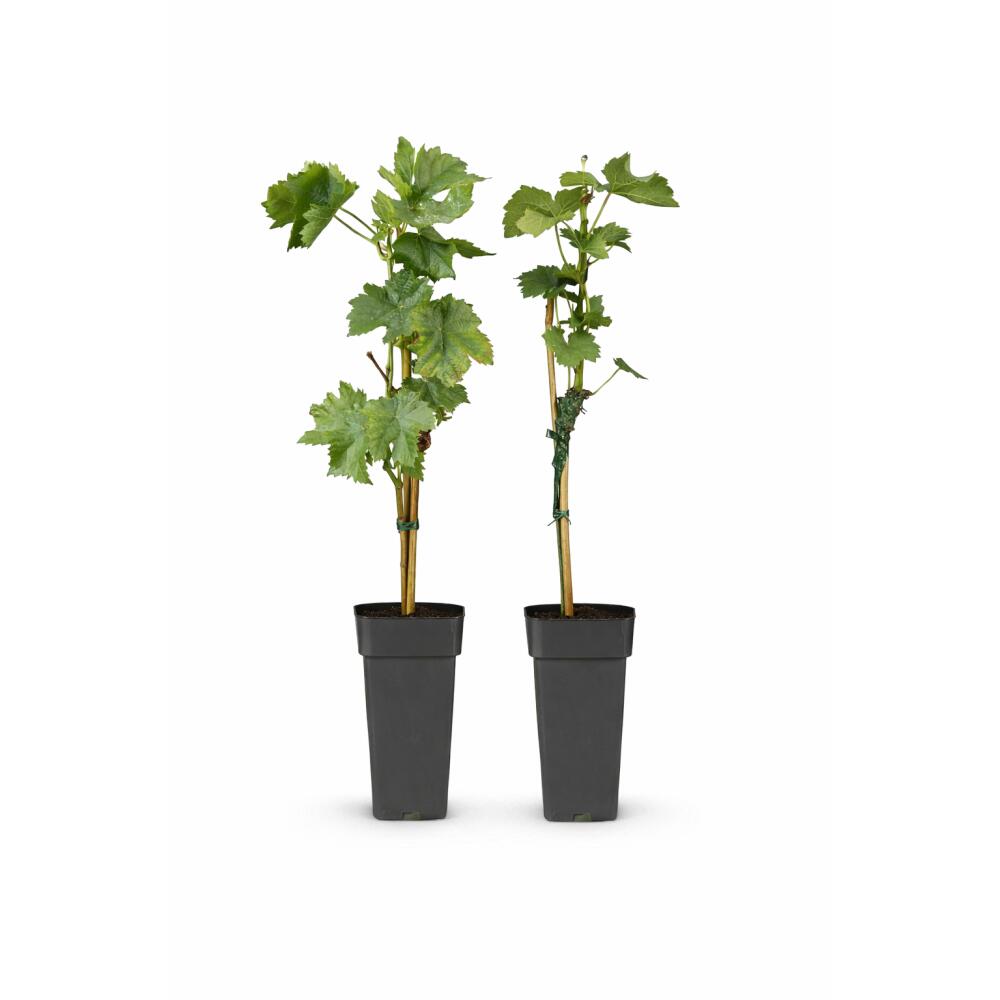
The set contains two plants in 15 cm pots at about 50 cm overall height. The shop image shows young leafless vines and a separate grape inset. That does not promise the delivery already bears grapes. The scene accordingly presents two young vines. In time each plant needs room for framework and fruiting shoots. Do not plan the position from the narrow delivery form alone. Support wires, pergola or trellis are part of later cultivation and are not automatically included in this plant offer.
Prepare sun and an airy framework
A sunny warm sheltered place supports development. Soil should be nutrient-containing, loose and well-drained. Avoid both constant shade and persistently wet roots. Beside walls, beneath a roof overhang, conditions may be drier than just a few steps away. Build a stable framework and loosely tie the young main shoot. Leaf surfaces should later receive air and light. A dense disorganised green wall makes checking harder and may encourage moist conditions between leaves and grapes.
Develop young roots first
During establishment, regularly check moisture in the root ball and its surroundings. During dryness, water slowly and thoroughly. Established vines later explore more soil; in a container the water reserve remains limited. Feed according to need and soil supply, rather than giving large amounts as a precaution. Particularly lush shoot growth does not automatically bring better-ripened fruits. First establish a stable structure in young plants and avoid an excessive early fruit load. Healthy roots and well-ripened shoots provide the foundation for coming years.
Pruning preserves order and fruiting wood
A permanent trunk or framework arm carries regularly renewed fruiting shoots. The precise training depends on trellis, space and desired form. Targeted pruning takes place in winter, while summer care organises surplus growth and keeps the grape zone accessible. Young fruiting shoots arise from buds on previous-year wood; do not remove every one-year section indiscriminately. First observe the structure and follow an appropriate vine-pruning scheme. Shortening the entire vine like a hedge year after year does not maintain a well-ordered fruiting framework.
Resistance remains linked to monitoring
Regent has increased resistance to powdery and downy mildew, but is not immune to every disease. Grape rot and other damage may also occur. Regularly check foliage and bunches and selectively remove diseased or dead material. Young growth may suffer late frost, while small containers need extra root protection in winter. Judge ripe grapes by taste and development, not only blue colour. Pick carefully and use healthy ripe fruits. An airy position and orderly pruning remain important even with this more robust variety.
One plant, several views
Good to know
Is Regent a seedless table grape?
No. Regent is mainly a well-known blue red-wine variety and is not described here as a seedless large-berried table grape.
Do plants already bear fruit on delivery?
That is not promised. The shop photograph shows young vines and a separate fruit inset.
Does a fungus-resistant vine need no care?
It does. An airy position, orderly pruning and regular checks remain necessary; resistance does not mean complete immunity.
Can I remove all young shoots in winter?
Not indiscriminately. Previous-year wood provides the basis for new fruiting shoots. Pruning must suit the chosen training form.
Sources and editorial note
- Product and delivery contents: Exotenherz
- NC State Extension: plant profile
- Julius Kühn-Institut: grape variety catalogue
- Bayerische Landesanstalt für Weinbau und Gartenbau: plant knowledge
- Royal Horticultural Society: plant and care knowledge
Sources checked: 15 September 2026. Product information and delivery contents follow the linked shop offer. Care has been checked against the stated specialist sources and remains subject to plant condition, position and season.