This plant at Exotenherz
Check the shop offer for current availability, price and what is included.
Check the selected shop offer for price, availability and delivery contents.
Your care table
| Topic | What to do | Why it helps |
|---|---|---|
| Position | Bright, with gradual stronger-sun introduction. | Compact rosettes need usable daylight; hot sun after shipping may harm. |
| Water | Only when the rootball is dry, directly onto soil. | Firm leaves store water; surface and deeper ball may differ. |
| Drainage | Let each pot drain, empty decorative pots. | Standing water keeps roots and leaf bases needlessly wet. |
| Rosette centre | Do not water funnel or routinely spray. | No water should pool between overlapping leaf bases. |
| Soil | Draining succulent compost, container with holes. | Airy roots dry again more easily after water. |
| Feed | Sparingly by label during visible growth. | Little winter growth needs little supply; account for pre-fed soil. |
| Repotting | Only when roots fill space, one small size larger. | Unused soil stays moist and complicates water checks. |
| Propagation | Divide healthy well-rooted daughter rosettes if needed. | Division preserves yellow edges more reliably than leaf cuttings. |
| Winter | Bright warm frost-free; check each rootball. | Less light lowers growth and water demand despite firm leaves. |
Check the compost and pot weight. The care table explains how far the compost may dry.
Water only when needed. The water should reach the root ball without spilling over the rim.
Remove surplus water from the saucer or cachepot. Then return the plant to a suitable position.
Three small rosettes for bright table
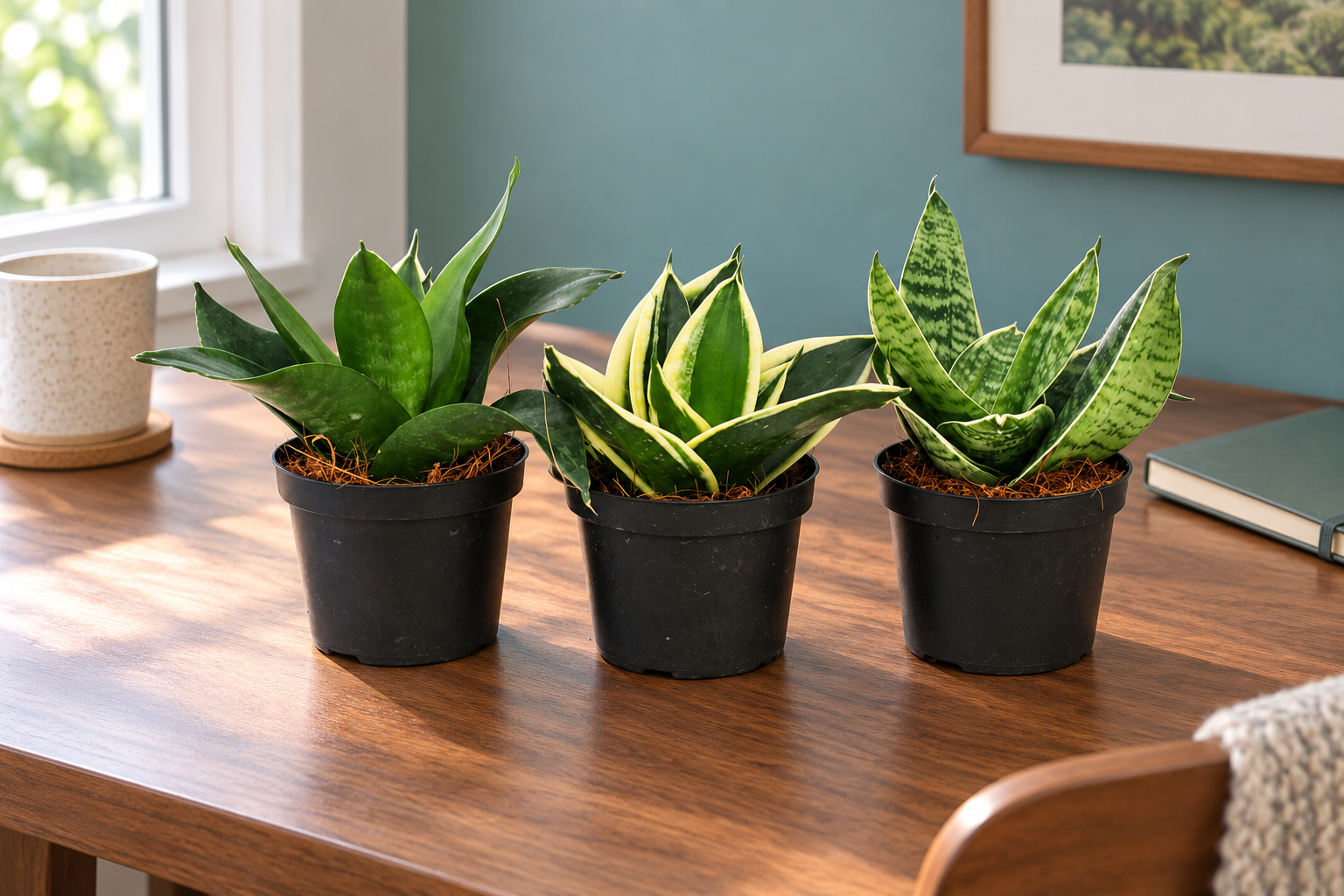
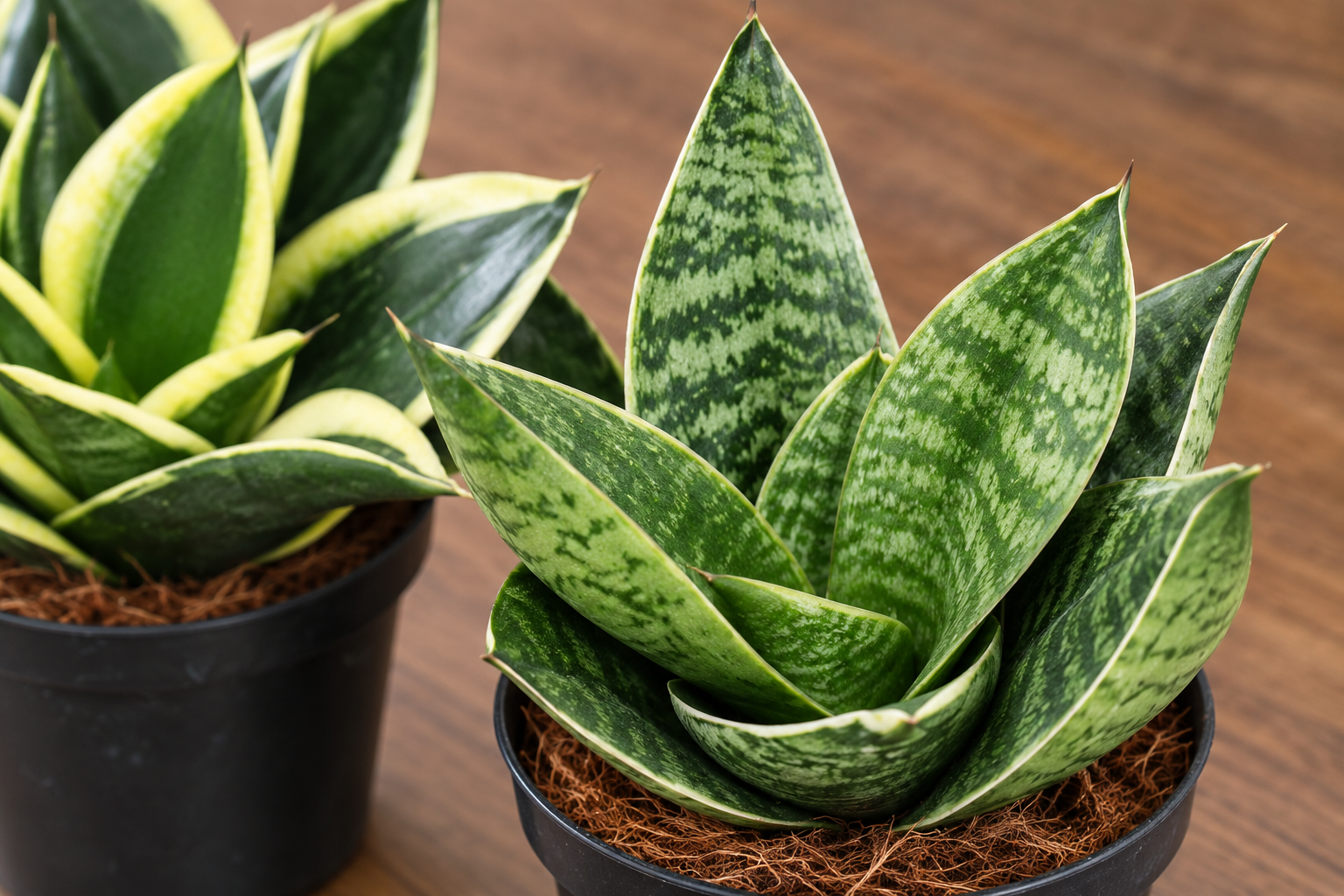
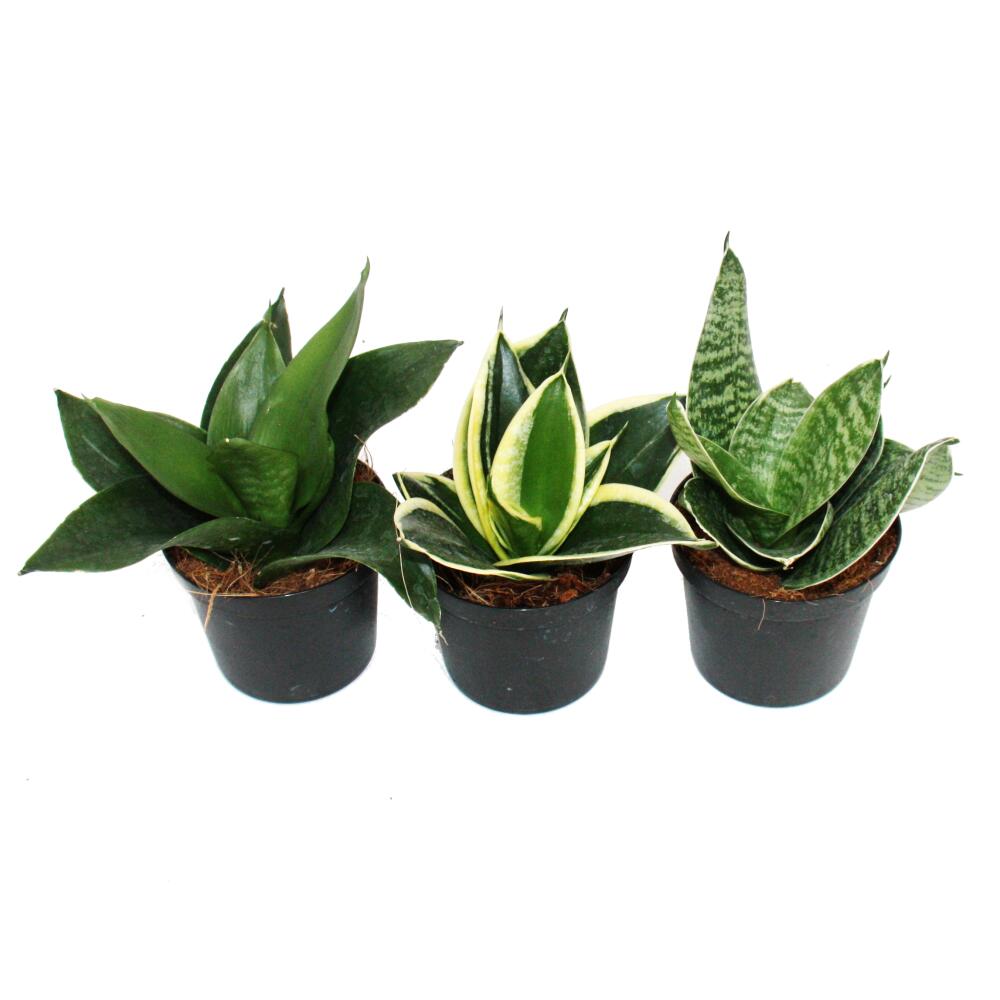
Hahnii rosette best viewed slightly from above. Broad firm leaves push around each other into small funnel. Tips point outward or stand above centre. Originals place dark green, pale cross-bands and creamy-yellow edges side by side. Low form looks different from large snake plant beside sofa. Free corner by window suffices for three small pots. Space slightly to keep edges visible and remove each pot for checks. Quiet background displays patterns well.
Hahnii means low rosette habit
Familiar trade name Sansevieria trifasciata now botanically Dracaena trifasciata. Hahnii belongs to compact horticultural forms: short flat leaves construct squat funnel rosette, hence bird’s-nest snake plant. Linked set combines three differing plants of Hahnii trade group without additional cultivar names for colours. Perennial evergreen leaf succulents can form lateral rosettes and widen pot over time. Delivery height is not fixed final size. Occasional flowers possible but rarely reason to grow indoors; appeal in lasting leaf structure and slow change.
Meet each pot after unpacking
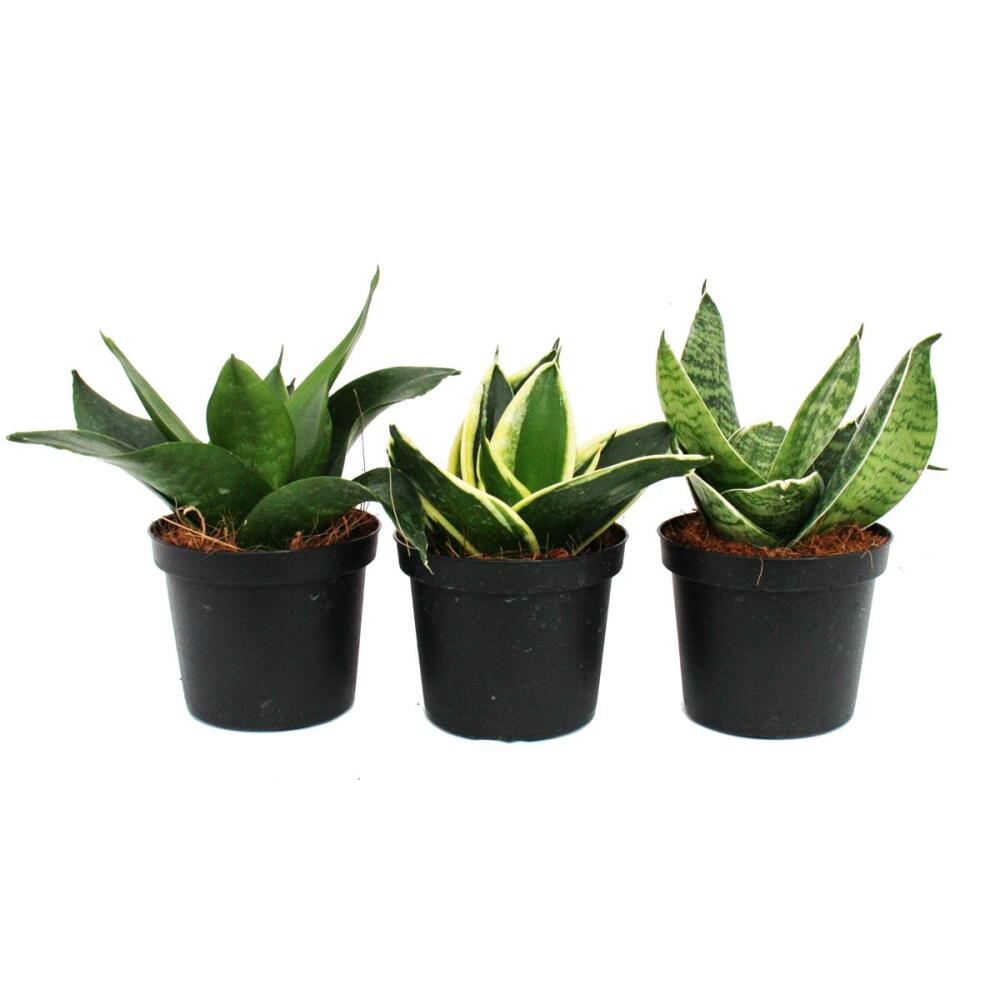
Three plants supplied, each 9 cm pot about 10–15 cm total height including pot. Original gallery shows offered group with varied greens and borders. No immediate move into shared bowl required. First check rosette firmly seated and leaves undamaged. Move by pot rather than pulling leaf. Check soil: a still-moist rootball needs no automatic welcome water. Similar pots may arrive differently moist. Remember individual weights to help recognise a dry rootball later.
Light and warmth without rushed change
Bright mild daylight suits. Desk group should really see window; deeply recessed shelf is much darker. Hahnii tolerates weaker light but grows more slowly. After transport introduce stronger sun gradually and initially shield hot midday through glass. Warm room suitable, about 15–24 °C general guidance. Pots frost-free away from cold draught. Keep distance from open window edge when airing. Occasionally turn pot leaning to light. Normal room air needs no routine spraying for succulent; dense rosettes should not remain wet.
Recognise a dry rootball before watering
Fleshy leaves store water, so water only once soil dry again. Dry surface alone insufficient: cautiously feel deeper and compare pot weight with last watered state. When necessary, give each rootball water directly to soil, leaving tight centre clear. Let all excess drain then empty decorative pot. Tiny daily sips complicate control and keep top constantly moist. Fixed weekly date likewise inappropriate. Light, warmth, mix and roots change dry phase. Darker winter weeks often lengthen intervals. Dry rootball remains starting point for checks.
Suitable roots and gentle propagation
Draining succulent mix in holed pot eases wet-dry changes. In spring check roots and rosettes actually fill pot. Slightly larger container then enough; unused soil stays damp longer. Account for fresh pre-fed mix in later nutrition. Visible growth allows sparse labelled feed. Well-rooted daughter rosettes can be separated later. Healthy plants and clean tools, viable own base on every division. Especially useful for yellow-edged forms: leaf cuttings may yield green plants losing border. New daughters need time; do not pull young trio apart preventively.
Watch leaf bases and winter rest
Gently remove dust with soft slightly damp cloth supporting leaf. Keep healthy tips and edges. Dead leaves remove at base; regular shaping not part of care. Check gaps where mealybugs easily missed. Soft yellowish bases and wet soil call for roots/drainage assessment, not unchecked more water. Slow winter growth alone no concern or cause for strong feed. Keep bright warm and adapt to actual development. Ornamental snake plant harmful if eaten; outside reach of small children and chewing pets, gloves for cutting.
One plant, several views
Good to know
Is set a particular cultivar?
Three differing plants of low Hahnii trade group. No individual cultivar names promised for green, bands or yellow edges.
What size supplied?
Each 9 cm pot. Approx. 10–15 cm total including pot describes delivery, not final size.
Can Hahnii stay on dark shelf?
Lower light tolerated but slows growth/water use. Bright usable daylight better for lasting culture.
How often water trio?
Check each separately, water only when the rootball is dry. Shared weekly date unreliable for varied moisture/seasons.
Should water go in centre?
No, directly onto soil and drain. Overlapping bases not water funnels.
Does yellow edge survive propagation?
Well-rooted daughters better for preserving yellow borders. Leaf cuttings may produce green plants.
May I cut tips for rounded shape?
Healthy tips remain. Remove dead or badly damaged leaves at base instead of regular shaping.
Sources and editorial note
- Exotenherz: fresh Hahnii trio and original gallery (04.10.2026)
- RHS: Hahnii compact rosette growth and culture (04.10.2026)
- NC Extension: Dracaena trifasciata, Hahnii and leaf features (04.10.2026)
- RHS: snake-plant care, water, division and edges (04.10.2026)
- Wisconsin Extension: light, winter and water checks (04.10.2026)
- Iowa State Extension: healthy parent plants and vegetative propagation (04.10.2026)
- University of Georgia Extension: pot size and careful leaf care (04.10.2026)
Offer, article number, GTIN, availability and originals freshly checked directly 04.10.2026. Specialist sources directly read. Hahnii habit and care compared with sources. Delivery information follows linked trio offer.