
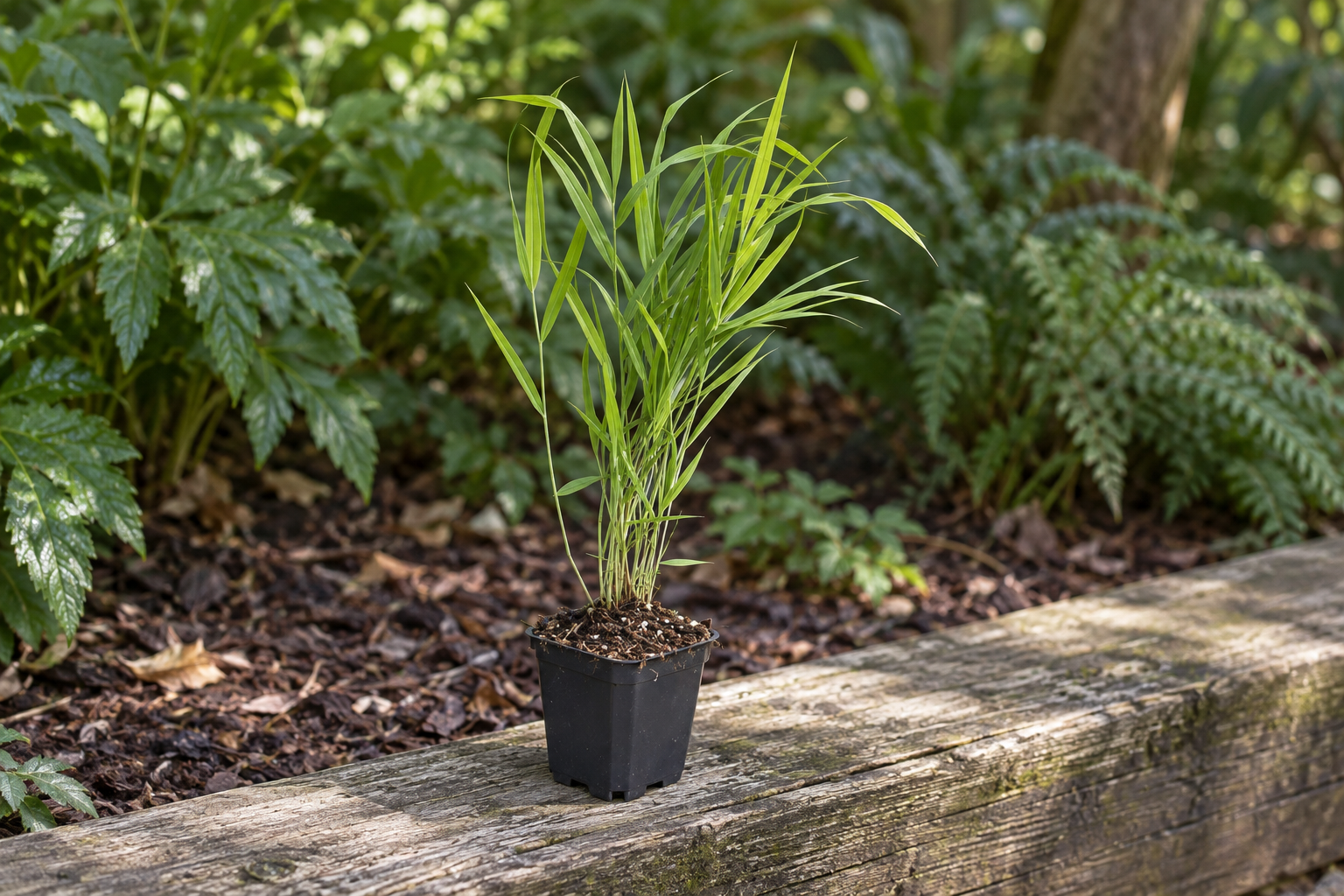
This plant at Exotenherz
Check the shop offer for current availability, price and what is included.
Product and delivery details are given in the individual offer.
Your care table
| Topic | What to do | Why it helps |
|---|---|---|
| Position | Prefer cool partial shade to shade. | Summer heat and irregular moisture can damage fine green leaves. |
| Soil | Create a humus-rich, loose, well-drained root zone that stays consistently moist. | Very dry soil and heavy saturated clay do not fit culture needs. |
| Planting | Plant frost-free at previous ball height in spring or mild growth weeks. | A small slow clump needs time and good ground contact. |
| Spacing | Plan around 30–40 cm; individual cushions may stand farther apart. | Overhanging leaf layers gradually widen. |
| Water | Particularly check original balls while rooting in. | Moist bed surfaces and moisture inside 9-cm balls can differ. |
| Feed | Prioritise soil care over heavy feeding, supplement only as needed. | Cool moist roots help more than nutrients during lasting drought. |
| Pruning | Remove old dry leaves in late winter to early spring. | Deciduous forest grass needs room for new growth. |
| Division | Divide large older clumps in spring, let young plants grow first. | Slow growth makes frequent division of small plants unhelpful. |
| Outdoor tub | Plan more soil than delivery pot, free drainage and winter root protection. | Pots fluctuate faster between dryness, wetness and cold than ground. |
For young plants, feel the soil directly at the root ball. The surface and deeper soil may have different moisture levels.
Water thoroughly after planting; later, water according to the soil, weather and establishment rather than a fixed calendar.
Avoid standing water. For plants in containers, also check that water runs out of the drainage hole.
The green species has its own appeal
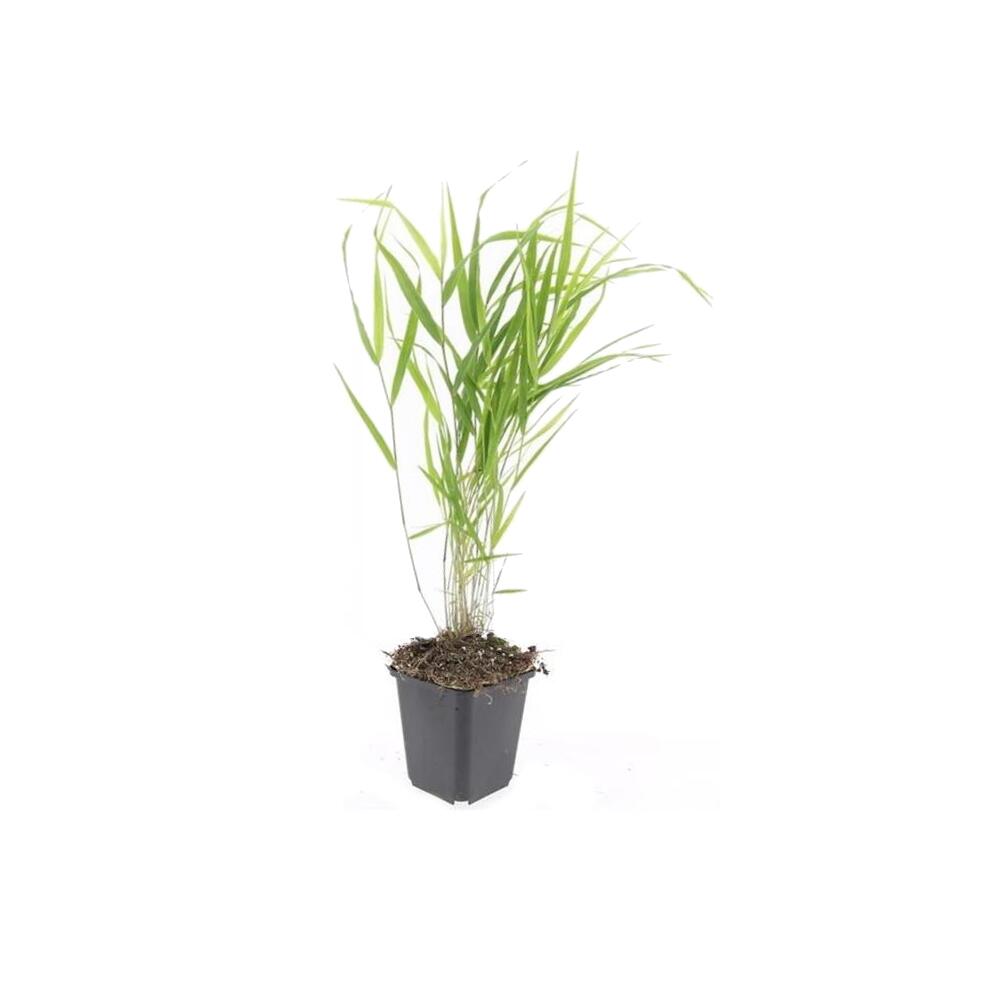
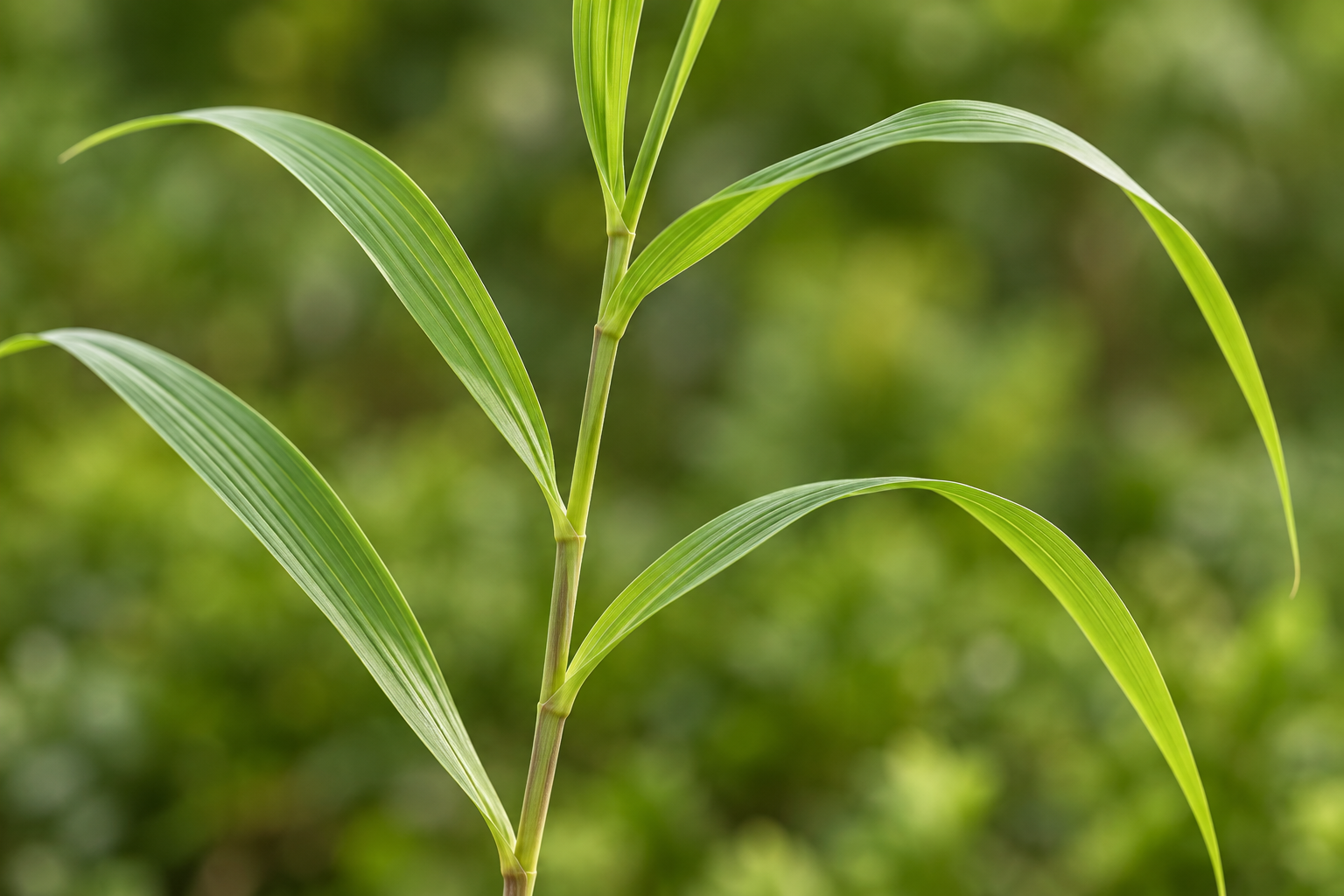
Japanese forest grass is often known through yellow or striped cultivars. Here the green species Hakonechloa macra is described. Flat lanceolate leaves sit on fine culms in staggered layers. As they grow these levels lean into a soft connected cushion. Beside a stone step or broad perennial leaves the green species’ movement shows well. A young specimen is initially more upright and loose; layered garden form develops gradually. The plant belongs to Poaceae and comes from Japan.
A 9-cm ball needs time for the later wave
The shop gives each 9-cm pot at around 10–25 cm total height including pot; quantity depends on selected set. Older cushions reach roughly 35–40 cm and widen sideways. Around 30–40 cm between centres guides groups, adjusted for intended closure. Hakonechloa grows rather slowly. Young plants therefore do not immediately fill all planned space. Still leave room for later overhanging an edge without competing with larger neighbours around the small starting ball.
Cool roots matter more than attractive shade
Bright partial shade to shade suits well. Protection from strong summer sun is particularly useful in hot places. Sun is possible with sufficiently cool reliably moist conditions but must not be confused with hot dry planting. Soil should be humus-rich, loose and constantly fresh. Heavy poorly aired clay and very dry ground are unfavourable. Explicitly check moisture under trees, since woody roots can dry seemingly shaded beds. Prepared roots carry the leaf wave more reliably than frequent extra fertiliser.
Take the small ball seriously on arrival
Prefer planting in mild growth weeks in frost-free workable ground; spring gives young clumps a longer rooting season. Moisten a dry delivery ball first. Set at nursery-pot height, gently firm soil and water thoroughly. In dry spells check the original ball until roots expand into ground. The surface can look damp while the small core stayed dry. Moderate compost between plants improves soil without covering bases.
Distinguish summer flowers, autumn colour and winter rest
Fine green to greenish-yellow panicles can appear above or among leaves in mid to late summer. They are much quieter than layered foliage. In autumn this develops reddish to brown tones depending on place and dries for winter rest. Hakonechloa is deciduous; brown end-season leaves need not indicate water shortage. Remove old material near ground in late winter or early spring before new culms grow. With slow plants patience for spring shoots is worthwhile instead of prematurely discarding dormant clumps.
Renew without disturbing slow construction
A larger clump can be divided in spring if too wide or needing renewal. Because forest grass grows slowly, frequent division of small young plants is not sensible. Strong pieces again get humus-rich soil and reliable moisture. Outdoor containers need larger water reserves than delivery pots; open holes remain essential. Protect limited roots from strong winter changes and check moisture frost-free. Dry or scorched summer tips first lead to checks of heat and water, not automatically scissors or fertiliser.
One plant, several views
Good to know
Is this Hakonechloa yellow striped?
No. The portrait covers green Hakonechloa macra. Traits of yellow or white-striped cultivars are not transferred.
How high does it grow?
About 35–40 cm guides mature cushions. Young delivery measures around 10–25 cm including pot.
Why is it not yet a dense cascade?
Young plants are looser and often more upright. Wider layered cushions develop slowly over several years.
Are brown winter leaves dead?
The species is deciduous. Above-ground leaves dry for winter while the base survives and regrows.
What helps dry summer leaf tips?
Check heat, ball dryness and position. Cool partial shade with reliable moisture usually supports foliage more easily.
When can I divide forest grass?
In spring when a sufficiently large clump exists. Small slow young plants are developed first.
Sources and editorial note
- Exotenherz: parent offer, measurements and original images (accessed 03.10.2026)
- Specialist reference: hakonechloa-rhs (read directly 03.10.2026)
- Specialist reference: hakonechloa-nc (read directly 03.10.2026)
- Specialist reference: grasses-growing (read directly 03.10.2026)
- Specialist reference: grasses-cutting (read directly 03.10.2026)
- Exotenherz: checked 6-plant child offer (accessed 03.10.2026)
- Exotenherz: checked 12-plant child offer (accessed 03.10.2026)
- Exotenherz: checked 20-plant child offer (accessed 03.10.2026)
- Exotenherz: checked 40-plant child offer (accessed 03.10.2026)
- Exotenherz: checked 60-plant child offer (accessed 03.10.2026)
Parent offer and all associated child offers directly read on 03.10.2026; product numbers, GTIN where present in child offer, availability and files separately documented. Total delivery height 10–25 cm including 9-cm pot explicitly separated from later garden height. Quantity variants not new plant identities. Specialist sources directly read, full fargesia-rufa-guide and heidelbeere-jersey-guide references compared. Clean original view 2 adopted unchanged; stamped montages excluded. Scene shows one young reference irrespective of set. Draft; shared page and browser acceptance still pending.