
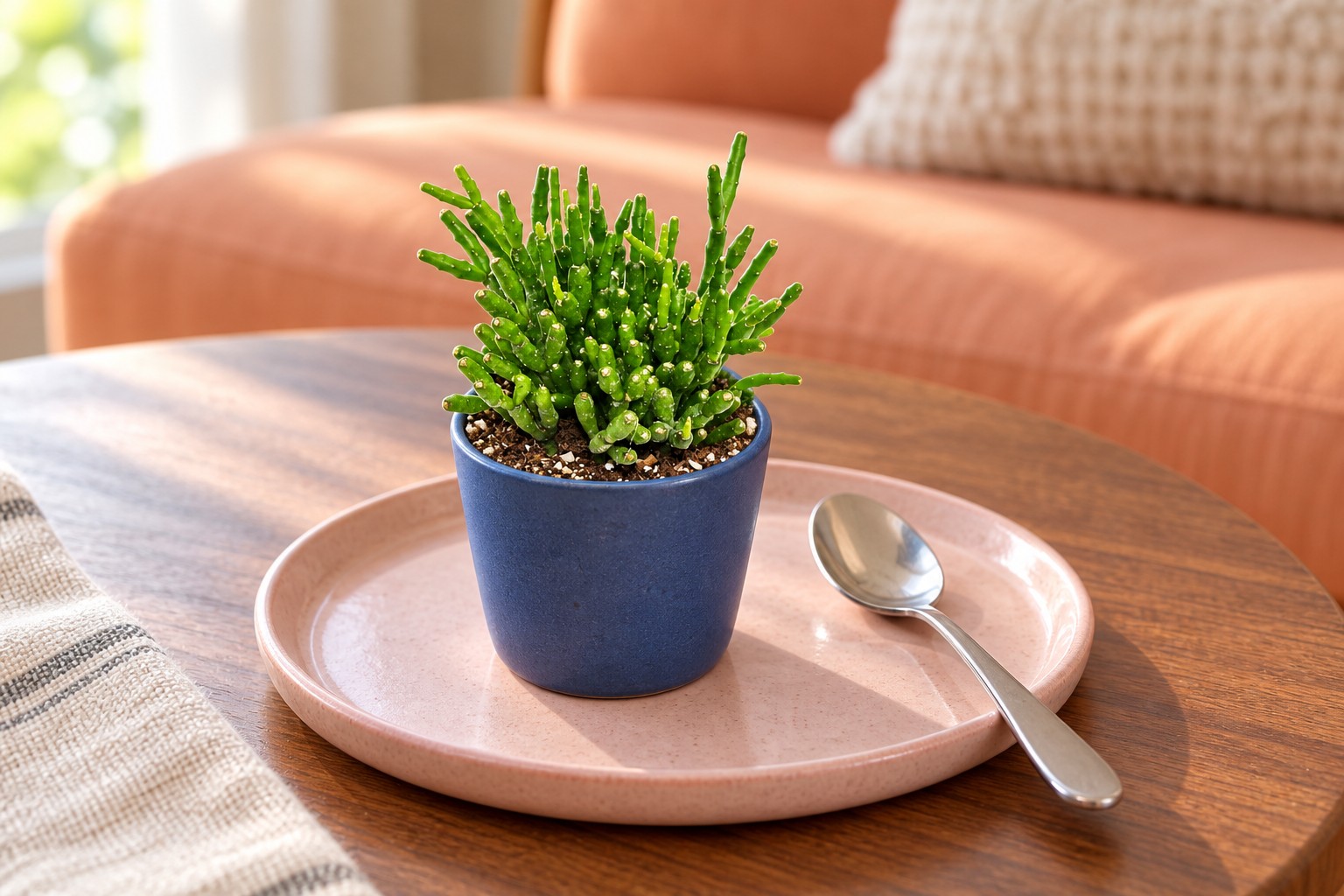
This plant at Exotenherz
Check the shop offer for current availability, price and what is included.
The linked shop is in German. Product details, availability and delivery information are provided in that shop.
Your care table
| Topic | What to do | Why it helps |
|---|---|---|
| Light | Bright with filtered light and mild morning or evening sun. | Protect the fine shoots from sudden midday heat. |
| Water | During growth, water after slight drying. | The epiphytic cactus needs a dependable supply. |
| Compost | Airy forest-cactus compost with stable structure. | Roots should receive air again after watering. |
| Drainage | Remove excess from the outer pot. | Moisture in the root ball differs from standing water. |
| Warmth | Around 18–26 °C during growth; keep frost-free. | Cold draughts and frost do not suit indoor cultivation. |
| Feed | During growth, weak monthly doses according to the product. | Stop during rest. |
| Winter | Bright and considerably drier during rest. | Less growth lowers water demand. |
| Stems | Do not squeeze or knock when moving. | Small joints may break under mechanical stress. |
Check the compost and pot weight. The care table explains how far the compost may dry.
Water only when needed. The water should reach the root ball without spilling over the rim.
Remove surplus water from the saucer or cachepot. Then return the plant to a suitable position.
Every little segment contributes to the shape
Hatiora salicornioides builds its shoots from short club- or bottle-shaped segments. New branches emerge from the ends, making the plant denser and broader over time. It comes from Brazil and belongs to the epiphytic cacti. Its structure recalls small rushes, although it is not botanically related to them. The cactus has no broad leaves. Its green stems carry out photosynthesis and give it an individual character.
A tiny start on a table or shelf
The offer states a 5.5 cm pot and around 8 to 10 cm overall height. The young plant initially remains a miniature. Position it so its fine segments do not constantly knock against curtains, books or hands. A bright place on a low shelf or side table can work well, provided sufficient natural light actually reaches it. The plant becomes larger later; a mature dense crown is not included in the stated size. After unpacking, carefully remove loose broken segments and first check the moisture condition of the root ball.
Filtered light and comfortable warmth
Bright filtered light provides an easily monitored position. Some mild morning or evening sun is possible; accustom it gradually to stronger sun. Scorching midday heat behind glass can stress the fine stems. The shop states 18 to 26 °C as a favourable range. Higher humidity can help without the plant needing to stay permanently wet. Air movement and accessible watering belong with it. A closed damp terrarium is not an automatic recommendation, even if the small size is tempting. Hatiora spends winter brightly and reliably frost-free.
Roots need water and air
Use loose forest-cactus compost with airy structural ingredients. During active growth, water as soon as the compost dries slightly. Water must pass through the small root ball and then drain away. Avoid permanently full outer pots. The fine stems should not shrivel for weeks through complete drying. Spraying only the stems is equally unhelpful if roots stay dry. Assess pot weight, compost and stem firmness together. With soft stems in wet compost, check root condition first rather than automatically increasing water.
Support a quieter season
When light and growth decrease in winter, keep the cactus considerably drier and do not feed. This rest differs from regular supplies during warm growth. A tiny pot still needs observation, especially in warm indoor air. In spring, gradually supply more water with new shoots. During the growing season, use suitable weak-dose fertiliser around monthly according to product instructions. Small yellowish to orange flowers may appear at stem tips later. The young delivery plant must first become strong enough; a fixed flowering promise would be inappropriate.
Care gently rather than constantly shape
The loose branching does not require regular formative pruning. Remove only damaged or inconvenient broken parts using clean working methods. Healthy stem pieces can later be used for propagation after injured surfaces dry. Once inserted into airy compost, supply them gently until rooted. Repot only when roots or compost condition require it. Check densely branched bases for mealybugs and aphids. Distinguish natural small pale attachment points on the segments from additional cottony nests that develop.
One plant, several views

Good to know
Is the rush-like cactus a true rush?
No. Hatiora is a cactus; the German name only describes the finely segmented appearance.
Does it need the same dryness as a ball cactus?
During growth, supply it regularly after slight drying. Its epiphytic way of life requires its own care.
Can it go in closed glass?
Airy pot cultivation with manageable moisture is the more reliable choice. Permanently damp closed glass is not automatically suitable.
Why do individual segments fall off?
Mechanical stress can detach segments. With frequent shedding, also check moisture, temperature and root condition.
Sources and editorial note
Sources checked: 15 September 2026. Product information and the contents of delivery follow the linked shop offer. Care advice was checked against the cited specialist sources and should still be adapted to the plant’s condition, position and season.