
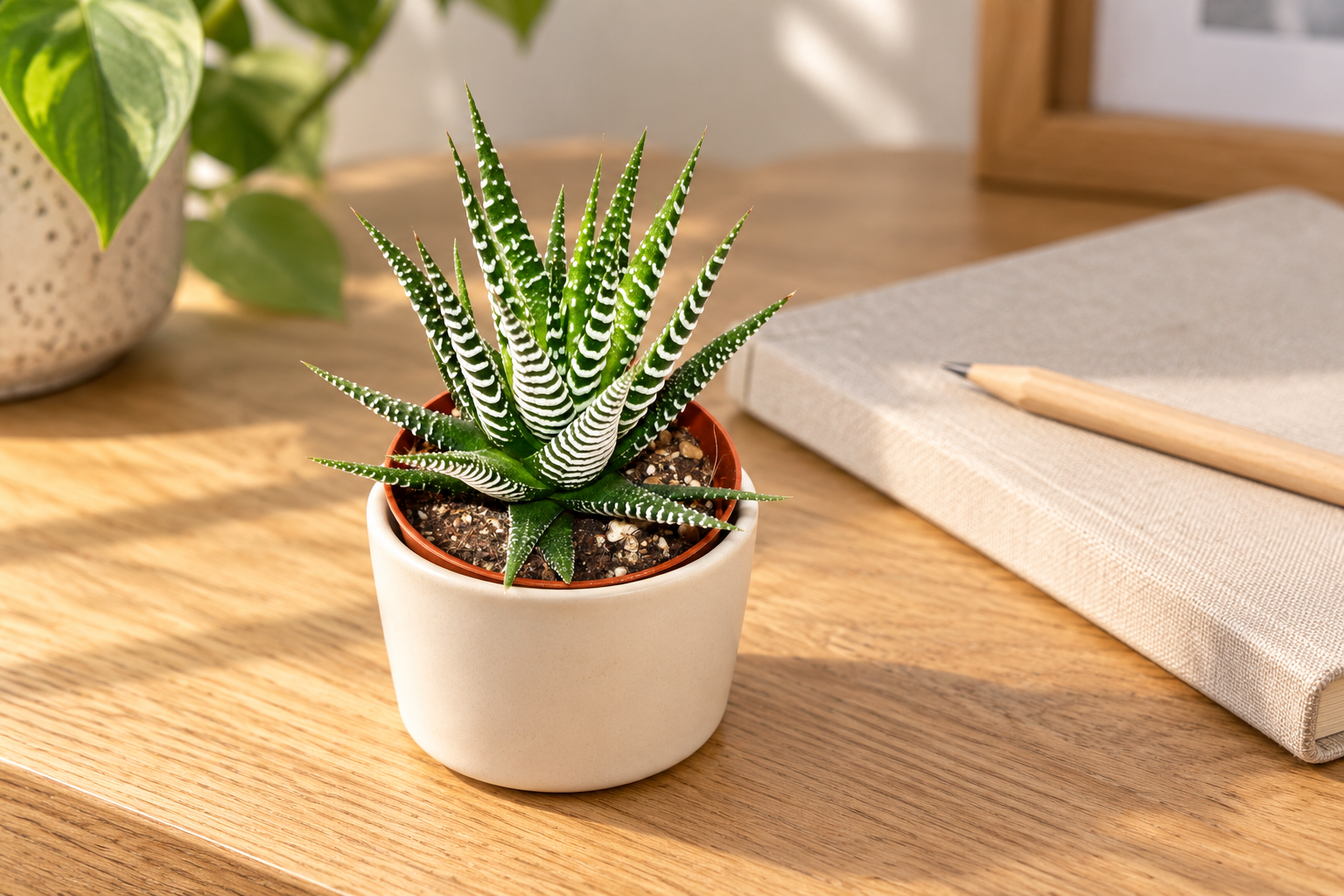
This plant at Exotenherz
Check the shop offer for current availability, price and what is included.
Product and delivery details are given in the individual offer.
Your care table
| Topic | What to do | Why it helps |
|---|---|---|
| Light | Choose a bright position with gentle daylight. | A small bright workspace suits better than a dark decorative niche. |
| Water | Water again only when the root ball has largely dried. | Fleshy leaves store water; roots need air. |
| Drainage | Let drain after watering and empty the sleeve. | Excess water can easily remain hidden in a miniature outer pot. |
| Compost | Use free-draining cactus compost in a nursery pot with holes. | The root space should dry again between waterings. |
| Rosette | Apply water to the soil and keep the leaf centre dry. | Closely packed leaf bases are not a water-storage basin. |
| Nutrients | During growth apply weakly dosed succulent fertiliser according to the label. | Compact development needs no lavish feeding. |
| Repotting | Offer only a little extra root space when the root ball is dense. | A large store of wet soil does not suit the small plant. |
| Checks | Distinguish irregular cotton-like deposits from firm cross-bands. | The natural pattern is not cleaned away. |
Check the compost and pot weight. The care table explains how far the compost may dry.
Water only when needed. The water should reach the root ball without spilling over the rim.
Remove surplus water from the saucer or cachepot. Then return the plant to a suitable position.
A miniature with sculptural stripes
Strong white bands lie like small reliefs across narrow dark green leaves. Their width gives Big Band its own character among zebra haworthias. Leaves stand around a centre where young tips grow inside. A calm place beside a simple notebook is enough for this small form on a desk. The shop calls it Haworthia fasciata “Big Band”; the RHS variety profile uses Haworthia ‘Big Band’. The portrait uses this variety designation without deriving an additional species identification from the sales name.
Look honestly at the small size
The offer states a 5,5 cm pot, roughly 6 to 8 cm total height and an age of around two years. It is a small living rosette, not a large aloe. The original photograph clarifies its narrow leaf shape and bands. A miniature outer pot can hold the nursery pot, which should lift out easily for soil checks. Position it so sleeves and books do not press against the tips. Later daughter rosettes alter the width. The scene therefore shows a small single plant, not a mature dense stand.
Check light at the rosette
A bright workspace with indirect daylight is a good starting point. Check brightness at the actual position, not just in the room. An overhanging shelf can strongly screen light. Sudden hot midday sun behind glass is unfavourable after transport. Introduce more light gradually. A sheltered summer position outdoors is possible if neither cold nights nor prolonged rain are expected. Acclimatisation there also starts in a bright slightly protected place. It remains a frost-free pot plant, not a hardy border perennial.
Really assess the small root ball
Feel the soil at an open spot and compare pot weight. Wait until the root ball has largely dried; a dry surface alone may hide wetness beneath. Then water slowly onto the soil and let all excess drain. Small containers may dry faster in warmth, while a cool miniature outer pot holds moisture longer. Daily individual drops do not help you understand its condition. Observe leaf firmness alongside the soil. Soft leaves with a wet root ball require a different check from a thirsty dry rosette.
Roots need a manageable space
Free-draining cactus compost and open drainage holes form the basis. A closed decorative sleeve does not replace the nursery pot. Lift it out after every watering or check the sleeve’s base. Repotting becomes sensible when the root ball densely fills the existing space. Choose a moderately larger pot, keeping the rosette base at its previous level. Feed weakly during active growth according to the label. Account for fresh pre-fertilised compost. Neither frequent moving nor extra nutrients make the white bands wider; their pattern belongs to the variety character.
White bands are not a cleaning job
Leave the firm regular reliefs untouched. Additional soft cotton-like nests at leaf bases or the pot rim, by contrast, could be mealybugs. Check gently without pulling closely packed leaves apart. Use no leaf-shine products. Remove old outer leaves only when dry and easily released. The small rosette needs no shaping cut. If strong daughter rosettes with their own roots appear later, they can stay together or be carefully separated. Removing tiny starts prematurely brings the young mother plant no benefit.
Combine winter rest with attention
With less light and growth, water more sparingly and do not routinely keep feeding. A bright frost-free slightly cooler place makes a quiet winter easier. Still check whether leaves shrink strongly; prolonged complete neglect is no care method. A single rosette may later show a slender stem with small white flowers. The compact delivery plant does not yet have to flower, however. Record how long its small root ball takes to dry in your own position in the plant book. That helps next winter more than an adopted watering calendar.
One plant, several views
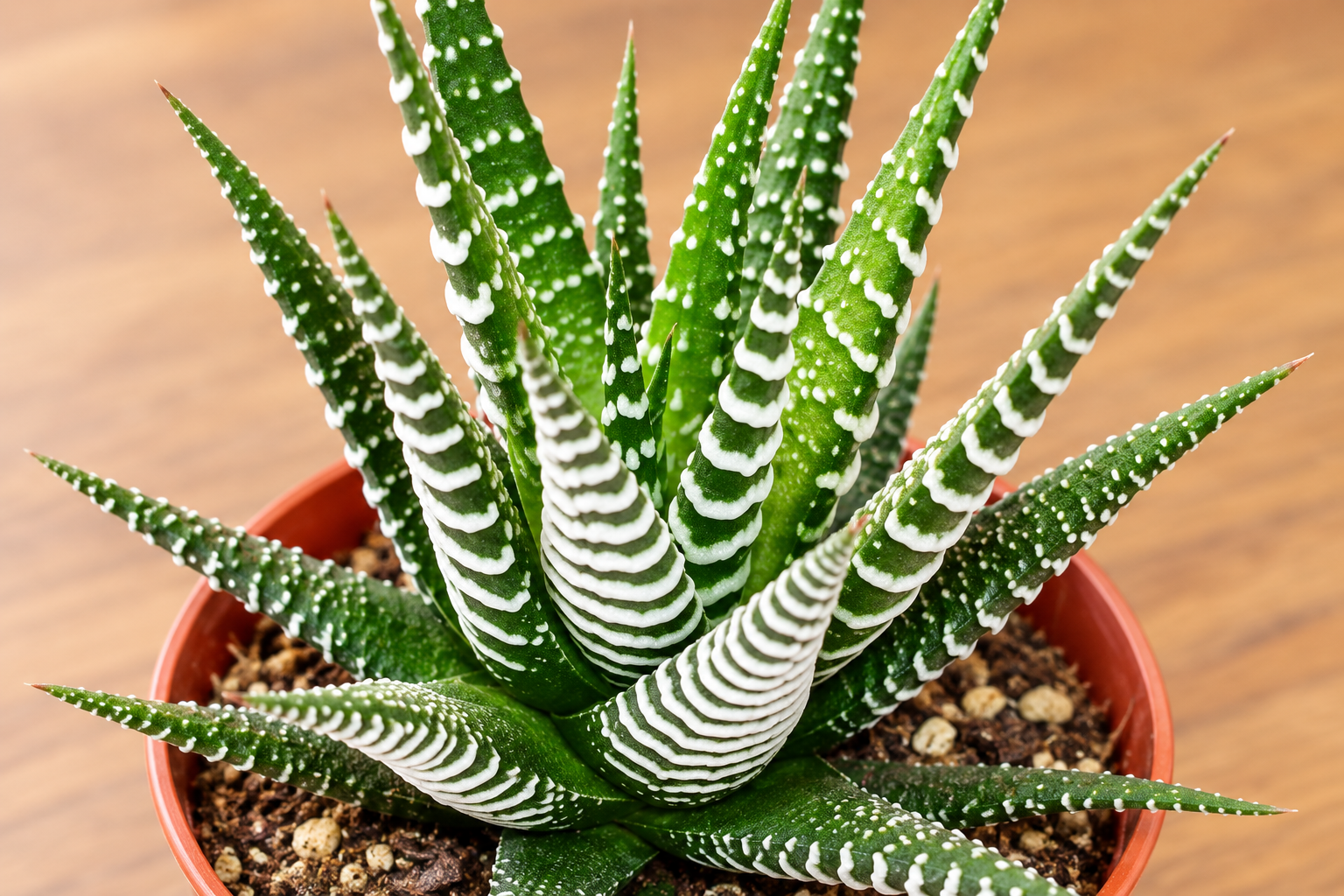
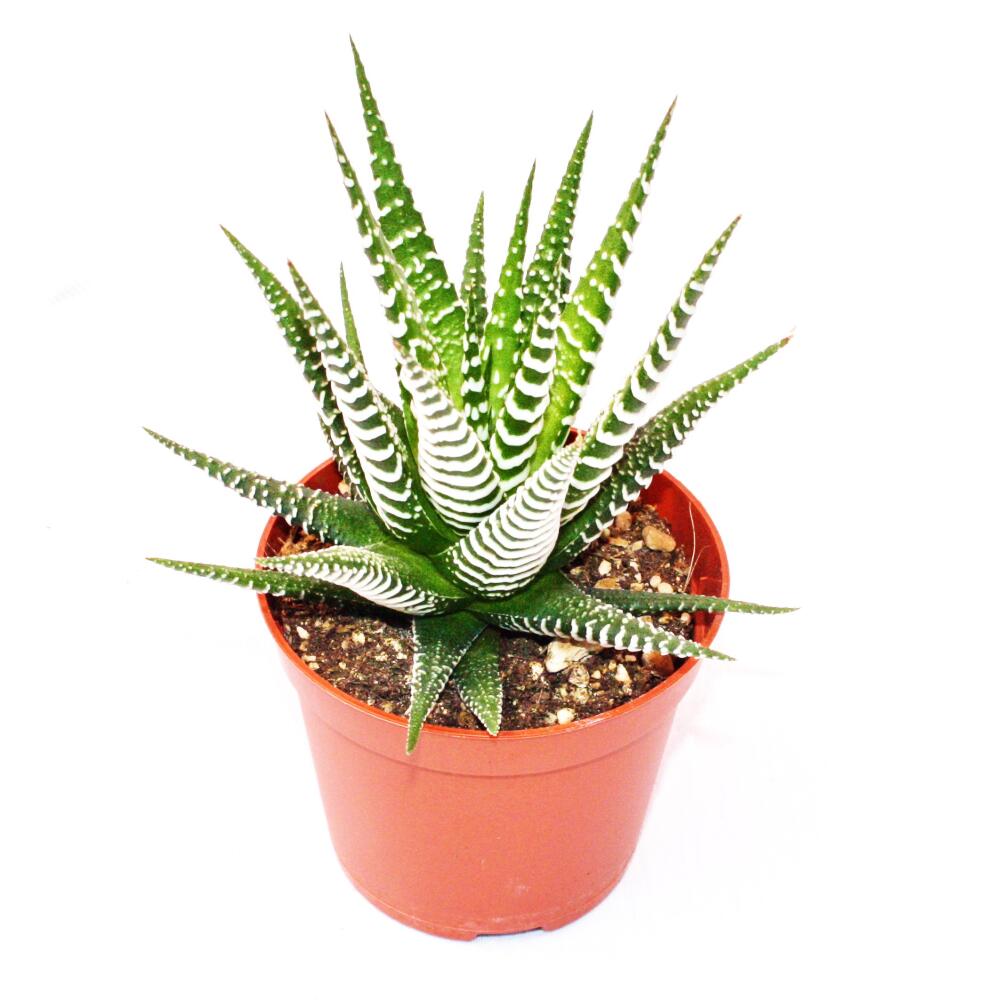
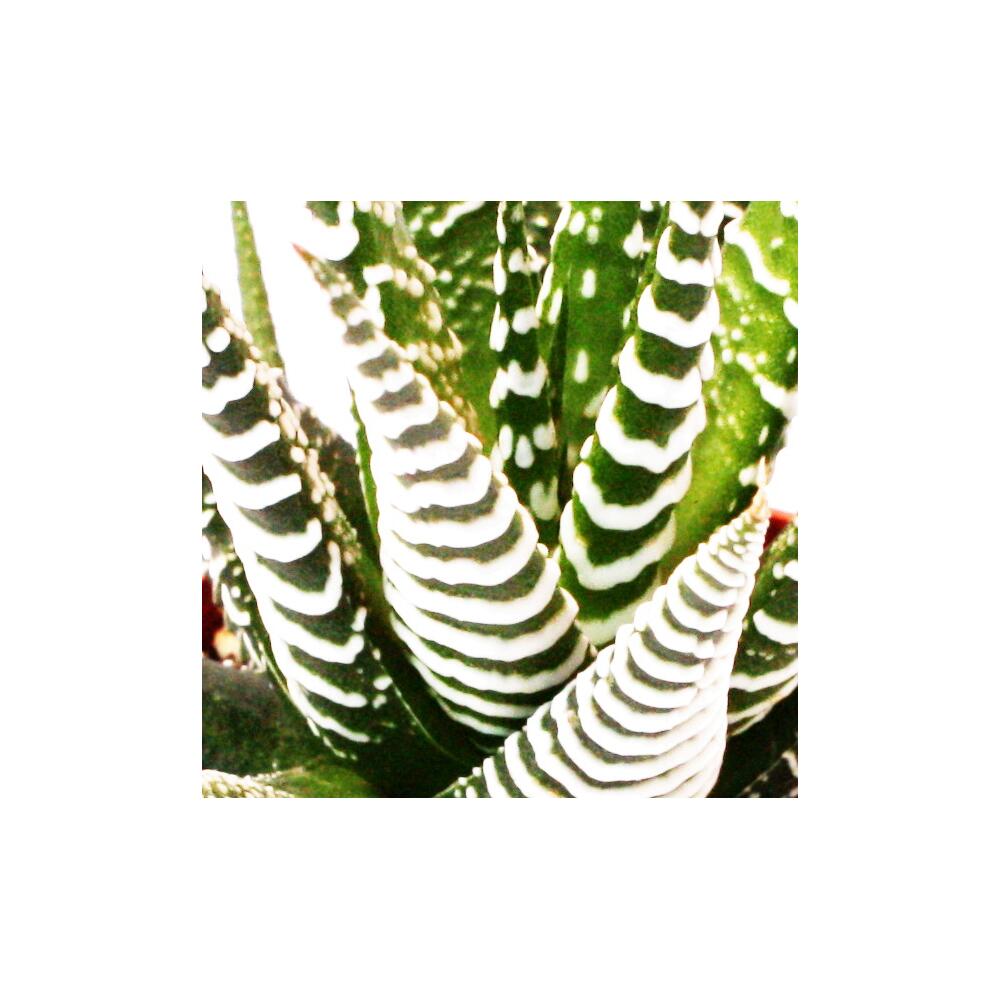
Good to know
Are the white bands deposits?
No. The regular raised cross-bands belong to the leaf surface and are not scraped off.
Does the pot always remain 5,5 cm?
That is the delivery size. When needed and well rooted, the plant later receives modestly more room.
Can Big Band go on a desk?
Yes, if enough daylight reaches it and it is acclimatised protected from hot direct sun.
Should I water a little every day?
Check the whole root ball first. Let dry well, then water thoroughly with reliable drainage.
Must offsets be removed?
No. Daughter rosettes may initially grow together; separate only sufficiently strong rooted plants.
Are white bands and mealybugs the same?
Firm regular bands are normal. Irregular additional cotton-like nests are checked separately.
Sources and editorial note
- Exotenherz: offer and original photographs (03.10.2026)
- RHS – Haworthia Big Band variety profile (03.10.2026)
- RHS – Haworthias: light, rest and water (03.10.2026)
- RHS – pot selection and houseplant care (03.10.2026)
Shop offer, article number, GTIN, availability and original images checked directly on 02.10.2026; specialist acceptance on 03.10.2026. Specialist sources read directly. Original images and current offer checked directly on 03.10.2026. RHS variety profile and genus/houseplant guides read directly. Shop name fasciata Big Band retained; botanical field follows the RHS as Haworthia Big Band, without additional species identification. Natural markings checked against originals; 6–8 cm total height and around two years concern the shop delivery. Compared with full haworthiopsis-fasciata-guide and tillandsia-ionantha-guide portraits; not merely a pot-size duplicate.