
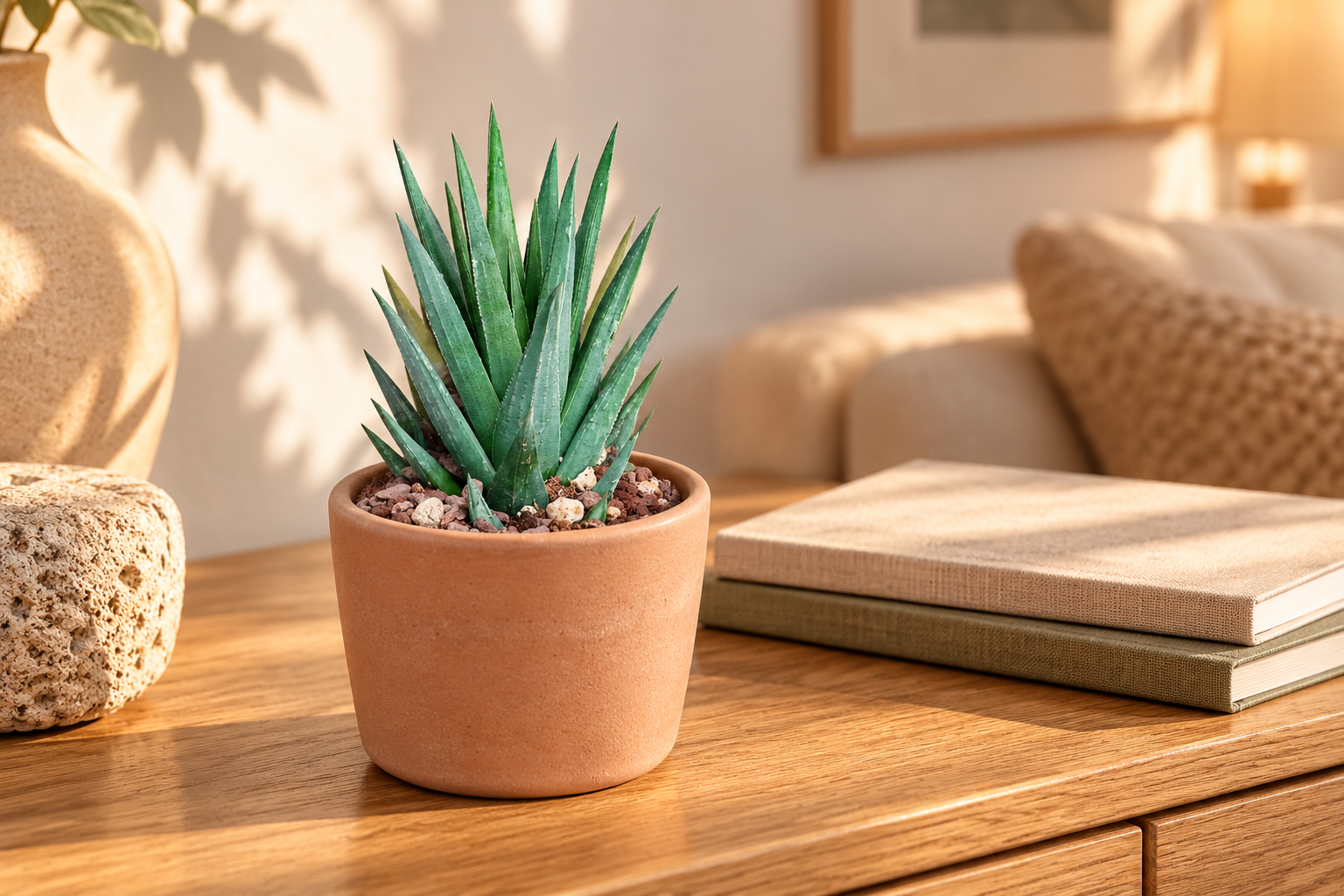
This plant at Exotenherz
Check the shop offer for current availability, price and what is included.
Product details, availability and delivery information are provided in the shop offer.
Your care table
| Topic | What to do | Why it helps |
|---|---|---|
| Light | Keep bright with gentle sun or bright indirect light. | Compact shape needs light; sudden strong midday sun may stress leaves. |
| Water | Water only after the root ball dries well, then let water drain. | Fleshy leaves handle dry periods better than permanently moist roots. |
| Pot | Use a drainage hole and remove remaining water from the decorative pot. | Waterlogging is easily unnoticed in a small container. |
| Growing medium | Choose an airy well-drained succulent mixture. | Roots need oxygen again after watering. |
| Summer | Keep bright with good ventilation; use outdoors only sheltered and after acclimatisation. | Rain and direct sun quickly change conditions in a small pot. |
| Winter | Keep bright, frost-free and water more sparingly. | With less light, growing medium dries slower and growth rests more. |
| Feeding | During active growth, occasionally give a weak dose. | Strong feeding does not suit slow compact growth. |
| Repotting | Only with dense roots or spent growing medium, into a slightly larger pot. | An oversized container holds moisture too long around small roots. |
Check the compost and pot weight. The care table explains how far the compost may dry.
Water only when needed. The water should reach the root ball without spilling over the rim.
Remove surplus water from the saucer or cachepot. Then return the plant to a suitable position.
A small plant with a clear silhouette
Haworthia glauca stands out neither through large flowers nor colourful patterns. Narrow grey-green leaves sit closely together in an upright, almost graphic shape. Close up, you see their differing lengths and slight curves. The shop offers it in a 6.5 cm pot at around 15 cm total height. Initially it remains a small plant for a position where you notice it deliberately. Botanically, Kew now lists the species as Haworthiopsis glauca; the familiar trade name Haworthia glauca describes the same species.
Bright, without a sudden heat shock
We put it somewhere bright, such as a sideboard with good daylight or near a bright window. It need not stand in blazing sun all day. After shipping or a darker winter position, introduce more direct light gradually. Midday sun can quickly get hot behind glass. Too little light stretches the normally dense growth; too much sudden sunshine can bleach or dry leaves. We therefore watch the plant’s response rather than choosing a place by compass direction alone.
Water when the small root ball needs it
Fleshy leaves store water. This makes Haworthiopsis glauca patient, but calls for attention to its pot. Before watering, check whether the growing medium has dried well deeper in the small root ball too. Then water thoroughly, let excess water drain and empty a decorative pot immediately. A fixed weekly rhythm does not fit: the root ball dries differently in a warm bright room and cooler winter weeks. Wrinkled leaves may indicate drought stress; soft dark patches and constantly moist growing medium suggest a root problem instead.
Consider roots and container together
A loose mixture with mineral components lets water drain and air reach roots. The inner pot needs a drainage hole. A nice ceramic pot can conceal it as long as water does not collect inside. The plant need not immediately move after arrival. Wait until roots densely fill the ball or growing medium is spent, then choose only a slightly larger pot. When moving it, handle the root ball rather than slender leaves. During growth a measured nutrient dose suffices; strong feeding would not help its slow development.
Restraint matters in winter
Less daylight slows growth and water consumption. The plant stays bright and frost-free, preferably away from a dark shelf or directly above a hot radiator. We extend watering intervals according to actual drying. A sheltered outdoor summer place is possible with gradual introduction to sun and air; prolonged rain suits the small pot less well. Bring it indoors before cool nights. Winter rest thus remains a gentle adjustment rather than an abrupt move.
What the leaves tell us
Changes show quickly on such a small plant. If it pushes new leaves tightly from the centre, the place usually fits. If gaps get larger, check light first. Soft patches at leaf bases call for checking moisture and roots before watering again. Individual dry older leaves can be normal development. It matters not to answer every sign with the same action. Taking the small pot briefly out of its decorative container to water and looking closely afterwards helps you get to know this quiet succulent’s rhythm surprisingly well.
One plant, several views
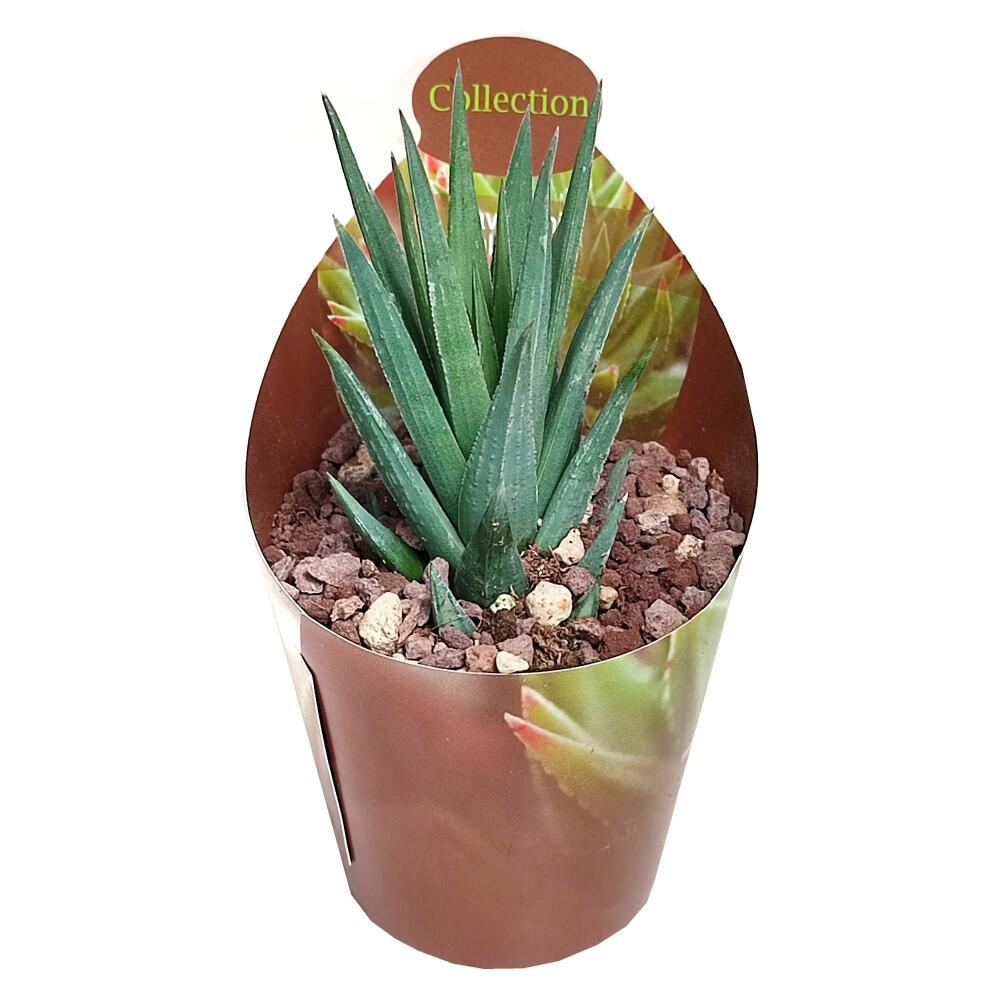
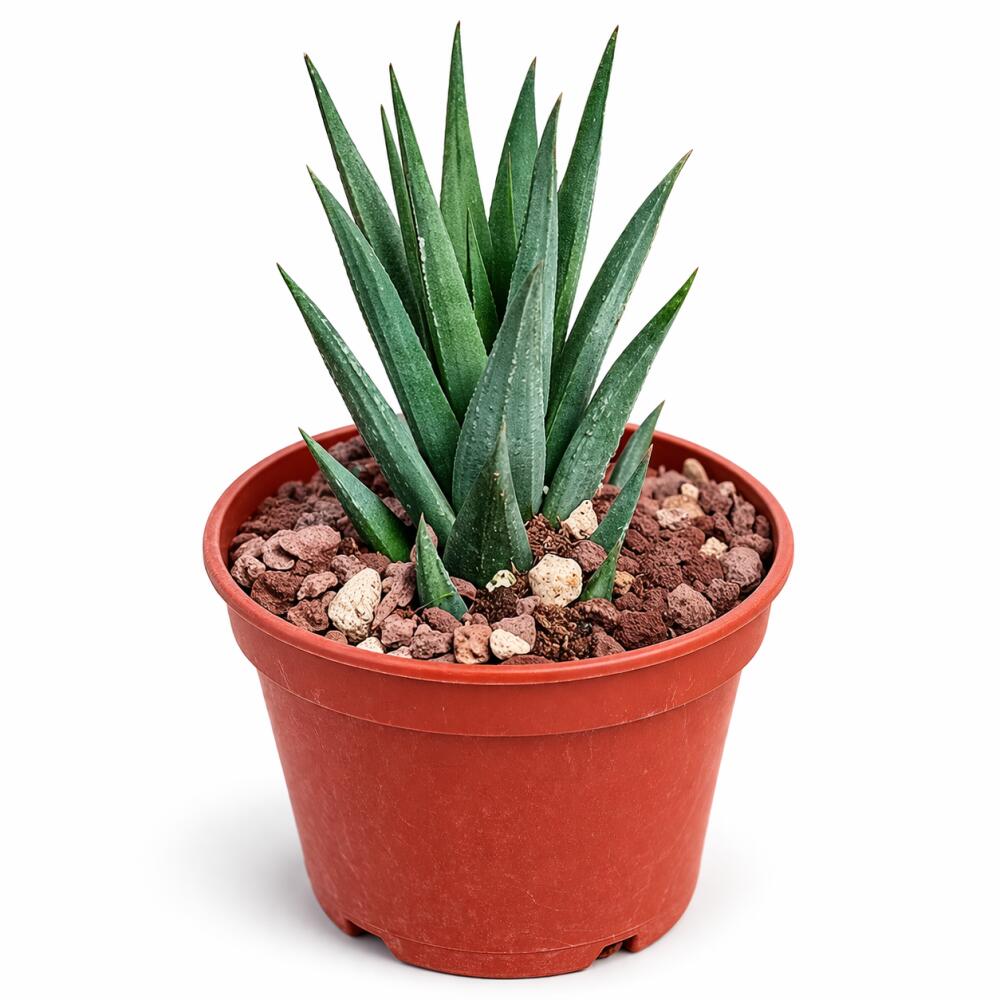
Good to know
Is it called Haworthia or Haworthiopsis?
The shop calls it Haworthia glauca. Kew now lists the same species as Haworthiopsis glauca; it is not a different delivery plant.
How sunny can the position be?
Very bright is good, but introduce strong direct sun gradually. Watch leaves and warmth at the actual position.
How often should I water?
Not by calendar: check the small root ball, water after good drying and remove excess water.
Does it need a bigger pot immediately?
No. The 6.5 cm pot initially suits. Repot only with dense roots or spent growing medium.
Can it go outside in summer?
In a sheltered bright place after slow acclimatisation. Bring indoors before persistent rain, cold nights and frost.
Sources and editorial note
- Exotenherz: exact shop variant, article number and delivery size
- Royal Botanic Gardens, Kew: accepted name Haworthiopsis glauca
- Royal Horticultural Society: Haworthia, light and culture
Shop variant, article number and size checked on 30 September 2026. The shop uses the trade name Haworthia glauca; Kew lists the species as Haworthiopsis glauca. Culture guidance checked against the RHS Haworthia genus profile and the actual plant.