
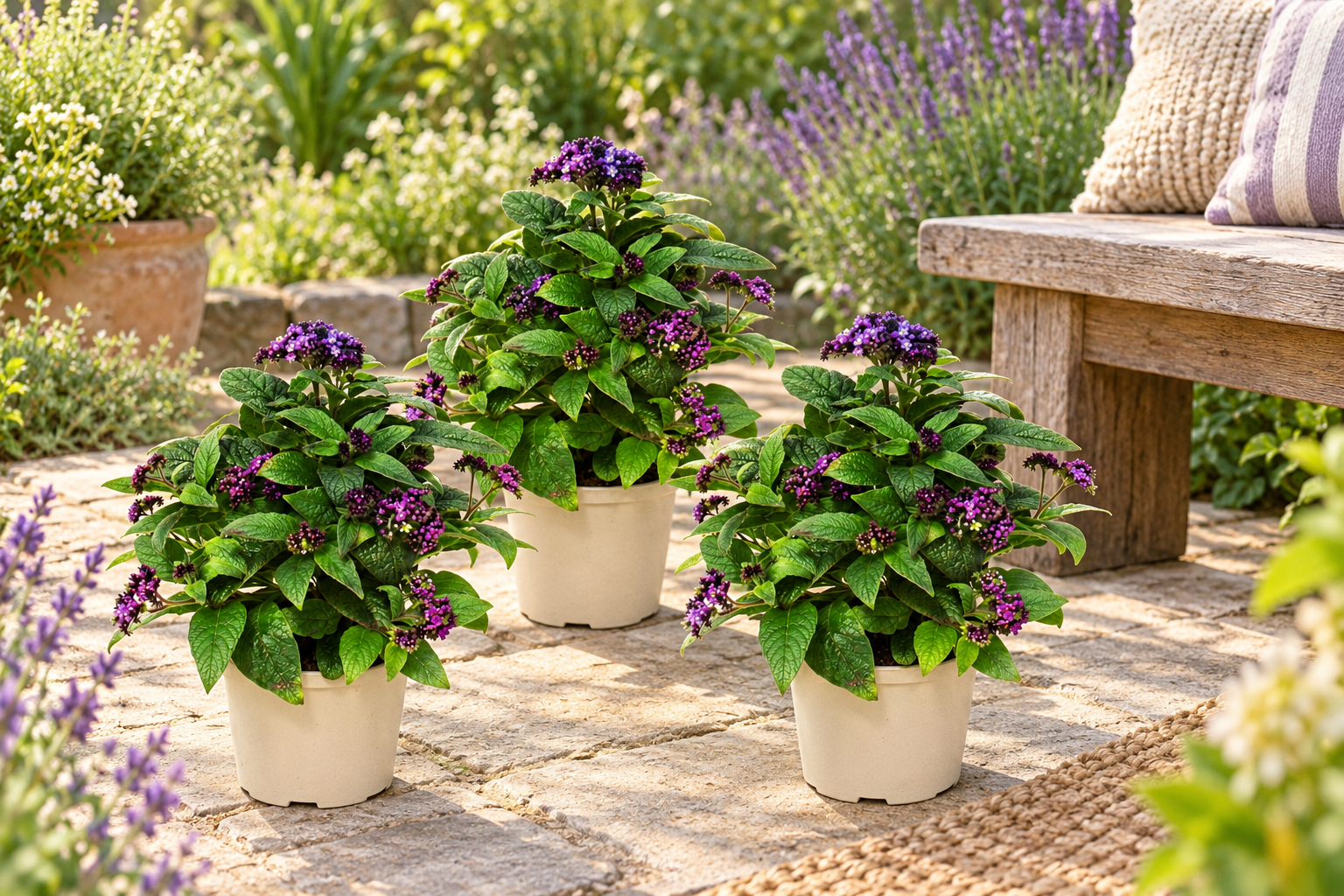
This plant at Exotenherz
Check the shop offer for current availability, price and what is included.
Product and delivery details are given in the individual offer.
Your care table
| Topic | What to do | Why it helps |
|---|---|---|
| Light | Sunny, protected from extreme afternoon heat. | Flowering and the plant’s supplies must suit the same position. |
| Planting | Acclimatise gradually after the risk of frost. | The species is frost-sensitive. |
| Moisture | Keep reliably moist and check the root ball. | Broad foliage needs an available water supply. |
| Drainage | Remove excess water. | Moist does not mean waterlogged and deprived of oxygen. |
| Soil | Use humus-rich, well-drained soil. | The small root base should be able to develop evenly. |
| Nutrients | Feed during growth according to the label. | Do not double up on existing fertiliser. |
| Shape | Gently pinch young tips when needed. | This can encourage branching. |
| Safe position | Do not eat; protect against nibbling. | The ornamental plant contains toxic substances. |
Check the compost and pot weight. The care table explains how far the compost may dry.
Water only when needed. The water should reach the root ball without spilling over the rim.
Remove surplus water from the saucer or cachepot. Then return the plant to a suitable position.
Many small flowers form a cloud
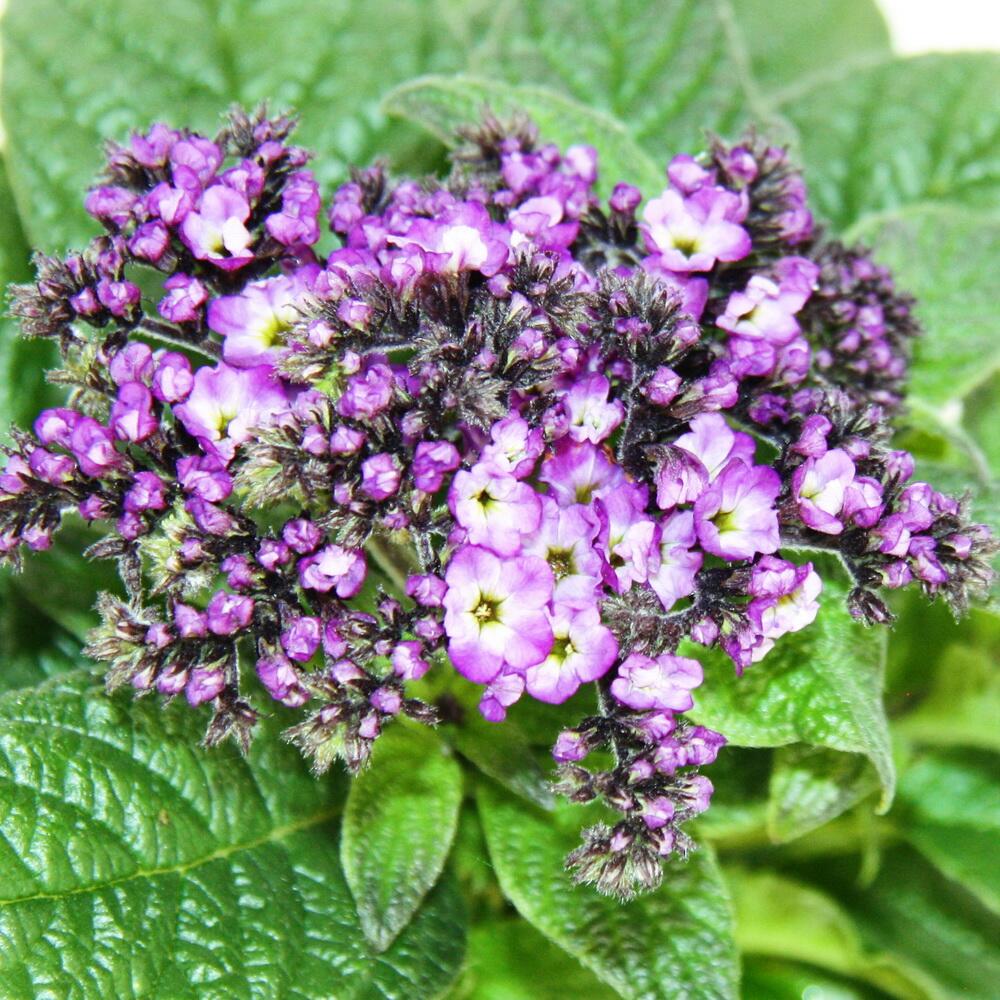
Heliotrope forms dense clusters of tiny violet flowers above dark green foliage. A closer look reveals individual small flowers and the strong leaf veins beneath them. Its scent is described as vanilla-like; how clearly we notice it also depends on flowering and surroundings. Heliotropium arborescens comes from western South America and is not a winter-hardy border perennial in Germany. Place the plants in an accessible summer position where the flowers can be admired. Their beauty and culinary-sounding name do not make them an edible herb.
Give the young group room to develop
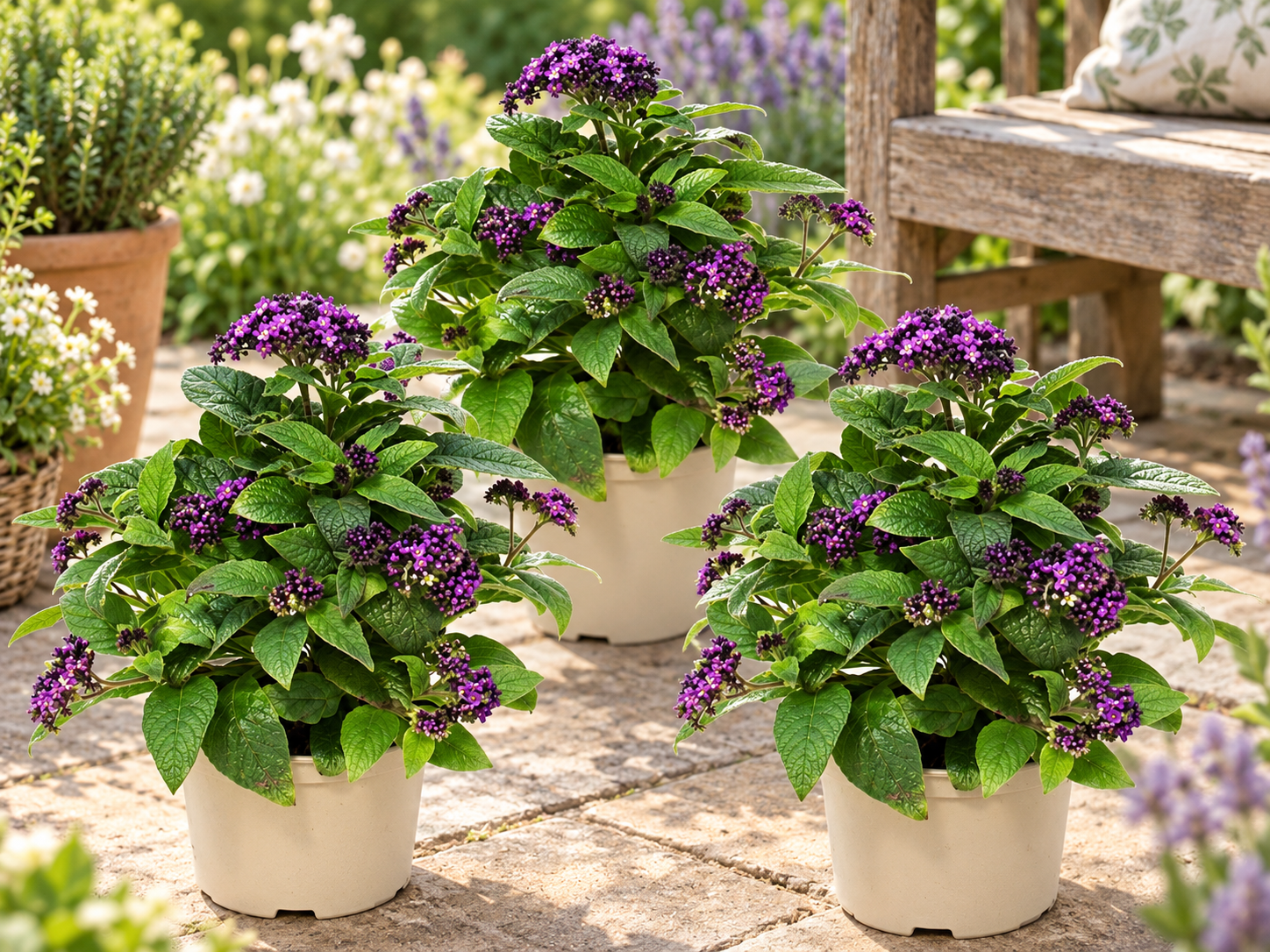
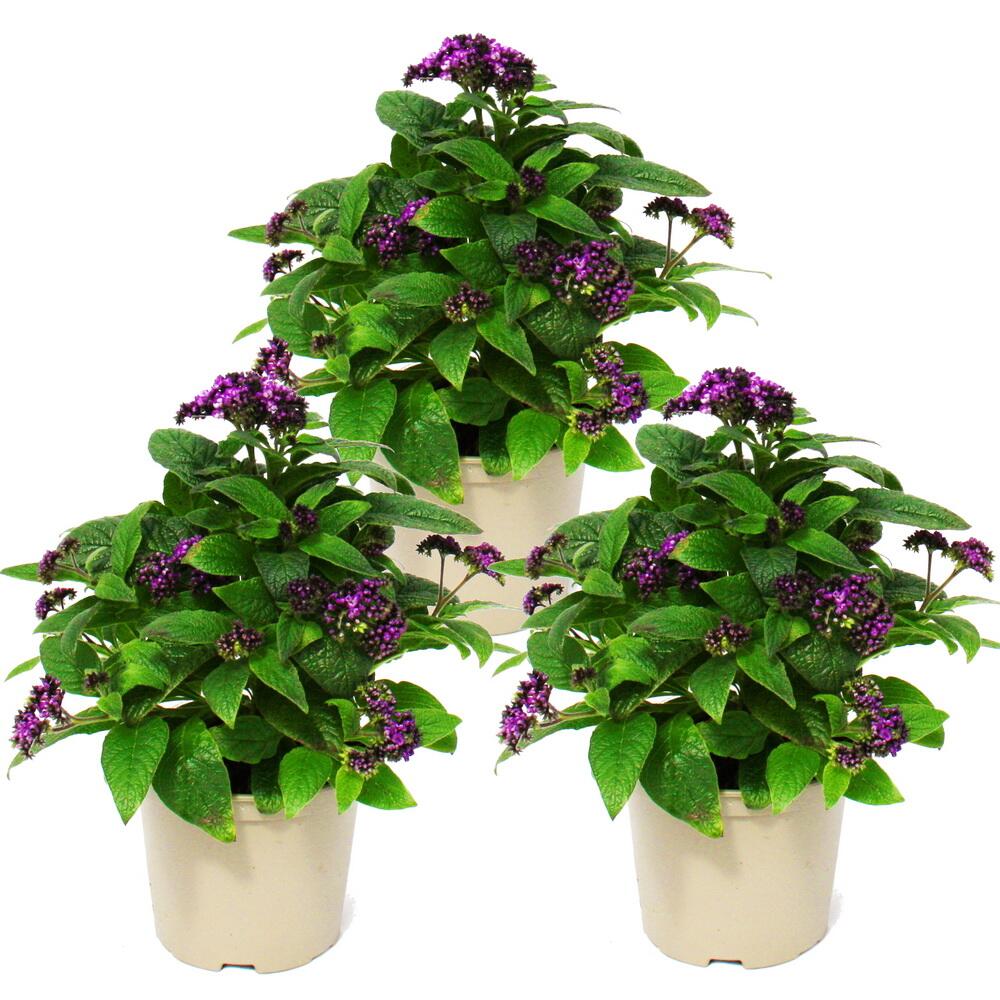
The set contains three plants, each in an 11 cm pot, with a plant height of about 25 to 35 cm. This delivery figure is not a fixed final height and is not reinterpreted as total height. Specialist profiles often give roughly thirty to sixty centimetres for seasonal cultivation, without precisely defining an unnamed variety. Arrange the young crowns loosely before planting. About thirty to forty-five centimetres spacing can serve as a guide for a group; usable compost volume and clear access for care also matter in a container.
Sunshine with an eye on the hot hours
A sunny position supports flowering. In very hot summer weather, protection during the harshest afternoon hours can help. Acclimatise young plants gradually after transport and plant outdoors only after the risk of frost. A sheltered terrace is often easier to care for than a windy, overheated planter. Check not only the sunlight on the flowers but also the warmth around the pot. The broad leaf area should be able to benefit from its position without the small root ball drying out completely every day.
Moisture supports leaves and flowers
Heliotropes like humus-rich, reliably moist and well-drained soil. Feel beneath the leafy crown before watering too, and supply the root ball slowly. Excess water must not remain standing. With limp foliage, first check whether the soil is dry or already wet. Under a roof, rain does not automatically reach the pot. An accessible group makes it easier to check all three plants. Consumption changes as the crown grows or warm air blows. A fixed calendar therefore fits less well than a brief look at the actual root-ball condition.
Support branching and flower care calmly
During vigorous growth, feed according to the fertiliser label, taking account of nutrients in newly pre-fertilised compost. Young shoot tips can be gently shortened if bushier growth is desired. Remove faded heads and damaged parts cleanly. Look beneath the deeply veined foliage during care: whiteflies and mites are possible problems, not an inevitable consequence of the species. Do not prune heavily and greatly alter supplies at the same time. Healthy new growth is a better measure than expecting every individual flower to remain indefinitely.
A scented position with clear winter planning
The frost-sensitive perennial is often kept for just one summer. Continuing its cultivation requires a bright, frost-free position and adjusted watering. The plant is poisonous if eaten; flowers, leaves and other parts do not belong in drinks or desserts. Position it where it will not be nibbled. Compare flowering, leaf structure and the later spread of the crown in the plant book. Also record the summer position and whether heat protection was helpful. Such observations turn a pretty scented motif into a deliberately cared-for plant.
One plant, several views
Good to know
Is heliotrope real vanilla?
No. Its German name describes the ornamental plant’s scent, not a spice harvest.
Can I eat the flowers?
No. The plant is poisonous if eaten.
Will all plants remain 35 cm tall?
That is the young plant height; later size depends on selection and cultivation.
Why are the leaves drooping?
Check root-ball moisture and heat together; wet, damaged roots can cause problems too.
Is it an annual plant?
Botanically it is a frost-sensitive perennial, but it is often kept seasonally outdoors.
Sources and editorial note
- Exotenherz: offer and original photographs (03.10.2026)
- NC State Extension – Heliotropium arborescens, growth, moisture and toxicity (03.10.2026)
Shop offer, article number, GTIN, availability and original images checked directly on 02.10.2026; specialist acceptance on 03.10.2026. Specialist sources read directly. Exact SKU, measurements, original images and orderability checked directly in the shop on 03.10.2026. Specialist sources read in full; shop name and botanical synonyms remain distinguishable. Currently not orderable: knowledge portrait without a purchase link, social drafts without sending approval. No Wawi, server or tool changes. Currently not orderable: knowledge portrait without a purchase link; social drafts are not authorised for sending.