
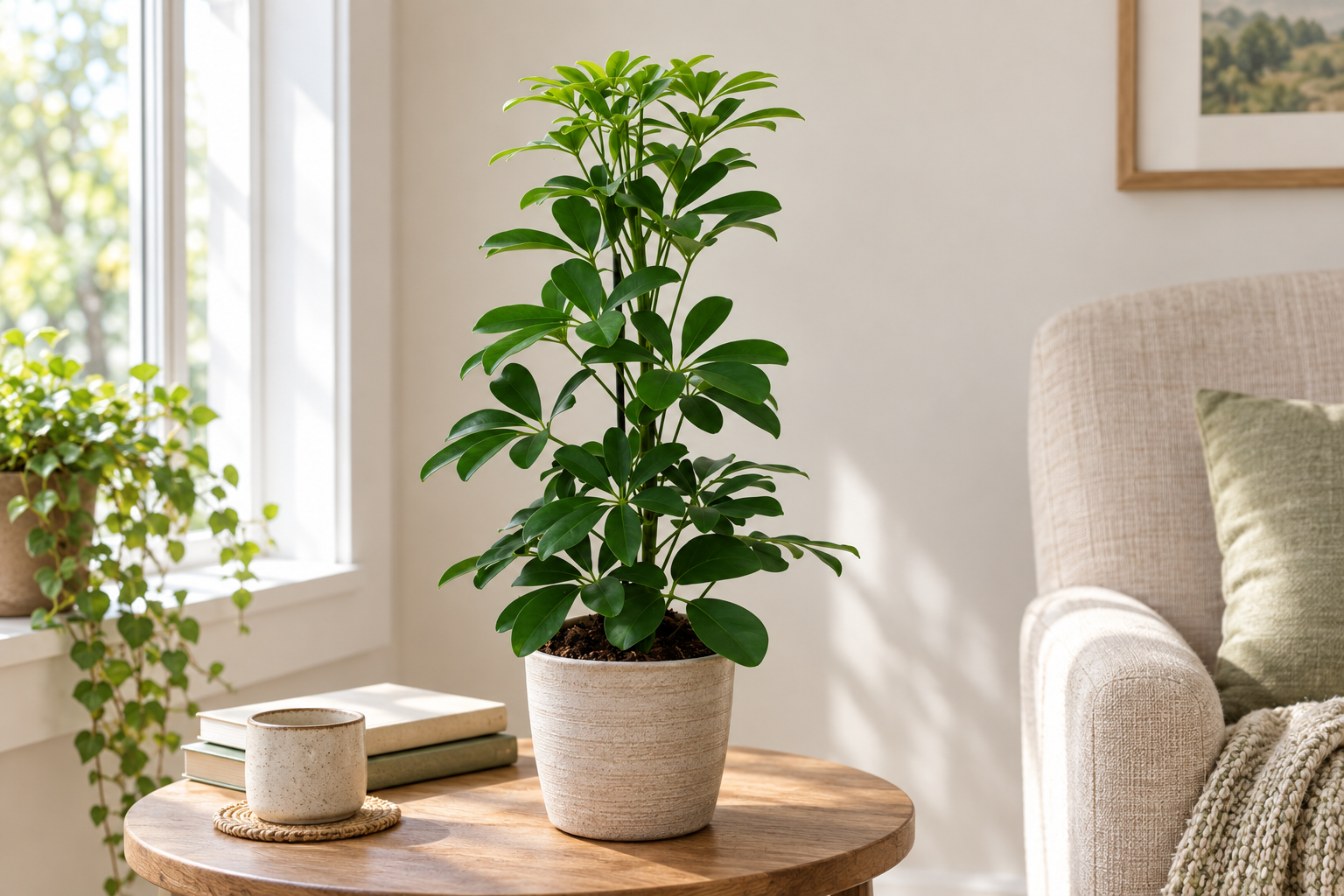
This plant at Exotenherz
Check the shop offer for current availability, price and what is included.
Product and delivery details are given in the individual offer.
Your care table
| Topic | What to do | Why it helps |
|---|---|---|
| Position | Place in bright indirect daylight with room around leaf umbrellas. | Long-stalked leaves need light without constantly rubbing walls. |
| Water | Let upper soil dry slightly, then supply balls evenly. | Extremely dry or permanently wet roots cause easier foliage loss. |
| Drainage | Let excess drain and empty remnants. | Decorative pots should not be lasting water basins. |
| Soil | Use loose humus-rich houseplant compost with good structure. | Roots need moisture retention and air together. |
| Humidity | Avoid direct heated air and choose sheltered surroundings. | Very dry air can favour leaf problems and mites. |
| Feed | Supply moderately in growth by suitable label. | Compact bushes need balanced supply rather than excessive doses. |
| Shaping | Shorten overlong shoots as needed during active growth. | Selective cutting can guide desired branching. |
| Winter | Continue bright and warm, considering lower water use. | A cold rest does not belong to normal indoor culture. |
Check the compost and pot weight. The care table explains how far the compost may dry.
Water only when needed. The water should reach the root ball without spilling over the rim.
Remove surplus water from the saucer or cachepot. Then return the plant to a suitable position.
Green umbrellas on mobile stalks
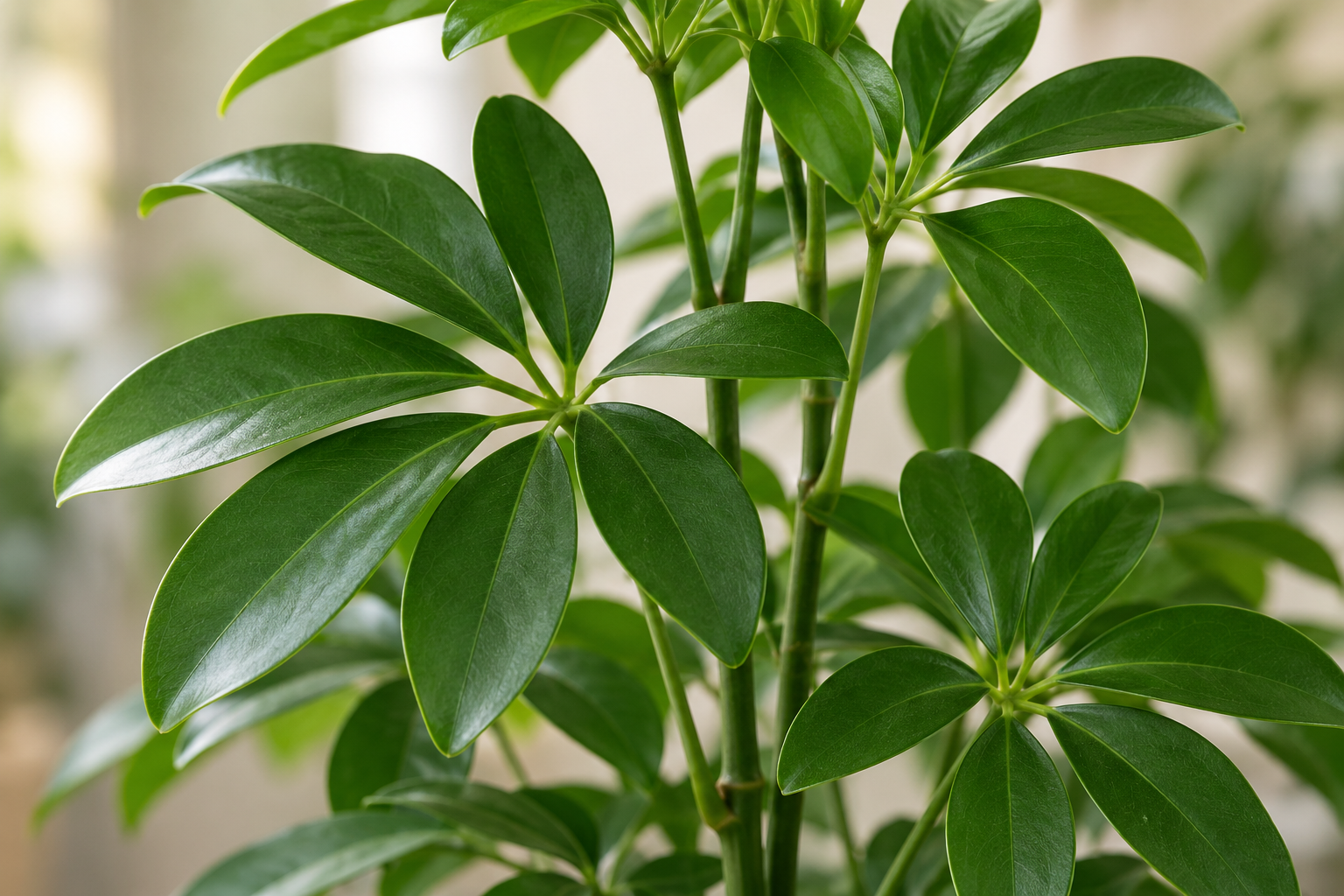
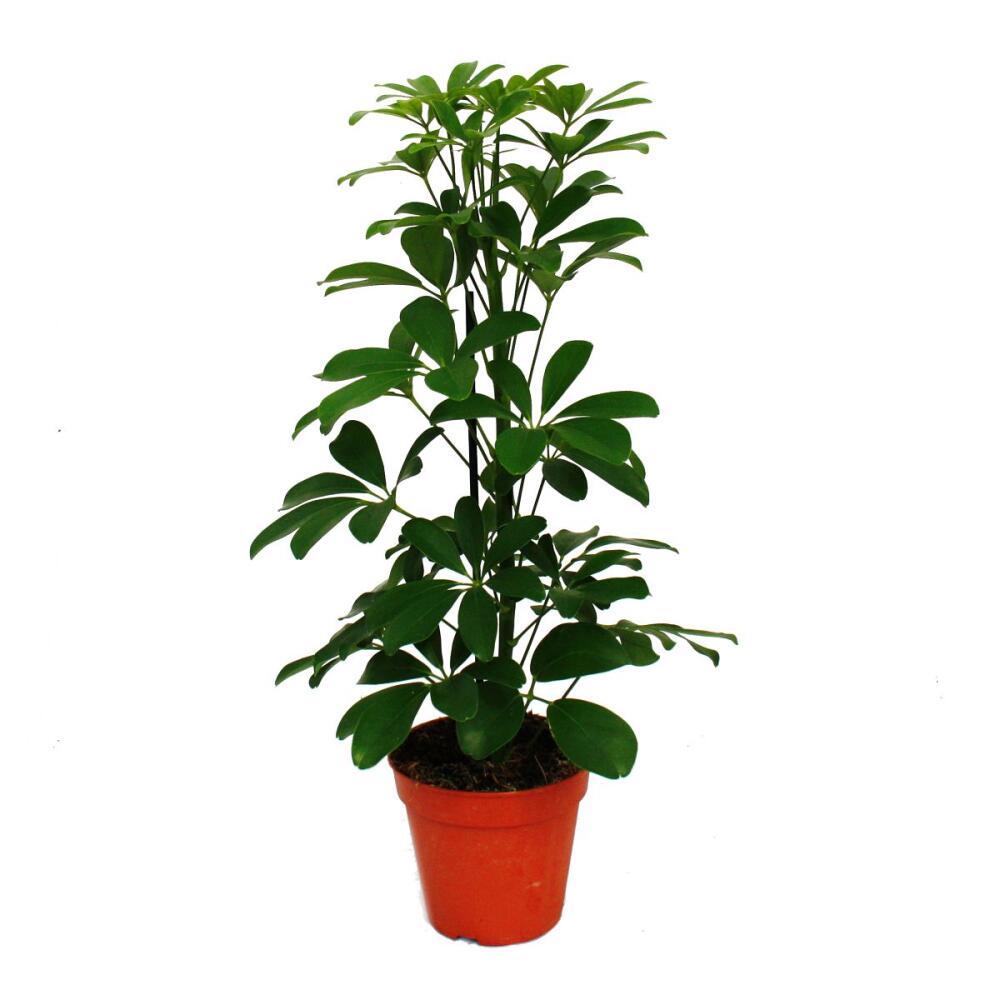
Nora looks lively because its leaves are not a closed surface. Several leaflets gather like a hand at the end of a long stalk. Seen from above this resembles a small umbrella. Glossy green remains quiet while various positions loosen the whole bush. The original shows a narrow young umbrella plant with several green shoots. A simple decorative pot and bright wall show these well. Do not wedge Nora between large objects. A fine stalk can move but should not constantly rub one obstacle. Even small specimens need air around their crowns.
Schefflera is now also Heptapleurum
The shop lists Schefflera arboricola Nora. North Carolina Extension now gives Heptapleurum arboricola; the older label means the same species. RHS describes Nora as a compact named selection with typically seven to nine glossy leaflets per leaf. This name change creates no second plant. The species belongs to Araliaceae and comes from China and Taiwan. Nora is described here as green-leaved. White-variegated offers or mixed bowls are therefore no substitute evidence. It is ornamental, not for eating, and stays beyond children or pets chewing leaves.
A slender bush with later development
Nora is offered in a 12-cm pot at roughly 45 cm total height. This guides young delivery. RHS class of around 50 to 100 cm describes a possible later frame, not guaranteed final height indoors. Light, pruning and root space alter structure. Original leaf-umbrella count is not a fixed list for every specimen. Do not use stalks as handles when unpacking; support the pot and gently release wrapping. Check moisture and place first. Small plants can establish before strong pruning or unnecessary repotting changes several things at once.
Light reaches the whole crown
Bright indirect daylight suits indoor culture. Hot direct sun through glass can burden foliage; a light curtain helps strong sunshine. Permanently dark positions make new shoots less dense and compact. Cultivar name alone does not keep them bushy there. Light should reach several sides without constant moves between completely different places. Nora stays evenly warm and protected from cold draughts. Move small pots from airflow when airing. Direct heated air is unfavourable too. A bright living room with accessible soil is better than a decorative corner getting little daylight.
Let dry slightly, then supply thoroughly
Feel upper soil before watering and check deeper if needed. The surface may dry slightly but the ball should not remain completely dry. Then water slowly evenly and let the nursery pot drain. Remove excess from the decorative pot. Both wet and dry roots can relate to foliage loss. A falling leaflet first calls for moisture checking, not automatically extra water. Pot weight changes while drying; this observation helps small balls particularly. Warm bright days may raise demand, darker winter often lowers it. A rigid weekday poorly reflects these differences.
Gently accompany branching
Nora is compact but still develops new shoots and longer gaps. Healthy overlong shoots may be selectively shortened during active growth. Do not remove most green surfaces at the same time. Clean cuts and suitable culture allow new branching without assured timing. Suitable cuttings can vegetatively pass on the named selection; seedlings do not automatically confirm this foliage. When densely rooted, move the plant into slightly more space. Humus-rich stable houseplant soil holds water while draining. Feed moderately during new growth by label, accounting for pre-fertilised soil. Extra feed does not compensate for missing light.
Look at foliage and undersides in winter
Less daylight makes balls dry slower. Nora stays warm and bright but receives water only as actual moisture demands. Deliberate cold winter rest is unnecessary. Carefully dust glossy leaflets with a soft slightly damp cloth without twisting stalks. Check undersides, bases and young shoots for scale, mealybugs or webbing. Very dry heated air can favour problems and should stay away. Older leaves may change while healthy new foliage grows. Flowers and fruits are rare in ordinary indoor culture. Green umbrellas and suitable new branches remain Nora’s more reliable pleasure.
One plant, several views
Good to know
Are Schefflera and Heptapleurum two plants here?
No. Older and current genus assignment refer to the same species and Nora selection.
How many leaflets make a leaf?
Typically seven to nine at one stalk end; young leaves may differ.
Is Nora white-variegated?
The checked offer is green-leaved. White stripes do not belong to its described form.
Does it stay 45 cm tall?
That describes delivery. Suitable culture allows further growth.
Why do leaves fall?
Too-wet or too-dry roots, draughts or changes of position are possible. Check moisture first.
Can it stand dark?
Bright indirect light supports compact growth better than permanent darkness.
How does the bush stay shaped?
Suitable light and selective shortening of long shoots help when needed. No regular heavy defoliation.
Must it stand cooler in winter?
Keep warm and bright indoors. Account for often lower demand after checking the ball.
Sources and editorial note
- Exotenherz: offer and original photographs (03.10.2026)
- RHS: Nora selection, leaf structure and cultivation (03.10.2026)
- NC State: current species name and indoor care (03.10.2026)
Shop offer, product number, GTIN, availability and original images directly checked on 03.10.2026. Specialist sources directly read. Nora green-leaved named selection, not white-variegated Schefflera quantity variant. Heptapleurum name transparent. RHS class not fixed maximum.