
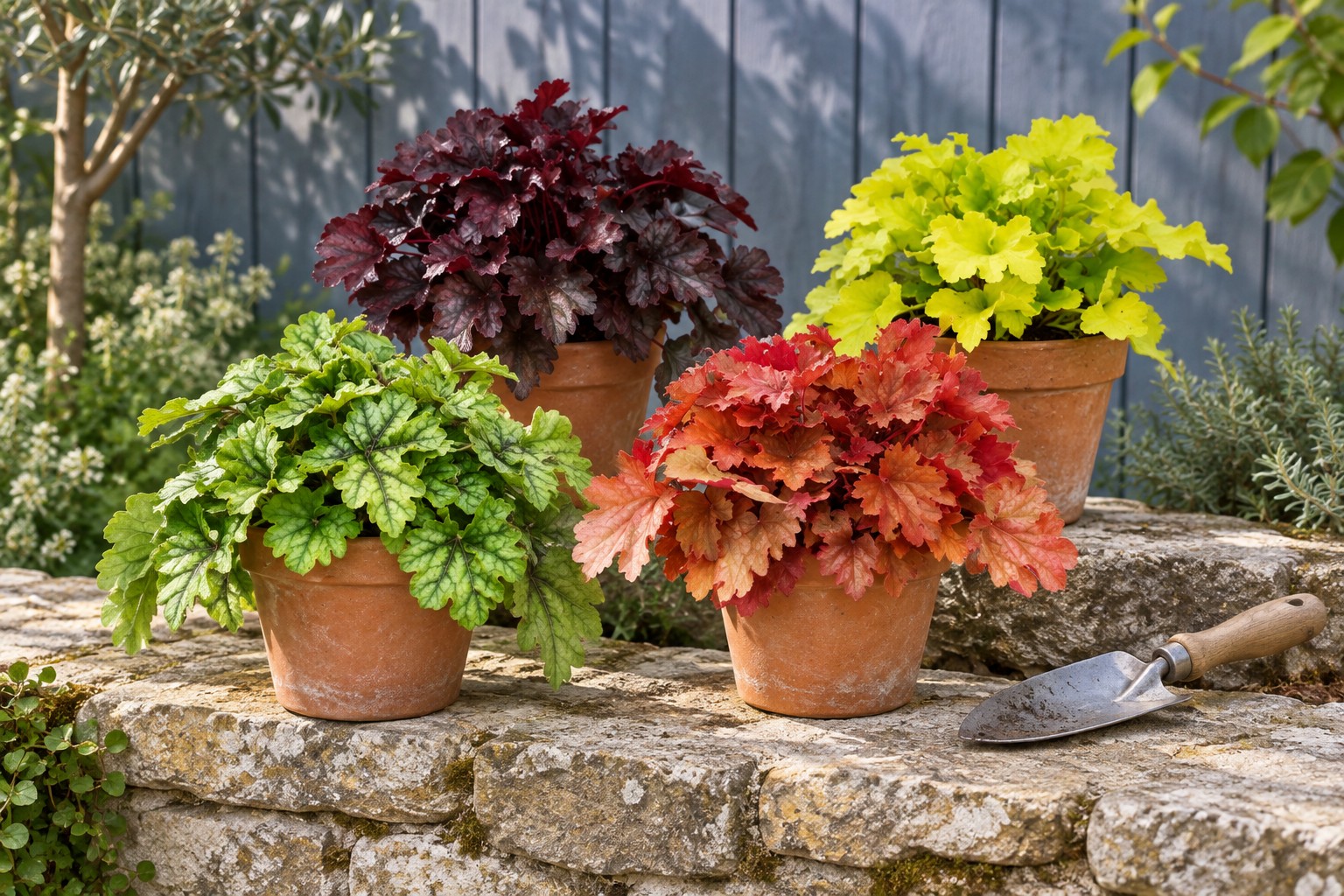
This plant at Exotenherz
Check the shop offer for current availability, price and what is included.
Link to the offer in German. Check the shop for the current price, availability and delivery contents.
Your care table
| Topic | What to do | Why it helps |
|---|---|---|
| Light | Initially bright partial shade for the mixture. | Very pale leaves often react more sensitively to hot sun. |
| Water | Check and supply regularly during establishment. | Containers dry faster than established borders. |
| Planting depth | Keep the crown level with the soil surface. | Planting too deeply can encourage rot. |
| Soil | Humus-rich and well-drained, never persistently wet. | Shallow roots need moisture and air together. |
| Fertiliser | Sparingly in borders, according to need in containers. | Nutrient demand depends on soil and cultivation duration. |
| Spring | Cover lifted roots again while leaving the crown clear. | Frost can push the clump out of the ground. |
| Rejuvenation | Divide old woody clumps when needed. | Vigorous pieces produce denser plants again. |
| Checks | Investigate feeding notches and wilting in moist soil. | Vine weevil larvae can damage roots. |
Check the compost and pot weight. The care table explains how far the compost may dry.
Water only when needed. The water should reach the root ball without spilling over the rim.
Remove surplus water from the saucer or cachepot. Then return the plant to a suitable position.
A play of colour from living leaves
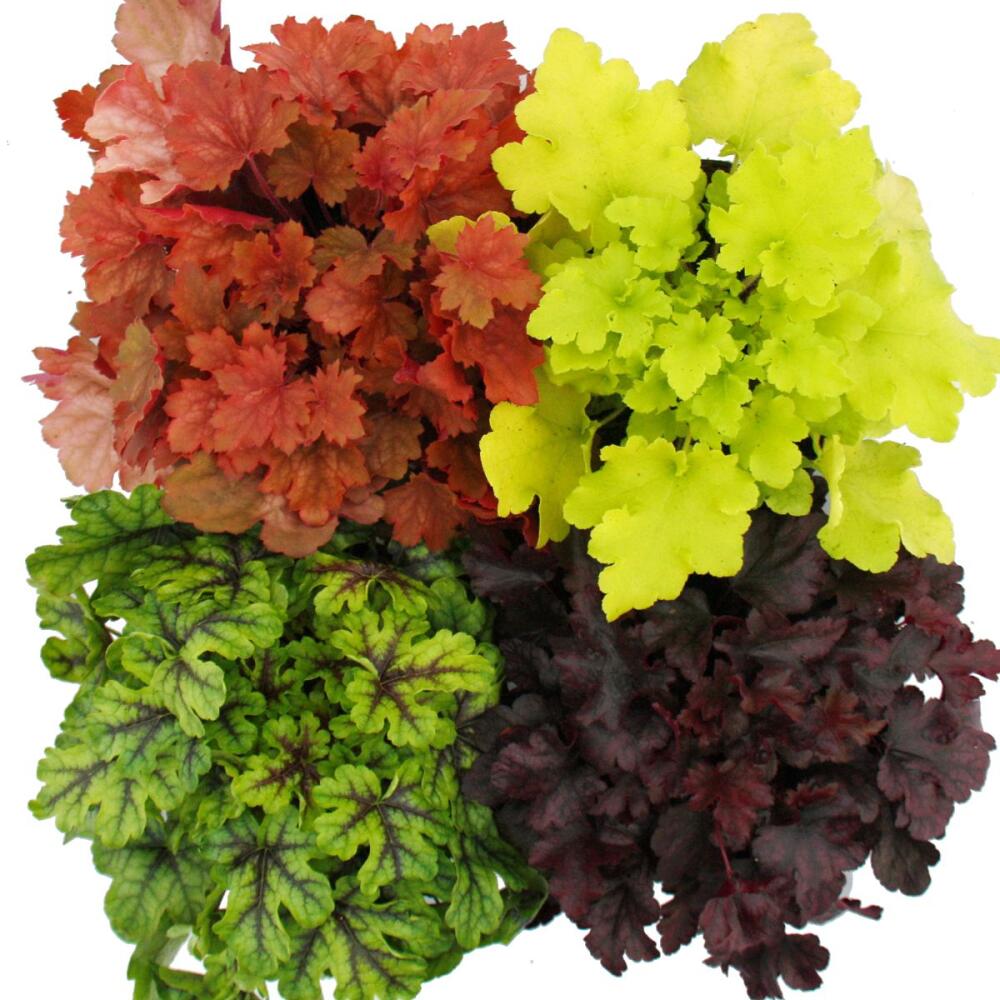
Heuchera belong to the saxifrage family. Many garden forms produce low leafy clumps with delicate stems rising above them during flowering. Leaves may be dark red, coppery, light green or conspicuously veined. These colours change with variety, age and season. The offered Indian Summer set is a mixture, not a single botanical variety. Care therefore follows common basic needs and each plant’s response. An attentive look at light and dark leaves is more helpful than assuming entirely identical requirements.
Four plants with a changing combination
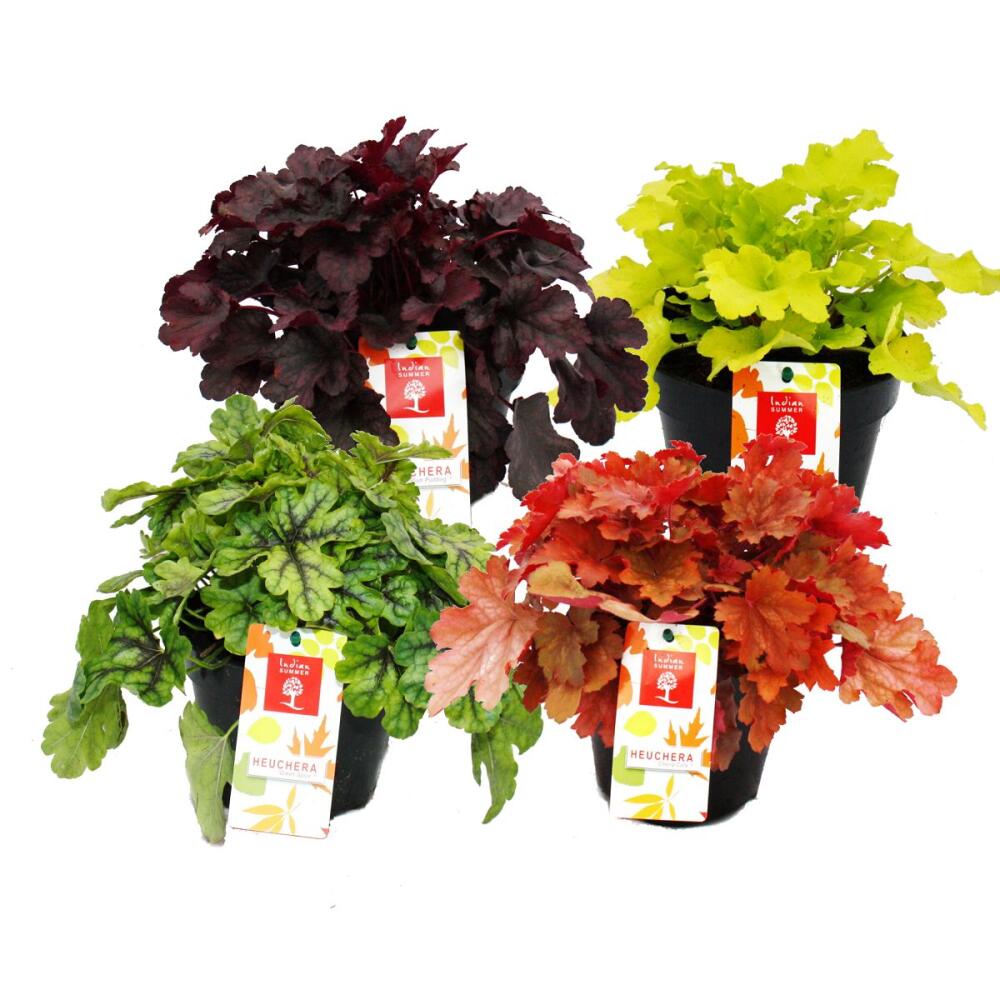
The set contains four heucheras in 15 cm pots. The shop states about 25 cm growing height; this does not promise identical delivery height in every colour. The selection is assembled according to stock, and particular varieties cannot be chosen for this offer. The original image and scene show an example colour combination. In the border, plants can be repeated individually or planted in a small group. The 20–30 cm spacing stated in the shop provides a starting point; stronger specimens will need correspondingly more room later.
Partial shade is a good shared starting point
Bright partial shade is a sensible starting point for an unknown colour mixture. Darker varieties often tolerate more sun, while yellowish or very pale leaves suffer more easily in dry midday heat. Observe each plant and adapt its position when needed. Humus-rich, well-drained soil supports shallow roots. Do not bury the crown deeply when planting; it should remain at the surface. Improve heavy, permanently wet soils before planting. A dense decorative arrangement can later be spaced out so clumps have air and room.
Support establishment reliably
Newly planted heucheras need regular moisture checks. Water the soil and supply the root area evenly. Established border plants later cope better with temporarily drier conditions. Limited water reserves remain important in containers, however. Check more often during hot weather without leaving water in an outer pot. A thin organic covering around the plant can make soil conditions more even; keep the crown clear. Feed sparingly in borders and according to need and product instructions in containers used over a longer period.
Plants sometimes sit higher in spring
Frost movement may lift shallow-rooted clumps slightly out of the soil. Check their position in spring and cover exposed roots again without sinking the crown. Older plants sometimes become woody and less dense. Division and replanting vigorous pieces can then rejuvenate the group. Selectively remove old damaged leaves and protect new growth. Many heucheras retain winter foliage, but cold and varietal characteristics affect its quantity. A sparse winter clump can grow strongly again in spring.
Distinguish leaf damage from root problems
Pale dry leaf areas may indicate excessive sun or drought stress. Rounded notches at leaf edges, however, fit damage by vine weevils among other causes. If a plant wilts despite moist soil, careful root inspection is worthwhile: larvae may cause considerable damage there. Similar symptoms do not all share the same cause. Check wetness, planting depth and crown condition too. Spent flower stems can be removed when foliage should take the leading role. Occasional rejuvenation can turn the first autumn combination into a lasting garden planting.
One plant, several views
Good to know
Will I receive exactly the four colours in the photo?
The combination is assembled according to stock. The set includes four plants, but no particular variety selection is promised.
Do all colours tolerate full sun?
Not equally well. Bright partial shade is a good start for the mixture; protect pale leaves especially from hot dry sun.
Why does the plant sit higher after winter?
Frost can lift the shallow rootstock. Cover exposed roots again and leave the crown at the surface.
What does wilting despite moist soil mean?
Root damage, wetness or a damaged crown are possible. Check for vine weevil larvae too rather than simply giving more water.
Sources and editorial note
- Product and delivery contents: Exotenherz
- NC State Extension: plant profile
- Royal Horticultural Society: plant and care knowledge
- Royal Horticultural Society: plant and care knowledge
Sources checked: 15 September 2026. Product information and delivery contents follow the linked shop offer. Care has been checked against the stated specialist sources and remains subject to plant condition, position and season.