
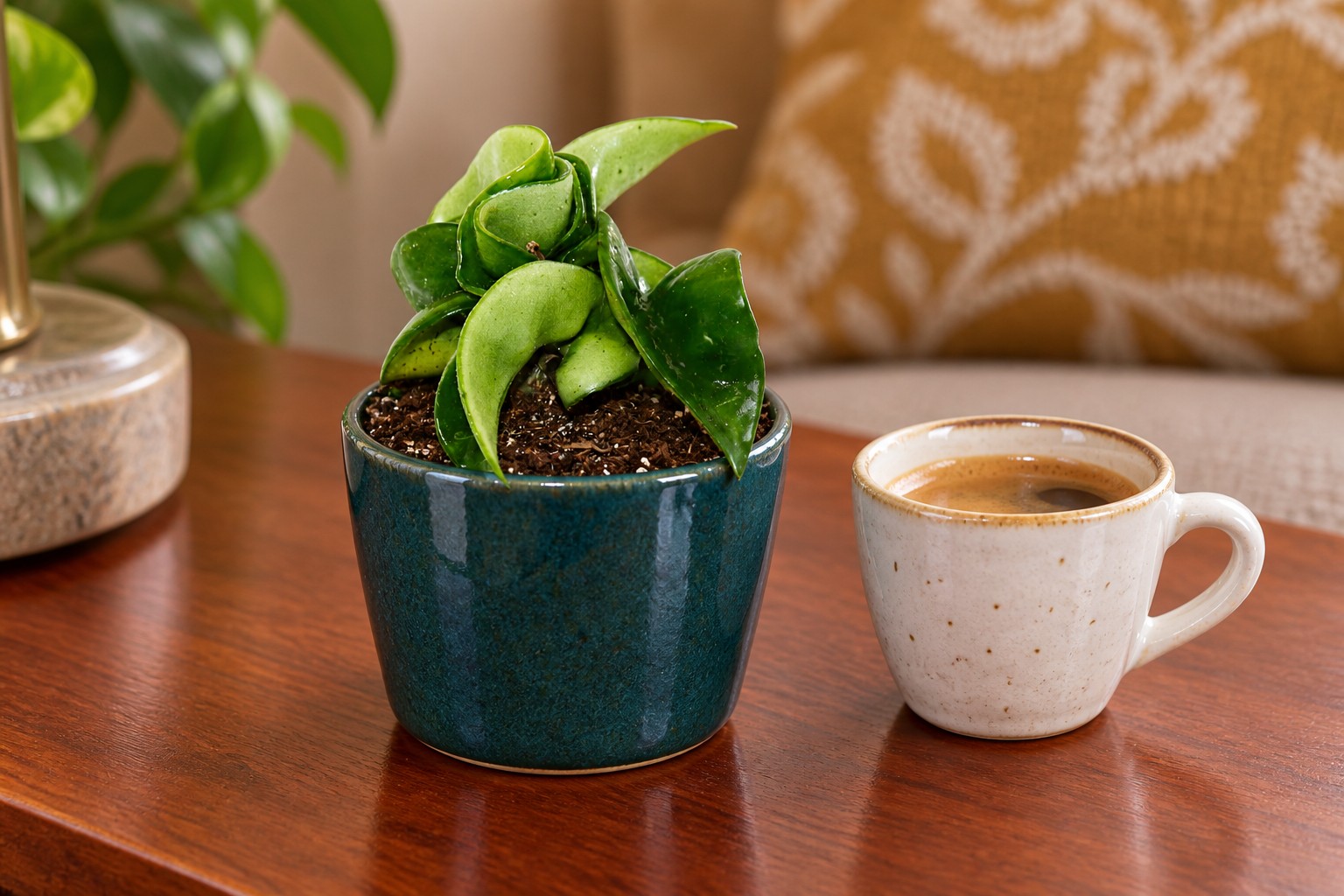
This plant at Exotenherz
Check the shop offer for current availability, price and what is included.
The linked shop is in German. Product details, availability and delivery information are provided in that shop.
Your care table
| Topic | What to do | Why it helps |
|---|---|---|
| Light | Bright, filtered light; acclimatise gradually to gentle sun. | Light supports strong new leafy sections. |
| Water | Let the root ball dry noticeably between watering. | Fleshy leaves store water. |
| Drainage | Allow to drain completely after watering. | Constant wetness damages the roots. |
| Compost | Use a loose mix with a coarse structure. | Air spaces prevent a root ball that stays wet for a long time. |
| Potting | Keep the miniature in a suitably small pot initially and increase size only as needed. | A large volume of compost stays moist unnecessarily long. |
| Fertiliser | Feed sparingly during growth, following the label. | Slow growth does not need heavy nutrient applications. |
| Flowers | Leave old healthy flower stalks in place later. | New flowers may form on them. |
| Checks | Inspect tight leaf folds for mealybugs. | Pests hide between the twisted leaves. |
Check the compost and pot weight. The care table explains how far the compost may dry.
Water only when needed. The water should reach the root ball without spilling over the rim.
Remove surplus water from the saucer or cachepot. Then return the plant to a suitable position.
Twisted leaves rather than straight vines
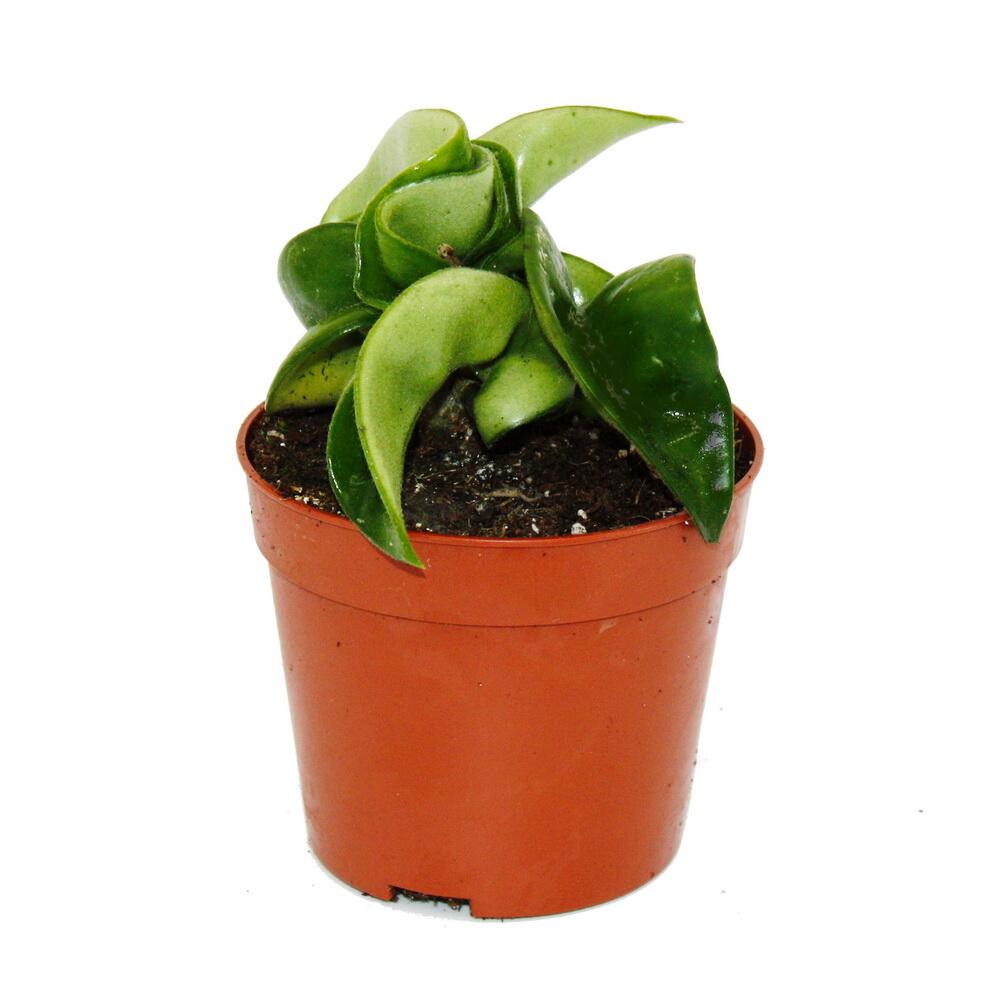
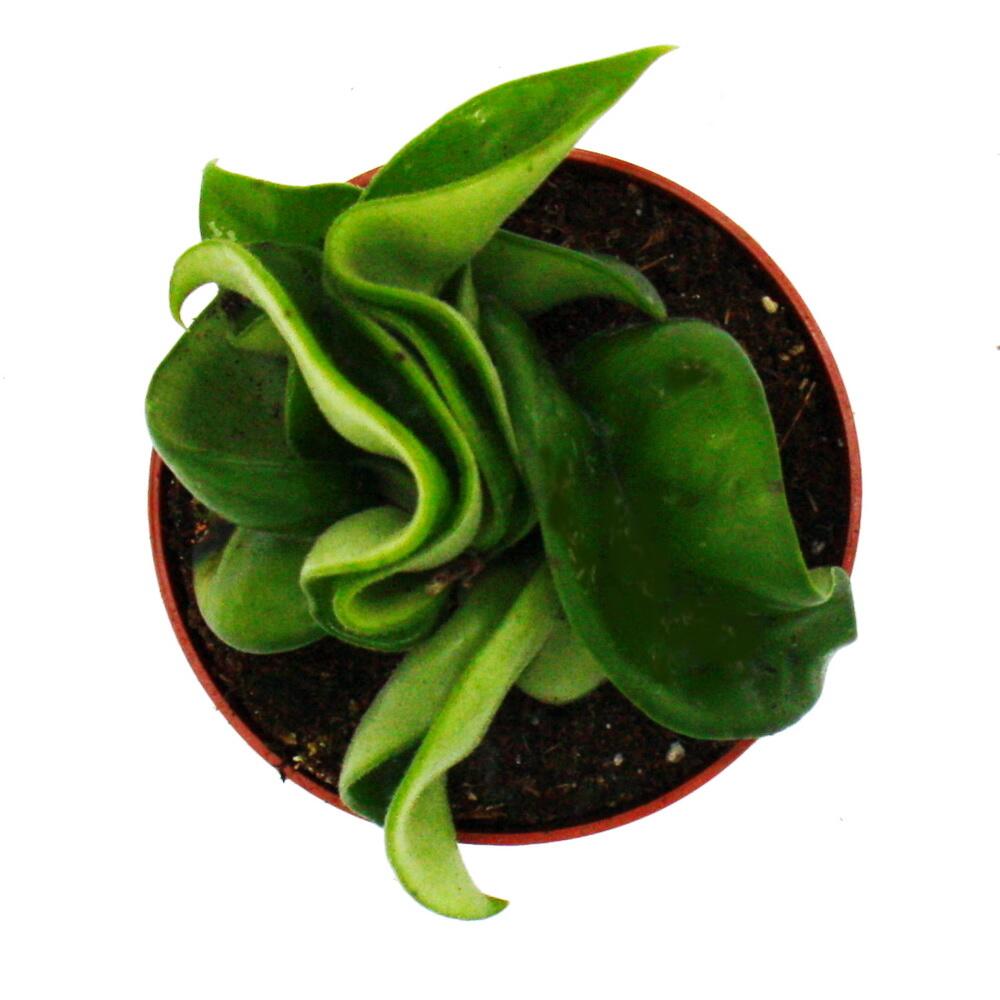
Hoya carnosa Compacta has thick, curved leaves packed closely along its shoots. Later this creates the impression of a green rope. The leaves store water, and growth may be slow at first. Older, well-developed plants can form the star-shaped flower clusters typical of Hoya. But a small young-plant listing is not a flowering hanging arrangement. The appeal already lies in how each new leaf folds and slowly fits into the existing form.
Describe the miniature listing honestly
The plant linked here comes in a 6.5 cm pot and is listed at approximately 6–8 cm. It is a very small specimen. The scene therefore shows a small start of foliage alongside an appropriate size reference, not long invented vines. A bright, easily accessible position helps with checking the compost. The plant can grow later, but an oversized pot will not turn it into a lush trailing plant more quickly. The decorative pot and accessories are examples.
Plenty of light, introduced gently
Bright, indirect daylight is suitable. Gentle morning or evening sun may be possible after acclimatisation; avoid abrupt exposure to hot midday sun. A dark shelf further slows a plant that already starts slowly. Keep it warm and protected from cold draughts. If flower buds appear later, retain a suitable position as far as possible. Neither constant moving nor more fertiliser is a reliable shortcut to flowers.
Water small pots deliberately
Let the root ball dry noticeably between watering and check pot weight. Water thoroughly when needed, then let it drain completely. Thick leaves allow dry pauses, but a tiny plant should not be left unobserved for weeks. Soft, wrinkled leaves can also occur when wet roots are damaged. Always check the root ball before adding more water. Water use usually decreases during darker months.
An airy mix and little disturbance
A loose mix with suitable coarse ingredients prevents prolonged wetness. A nursery pot with drainage holes remains necessary. Repot only when roots are using the existing space well, then choose a pot only slightly larger. Feed sparingly, following the label, while new growth is visible. Later, do not automatically cut off old flower stalks, as hoyas may flower on them again. Treat damaged shoots selectively with clean tools.
Leaf folds make good hiding places
Look regularly into the tight folds and around leaf-stalk bases. Mealybugs can remain unnoticed there for a long time. If you suspect a problem, separate the plant and identify the infestation precisely before choosing a suitable approach. Remove dust gently without forcing leaves apart. Hoya is ornamental and should not be eaten. Patience and small checks suit it better than constant changes to pot, compost and position.
One plant, several views
Good to know
How large is the offered hoya?
It is a miniature in a 6.5 cm pot with a stated size of approximately 6–8 cm, not a ready-grown long hanging plant.
Why does it grow slowly?
Compacta often starts slowly. Check light and roots rather than trying to force growth with heavy feeding.
When will it flower?
Only a sufficiently developed plant can flower in suitable conditions. No fixed flowering promise is given for the miniature listing.
Where should I look for mealybugs?
Especially in leaf folds and at leaf-stalk bases. Regular, quiet checks help spot an infestation early.
Sources and editorial note
Sources checked: 15 September 2026. Product details and delivery contents follow the linked shop listing. Care has been checked against the cited specialist sources and should be adapted to the plant’s condition, position and season.