
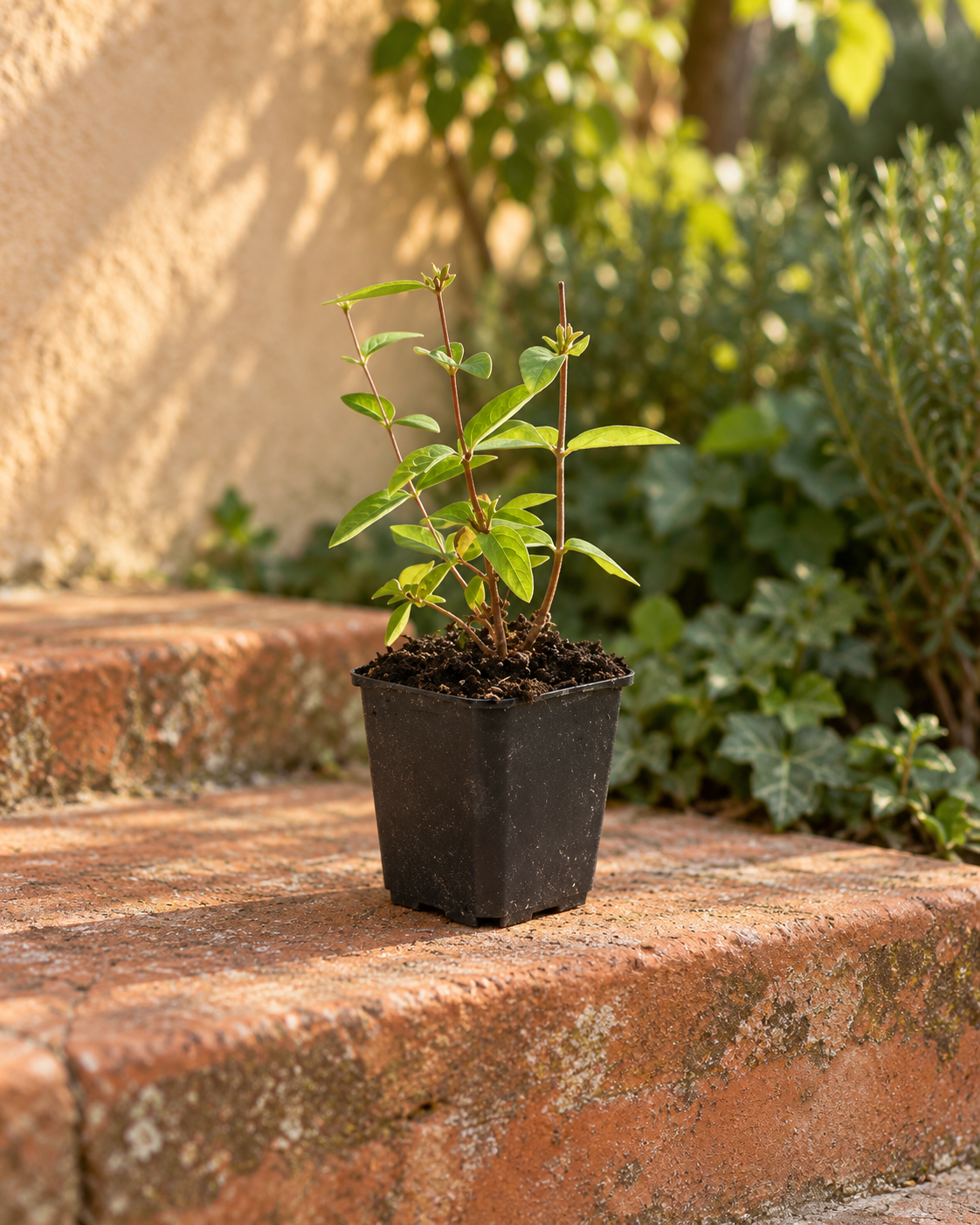
This plant at Exotenherz
Check the shop offer for current availability, price and what is included.
Check the shop for the current price, availability and offer contents.
Your care table
| Topic | What to do | Why it helps |
|---|---|---|
| Light | Choose a bright garden position in sun to partial shade. | A visible shrub area lets flowers and later fruits stand out. |
| Soil | Prepare moisture-retentive but well-drained soil. | Roots need both water reserves and air. |
| Start | Moisten the ball, plant at its old height and water in. | Young plants initially use only their existing root space. |
| Water | Check the ball more often in warm dry weather. | The small pot zone loses moisture faster than an established shrub. |
| Feeding | Feed modestly in spring only if needed. | Extra food does not explain absent flowers on a young plant. |
| Pruning | Check living shoots in spring and arrange the shape appropriately. | Desired garden form determines action, not delivery height. |
| Fruit | Treat as ornamental and do not offer for eating. | Fruit belongs to the garden picture of an ornamental shrub. |
| Winter | Protect containers and ensure free drainage. | Leaf loss and wet cold roots need separate assessment. |
Check the compost and pot weight. The care table explains how far the compost may dry.
Water only when needed. The water should reach the root ball without spilling over the rim.
Remove surplus water from the saucer or cachepot. Then return the plant to a suitable position.
Small flowers are only a beginning
Annebel shows yellow summer flowers among oval paired leaves. Up close, numerous stamens and small green sepals stand out. Berry-like ornamental fruit may develop later. A garden position beside a bench or at a perennial edge thus offers more than one flowering moment. The young offered plant need not yet show this whole sequence. A framework of branches still without flowers in the small pot can be a normal starting point. First look for healthy leaves and living shoots; the later annual sequence cannot be read from one delivery-plant picture.
Keep Annebel as a named selection
Annebel is a documented named selection of Hypericum × inodorum. It remains separate from other St John’s wort offers even though many flower yellow. Shrub shape and later fruit matter in this group, so a similar-sounding trade name must not borrow another selection’s features. This portrait describes Annebel as an ornamental shrub, not a medicinal plant. The botanical hybrid designation helps classify it, while specific original photos link to the shop offer. The cultivar name is more meaningful for your choice than the general word groundcover, used for very different garden plants.
A garden area about eighty centimetres high
The 9 cm sales pot and about 10–25 cm total height including pot describe its young start. A developed Annebel shrub is placed at around 80 cm tall. This guide helps plan distance from lower perennials and the view over a bed edge. The offer gives about 40–50 cm for groups. Closely planted shrubs may join later; to keep individuals distinguishable, give their side branches more space. Lay sets out before planting and check the later outline. An initially open spot is not a flaw but often the right beginning for a clear shrub area.
The planting place should hold and pass on water
Sun to partial shade is a good start. Adequate moisture and drainage belong together in the soil. A sunny spot may stay wet long after rain, while partially shaded ground beneath woody plants dries quickly. Check soil at the actual planting place. Loosen compacted areas and avoid an isolated planting hollow collecting water. For an outdoor container, choose enough volume, stable soil structure and free drainage. A decorative outer pot must not hold excess water permanently around the root ball. This small shrub needs good outdoor root conditions regardless of how cheerful its flowers look.
Stay close to the plant during establishment
Plant Annebel in spring or suitable early autumn when soil is frost-free and not waterlogged. Moisten the ball fully first and plant at its old height. Bring soil into contact from the sides and water slowly. In the first weeks, check the root ball specifically rather than watering the whole bed on a fixed weekly rhythm. Wind and warm days can dry the small root zone quickly. An established shrub reaches different reserves later. For little young growth, first check light, moisture and soil contact. More fertiliser does not help while roots cannot use their new position.
Watch the transition to ornamental fruit
Yellow summer flowers are described for June to August. This is garden guidance, not a promise of constantly open flowers. Flowers and berry-like fruits can appear together in a planting. The original gallery shows examples of a later condition, not guaranteed equipment for the young order. Treat fruits as ornamental. Cutting branches for your own garden decoration also changes shrub shape, so prune selectively rather than automatically cutting every shoot. Assess unusual leaf spots or coatings independently of normal fruit development. A colourful seasonal transition differs from a whole group of damaged leaves.
Find a form again with spring
Winter may change leaf retention. In spring, check which branches live and remove dead or poorly growing parts appropriately. Desired form and actual branching guide that decision. In containers, protect the restricted root space and keep drainage open; beneath a roof, check moisture on frost-free days. The shrub still belongs outdoors. An older well-structured Annebel planting can combine summer flowers with later ornamental fruit. It does not need an eternally unchanged winter appearance, but a suitable place and care reflecting changing garden phases.
One plant, several views
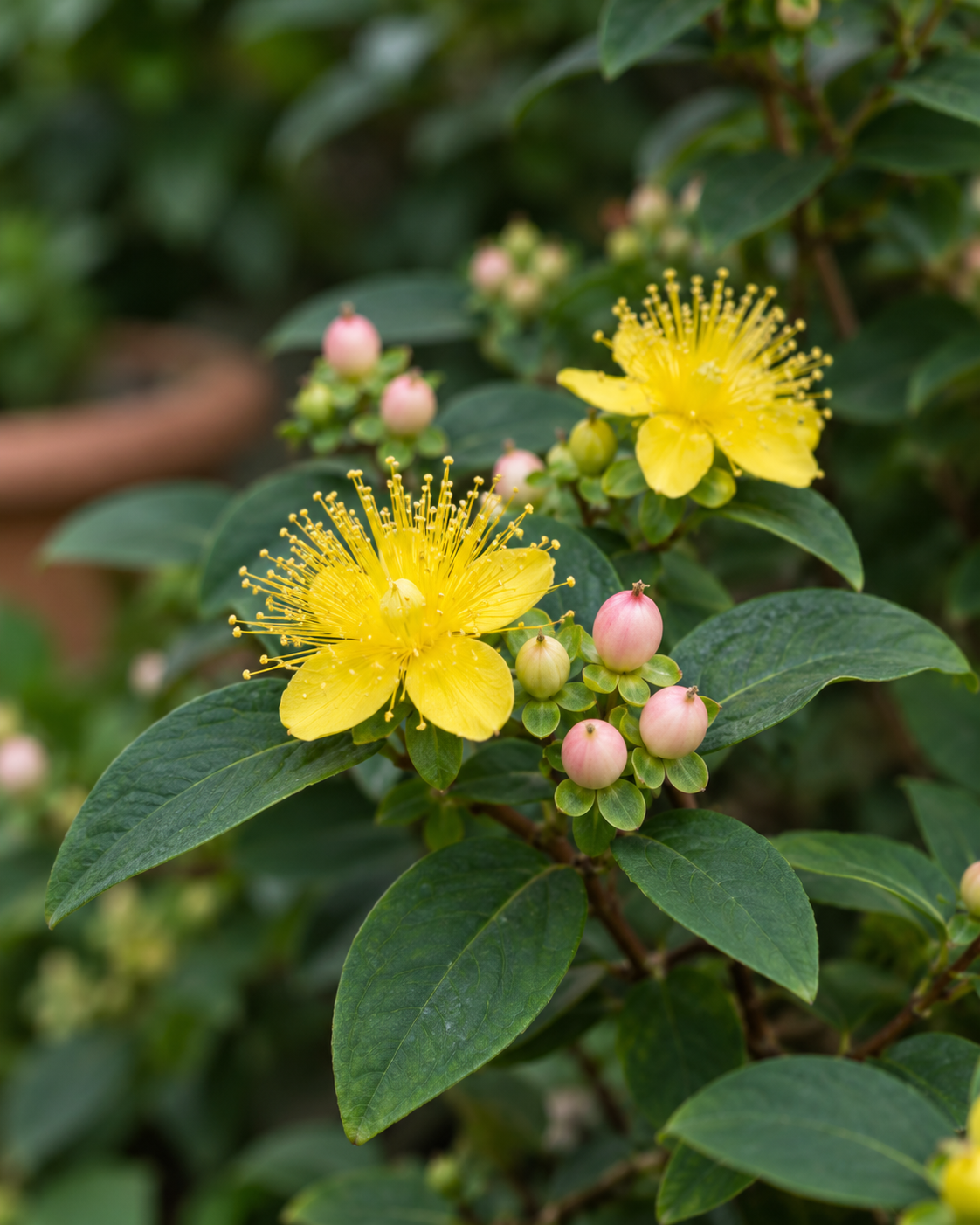

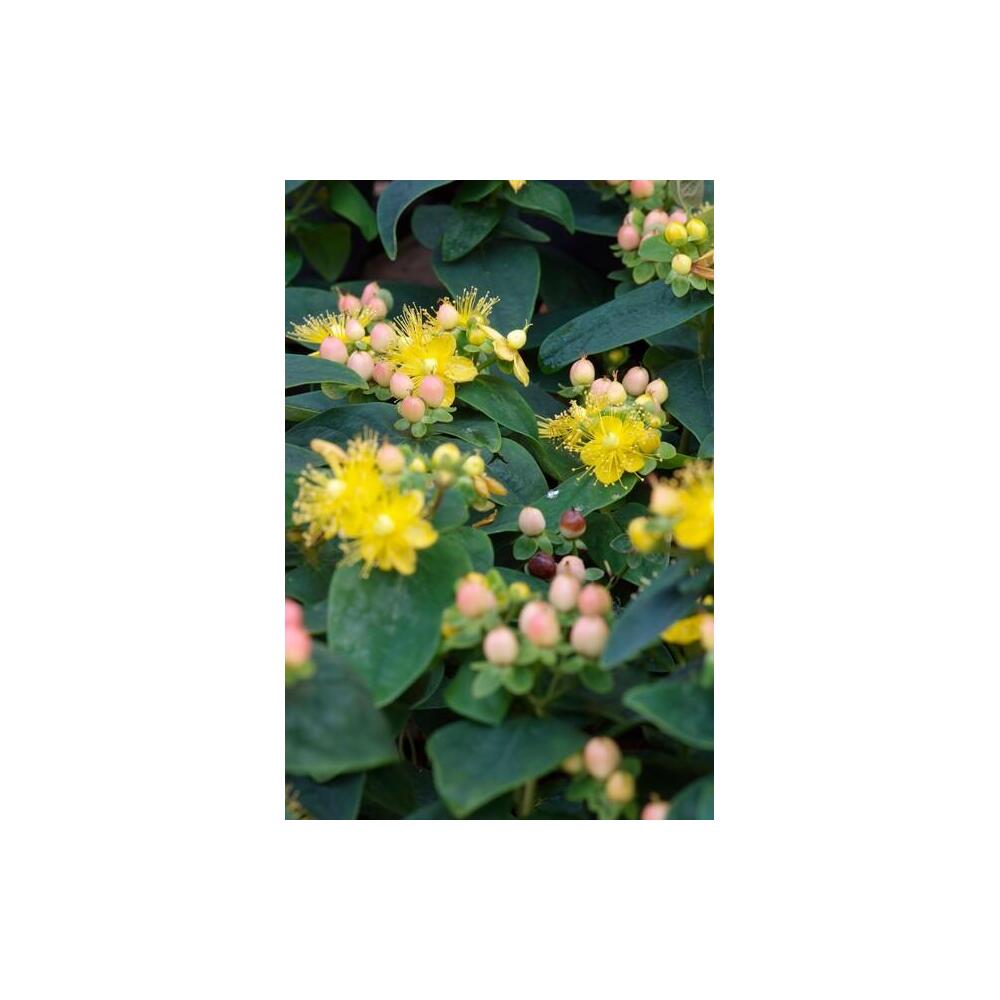
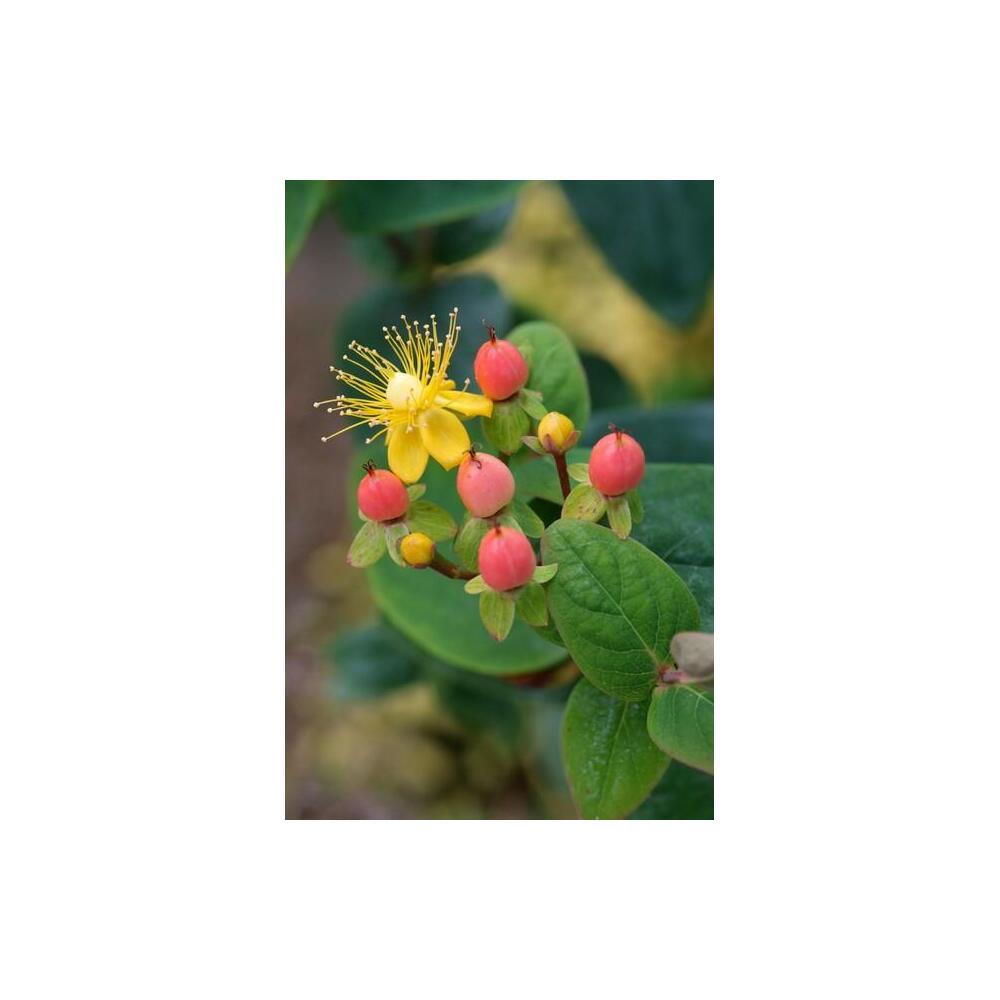
Good to know
Is Annebel a distinct cultivar?
Yes, a named selection of Hypericum × inodorum.
How tall does Annebel grow?
About 80 cm as cultivar guidance, separate from delivery height of 10–25 cm including pot.
When does it flower?
In summer, roughly June to August as producer guidance.
Must the young plant already carry fruit?
No. Flower and fruit pictures show later development, not guaranteed delivery features.
How do I plant a group?
With about 40–50 cm spacing as shop guidance; allow for greater sideways development.
Does the pot need drainage?
Yes. Water reserves are useful; roots permanently standing in water are not.
Sources and editorial note
- Exotenherz: currently read parent offer (3 October 2026)
- Exotenherz: currently orderable child offer (3 October 2026)
- RHS: accepted cultivar name Annebel (accessed 3 October 2026)
- WTM de Boer: specific cultivar height and summer flowers (accessed 3 October 2026)
- International Dendrology Society: hybrid group (accessed 3 October 2026)
Identity, parent offer and selectable child offers read publicly on 3 October 2026. Specialist sources read directly; quantity variants belong to this one plant portrait. RHS confirms Annebel as an accepted cultivar name; profile has no cultivation height of its own. 80 cm/June–August come from the specific WTM cultivar profile. No unsupported exact final colour promised.