
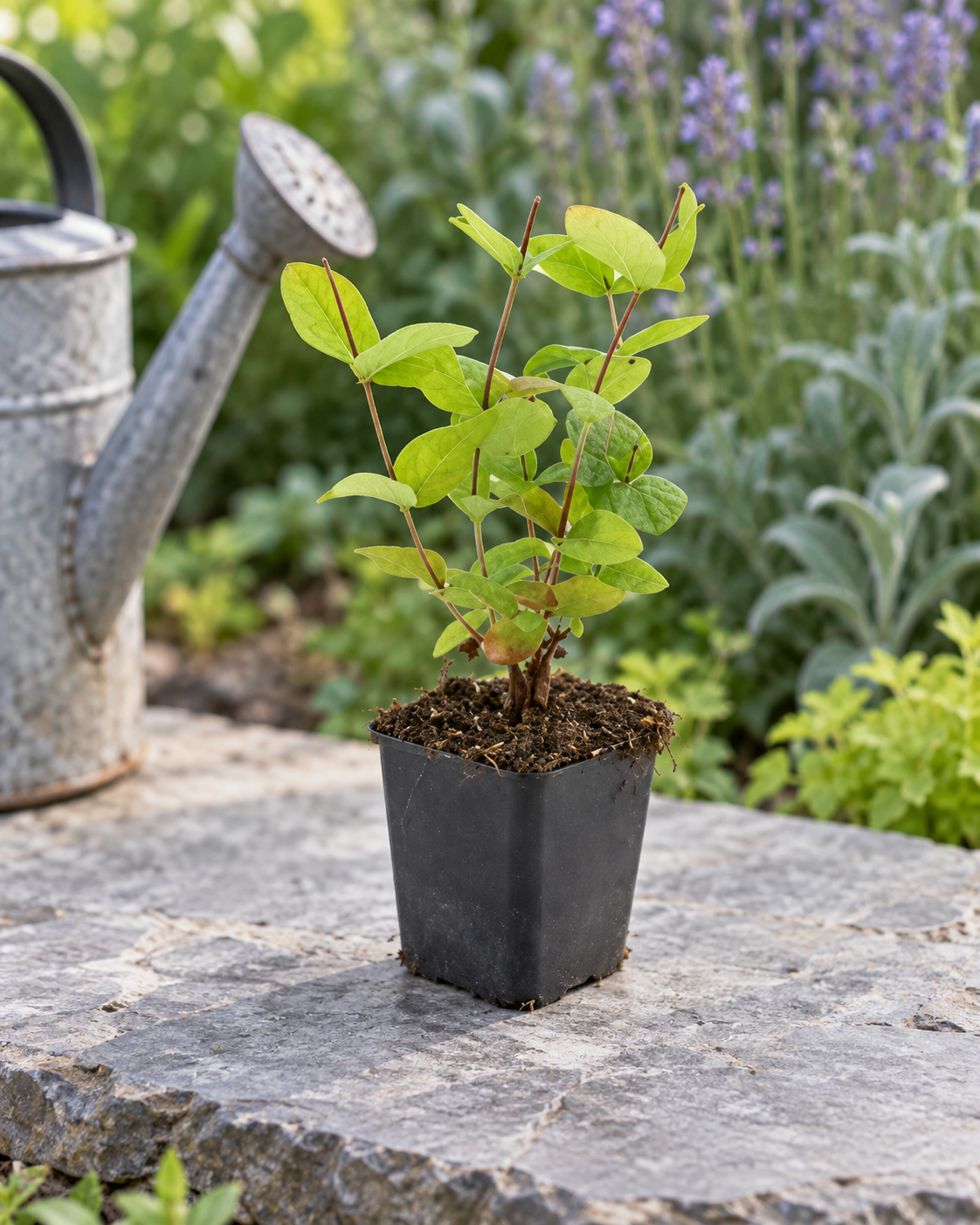
This plant at Exotenherz
Check the shop offer for current availability, price and what is included.
Check the shop for the current price, availability and offer contents.
Your care table
| Topic | What to do | Why it helps |
|---|---|---|
| Light | Choose sun to partial shade in a visible garden spot. | The annual picture switches between leaves, flowers and fruit. |
| Soil | Provide fresh well-drained soil. | The future shrub crown needs reliable root conditions. |
| Planting | Plant the moist ball at its old height and water in. | Soil contact enables further rooting. |
| Water | Check moisture at the root ball, not only the surface. | The young sales-pot zone has limited reserves. |
| Feeding | Supply modestly as needed during spring growth. | Extra nutrients alone do not guarantee fruit. |
| Spacing | Plan later width beside small perennials. | Dense groups grow together and easily obscure lower neighbours. |
| Pruning | Remove dead wood in spring and arrange the desired form. | A clear framework makes leaf and shoot checks easier. |
| Pot | Protect a larger outdoor container and keep drainage open. | The older cultivar needs more root space than the small delivery plant. |
Check the compost and pot weight. The care table explains how far the compost may dry.
Water only when needed. The water should reach the root ball without spilling over the rim.
Remove surplus water from the saucer or cachepot. Then return the plant to a suitable position.
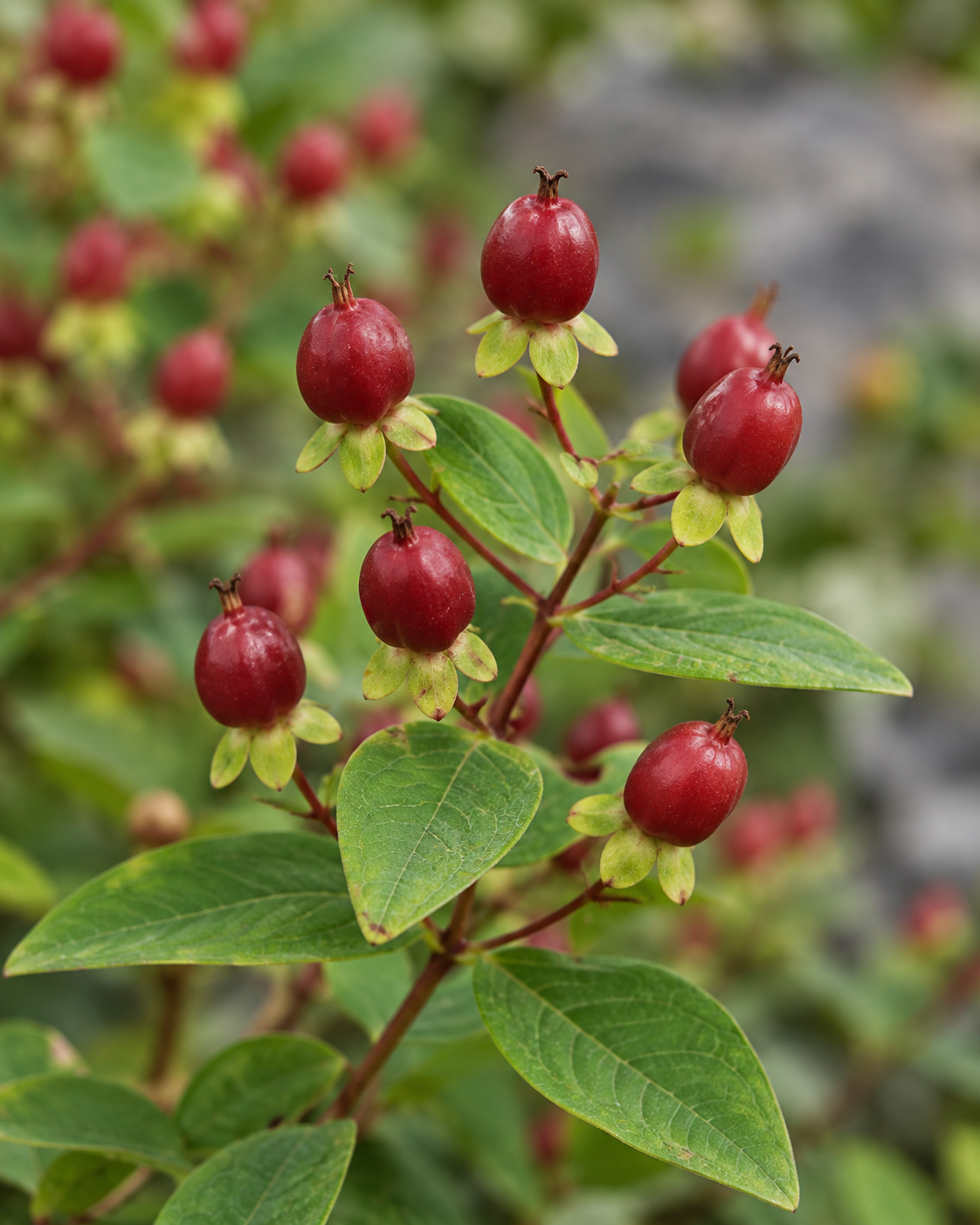
A fruit picture belonging to the garden year
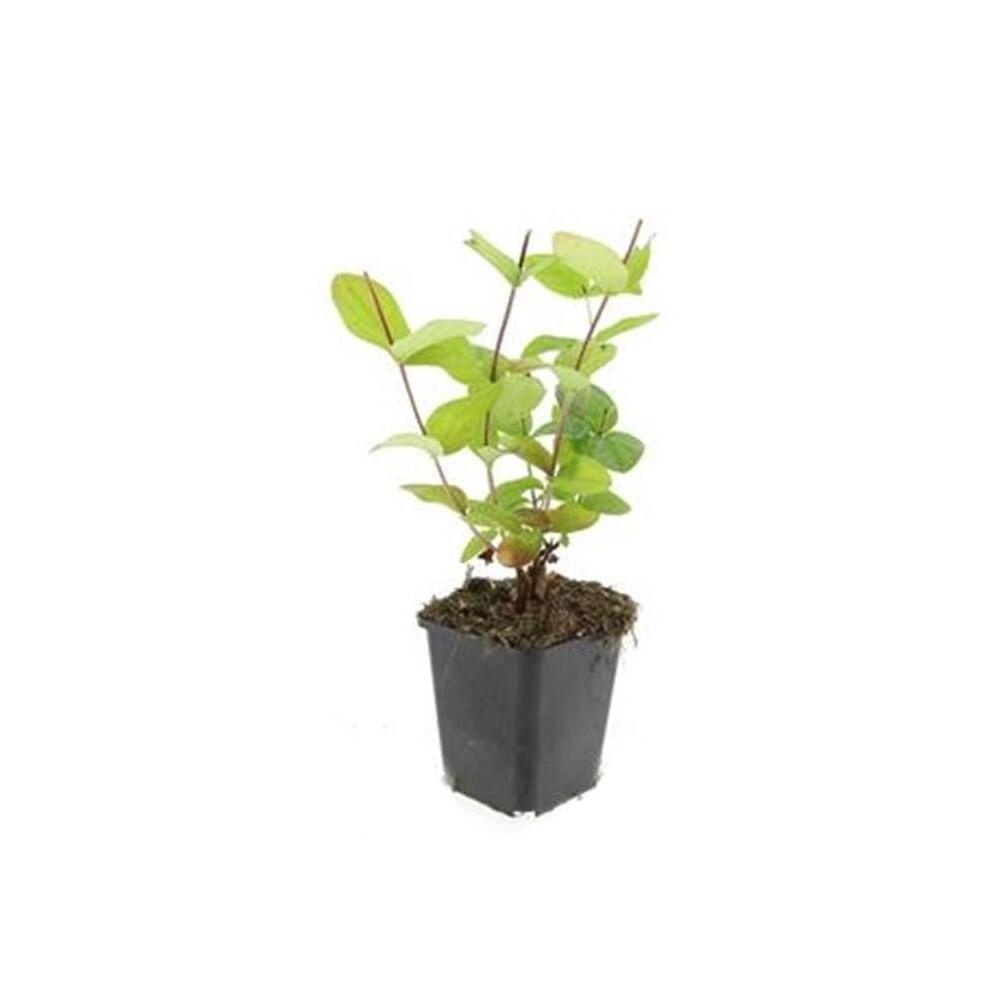
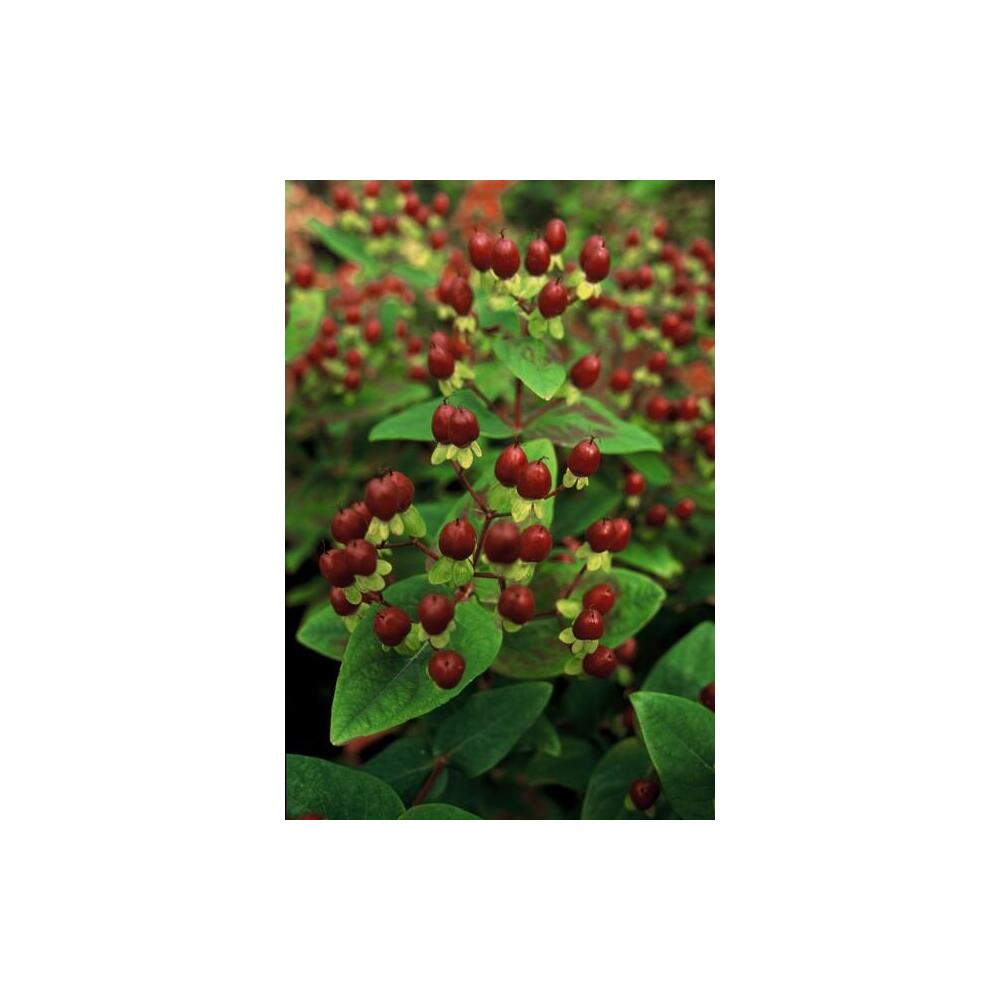
Beauty stands out in original photos with red berry-like fruits among oval green leaves. Before them come yellow flowers with many stamens. The shrub therefore offers different points of interest: living green structure first, then summer flowers and later ornamental fruit. A place near a path invites close observation of these changes. The young potted plant need not yet carry that later picture. Inferring immediately fruiting delivery from the red fruit photo would mislead. Look at the actual original view of the small plant and plan the developed shrub as a later possibility.
Beauty stays this specific garden selection
Beauty here names a distinct selection of Hypericum × inodorum. Producer ranges list it independently of Magical Beauty. A short similar name is not enough to borrow particular fruit colours or features from that other trade selection. This portrait stays with the offered Beauty and its original photos. It is a woody ornamental shrub. Yellow flowers alone do not reliably distinguish St John’s worts; form, leaves and fruit also matter. Keep the full cultivar name for your garden decision rather than classing it as any low yellow St John’s wort.
Separate free shrub space from set size
Delivery starts in a 9 cm pot at about 10–25 cm total height including pot. A developed Beauty shrub may reach roughly 80–100 cm. The cultivation profile guides spread at around 90 cm. This noticeably changes its relationship with lower perennials. Shop spacing of 40–50 cm suits a group growing together, not permanently separate small individuals. Lay sets out before planting and consider future side branches too. Allow more space if each shrub should remain a visible individual shape. Ordered count describes delivery contents, not suitable garden size.
Good garden soil lies beneath visible green
Sun and partial shade suit Beauty. Choose soil providing moisture while draining excess water. A moist surface is not a reliable sign of deeper root-ball conditions, especially with a younger shrub. Compacted subsoil may hold water after heavy rain; near a warm wall, its small root zone may dry quickly instead. Prepare the area for these real conditions. A container needs sufficient space, stable soil structure and open drainage. Later colourful fruit is supported by the whole healthy plant, not just a pretty sunny picture spot.
From small root ball into the first shrub season
Spring or suitable early autumn work well for the start if soil is frost-free and not waterlogged. Moisten the ball thoroughly and plant at its old height. Bring soil into side contact and water slowly. During establishment, check at the planting site that water actually reached the ball. An older large shrub uses a wider soil area; the young plant cannot yet. For little initial growth, check moisture, light and soil contact before adding fertiliser. Modest feeding according to need goes further than a blanket high fertiliser plan.
Fruit views do not replace leaf checks
Yellow flowers open in summer, often June to August and sometimes into September in suitable conditions. Fruit appears afterwards or among further flowers. Development and quantity depend on the year. Treat fruit decoratively, not as something to snack on. Regularly check leaves for unusual spots or coatings too. Normally ageing foliage differs from a change on many young shoots. For a shrub with changing colours, look precisely at where the change occurs. Raising water or fertiliser together does not explain why certain leaves suddenly appear damaged.
Support the older framework with calm pruning
In spring, first look at living wood and fresh growth. Remove dead or badly placed branches with clean tools; further correction follows the desired shape. A winter with fewer leaves does not automatically require the same action as a dead shoot. Container plants remain protected outdoors with appropriate root protection and free drainage. Check moisture on frost-free days, especially where little rain reaches. Sideways development becomes clearer over the years. Keep paths and lower neighbours free so Beauty remains a distinct green shape with changing flowers and fruit.
One plant, several views
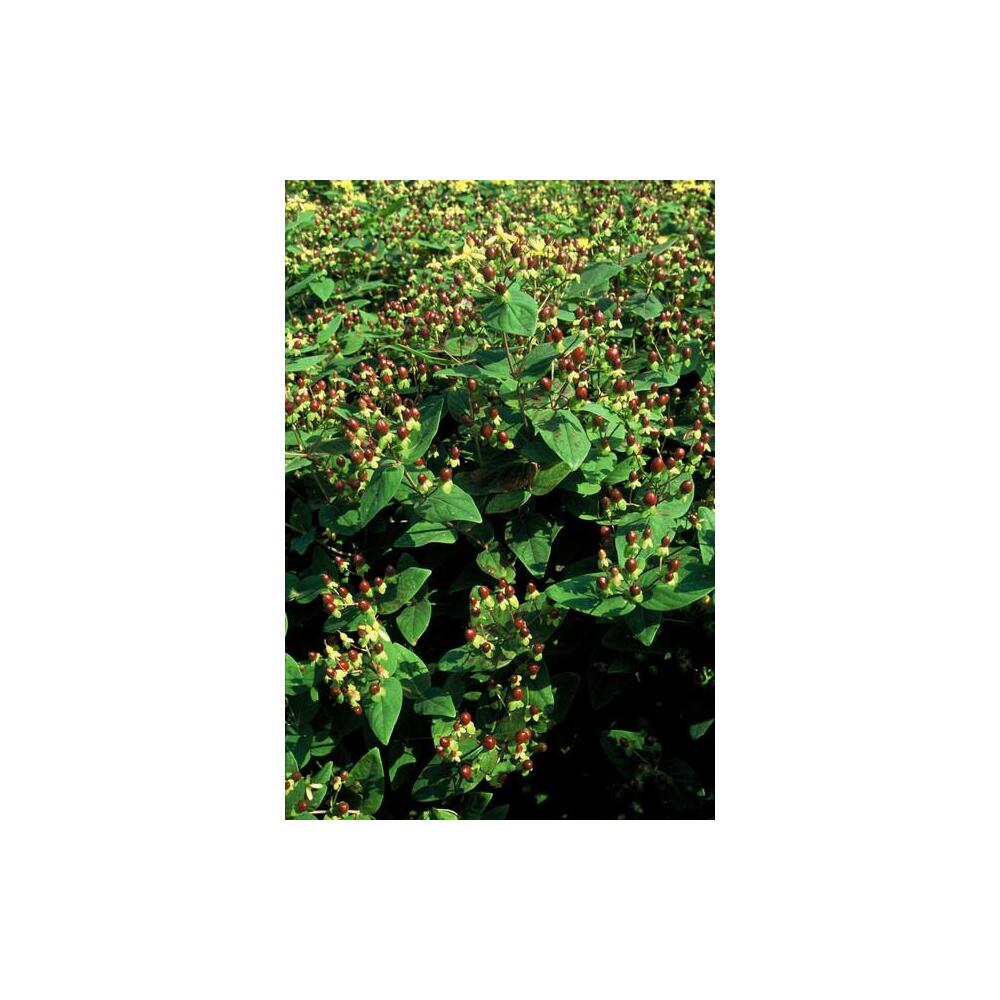
Good to know
Is Beauty the same as Magical Beauty?
The portrait follows Beauty offered independently and listed separately by producers; Magical Beauty features are not transferred.
How large does Beauty grow?
About 80–100 cm tall and roughly 90 cm wide as cultivation guidance, not an exact promise.
What colour are its flowers?
Yellow. Striking later ornamental fruit belongs to another development phase.
Should I expect a fruiting delivery?
No. Original fruit images show developed plants, not guaranteed features of the young order.
Are the fruits for eating?
They are treated as ornamental fruit and not offered for consumption.
Can Beauty stay permanently in a 9 cm pot?
The small sales pot is for the start. An older shrub needs sufficient root space and free drainage.
Sources and editorial note
- Exotenherz: currently read parent offer (3 October 2026)
- Exotenherz: currently orderable child offer (3 October 2026)
- WTM de Boer: Beauty separate from Magical Beauty (accessed 3 October 2026)
- Jan den Hertog: independent Beauty selection (accessed 3 October 2026)
- Jardin du Bout du Ciel: specific cultivar cultivation and dimensions (accessed 3 October 2026)
- International Dendrology Society: hybrid group and fruit variation (accessed 3 October 2026)
Identity, parent offer and selectable child offers read publicly on 3 October 2026. Specialist sources read directly; quantity variants belong to this one portrait. WTM lists Beauty and Magical Beauty separately; no equation with Kolmbeau. WTM 80 cm/Jardin du Bout du Ciel 100 cm provide 80–100 cm guidance; 90 cm spread from direct cultivar cultivation. Red fruit matches the shop original, without delivery guarantee.