
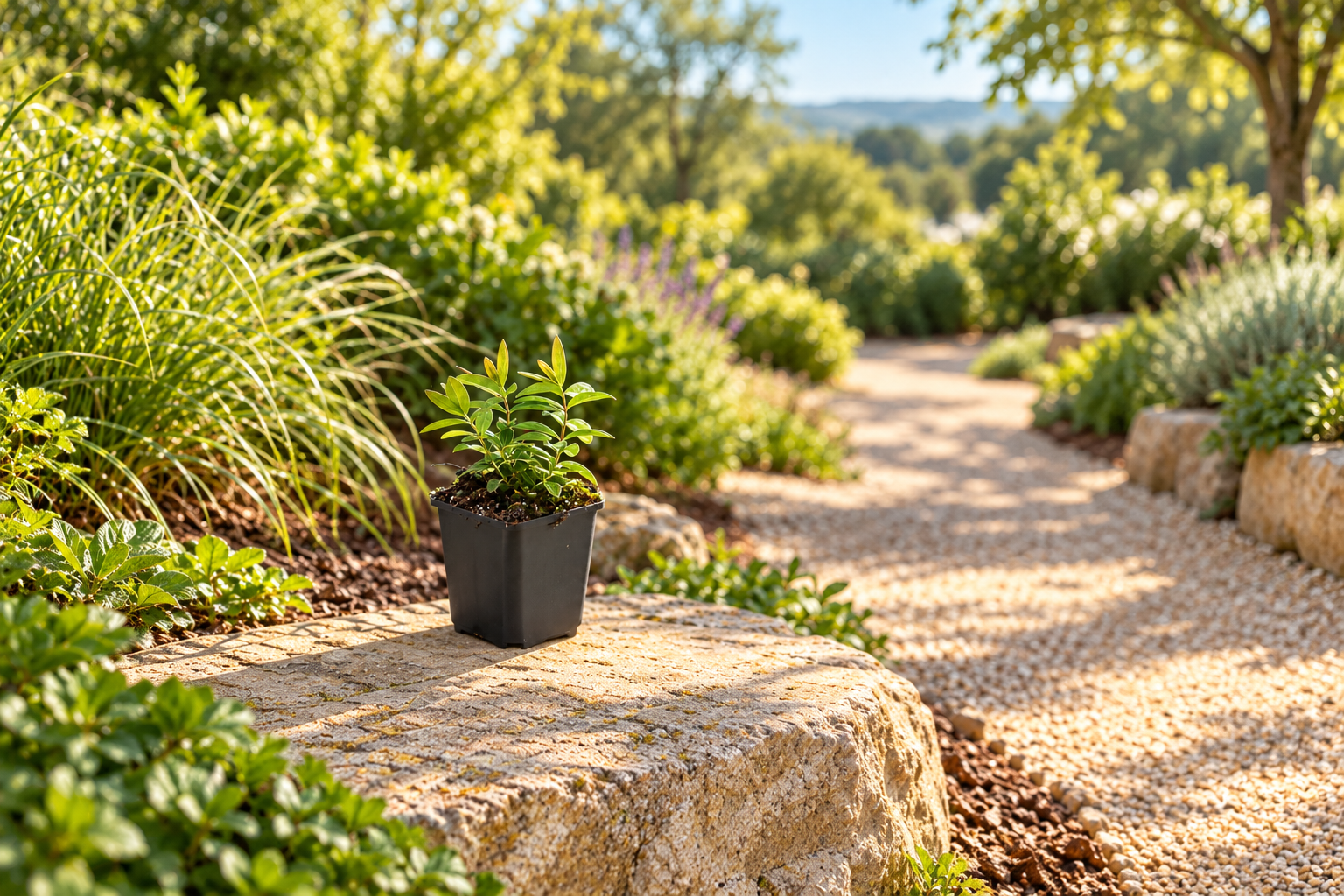
This plant at Exotenherz
Check the shop offer for current availability, price and what is included.
Check the shop for the current price, availability and offer contents.
Your care table
| Topic | What to do | Why it helps |
|---|---|---|
| Place | Choose a continuous area with controllable edges. | The plant spreads underground and may crowd small neighbours. |
| Light | For more flowers, seek a bright sunny to partially shaded position. | Deeper shade is possible but usually gives fewer flowers. |
| Planting | Plant a moist ball at its previous height, firm and water in. | Good contact with surrounding soil helps young roots establish. |
| Water | Check the ball directly in the first year and water thoroughly when dry. | Later drought tolerance does not replace supply to a newly planted specimen. |
| Soil | Relieve compaction and avoid standing wetness. | Roots need water and air in the soil together. |
| Nutrients | Feed modestly in spring according to need. | A vigorous groundcover does not need constant high fertiliser amounts. |
| Pruning | Cut back old or frost-damaged stands in spring. | Fresh shoots can renew the area; healthy young plants need not be constantly cut. |
| Edges | Lift encroaching runners specifically and check adjoining areas. | Desired groundcover should not wander unnoticed into sensitive planting. |
Check the compost and pot weight. The care table explains how far the compost may dry.
Water only when needed. The water should reach the root ball without spilling over the rim.
Remove surplus water from the saucer or cachepot. Then return the plant to a suitable position.
Flowers that surprise up close too
Yellow is more than a colour on the garden surface here. Numerous fine stamens stand in the middle of a five-part flower like a small radiating crown. Together with paired green leaves, they make a calm planting gaining bright points in summer. Hypericum calycinum grows low and spreads sideways. At a woodland edge or larger bank, this form can suit a continuous area. One young plant initially shows only a small part of it.
A small pot begins a bigger area
The offered plant comes in a 9 cm pot at roughly 10 to 25 cm total height including pot. The shop gives 30 to 35 cm spacing or about eight to eleven plants per square metre. This describes dense initial planting, not each specimen’s permanent boundary. Underground runners enlarge the stand later. Roughly 30 to 60 cm is a helpful mature-height range; site and pruning change the picture. Plant with the whole area and its boundaries in mind, not only today’s planting hole.
Light brings summer colour forward
Sun to partial shade fit well if water can soak away. St John’s wort may grow in shadier spots but often flowers less there. Under trees, check real moisture too: roots and intercepted rain can make shaded ground very dry. Plan small neighbouring perennials outside the later spreading zone. A path or clearly visible edge makes control easier. Among delicate slow-growing favourite plants, its area-covering ability would be a continuing task rather than a convenience.
Help the young root ball establish reliably
A mild frost-free planting day in spring or early autumn is easy to support. First soak a dry pot root ball slowly. Loosen soil around the hole and plant at its former height. Firm gently and water thoroughly. Over the following weeks, check the small root zone itself instead of relying only on the moist surface beside it. Later established plants tolerate temporary dryness better. That is development, not a property immediately sparing newly planted specimens all watering. Check more often on hot days without keeping the site permanently wet.
Care starts at the edge of the planting
Underground shoots may emerge elsewhere. They connect an area but may also pass its intended boundary. Occasionally look between neighbouring plants and along the path. Lift unwanted pieces with their roots while soil is workable. Such spreading growth is not the easiest choice for a small mixed balcony box. In a sufficiently large container of its own, it instead needs open drainage and regular root-ball checks. A pot dries differently from an established garden area.
Restore order with fresh growth
Much foliage may remain through mild winters; harsher cold kills some parts. Spring condition decides pruning. An unattractive older stand can be cut back and renewed by fresh shoots; a healthy young stand needs no routine major intervention. Assess feeding modestly after tidying. A thin suitable compost application or fertiliser according to need does more than continued extra feeding. Do not simultaneously prune heavily, keep wet and feed strongly to conceal a winter leaf change quickly.
Not every yellow leaf has the same cause
If the area weakens, examine soil, roots and foliage together. Standing wetness, prolonged dryness and damaged leaves require different steps. For conspicuous rust-coloured spots, inspect undersides too and remove heavily affected parts appropriately. One old leaf among fresh shoots is not a reason to treat the whole planting. Watch whether new growth returns evenly. Large yellow flowers remain the attractive focus while spreading and root conditions are managed consciously.
One plant, several views
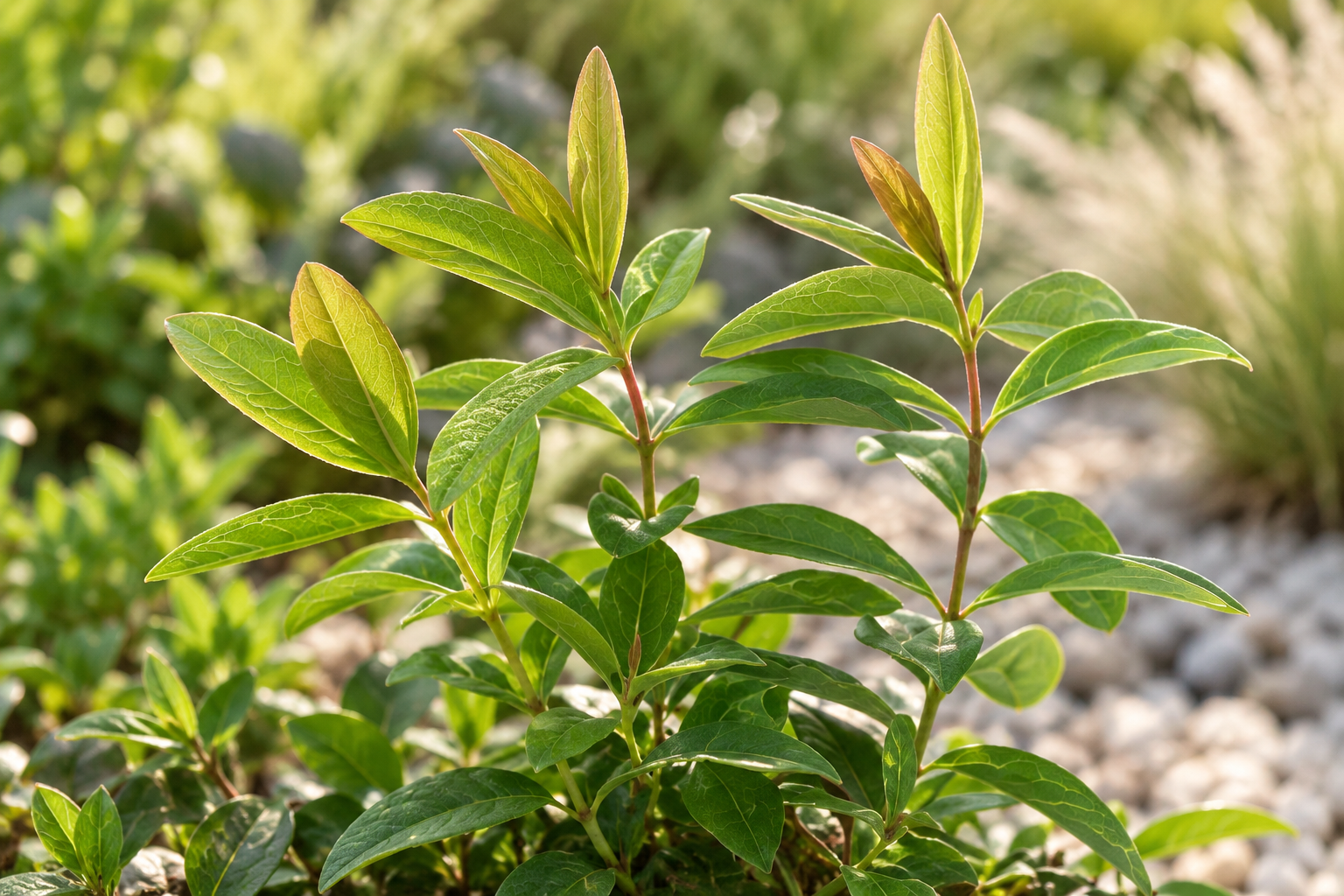
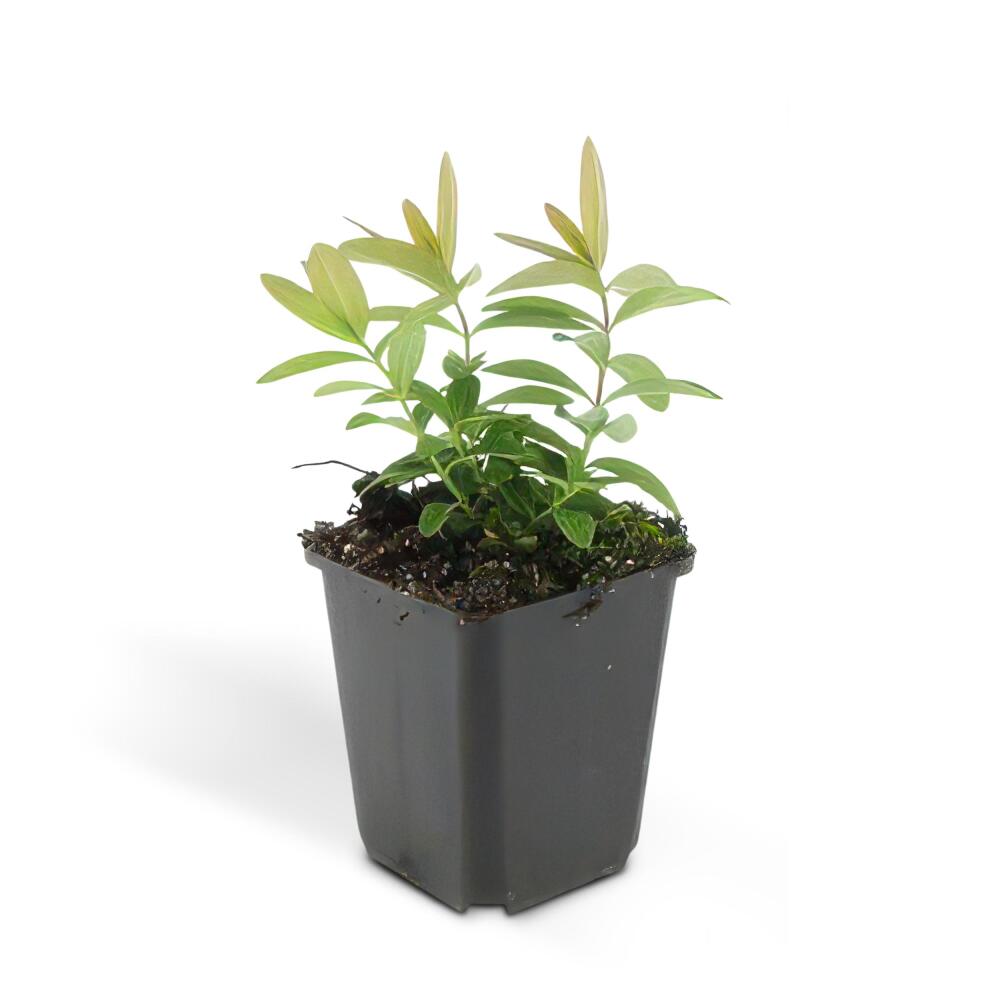
Good to know
Is it a small perennial or shrub?
Hypericum calycinum is a low perennial subshrub spreading sideways. It does not stay restricted to its young pot-root-ball shape.
Does it flower in shade?
It can grow there. A sunny to partially shaded position is usually better for more flowers.
Does foliage stay green in winter?
Often partly or largely in mild sites. Cold may damage leaves and shoots; complete retention is not promised.
Can I plant it closely among small perennials?
That requires ongoing checking. Underground runners may crowd neighbours; its own continuous area is clearer.
Why water in a drought-tolerant plant?
The young plant must first grow roots into its surroundings. Until then, mainly its small former pot ball supplies growth.
Must everything be cut back every spring?
No. Condition and desired renewal decide. Old or damaged stands can be reduced; healthy young plants do not automatically need that.
Sources and editorial note
- Exotenherz: offer and original images (3 October 2026)
- RHS: Hypericum calycinum – position and habit (3 October 2026)
- NC State Extension: Hypericum calycinum (3 October 2026)
- Exotenherz: checked 6-plant child offer (3 October 2026)
- Exotenherz: checked 12-plant child offer (3 October 2026)
- Exotenherz: checked 20-plant child offer (3 October 2026)
- Exotenherz: checked 40-plant child offer (3 October 2026)
- Exotenherz: checked 60-plant child offer (3 October 2026)
Shop offer, article number, availability and original images checked directly on 3 October 2026. Specialist sources and both species profiles read directly. Runners, light, flower form and foliage reaction compared. No berry colour transferred: NC State species description gives capsules. Height range from Extension 30–45 cm and RHS about 60 cm expressed as site guidance; no exact final height promised. All five child offers read freshly and individually, with SKU, GTIN where present and availability documented; orderable counts: 6, 12, 60. Scene shows one plant; count follows selected set.