
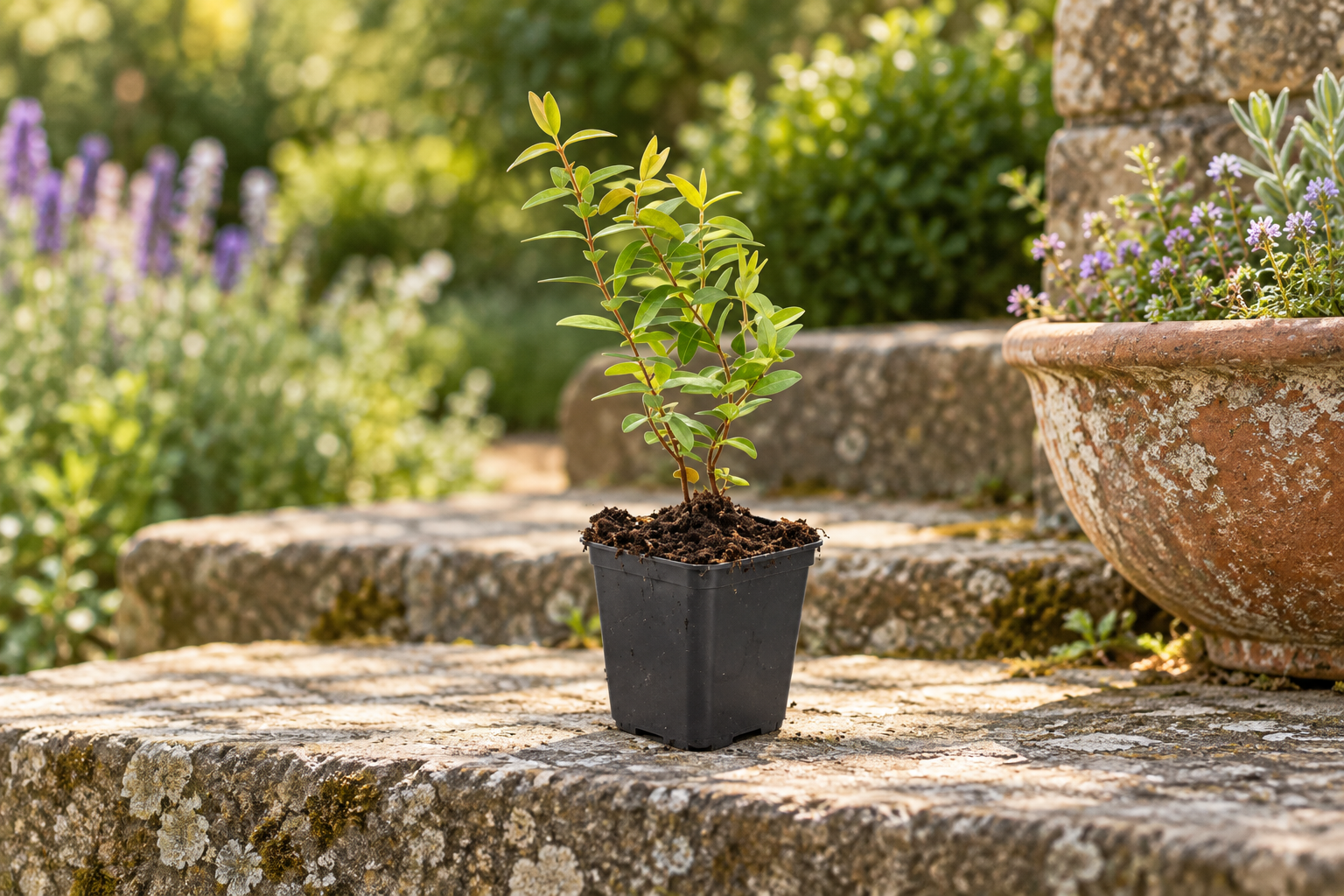
This plant at Exotenherz
Check the shop offer for current availability, price and what is included.
Check the shop for the current price, availability and offer contents.
Your care table
| Topic | What to do | Why it helps |
|---|---|---|
| Light | Choose sun to partial shade. | Equally abundant flowers are not expected in dense shade. |
| Water | Check young root balls during establishment and water thoroughly as needed. | A small container has not yet explored garden soil widely. |
| Soil | Provide well-drained normally supplied soil. | Long-standing wetness burdens roots. |
| Planting | Plant a thoroughly moist ball at its old height and water in. | Good contact connects new roots to their surroundings. |
| Space | Consider sideways development and taller branches. | Hidcote is a shrub, not a permanently few-centimetre-high carpet. |
| Pruning | Lightly shape after flowering as needed; remove dead wood specifically. | Do not equate its care with flat Hypericum calycinum. |
| Feeding | Consider bed supply and supplement modestly only if needed. | More fertiliser offsets neither poor light nor wet soil. |
| Winter | Choose shelter and protect containers from strong root temperature changes. | Leaf retention and shoot damage depend on the specific winter and position. |
For young plants, feel the soil directly at the root ball. The surface and deeper soil may have different moisture levels.
Water thoroughly after planting; later, water according to the soil, weather and establishment rather than a fixed calendar.
Avoid standing water. For plants in containers, also check that water runs out of the drainage hole.
Golden bowls over dark green
Hidcote first catches attention with its open flower form. Five golden-yellow petals make a broad bowl with many fine stamens in its middle. Dark foliage makes the warm tone visible. Flowers sit on a branching ornamental shrub, not a permanently flat carpet. New flowers may appear through summer into early autumn depending on weather and position. A freshly delivered young plant need not carry those flowers yet. Look just as carefully at narrow paired green leaves and young branching: they show the framework of its future garden picture.
A St John’s wort for the garden, not the home medicine cabinet
The shop lists Hypericum Hidcote. RHS places the cultivar as Hypericum × hidcoteense ‘Hidcote’; these name versions refer here to the same described ornamental shrub. Do not infer that every St John’s wort is identical. The familiar medicinal image of Hypericum perforatum is neither identity evidence nor a use recommendation for this offer. Hidcote is planted for flowers and shrub habit. Ornamental fruit is no promise either: the Polish nursery association’s read cultivar profile describes Hidcote without fruit set. Flowers, leaves and understandable garden care remain the key features.
From a 9 cm pot to a branching shrub
Selectable sets contain young plants in individual 9 cm pots. About 10 to 25 cm total height including pot describes delivery. Later shrub height is often about 80 to 120 cm; specialist profiles also give a 1 to 1.5 m size class. Site and development affect the actual value. Plan sideways spread too. The shop gives 50 to 60 cm spacing for connected planting. More space may suit individually visible shrubs or small neighbouring perennials. Lay pots out before planting so a narrow path does not later run through spreading growth.
Consider light and drainage together
A sunny to partially shaded outdoor spot suits Hidcote. In dense shade, do not expect the same abundant flowers as at a brighter edge. Check soil after rain too: water must drain. A persistently wet hollow stays problematic even with enough sun. Beneath trees, dry soil may instead burden young root balls. Check moisture and structure at the intended spot. Containers need adequate root space and free drainage holes. The small sales pot is a start, not evidence that a developed shrub can remain well supplied in that volume permanently.
Connect the young root ball carefully
Spring or early autumn are often pleasant planting times in frost-free soil that is not waterlogged. Summer planting requires assured water support. Wet the ball fully before removing the pot and plant at the same height. Bring soil into contact, water slowly and then check the actual young root zone. A moist surface further away says little about the old container ball. Water as needed to reach roots and let excess escape. Only new roots explore surrounding reserves. Do not treat an older garden plant and a newly planted young specimen with the same rigid calendar.
Support the cultivar with light pruning
Hidcote is managed as a shrub. After flowering, a light shape correction can arrange encroaching branches; remove damaged or dead wood specifically. Do not automatically transfer pruning ideas for low Hypericum calycinum. Before acting, check which branches actually disturb and where healthy growth sits. In normally supplied garden soil, frequent extra feeding is not an aim itself. In containers, follow actual growth and the fertiliser label. If flowers decline, first inspect light, water and development. Additional nutrients do not make a dark or long-waterlogged place suitable.
Winter green depends on winter
Hidcote is described as partly evergreen. How much foliage remains depends on weather and position; shoots may suffer in cold winters. Choose shelter where possible and watch fresh growth after cold weather before hastily cutting the whole shrub back. Containers have less temperature buffering than garden soil. Put them protected outdoors and check root-ball moisture on frost-free days. Do not routinely water frozen soil. A planned edge, functional drainage and close attention to young branches give this golden garden plant a better start than blanket hardiness or flower promises.
One plant, several views
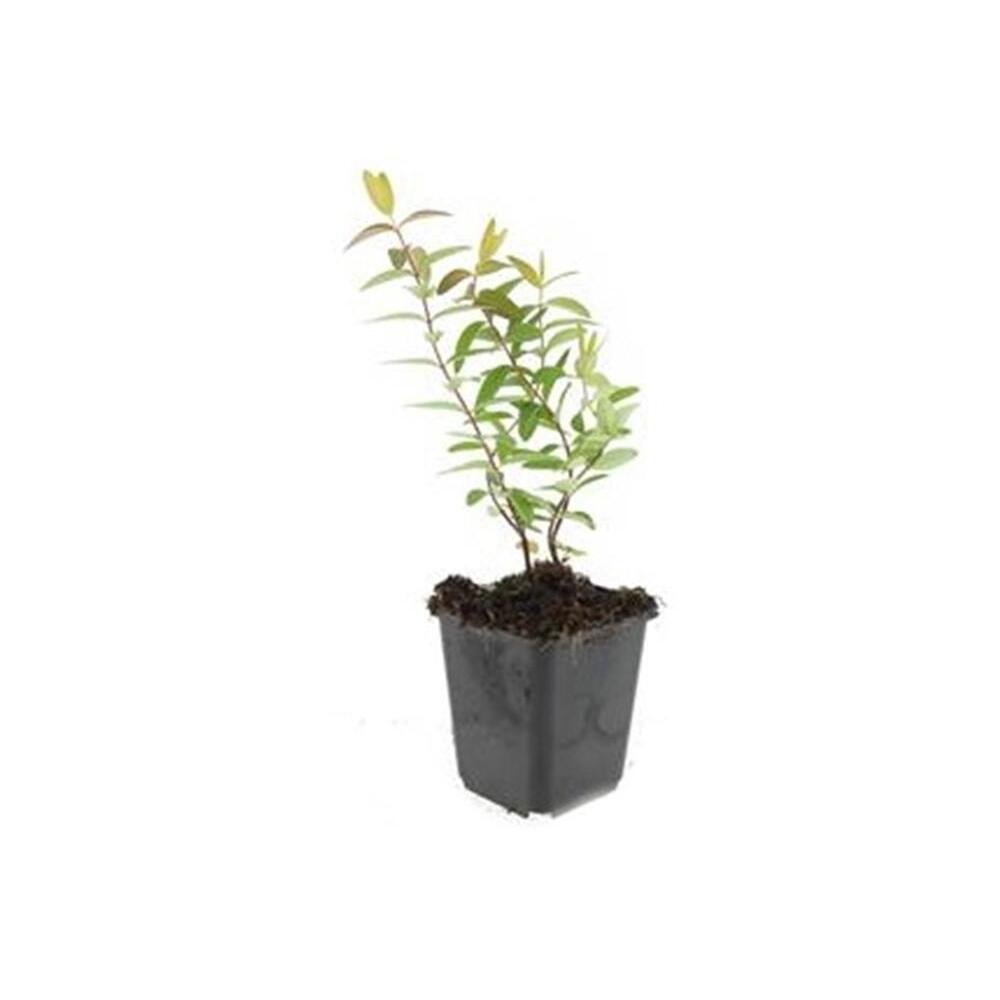
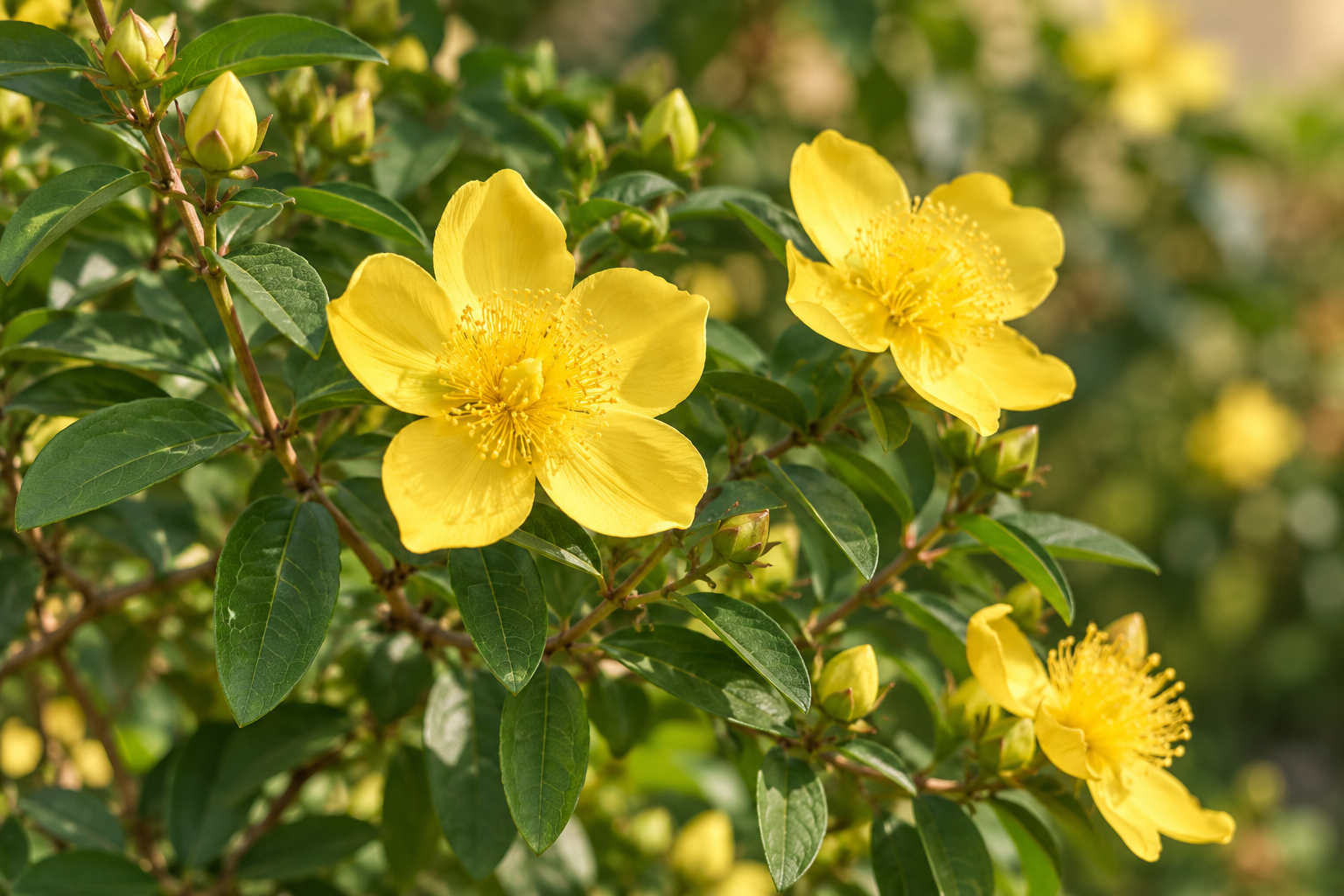
Good to know
Is Hidcote the same flat groundcover as Hypericum calycinum?
No. It is a bushy ornamental shrub with much more height; pruning and space are considered separately.
When does Hidcote flower?
In summer to early autumn depending on weather and development. A young plant need not flower on delivery.
Why are different botanical names listed?
The shop says Hypericum Hidcote, RHS Hypericum × hidcoteense ‘Hidcote’. The same documented cultivar is described here.
How tall does it grow?
Often about 80–120 cm; profiles also give 1–1.5 m as a size class. Delivery height including pot is separate.
Can I make tea from it?
This offer is presented as an ornamental shrub. Membership of Hypericum is not a recommendation for consumption or medicinal use.
Does it stay green in winter?
Partly possible, depending on location and winter. Leaf retention and undamaged shoots are not promised.
Sources and editorial note
- Exotenherz: offer and original images (3 October 2026)
- RHS: Hidcote – cultivar profile read directly (3 October 2026)
- Związek Szkółkarzy Polskich: Hidcote – cultivar profile (3 October 2026)
- RHS: Hypericum and care (3 October 2026)
- RHS: evergreen pruning group 8 (3 October 2026)
- Exotenherz: checked 6-plant child offer (3 October 2026)
- Exotenherz: checked 12-plant child offer (3 October 2026)
- Exotenherz: checked 20-plant child offer (3 October 2026)
- Exotenherz: checked 40-plant child offer (3 October 2026)
- Exotenherz: checked 60-plant child offer (3 October 2026)
Offer, article number, availability and original images checked directly on 3 October 2026. Specialist sources read directly: Hidcote identity, shrub form, summer flowers and conditional leaf retention. Shop density arithmetic not transferred; no medicinal or fruit promise. Pruning group 8 rather than calycinum cutting back. All five child offers checked; available counts: 6, 12, 60. Clean original view unchanged; young scene and later flower detail labelled separately.