

This plant at Exotenherz
Check the shop offer for current availability, price and what is included.
Check the shop for the current price, availability and offer contents.
Your care table
| Topic | What to do | Why it helps |
|---|---|---|
| Light | Provide sun to partial shade. | A bright position supports flowering shrub development. |
| Soil | Choose well-drained soil without permanent waterlogging. | The small woody shrub needs an aerated root zone. |
| Planting | Wet the ball beforehand and plant at its former height. | The delivery plant initially uses only the small ball. |
| Water | Check regularly during rooting and water thoroughly according to need. | Later reserves emerge with the wider root system. |
| Feeding | Supply modestly in spring if needed. | Extra fertiliser replaces neither light nor good soil contact. |
| Pruning | Correct dead shoots and unsuitable branching in spring. | New structure determines later shrub form. |
| Pot | Choose a sufficient outdoor container with free drainage. | Small sales pots are not permanent space for an older shrub. |
| Winter | Put containers in shelter; check condition before spring pruning. | Semi-evergreen describes variable leaf retention, not an identical winter view. |
Check the compost and pot weight. The care table explains how far the compost may dry.
Water only when needed. The water should reach the root ball without spilling over the rim.
Remove surplus water from the saucer or cachepot. Then return the plant to a suitable position.
Flowers light up the small shrub
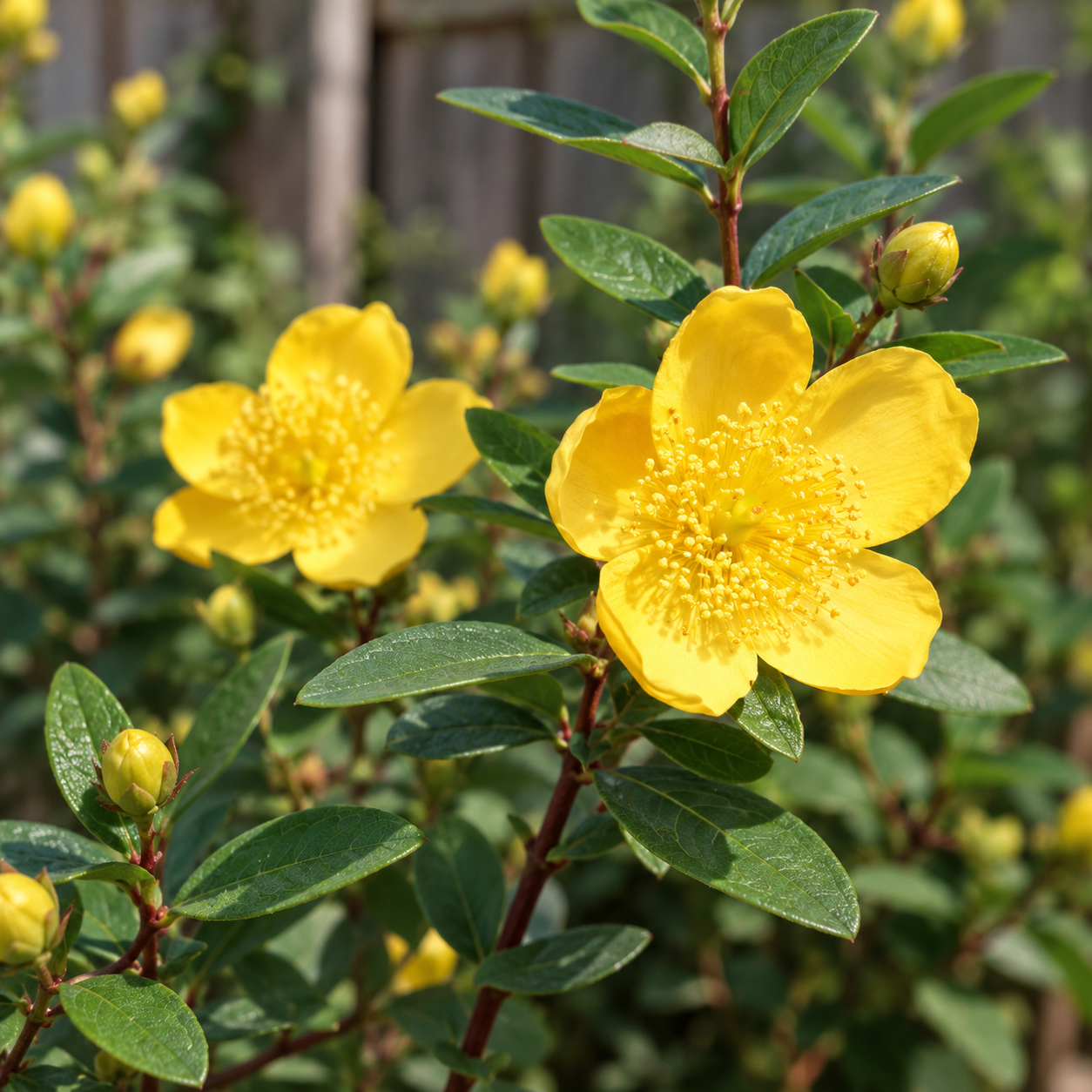
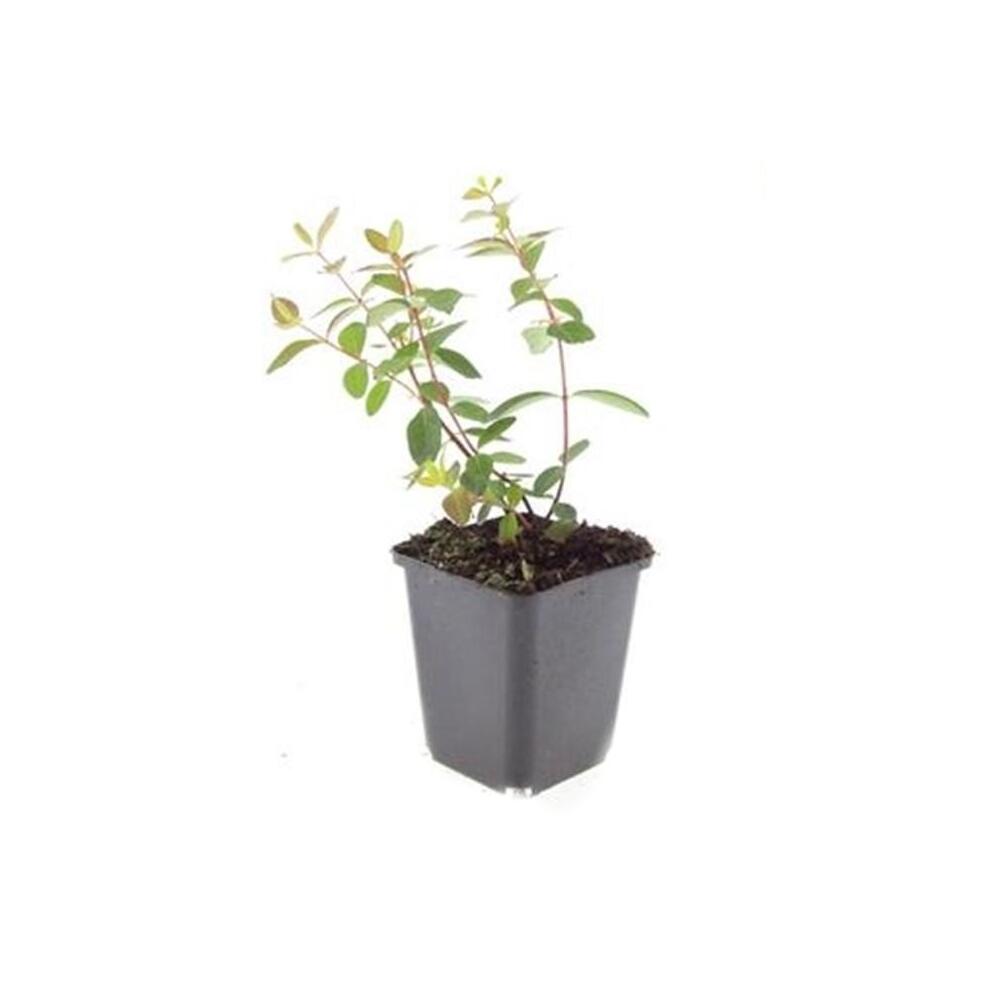
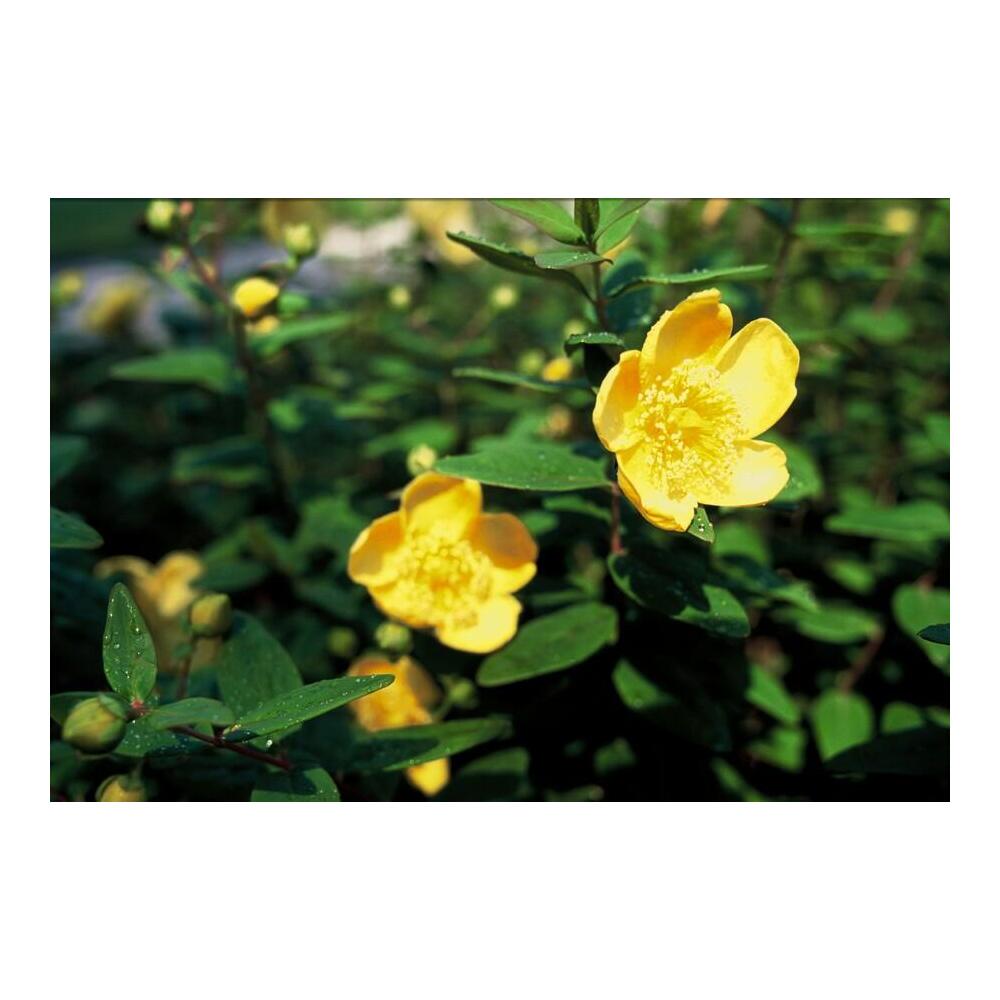
Peter Dummer has yellow bowl flowers with a prominent centre of many stamens. Below stand elongated green leaves whose undersides may look paler. Flowers belong to a small woody shrub, not low turf. In a mixed bed it can form its own summer area in front of taller woody plants. The young sales-pot plant initially shows only a small framework. Even a later especially floriferous shrub need not carry open flowers on delivery. Getting to know leaves and shoots first usually assesses structure better than a single summer flower picture.
A documented hybrid cultivar for the garden
Its botanical name is Hypericum × dummeri Peter Dummer. The cross marks its hybrid classification; the cultivar name preserves the particular selection. Other St John’s worts may grow very differently or emphasise flowers and fruit differently. Measurements from a taller fruit shrub are therefore not transferred here. It is an ornamental woody garden plant. The name St John’s wort makes no claim about medicinal use. Planning focuses on low woody growth, elongated foliage and yellow flowers that can extend from summer into autumn in suitable conditions.
Start small and keep sideways space free
Set plants each stand in a 9 cm pot at about 10–25 cm total height including pot. About 30–70 cm guides older shrub height; cultivation and site change its framework. Different cultivar profiles describe a lower or more developed stand, not an exact final height for every plant. The offer gives about 50–60 cm spacing. Lay pots out and consider the group as future shrubs with side branches. Initially visible soil is no planting mistake. Close to a path or among small sensitive perennials, later branches instead need repeated attention.
A bright place needs suitable root soil
Sun to partial shade suits the cultivar. Observe the intended position through the day, especially beside a warm wall. Much light helps, but a heated small pot surface can dry the young ball faster. In beds, prepare loose well-drained soil and check where water goes after heavy rain. A hole in compacted surroundings should not become a wet tub. In containers, free drainage and stable soil structure matter. Pretty surface decoration or a sunny flower photograph cannot show whether enough air and reliable drainage exist underneath.
Remember the small balls in the first season
Plant in spring or suitable early autumn when soil is frost-free, workable and not waterlogged. Wet the ball, carefully remove the pot and plant at its old height. Water thoroughly afterwards. In following weeks, check directly at the ball whether water reaches it and how quickly it dries again. An older shrub gains more root space; those later reserves do not excuse neglecting a young specimen. Well-supplied soil does not automatically call for much extra fertiliser in young growth. Light, soil contact and moisture first explain its entry into the first season.
Consider flowering and pruning together
The cultivar is described with yellow flowers from July to October. This is a possible summer-to-autumn course, not a promise of open flowers every day throughout. Weather, location and age affect visible flowering. In spring, remove dead parts and arrange branching appropriately. Wait to see which shoots actually regrow rather than judging bare winter twigs by colour alone. Clean targeted pruning helps keep a manageable form. Last year’s flowers are a useful reminder of space, not a fixed pruning plan for every garden.
Support the low shrub through winter
Peter Dummer is semi-evergreen. Some foliage may remain while cold and position change its appearance. It stays outdoors; an outdoor container needs shelter, appropriate root protection and open drainage. Check moisture on frost-free days, especially beneath a roof. In spring, first look for new buds and living shoots. Individual old leaves or a more open winter framework do not automatically make it unusable. If whole shoots change noticeably, check roots and seek the cause. The next summer starts with a healthy structure, not as much extra fertiliser as possible.
One plant, several views
Good to know
Is Peter Dummer perennial?
Yes, a small woody ornamental shrub.
When do flowers appear?
Described for summer to autumn, about July to October; weather and location alter timing.
What colour are the flowers?
Golden yellow to yellow-orange with prominent stamens.
Is 10–25 cm its garden height?
No. That is total young delivery-plant height including pot.
How far apart do I plant the sets?
About 50–60 cm according to the shop as guidance; consider side branches and neighbours.
Does it stay entirely green in winter?
Semi-evergreen means leaf retention varies with winter and site.
Sources and editorial note
- Exotenherz: currently read parent offer (3 October 2026)
- Exotenherz: currently orderable child offer (3 October 2026)
- Ebben Nurseries: specific hybrid cultivar, flowers and cultivation (accessed 3 October 2026)
- WTM de Boer: Peter Dummer in the producer range (accessed 3 October 2026)
Identity, parent offer and selectable child offers read publicly on 3 October 2026. Specialist sources read directly; quantity variants belong to this one portrait. × dummeri confirmed by Ebben and institutional plant lists. Ebben 30–50 cm and WTM 70 cm explained as cultivation-dependent height guidance; no colour cultivar inferred from × inodorum.