
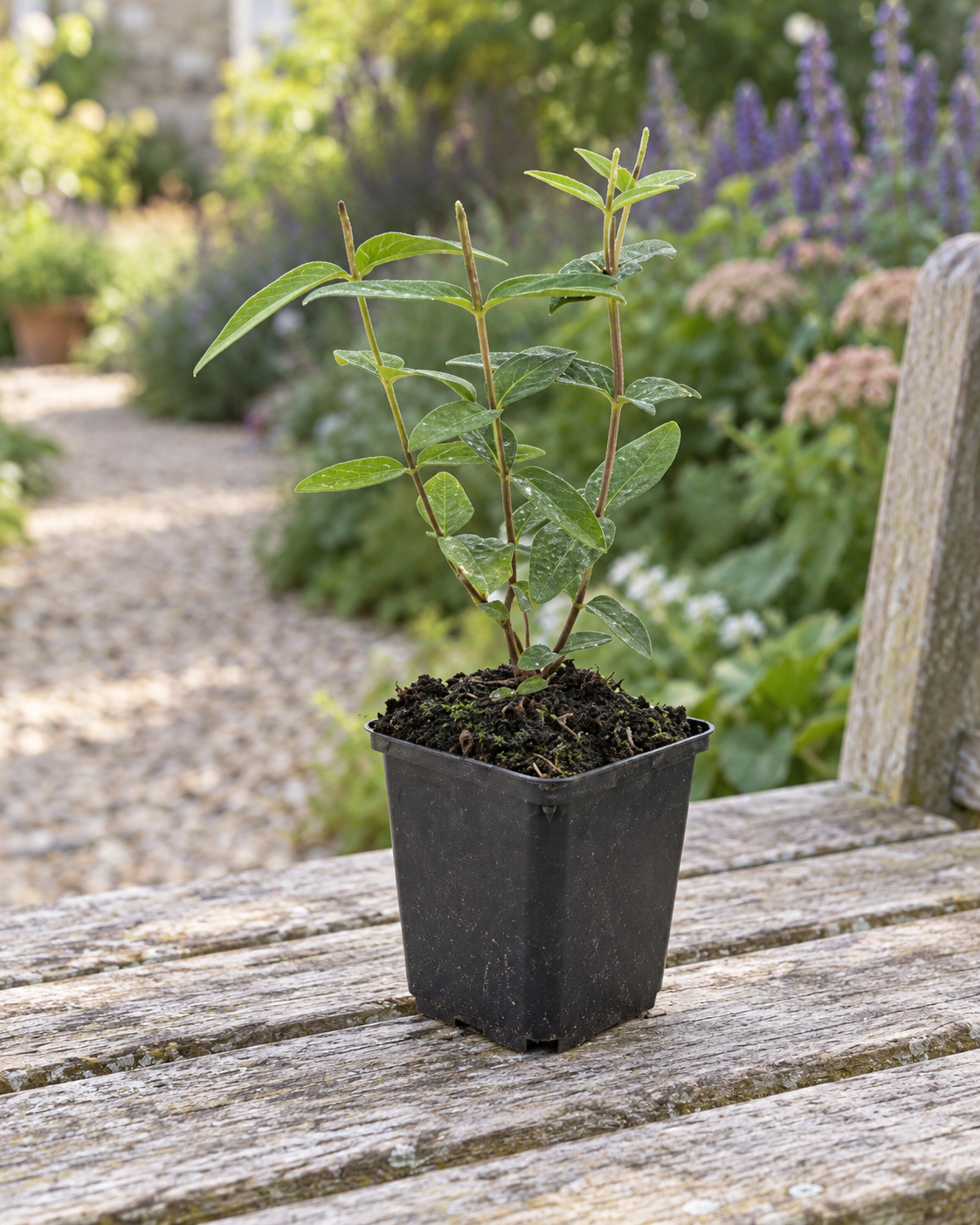
This plant at Exotenherz
Check the shop offer for current availability, price and what is included.
Check the shop for the current price, availability and offer contents.
Your care table
| Topic | What to do | Why it helps |
|---|---|---|
| Light | Provide sun to partial shade. | Paired leaves and later fruit need a suitable garden place. |
| Soil | Choose fresh well-drained soil. | Moisture should supply roots without permanently collecting. |
| Planting | Plant a thoroughly wetted ball at its old height. | The young delivery plant still needs to explore more soil. |
| Water | Check directly at the ball during establishment and water thoroughly. | Dark soil beside it may conceal a dry pot ball. |
| Spacing | Plan the roughly metre-wide later form. | Dense groups and free-standing individuals have different space aims. |
| Pruning | Correct dead wood and awkward branches appropriately in spring. | A living clear framework supports further development. |
| Health | Check leaves for unusual rust spots or coatings. | This specific cultivar may be susceptible; fruit colours are not leaf problems. |
| Winter | Protect outdoor containers and keep drainage open. | Semi-evergreen leaves and limited roots require attention to moisture. |
Check the compost and pot weight. The care table explains how far the compost may dry.
Water only when needed. The water should reach the root ball without spilling over the rim.
Remove surplus water from the saucer or cachepot. Then return the plant to a suitable position.
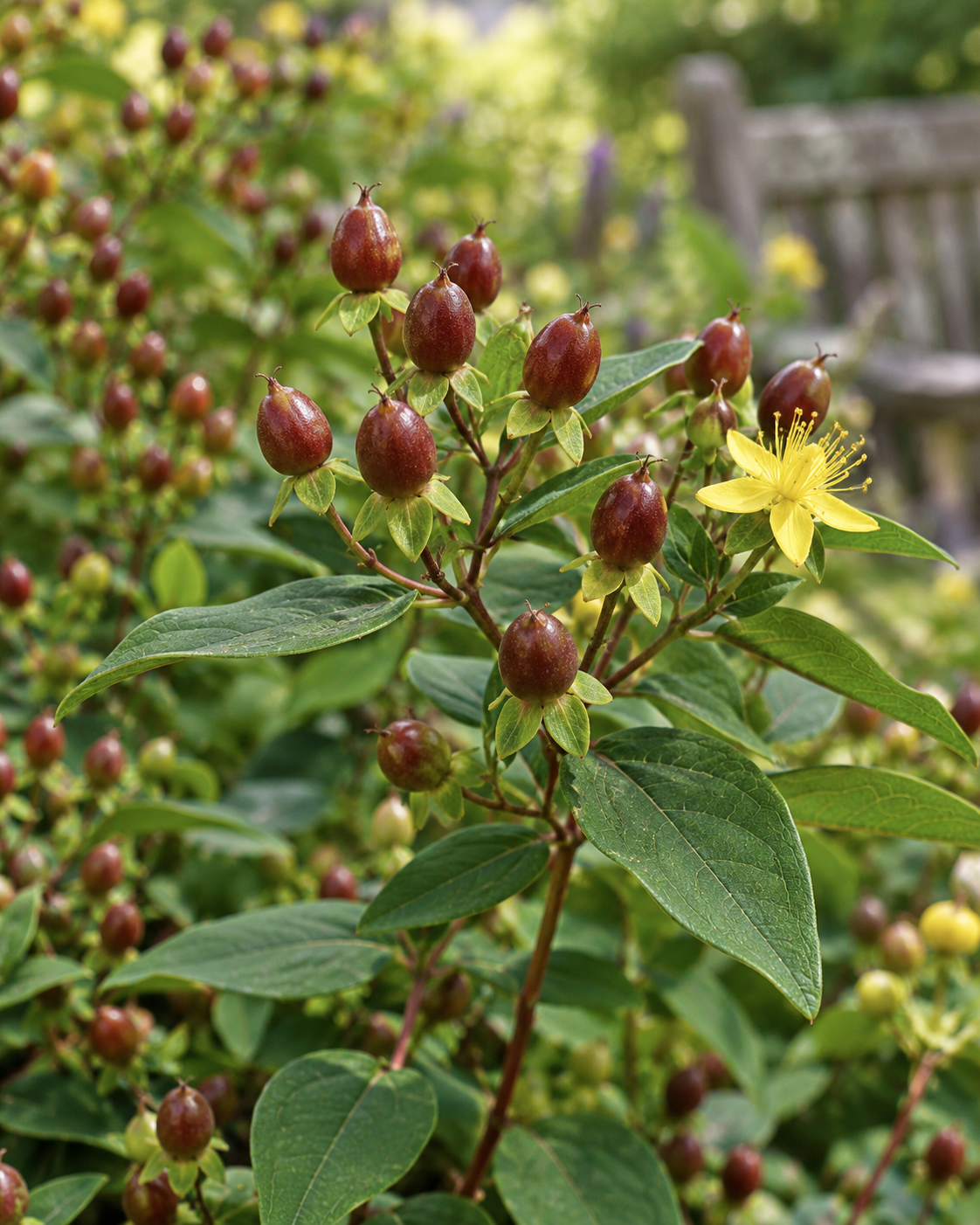
Small calyces belong to the ornamental fruit
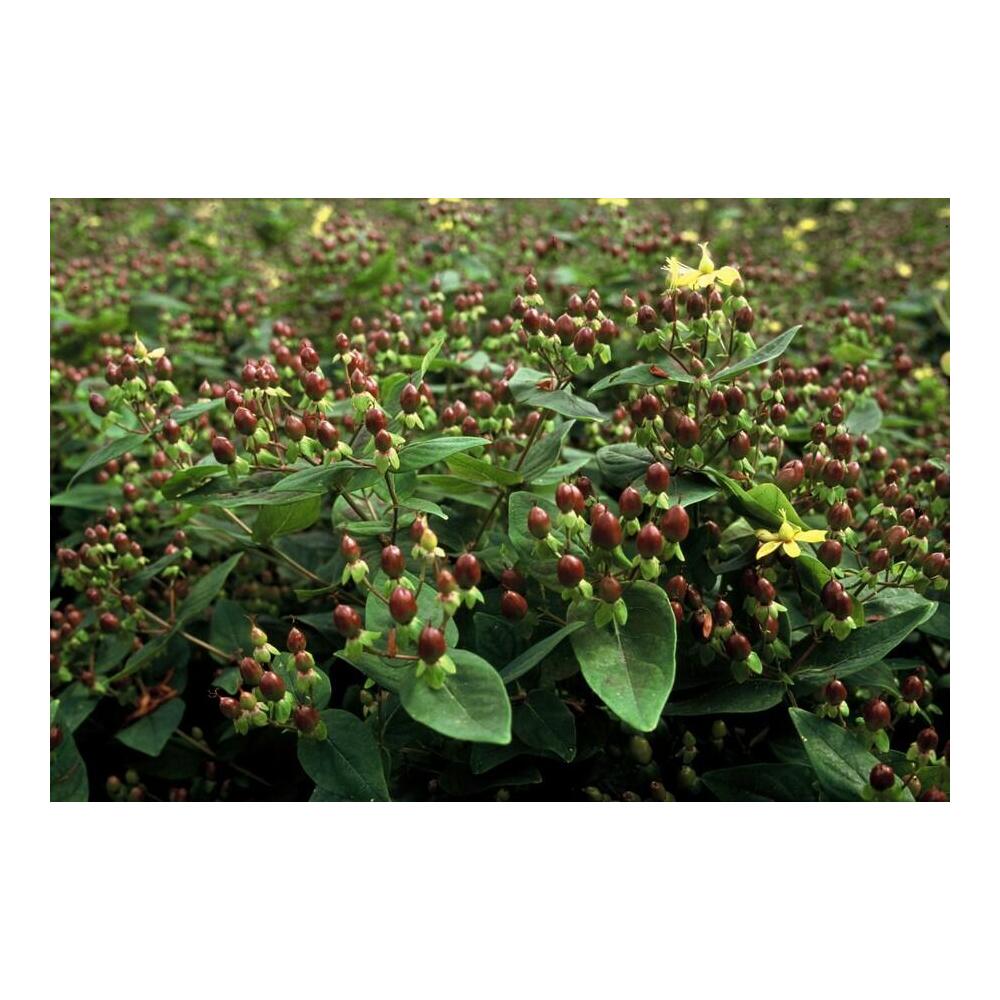
Look beneath Rheingold’s red berry-like fruits. Small yellow-green sepals remain there and make the fruit view especially clear. Before them are yellow flowers with many prominent stamens among paired green leaves. The shrub can therefore be interesting through several phases without flowering constantly. Young set plants usually begin with a few shoots. Their later red fruit view is a garden picture after development, not a guaranteed delivery state. That distinction helps avoid prematurely comparing an open young shrub with a fully fruiting original photo.
Get to know Rheingold as its own selection
The cultivar belongs to Hypericum × inodorum. Its full name with Rheingold fixes which plant this portrait follows. Another shrub in the same group may grow differently or carry fruits of other colours. Do not judge the selection only by St John’s wort as a general name. Rheingold is ornamental; its name contains no medicinal-use recommendation. Its specific combination of green leaf pairs, yellow flowers and later more elongated red fruits matters more for the garden picture. Beside a path, you can particularly appreciate the remaining calyx and each fruit cluster’s development.
Plan the metre-wide form calmly
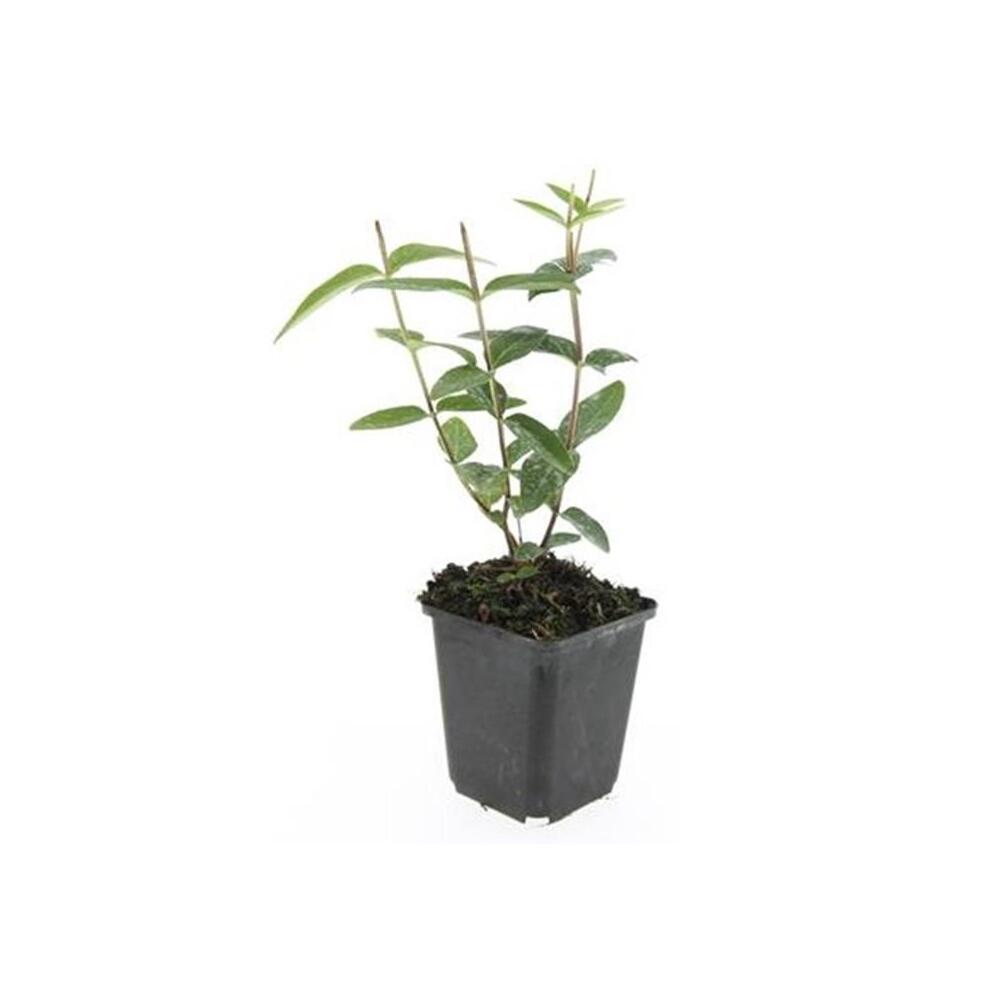
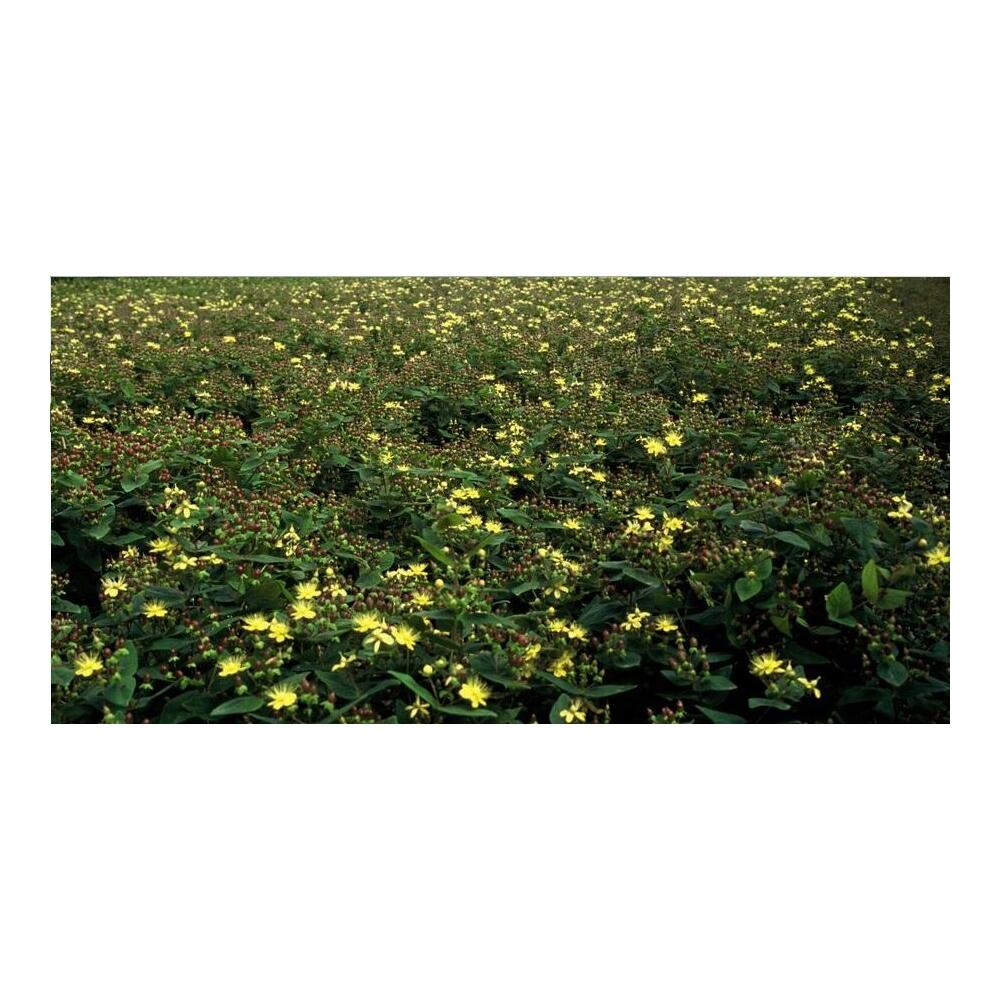
The offer gives about 10–25 cm total height including the 9 cm pot. Later comes a much larger shrub: roughly a metre tall and wide, in favourable conditions up to about a metre and a half. These guide planning, not exact measurements for every plant. Shop spacing of 40–50 cm produces a group growing together. A clearly distinct individual needs space for its side framework. Lay pots out first and consider the group from a distance. Rheingold can make a taller area before low perennials; among small slow-growing neighbours, its later width changes their space.
Water reserves in soil and free drainage
Sun to partial shade suits it. Soil should be fresh, holding water for roots without constantly submerging them. On heavy soil, check the whole planting zone rather than just a small hole’s surface. Heavy rain reveals whether water stands or drains. Outdoor containers need enough volume and stable soil structure. Keep drainage free; water must not collect invisibly inside a closed outer pot. Beside a heated wall, also check how quickly the small ball dries on warm days. Light and water conditions together decide a suitable spot.
Help the young shrub root deliberately
Spring or early autumn are good starting points if soil and weather allow planting. Wet the ball first and plant at its old height. Bring soil into side contact and water slowly. During the first weeks, check moisture at the ball itself. Brief rain may make surroundings look damp enough while the pot zone still lacks water. The shrub explores more soil and other reserves later. Modest feeding as needed supports growth. A young plant with little fruit or an open framework does not automatically need more fertiliser; living shoots, soil contact and reliable water come first.
Consider summer flowers and leaf health separately
Rheingold is described with yellow summer flowers about June to August. Weather and site may change timing. Red ornamental fruit can appear afterwards or alongside further flowers, with calyces remaining beneath. It is decorative, not for consumption. Check leaves independently. Conspicuous spots or rust coatings differ from normal fruit ripening. Seek the specific change rather than simply raising water and fertiliser. A clear shrub is easier to watch than a tight group with scarcely visible inner branches. Remove dead material selectively with clean tools.
Rediscover the living framework in spring
Semi-evergreen means Rheingold’s leaf retention changes with winter and location. It may look more open in spring without all branches being dead. Wait for visible living buds and fresh growth before correcting form. Remove dead or unsuitable branching specifically. In a container, protect roots, put it more sheltered outdoors and keep drainage open. Check moisture on frost-free days, especially beneath a roof. Over the years, pruning also manages the intended shrub area. The later combination of green leaves, yellow flowers and red fruit clusters stays clear up close.
One plant, several views
Good to know
How tall does Rheingold grow?
About a metre, up to roughly 1.5 m in suitable conditions. Young delivery height including pot is separate.
How wide does the shrub grow?
About a metre as garden guidance; closely planted groups join together.
When does Rheingold flower?
In summer, about June to August as cultivar guidance; weather and site affect timing.
What sits beneath the red fruits?
Small persistent sepals are part of the normal fruit view.
Are the fruits suitable for eating?
They are treated as ornamental and not offered for consumption.
Does Rheingold stay green in winter?
Partly, depending on location and winter. Semi-evergreen does not promise an unchanged foliage picture.
Sources and editorial note
- Exotenherz: currently read parent offer (3 October 2026)
- Exotenherz: currently orderable child offer (3 October 2026)
- RHS: specific Rheingold cultivar, fruits and cultivation (accessed 3 October 2026)
- WTM de Boer: specific cultivar height and flowering time (accessed 3 October 2026)
- International Dendrology Society: hybrid group (accessed 3 October 2026)
Identity, parent offer and selectable child offers read publicly on 3 October 2026. Specialist sources read directly; quantity variants belong to this one portrait. RHS accepts the specific cultivar, describes about 1 m with a 1–1.5 m height class; WTM 1 m/June–August. No blanket frost promise. Visible red fruit clusters and persistent calyces match the original.