
This plant at Exotenherz
Check the shop offer for current availability, price and what is included.
The linked shop is in German. Product details, availability and delivery information are provided in that shop.
Your care table
| Topic | What to do | Why it helps |
|---|---|---|
| Light | Bright to partially shaded; avoid strong midday heat. | Leaves need daylight without heat stress. |
| Climate | Place in fairly cool conditions away from dry heating warmth. | Hot, dry indoor conditions encourage problems. |
| Water | Let the surface compost dry slightly; do not let the root ball parch. | Fine trailing shoots need a reliable supply. |
| Compost | Use loose compost and clear drainage holes. | Persistent wetness harms roots. |
| Feeding | Feed sparingly during growth according to the label. | Demand falls in a cool winter. |
| Pruning | Shorten overlong shoots above healthy leaves. | The plant stays manageable and can branch. |
| Checks | Check undersides regularly for webs and sap-sucking insects. | An early infestation is easier to contain. |
| Safety | Do not eat; keep away from children and pets and wear gloves when pruning. | Ivy can be harmful if eaten and through skin contact. |
Check the compost and pot weight. The care table explains how far the compost may dry.
Water only when needed. The water should reach the root ball without spilling over the rim.
Remove surplus water from the saucer or cachepot. Then return the plant to a suitable position.
A familiar leaf with two life stages
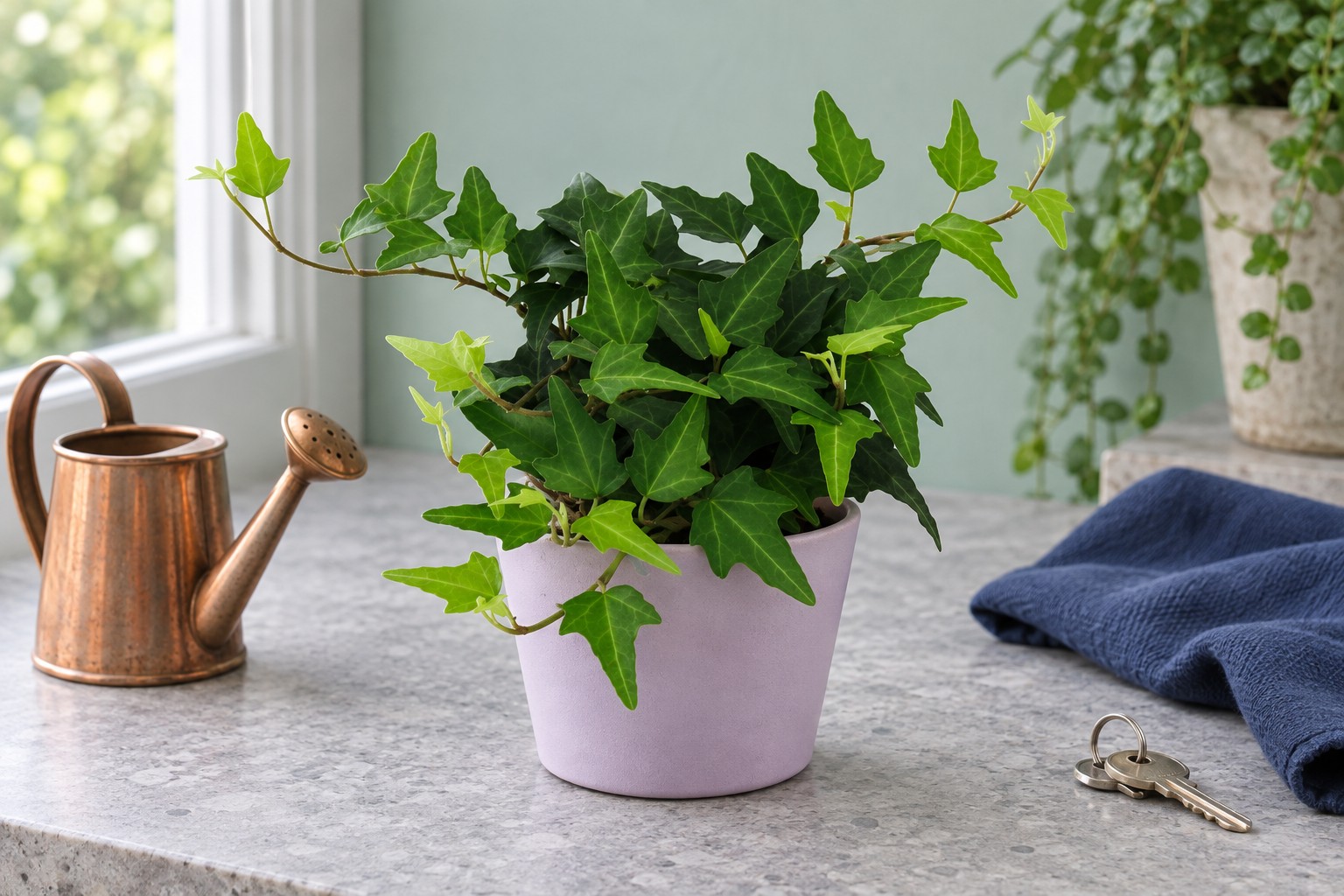
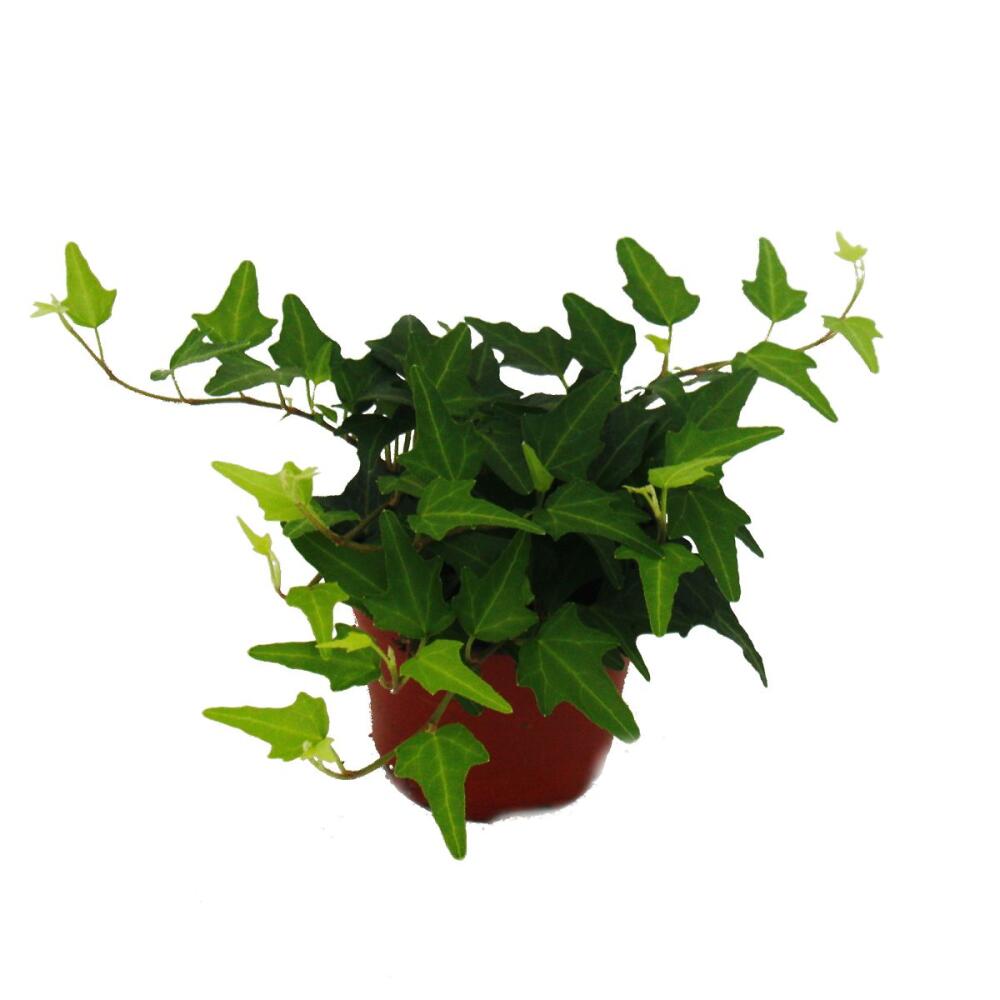
Young ivy bears the lobed leaves many people recognise immediately. Its shoots can trail or cling to suitable surfaces with attachment roots. Only older plants develop the flowering adult form with differently shaped leaves under appropriate conditions. The small houseplant is therefore not equated with a flowering garden specimen. The shop offers it as Hedera in a 9 cm pot; no particular variety is firmly named. We invent neither a variety name nor a guaranteed future leaf colour for it.
A climbing position that respects its surroundings
Let shoots hang over a clear shelf edge or guide them on a small, removable support. Wallpaper and delicate furniture are unsuitable surfaces for attachment. Keep the plant accessible enough to lift the pot regularly out of its cachepot. Pot diameter is established for the offered presentation, but a reliable total height is not. The scene therefore follows the proportions of the original photograph. Ivy can grow considerably further; a cramped decorative position will later need occasional pruning.
Indoors, choose fresh rather than hot conditions
Bright to partially shaded conditions without strong midday heat are a good starting point. A cooler hallway with daylight or a bright conservatory can be suitable. Directly above a radiator, much water evaporates while dry air favours spider mites. More fertiliser does not compensate for a dark position. Introduce plants previously kept indoors gradually to wind and sun when moving outside. Even robust species react to an abrupt change.
Keep the root ball consistently supplied
Feel the surface compost and water when it has dried slightly. The root ball should neither remain constantly wet nor repeatedly become completely parched. Let water pass through the pot and remove the remainder from the cachepot. If shoots hang limply, check moisture first: both dry compost and damaged roots in wet compost can interrupt the supply. Very dry compost benefits from slow, even rewetting. Afterwards, check whether water has genuinely reached the root ball.
Pruning and root care in small steps
Shorten long shoots above a healthy leaf if growth becomes too loose. Clean tools and gloves are part of the work. Cuttings with several nodes can root in loose compost; keep them moderately moist without creating a permanently dripping-wet microclimate. A rooted-through pot is carefully enlarged in spring. Airy compost with free drainage is better than a large reserve of heavy compost that stays wet for a long time. Feed moderately during visible growth, with correspondingly less in a cool winter.
Check leaves and choose a safe position
Fine webs and pale speckles may indicate spider mites. Check leaf undersides especially, separate affected plants and identify the infestation before treatment. Ivy is not suitable for eating; plant parts and particularly fruits belong out of reach of children and pets. Sap can also irritate skin. A permanent garden planting requires consideration of space, surface and spread. A small indoor ivy is not placed into winter frost without acclimatisation solely on the strength of its species name.
One plant, several views
Good to know
Is ivy a good plant directly above heating?
That position is usually too warm and dry. A fresher, bright room provides better conditions.
Why do leaves dry up and fall?
Check moisture, heat and pests. A wet root ball can also cause drying leaves through root damage.
Can I let it climb a wall?
Clinging roots can affect delicate surfaces. A separate support is easier to control.
May my pet nibble it?
No. Ivy is not suitable for eating and belongs out of reach.
Sources and editorial note
Sources checked: 15 September 2026. Product details and delivery contents follow the linked shop listing. Care has been checked against the specialist sources cited and must be adapted to the plant’s condition, position and season.