
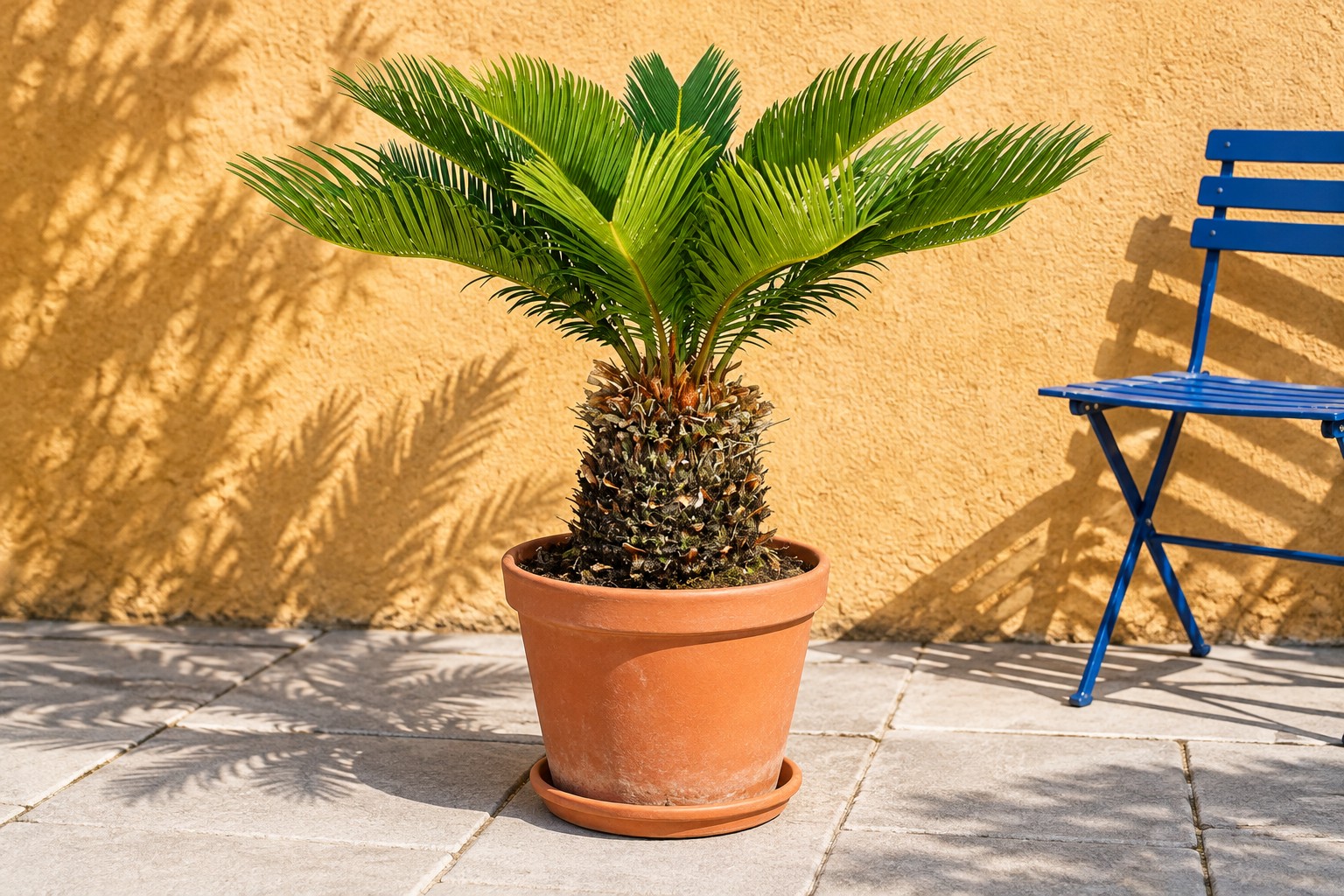
This plant at Exotenherz
Check the shop offer for current availability, price and what is included.
The linked shop is in German. Product details, availability and delivery information are provided in that shop.
Your care table
| Topic | What to do | Why it helps |
|---|---|---|
| Position | Keep very bright; acclimatise gradually to direct sun. | New pinnate leaves need good light conditions. |
| Water | Let the surface compost dry and check the root ball before every watering. | Constant wetness and poor drainage encourage root problems. |
| Compost | Use a freely draining, structurally stable mix with mineral components. | Clear drainage holes are essential. |
| Nutrients | During growth, feed sparingly according to product instructions. | Slow development does not mean a constant shortage of fertiliser. |
| Winter | Overwinter bright and frost-free; water considerably less. | Short-term cold tolerance is not a reliable promise of outdoor hardiness. |
| Leaf care | Remove only completely dead leaves. | Preserve green crowns and young growth. |
| Repotting | Only when needed; maintain the trunk’s level in the compost. | Avoid unnecessary root disturbance and deeper planting. |
| Safety | Keep out of reach of children and pets. | All parts are highly toxic, especially any seeds. |
Check the compost and pot weight. The care table explains how far the compost may dry.
Water only when needed. The water should reach the root ball without spilling over the rim.
Remove surplus water from the saucer or cachepot. Then return the plant to a suitable position.
Palm-like, but not a palm
Cycas revoluta is a cycad and belongs to a very ancient plant group. Its stiff, dark-green pinnate leaves form a crown above a sturdy, rough trunk. The leaf edges curl slightly backwards, as reflected in the species name. Unlike true flowering plants, a mature cycad develops particular reproductive organs and seeds rather than ordinary flowers. In the offered cultivated specimen, however, the slow-growing leaf crown is the main attraction.
Choosing size and position carefully
The linked offer states a 28 cm pot and approximately 90–100 cm total height. The broad crown needs more free space than the pot diameter might suggest. It can look impressive on a sheltered summer terrace or in a very bright room. The firm leaf tips should not obstruct walkways. Above all, a genuinely safe position is necessary: all parts are highly toxic, especially seeds. If pets or young children can reach the plant, that position is unsuitable.
Increasing light slowly and watching new foliage
Bright light matters, but gradually acclimatise a newly delivered plant to strong sunshine. An abrupt move from sheltered growing conditions into hot midday sun can damage the foliage. New leaf crowns sometimes develop in flushes, with long periods of little visible growth between them. This is not automatically a deficiency. Choose a stable, bright position particularly while leaves are developing, and do not straighten the still-soft young leaflets by hand.
Moderate watering and checking the root zone
Let the upper compost layer dry between waterings and check the root ball before watering again. A large pot may still be damp inside. When needed, water slowly onto the compost and remove excess water. Constant wetness and poor drainage can cause root rot. Once well rooted, this cycad tolerates dryness better than many tropical foliage plants, but should not be left to dry out unobserved for a long period. Consumption drops considerably in winter.
Hardiness is not a simple number
The shop description mentions short-term cold tolerance and a need for protection. For an ornamental potted specimen, we nevertheless recommend bright, frost-free overwintering. The crown, roots and trunk may react differently to cold; wetness and the duration of frost further alter the risk. A container protects roots less than garden soil does. Bring it indoors in good time before critical nights. Reduce winter water and fertiliser in line with lower activity, without forgetting the root ball entirely.
Respecting slow development
A freely draining, structurally stable mix and clear drainage holes provide the foundation. Repot only when clearly well rooted and do not bury the trunk more deeply. During growth, feed sparingly according to product instructions. Keep green pinnate leaves; fully dead ones can be carefully removed. Check leaf undersides and the trunk for scale insects, mealybugs or webbing. An older yellowing leaf crown and a softening trunk are different findings. If problems occur, assess roots, moisture and temperature before adding water.
One plant, several views


Good to know
Is Cycas revoluta a true palm?
No. The palm-like appearance belongs to a different plant group.
Why has it barely grown visibly for months?
Cycads grow slowly and do not constantly produce new leaf crowns. Check the growing conditions without automatically increasing fertiliser.
Can I rely on the frost figure in the shop?
A single number does not fully account for duration, wetness and container growing. Frost-free overwintering is the more reliable choice for a container.
Is it suitable for a home with pets that nibble plants?
Only if the plant stays safely out of reach. All parts are highly toxic; seeds pose a particularly high risk.
Sources and editorial note
Sources checked: 15 September 2026. Product information and the contents of delivery follow the linked shop offer. Care advice was checked against the cited specialist sources and should still be adapted to the plant’s condition, position and season.