
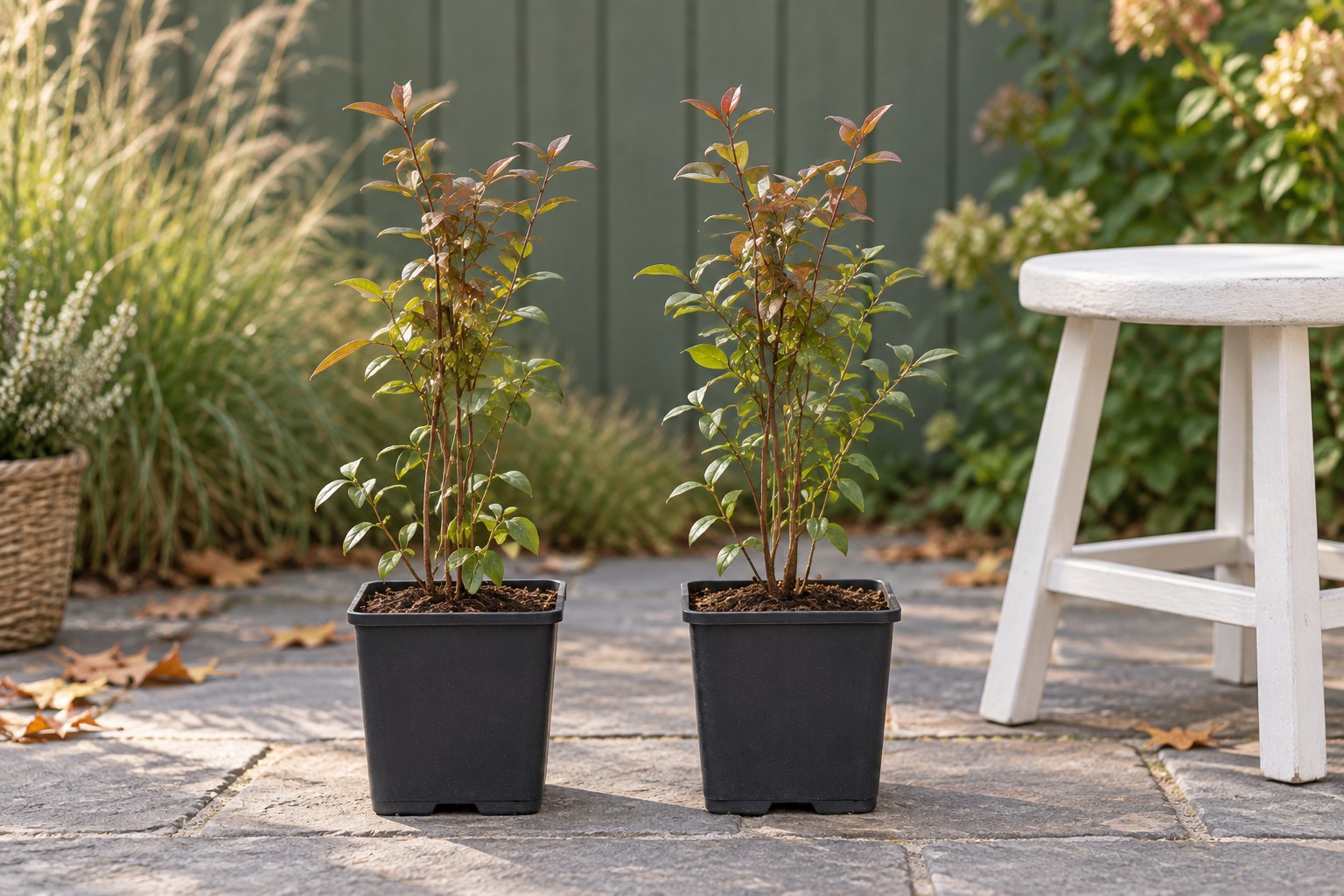
This plant at Exotenherz
Check the shop offer for current availability, price and what is included.
Product details, availability and delivery information in the shop.
Your care table
| Topic | What to do | Why it helps |
|---|---|---|
| Light | Sunny to bright, sheltered and not permanently dark. | Good light supports flowers and fruit development. |
| Water | Keep evenly moist, preferably with low-lime water. | Small containers and fine roots react quickly to drought. |
| Compost | Acidic blueberry compost, approximately pH 4.5–5.5. | In lime-rich soil, nutrients are often poorly available despite feeding. |
| Drainage | Clear drainage holes and no permanent water in the saucer. | Sufficient moisture is not the same as waterlogging. |
| Feeding | Apply suitable blueberry fertiliser moderately according to instructions. | Avoid uncontrolled repeated applications when leaves turn yellow. |
| Pollination | Another variety with compatible flowering time can improve fruit set. | Two Jersey plants are still the same variety. |
| Pruning | Build a healthy framework first, replace older shoots selectively later. | Drastic pruning of young plants is not a general requirement. |
| Winter | Overwinter outdoors, protect containers and check moisture. | Leaf fall and dormancy belong to the natural annual cycle. |
Check the compost and pot weight. The care table explains how far the compost may dry.
Water only when needed. The water should reach the root ball without spilling over the rim.
Remove surplus water from the saucer or cachepot. Then return the plant to a suitable position.
A shrub for several seasons
Jersey belongs to the cultivated blueberries of North American origin. The variety grows upright and can considerably exceed a young plant’s height over the years. Small pale flowers, blue fruits and autumn leaf colours attract attention in succession. Its later flowering can be helpful in some positions, but is not complete protection against unfavourable weather. For an attractive shrub and a possible harvest, careful preparation of the root zone is especially worthwhile.
Distinguish delivery size from later development
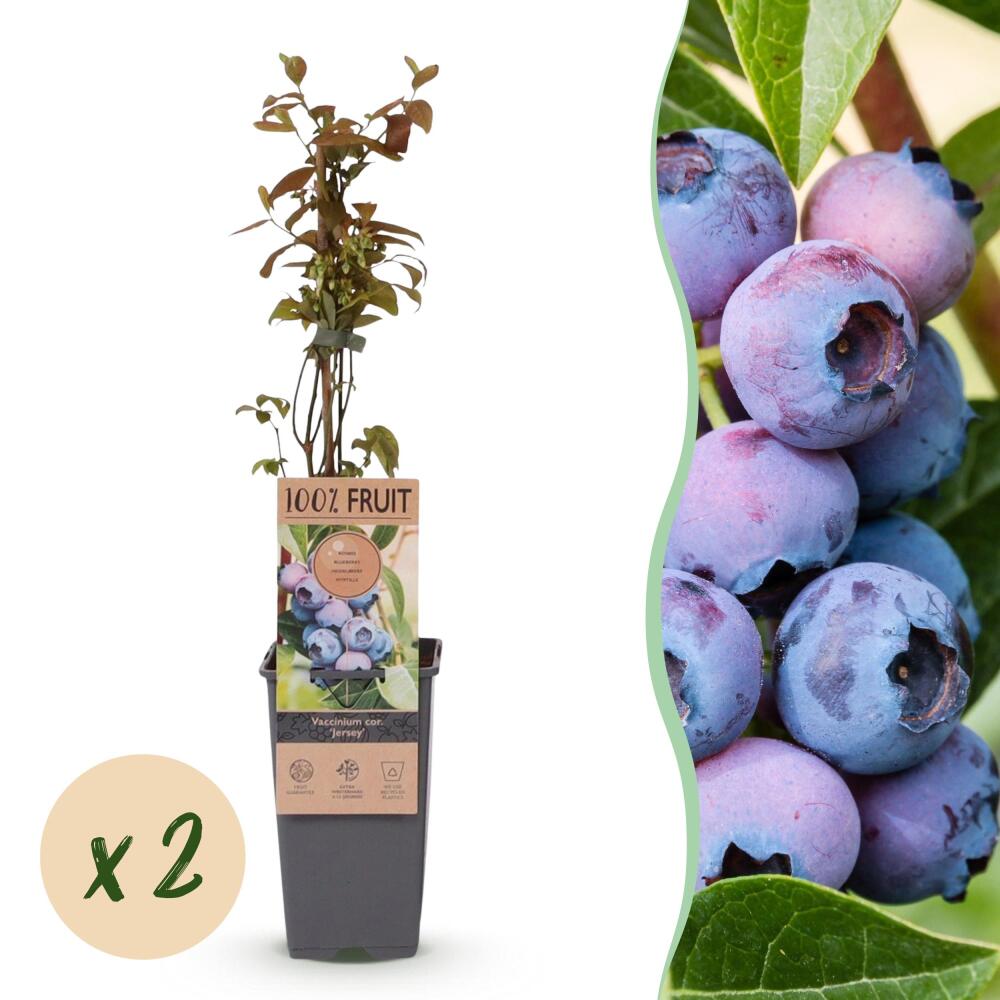
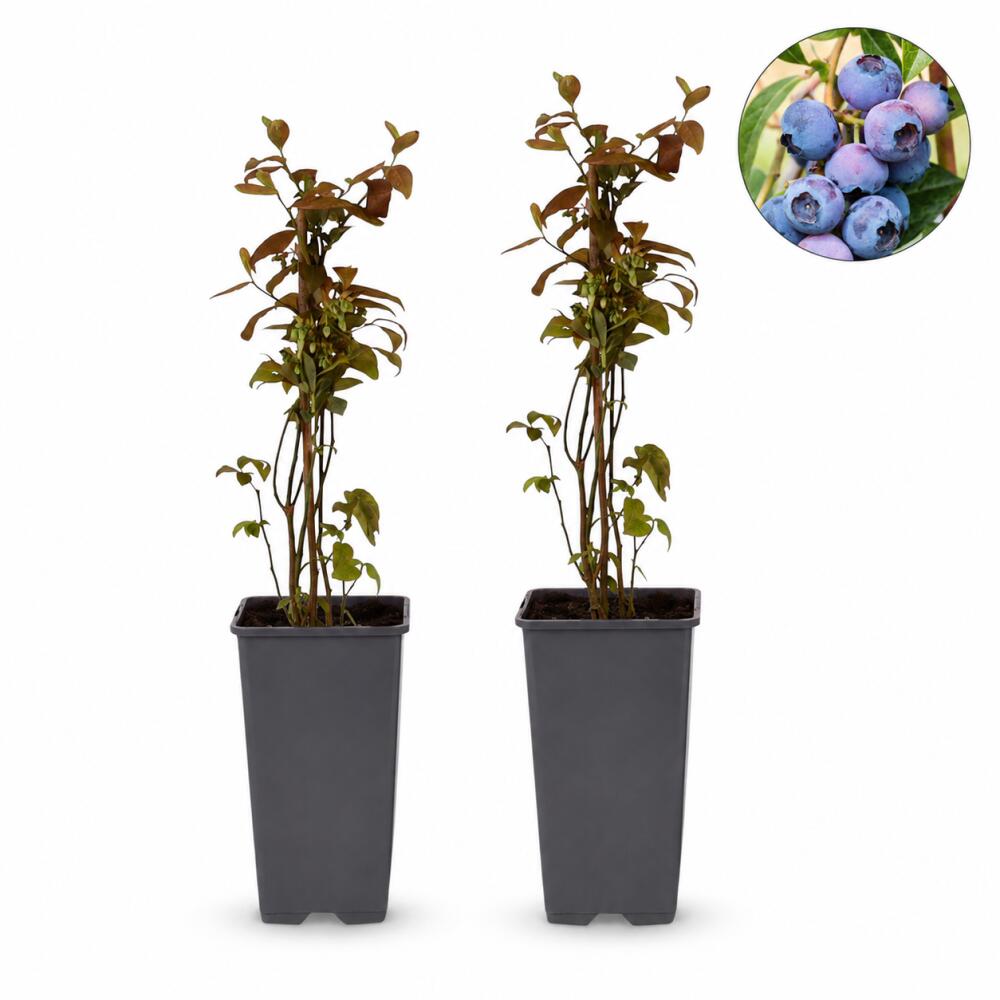
The offer lists two plants in 15 cm pots at approximately 50 cm total height. The young, fine shoots are not yet a mature blueberry bush laden with fruit. Plan for larger containers or a genuinely suitable bed in the long term. For a later harvest, another blueberry variety with compatible flowering time can improve pollination. Two specimens of the same variety enlarge the planting, but do not bring the diversity of two different varieties.
Choose the right acidic soil from the beginning
Blueberries need an acidic root zone, approximately in the pH 4.5–5.5 range. Lime-rich garden soil does not become a suitable position through occasional additional feeding. Where the soil is unsuitable, a generous container of appropriate, preferably peat-free ericaceous or blueberry compost is often easier to manage. Do not use lime-containing additions. If leaves turn yellow while their veins still look green, pH belongs among the checks before simply applying more fertiliser.
Hold moisture while letting air reach the roots
The fine root zone should remain evenly moist. Prefer collected rainwater or other suitable low-lime water for watering. A pot needs clear drainage holes; blueberries are not marsh plants meant to stand permanently in a saucer of water. Mulch can slow evaporation, but must not become a constantly wet layer at the base. Particularly during summer heat, check daily whether the water supply still suits the foliage and container size.
Build patiently rather than pruning hard early
During the first years, a healthy shrub framework is the priority. Remove damaged wood selectively instead of thinning every young plant according to a pattern for old shrubs. Later, replacing individual older shoots makes room for younger wood. Use suitable blueberry fertiliser sparingly according to product instructions. Ripe berries become completely blue; individual clusters may nevertheless ripen unevenly. Picking small quantities several times protects fruits that are not yet ripe.
Allow autumn colour and winter dormancy
Reddish foliage in autumn can belong to the natural season. Sudden colour changes accompanied by wilting in summer, however, must be assessed in relation to roots, moisture and position. Jersey loses its leaves for winter dormancy. The shrub stays outdoors while containers are protected against strong temperature fluctuations. Keep drainage clear in winter too, and watch for dryness on frost-free days. A dark, warm indoor room is not an improvement for this garden plant.
One plant, several views
Good to know
Will ordinary potting compost work?
Only if its properties really suit blueberry growing. Prefer an explicitly suitable acidic compost and check pH when problems arise.
Can I water with tap water?
That depends on water hardness. Consistently lime-rich water is unfavourable; suitable rainwater makes cultivation easier.
Are two Jersey plants two pollinating varieties?
No. A second, different variety with overlapping flowering provides the desired varietal difference.
Why does the foliage turn red in autumn?
Autumn reddening can be normal. In summer, together with wilting or growth problems, the position and roots need checking.
Sources and editorial note
- Product and delivery contents: Exotenherz
- Royal Horticultural Society: plant and care information
- Royal Horticultural Society: plant and care information
- NC State Extension: plant profile
Sources checked: 16 September 2026. Product information and the contents of delivery follow the linked shop offer. Care advice was checked against the cited specialist sources and should still be adapted to the plant’s condition, position and season.