
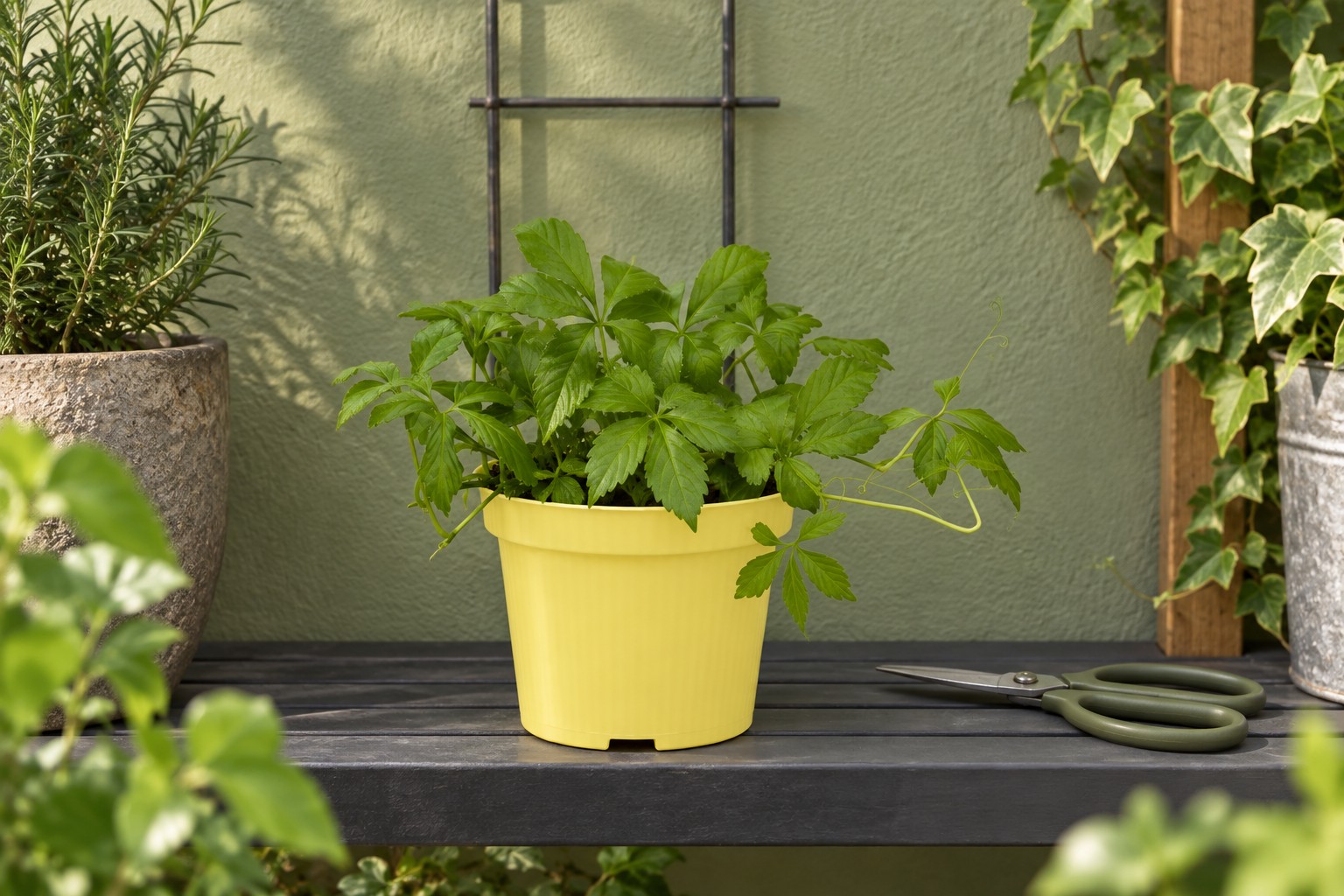
This plant at Exotenherz
Check the shop offer for current availability, price and what is included.
The linked shop is in German. Product details, availability and delivery information are provided in that shop.
Your care table
| Topic | What to do | Why it helps |
|---|---|---|
| Light | Bright partial shade, protected from extreme midday heat. | Fine leaves do not need a constantly hot sunny window. |
| Water | Water thoroughly after slight surface drying. | Even supplies support young climbing growth. |
| Soil | Humus-rich, loose and freely draining. | Roots need air as well as moisture. |
| Support | Guide fine shoots loosely or allow them to trail. | Delicate tendrils can hold onto narrow supports. |
| Feed | Feed moderately during active growth according to the product instructions. | No additional feeding during rest. |
| Pruning | Selectively shorten long shoots and retain healthy leaves. | This organises the structure without stripping all its foliage. |
| Winter | Keep young containers sheltered frost-free where the position is uncertain. | A shop hardiness rating does not guarantee results for a small pot. |
| Context | Grow as an ornamental; do not infer food or medicinal uses. | Trade names and photographed labels do not replace a separate food assessment. |
Check the compost and pot weight. The care table explains how far the compost may dry.
Water only when needed. The water should reach the root ball without spilling over the rim.
Remove surplus water from the saucer or cachepot. Then return the plant to a suitable position.
Focus on tendrils rather than grand promises
Gynostemma pentaphyllum belongs to the gourd family. Its slender shoots carry compound leaves, often with five to seven toothed leaflets. Fine tendrils help it grip a suitable support. Its described origins cover large parts of Asia. The trade name herb of immortality is striking, but says nothing about proven life-extending effects. Pflanzenwelt therefore presents jiaogulan as a botanical ornamental climber. Its lively structure offers enough reason for close observation without such promises.
A young plant and a contradictory label
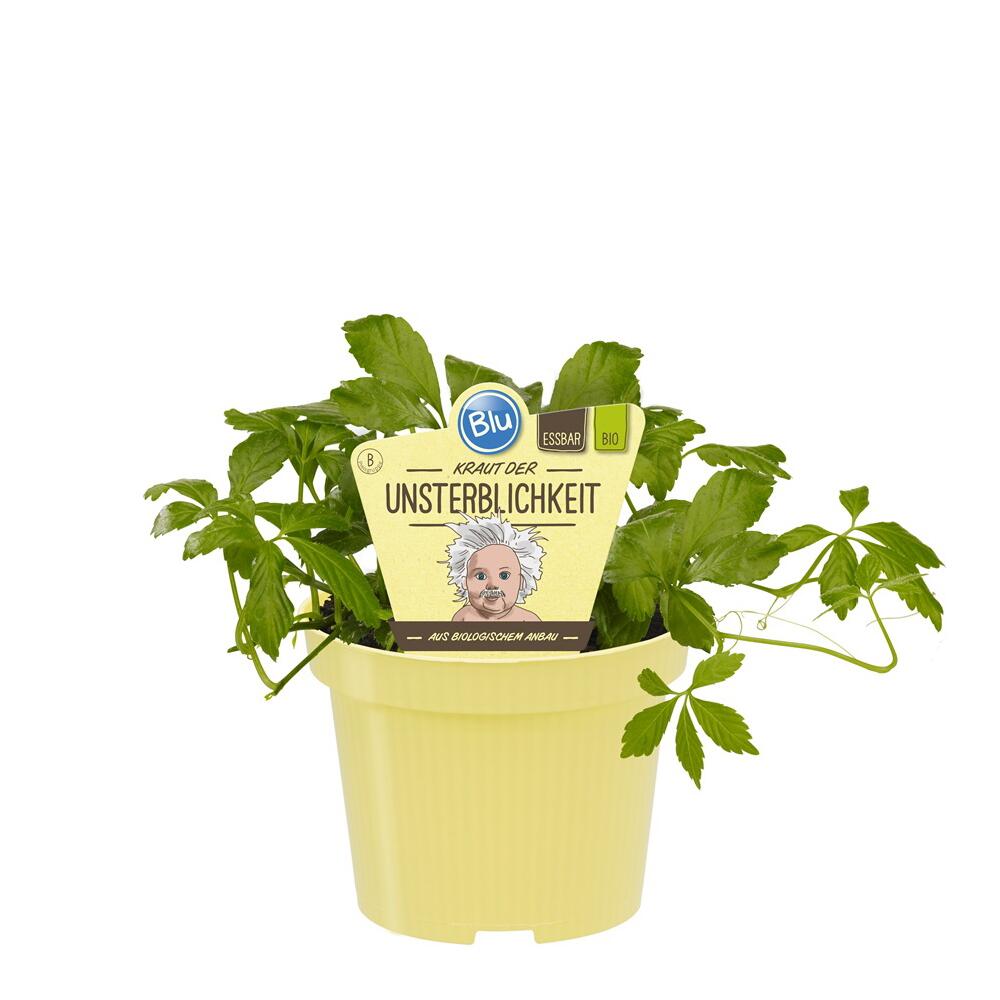
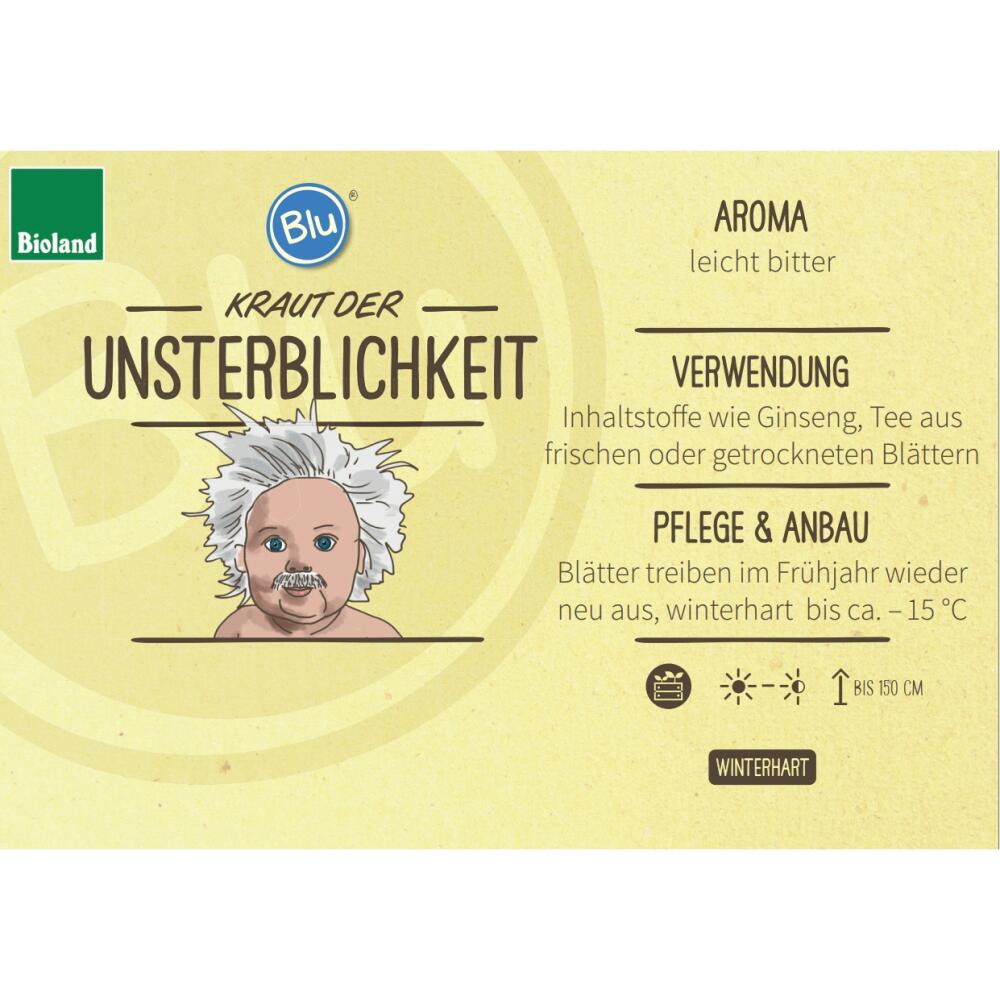
The offer states an organically grown plant in a 12 cm pot, but no specific delivery height. The stated growing height of up to around 150 cm is a later cultivation measurement; shoots can become longer in other conditions. The original photograph shows a young plant with a few short shoots. Its label says edible, while the shop description expressly notes the lack of food authorisation. This contradiction is not hidden here: we give no consumption or tea instructions. Before later marketing as food, the relevant requirements would need a separate assessment.
Provide light partial shade and suitable guidance
A bright partially shaded position is a good starting point. The fine leaves need not be placed in hot reflected midday sunshine. A sheltered outdoor position suits summer; gradually increase light and wind after indoor cultivation. Tendrils can hold onto thin stakes or a small lattice. Alternatively, the plant can trail from a raised container. Guide shoots carefully so they do not break or completely overgrow neighbouring plants. The support in the scene is decorative and is not automatically included in the plant offer.
Combine moist compost with free drainage
Check the root ball regularly and water thoroughly after slight surface drying. The young plant should not constantly alternate between complete dryness and heavy wetness. Loose, humus-rich, freely draining compost makes supplies easier to manage. Excess water must drain from the pot. As more leaf area develops, consumption can increase on warm days. Feed moderately during active growth according to the product instructions. With weak growth, first check light and root condition; more nutrients cannot compensate for dark, wet cultivation.
Guide growth with pruning and observation
Overlong shoots can be selectively shortened with clean tools. Leave enough healthy leaf area and spread growth along the support rather than allowing an uncontrolled dense tangle to form. Remove individual damaged leaves and check undersides for pests. Small inconspicuous flowers can appear; male and female flowers form on separate plants. A photograph without fruit therefore cannot establish later fruit set. The pale shoot tips, leaflets and fine tendrils are especially interesting for ornamental effect.
Choose winter care according to pot size and position
The shop describes possible dying back of above-ground shoots and regrowth from the roots. This does not guarantee frost tolerance for a newly purchased small pot. Where the winter position is uncertain, choose sheltered frost-free overwintering; water considerably less during a cool rest, but do not let the root ball dry completely. If the plant retains foliage, it still needs enough light. Do not feed without growth. Wait for new shoots in spring and gradually return to summer care. Herb names, tradition and ornamental cultivation remain separate from food and health questions.
One plant, several views
Good to know
Does the herb of immortality really make you immortal?
No. It is a trade name from which no health effect or life extension is inferred.
Why does the photograph say edible?
That is printed on the original label. The shop description also contains a food-related reservation. Here the plant is presented exclusively as an ornamental.
Can jiaogulan grow in a hanging basket?
Yes. The fine shoots can trail or be guided onto a suitable support.
Is a bare winter shoot always dead?
Not necessarily. Seasonal dieback is possible. Keep the root ball and roots protected and watch for new growth in spring.
Sources and editorial note
- Product and delivery contents: Exotenherz
- National Parks Board Singapore: plant profile
- European Commission: Novel Food Status Catalogue
- Bavarian Consumer Advice Centre: information on jiaogulan
Sources checked: 15 September 2026. Product information and the contents of delivery follow the linked shop offer. Care advice was checked against the cited specialist sources and should still be adapted to the plant’s condition, position and season.