
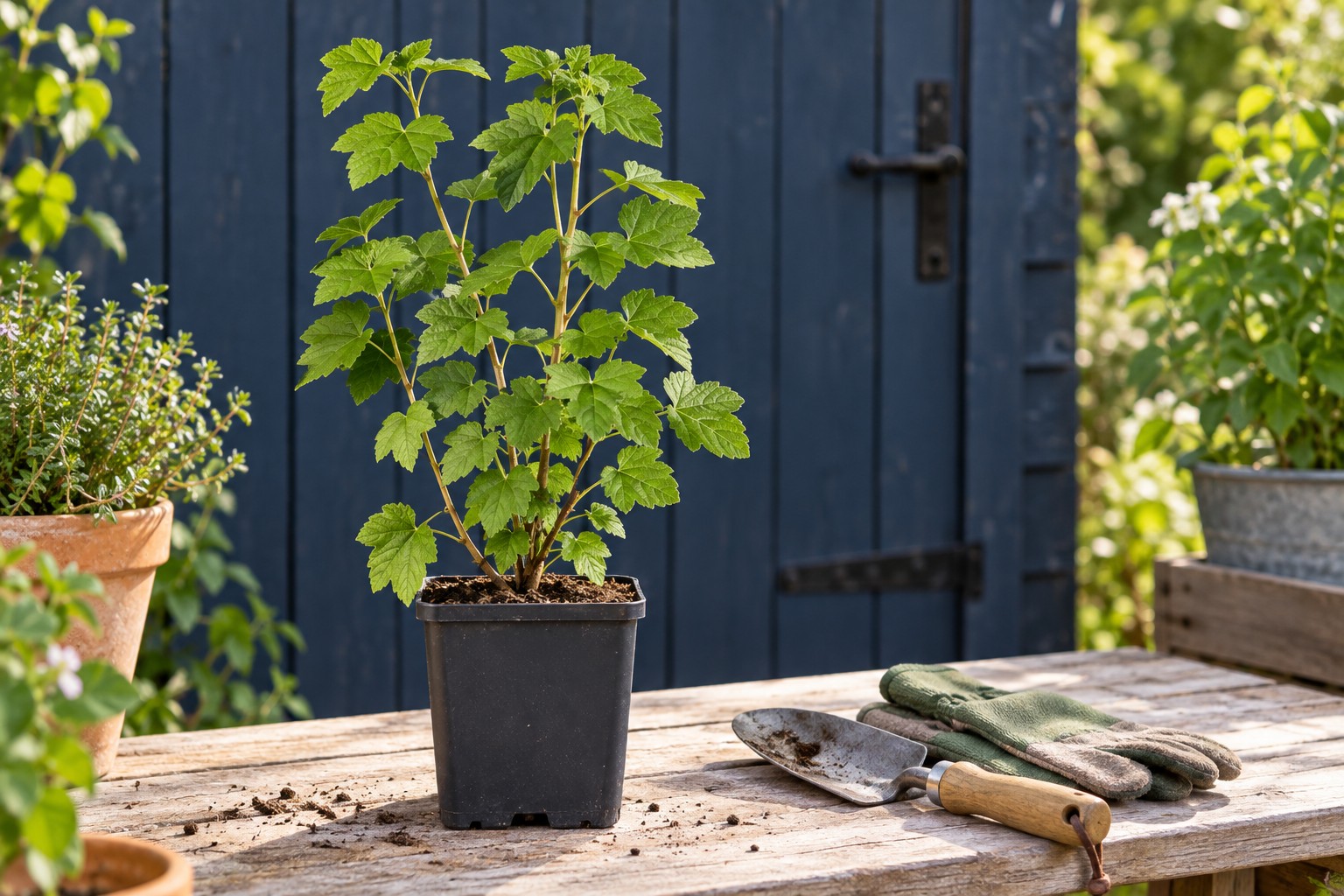
This plant at Exotenherz
Check the shop offer for current availability, price and what is included.
Product details, availability and delivery information in the shop.
Your care table
| Topic | What to do | Why it helps |
|---|---|---|
| Position | Sun to light partial shade, preferably away from frost pockets. | Early flowers can be sensitive to late cold. |
| Water | Check regularly while establishing and during dry weather. | Even moisture supports leaf and fruit development. |
| Soil | Fertile and well drained, with a protective mulch layer. | The roots should neither dry out nor become waterlogged. |
| Feeding | In spring, according to need and soil nutrient supplies. | Not every sparse cluster results from a nutrient deficiency. |
| Pruning | Retain older fruiting wood and thin the crown selectively. | Hedge trimming can easily remove valuable short fruiting shoots. |
| Pollination | Self-fertile variety; keep flowers accessible to pollinators. | A second plant is not an essential key to fruit set. |
| Harvest | Pick ripe clusters gently, store briefly in cool conditions. | Pressure and moisture reduce keeping quality. |
| Inspection | Check leaf undersides and shoots when leaves blister or are eaten. | Early recognition avoids unnecessary intervention on the whole shrub. |
Check the compost and pot weight. The care table explains how far the compost may dry.
Water only when needed. The water should reach the root ball without spilling over the rim.
Remove surplus water from the saucer or cachepot. Then return the plant to a suitable position.
Early clusters for the edible garden
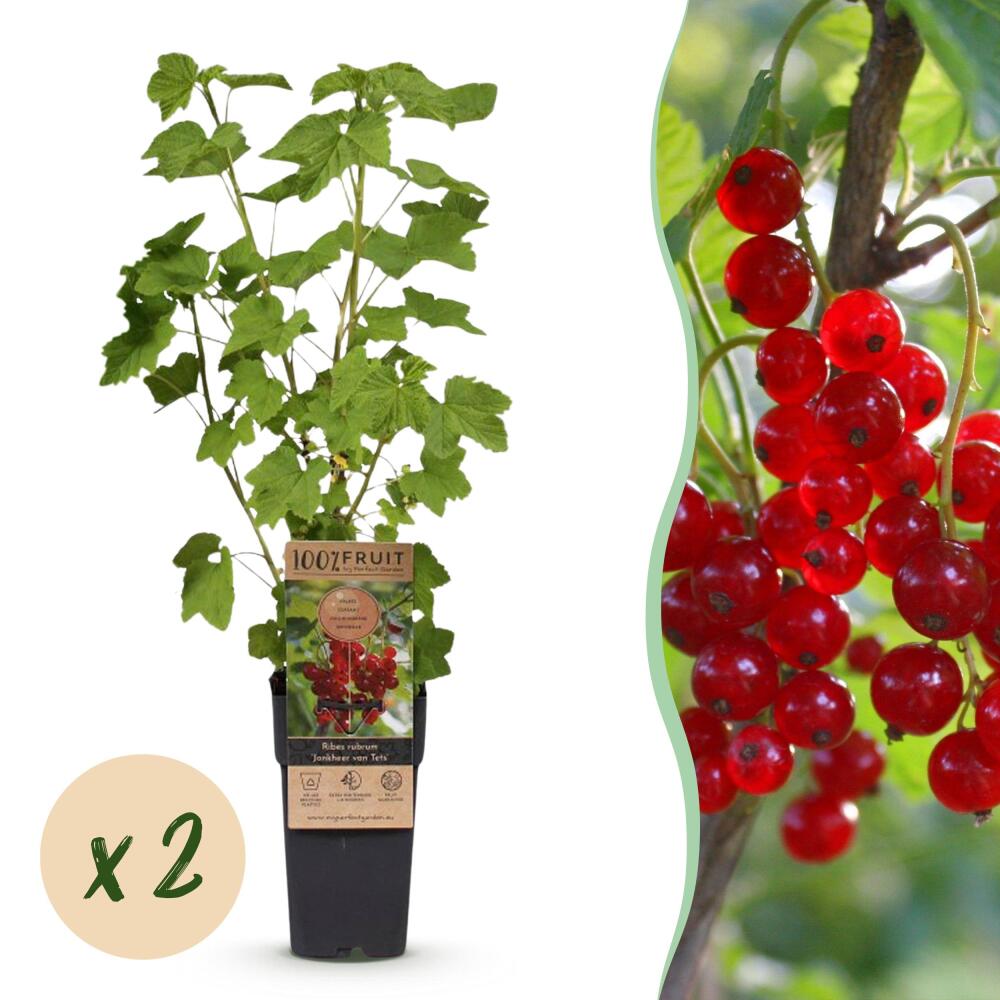
With Jonkheer van Tets, anticipation often begins earlier than with later currant varieties. Under suitable conditions, its red berries ripen in early summer; the exact timing depends on region and weather. They hang in clusters and bring a fresh acidity that suits desserts as well as jelly. The variety is self-fertile. A single well-developed plant can therefore crop without a second redcurrant necessarily standing beside it.
The delivered plant is the beginning
The linked offer consists of two plants in 15 cm pots, each approximately 50 cm in total height. They later develop into considerably larger shrubs. The fruit image in the shop shows the variety at a later stage, not a guaranteed harvest on the delivered shoots. Along a garden path or the edge of a vegetable bed, we plan enough space to keep ripe clusters conveniently within reach. In a container, the plant needs correspondingly more root room as it grows.
Sun, air and an even water balance
A sunny position is favourable; light partial shade is tolerated. The soil should be fertile and well drained. If it dries quickly, a suitable mulch helps, without piling wet material directly against the base. Watch young plants particularly carefully in warm wind. Hanging foliage first calls for a moisture check. Watering too hastily when the pot is still wet may worsen the underlying root problem.
Recognise fruiting wood rather than shearing the crown
Redcurrants bear fruit, among other places, on short fruiting shoots on older wood. That wood must not be removed indiscriminately when pruning. Keep the shrub open, remove poorly placed or over-aged parts selectively and retain a clearly understandable structure. A bush that is too dense gets less light inside and is harder to harvest. A narrowly trained form needs different pruning details from a freely growing shrub; choose the appropriate training consciously.
Accompany the early season thoughtfully
An early variety can benefit from a warm spring, but it can also lose flowers to late frosts. Avoid pronounced frost pockets for that reason. Missing individual berries can also be associated with unfavourable weather during flowering. Assess the plant over a whole season. Not every sparse cluster indicates a nutrient deficiency, and extra fertiliser does not bring back fruitlets that have fallen. Regular, steady care is more valuable than continually changing corrective measures.
Harvest and keep caring for the shrub
Pick ripe clusters preferably when dry and without pressure. After harvest, the shrub still needs healthy foliage and enough water to continue developing. Check leaf undersides for aphids when unusual blisters or distorted leaves appear. With heavy leaf feeding, also look deeper inside the shrub for larvae. An airy structure makes these checks easier. Remove affected material selectively and clarify more serious damage before unnecessarily cutting back the entire plant.
One plant, several views

Good to know
Do the two plants need each other for pollination?
Jonkheer van Tets is self-fertile. The pair is therefore not a necessary pollinating partnership.
When do the berries ripen?
The variety belongs to the early redcurrants. Exact timing depends on region, position and the course of the year.
May I cut all shoots equally short?
That is unfavourable. Retain suitable framework and fruiting shoots and thin selectively instead.
Can the shrub grow in partial shade?
Light partial shade is possible. For good fruit development, the position should nevertheless remain sufficiently bright.
Sources and editorial note
- Product and delivery contents: Exotenherz
- Royal Horticultural Society: plant and care information
- Royal Horticultural Society: plant and care information
Sources checked: 16 September 2026. Product information and the contents of delivery follow the linked shop offer. Care advice was checked against the cited specialist sources and should still be adapted to the plant’s condition, position and season.