
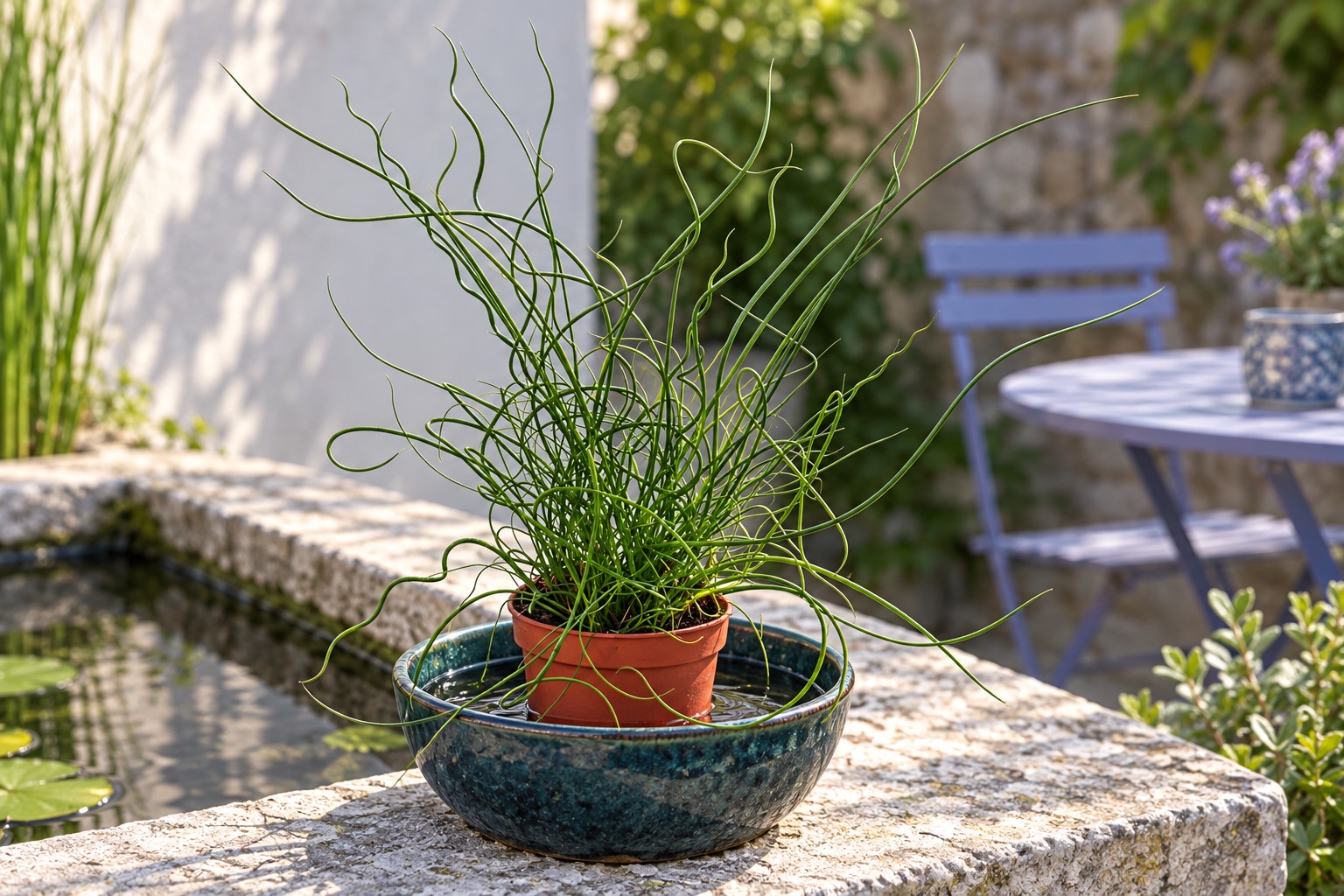
This plant at Exotenherz
Check the shop offer for current availability, price and what is included.
Link to the offer in German. Check the shop for the current price, availability and delivery contents.
Your care table
| Topic | What to do | Why it helps |
|---|---|---|
| Position | Bright to sunny; light partial shade outdoors also suits it. | Humid air alone does not make a dark position suitable. |
| Water | Keep the root ball persistently moist; do not let it dry out. | This marsh plant tolerates a small controlled water reserve. |
| Compost | Use moisture-retaining, structurally stable compost. | Strongly drying cactus compost does not suit this rush. |
| Nutrients | Feed moderately during growth according to fertiliser instructions. | Do not introduce surplus fertiliser into pond water. |
| Winter | In cool conditions reduce reserve water; keep the root ball moist. | Overwinter small pots sheltered and protect roots from freezing completely. |
| Pruning | Remove entirely brown stems individually near ground level. | Do not shorten healthy green spirals indiscriminately. |
| Repotting | Provide more root space for dense clumps in spring. | A stable container makes even supply easier. |
| Checking | Check water level more often on warm, windy days. | A small pot can dry quickly despite its moisture requirement. |
The root ball stays moist. Check more often in warm or windy conditions and do not let it dry out completely.
A small, controlled water reserve can help during growth. The centre of the plant does not need to be deeply submerged.
In cool winter conditions, reduce the reserve while keeping the root ball moist. Keep the saucer clean and follow the frost protection in the care table.
Not artificially twisted leaves
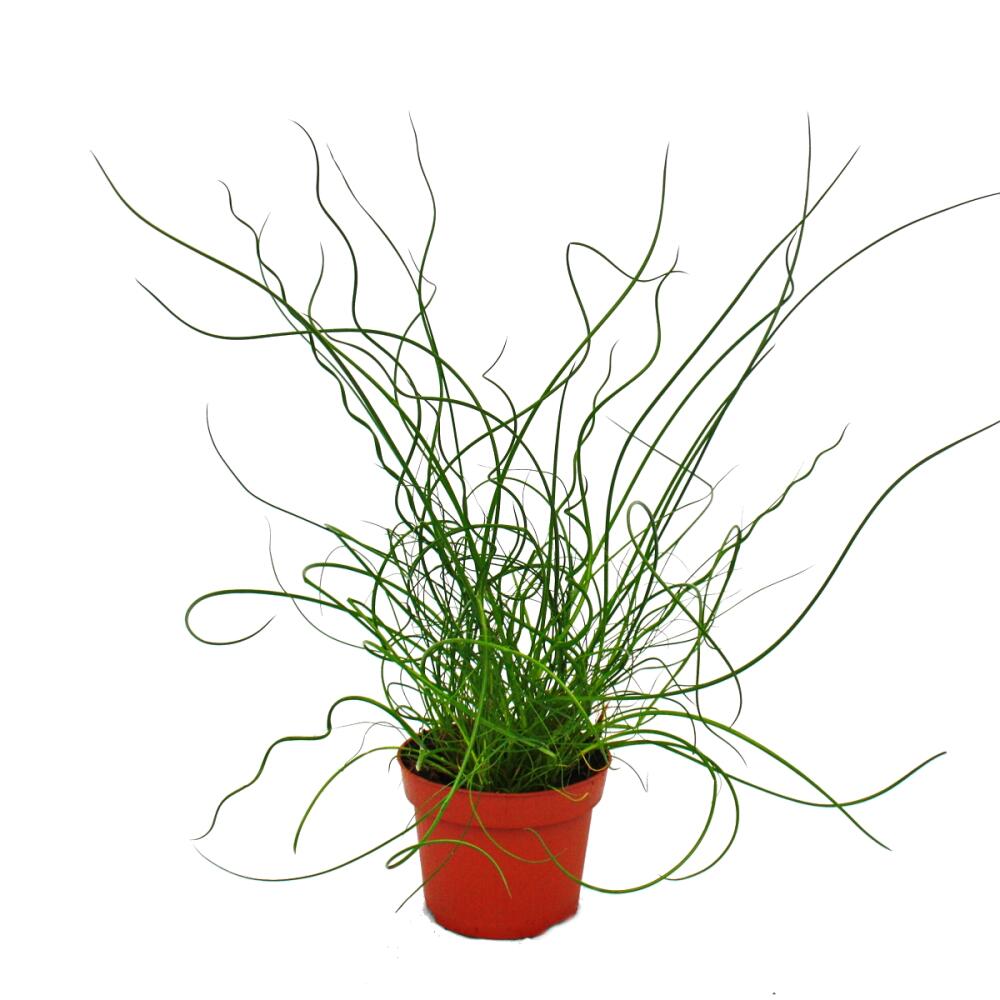
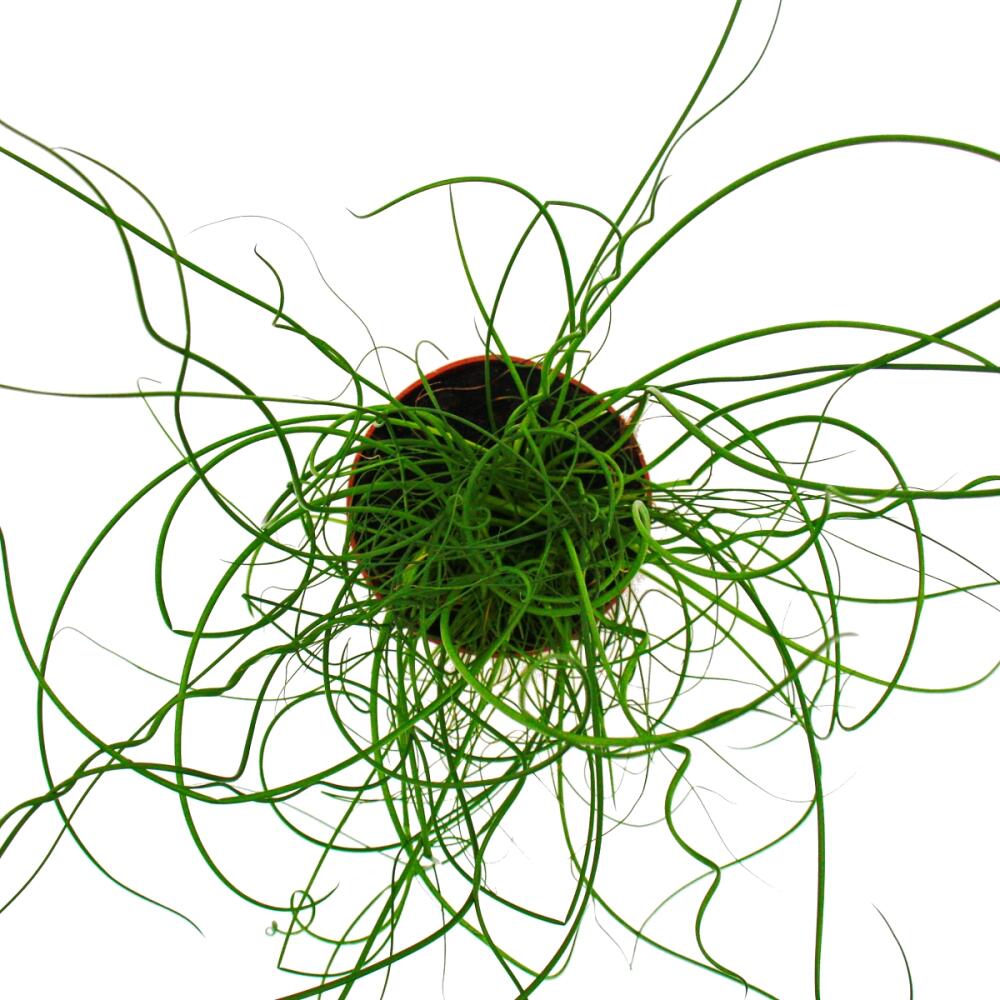
The spiral green lines of corkscrew rush are naturally grown stems. Some twist more strongly, while others remain almost straight for long stretches. This mixture is precisely what prevents the clump looking like a uniform wire figure. Juncus effusus Spiralis is a garden form of soft rush and belongs to the rush family. Inconspicuous flowers take a visual back seat; the main effect comes from the living shape of its green shoots.
A moist accent with a clear size statement
The shop offer states a 12 cm pot and about 30–35 cm overall height. This small plant can be interesting on a bright terrace, at a pond edge or by a suitable window. A low bowl makes water level easy to monitor. Our scene follows the delivered size class and shows the loose stem structure. It promises neither a huge mature clump nor a particular number of perfectly twisted spirals.
Brightness for the whole stem structure
Sun to light partial shade suits it outdoors, and a genuinely bright position indoors. When moving outside, gradually acclimatise it to stronger light. Consider wind as well as sunshine: a small pot on a hot, airy balcony loses water faster than a bowl at a sheltered pond edge. Dark bathrooms are unsuitable despite humid air if sufficient daylight is missing. Humidity replaces neither light nor water in the root ball.
Moist compost is expressly wanted here
As a marsh plant, corkscrew rush needs persistently moist compost. Unlike many succulents, its root ball is not left to become completely dry before watering. A small controlled water reserve in the decorative pot can be useful during growth. Check it regularly rather than leaving the bowl to dry out unattended. The crown need not stand deeply under water. Reduce the reserve in cool winter conditions, but still do not let the root ball dry completely.
Plan root space and season together
Moisture-retaining, structurally stable compost suits it better than strongly drying cactus compost. As rooting increases, the clump needs more room and a sufficiently stable pot. Feed moderately according to fertiliser instructions during growth; directly beside a pond, do not let surplus fertiliser enter the water. The species tolerates winter cold in the garden, but a small freestanding pot is more vulnerable. Place it sheltered and protect the root space from freezing completely.
Interpret brown stems and straight shoots
In cold winters, above-ground greenery can turn brown and later be replaced by new growth. In a warm room, suddenly drying stems instead call for checking water level, root ball and light. Entirely brown stems can be removed carefully at their base; do not trim all green spirals indiscriminately. Straight shoots are not proof of a care error. If the clump is to be divided later, spring when new growth begins is an easily monitored time.
One plant, several views
Good to know
Can water remain in the decorative pot?
Yes, a small controlled reserve suits this marsh plant during growth. Reduce it accordingly in cool winter cultivation.
Must the plant be entirely under water?
No. A moist root ball or small reserve is sufficient for pot cultivation; the crown need not be submerged deeply.
Why does my plant also have straight stems?
The twist is not equally pronounced in every stem. A mixture is part of its natural appearance.
Is it a plant for a dark bathroom?
No. Even in high humidity it needs a bright position with enough daylight.
Sources and editorial note
Sources checked: 15 September 2026. Product information and delivery contents follow the linked shop offer. Care has been checked against the stated specialist sources and remains subject to plant condition, position and season.