
This plant at Exotenherz
Check the shop offer for current availability, price and what is included.
Link to the offer in German. Check the shop for the current price, availability and delivery contents.
Your care table
| Topic | What to do | Why it helps |
|---|---|---|
| Light | Warm, sunny and sheltered from wind. | Simply surviving in shade is insufficient for fruit cultivation. |
| Water | Supply young root balls regularly and thoroughly. | Avoid waterlogging despite even moisture. |
| Soil | Humus-rich, nutrient-containing and well-drained. | The vigorous plant needs supportive root space. |
| Support | Build a stable framework early and tie shoots loosely. | Later foliage and fruit mass is considerable. |
| Fertiliser | According to soil supply and actual need. | Good garden soil does not necessarily need frequent additional feeding. |
| Pruning | Retain the main framework and organise side growth in winter and summer. | Previous-year wood provides the starting point for new fruiting shoots. |
| Late frost | Temporarily protect fresh growth when needed. | Young shoots are more sensitive than dormant wood. |
| Harvest | Observe fruit ripeness; if needed, harvest before strong frost and let the fruits ripen indoors. | Young plants need several years before dependable yield. |
Check the compost and pot weight. The care table explains how far the compost may dry.
Water only when needed. The water should reach the root ball without spilling over the rim.
Remove surplus water from the saucer or cachepot. Then return the plant to a suitable position.
A kiwi with distinctive flower biology
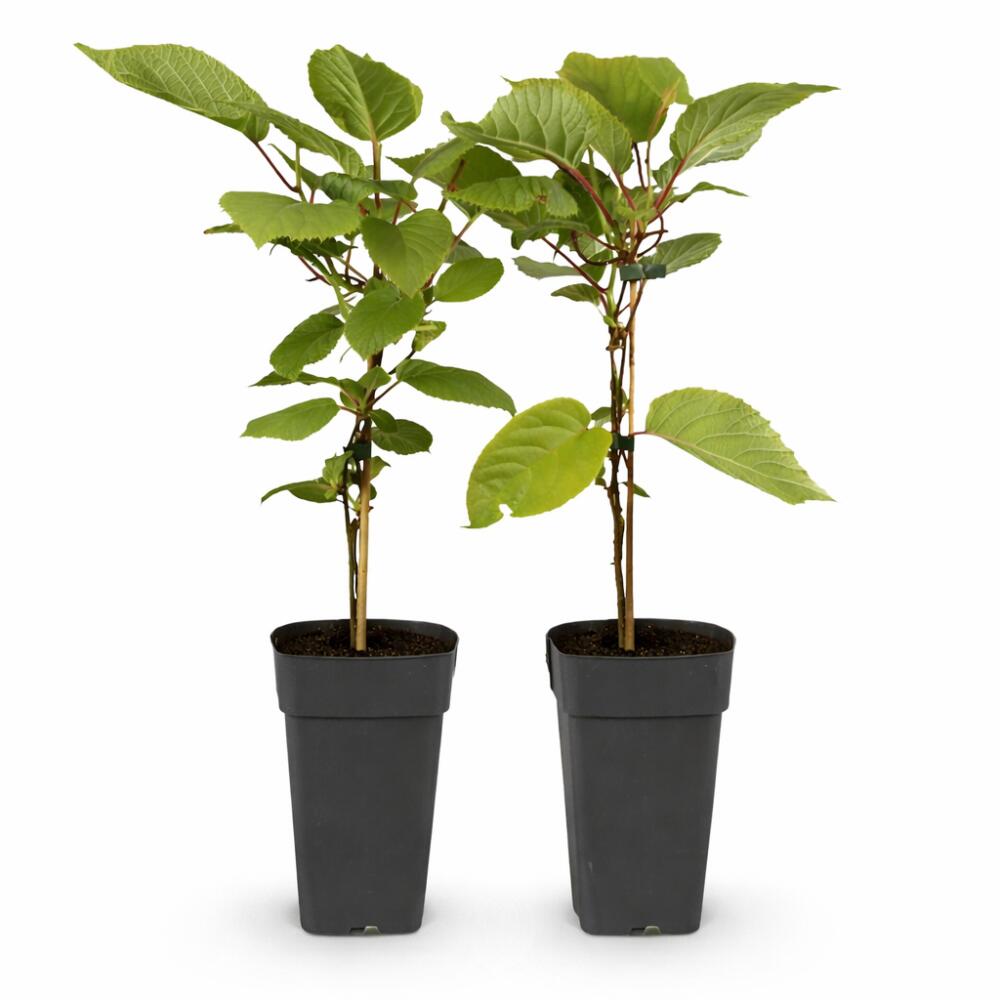
Actinidia deliciosa belongs to the Actinidiaceae family and originally comes from China. Jenny is a self-fertile cultivated form: it needs no separate male pollinator to be able to set fruit. This distinguishes it from many other kiwi offers. The plant twines vigorously, carries large leaves and loses them in autumn. Its hairy brown fruits are a later development goal, not the usual appearance of a freshly purchased young plant. Self-fertile also does not mean that position, flower development and weather no longer matter.
The set of two will later need plenty of room
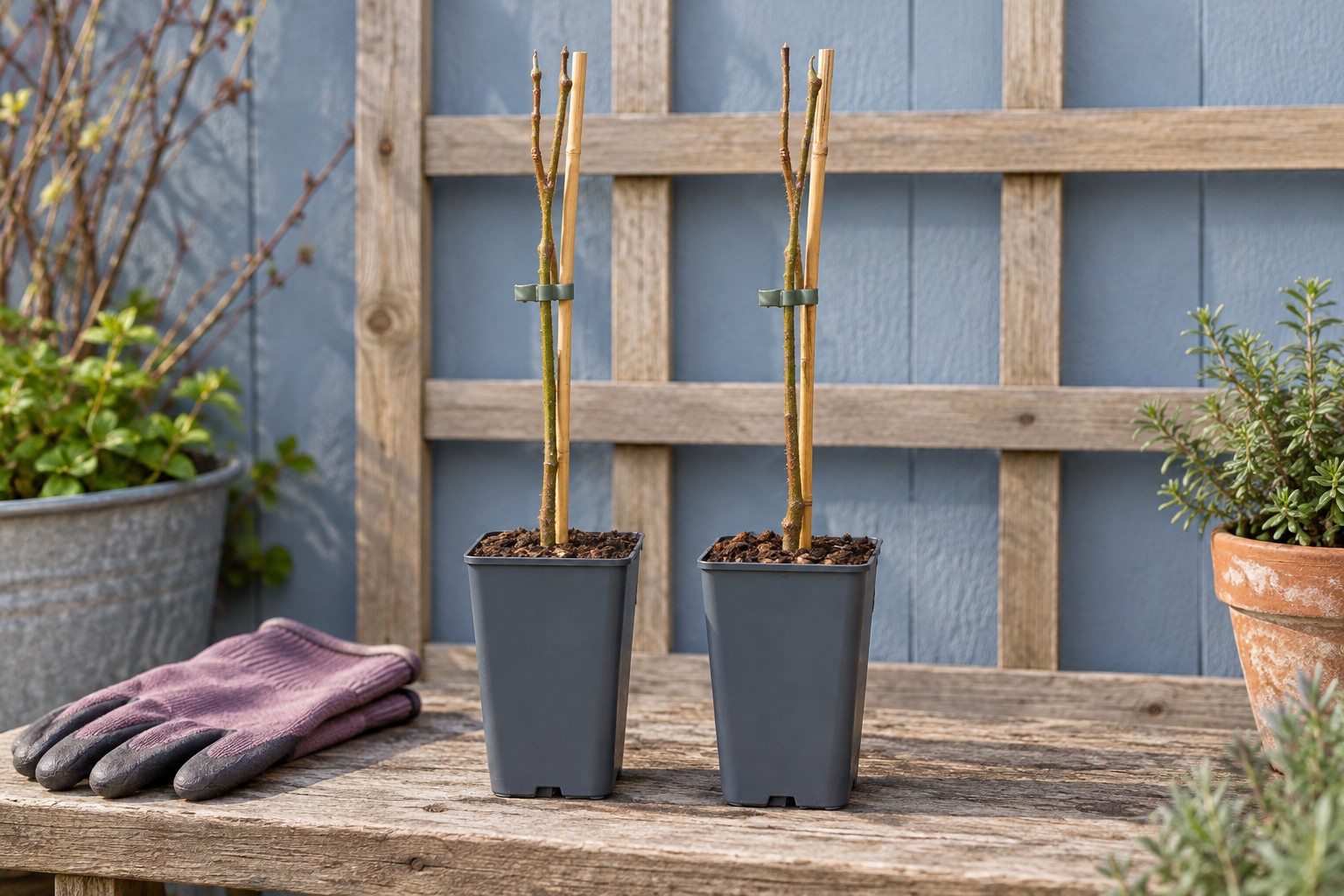
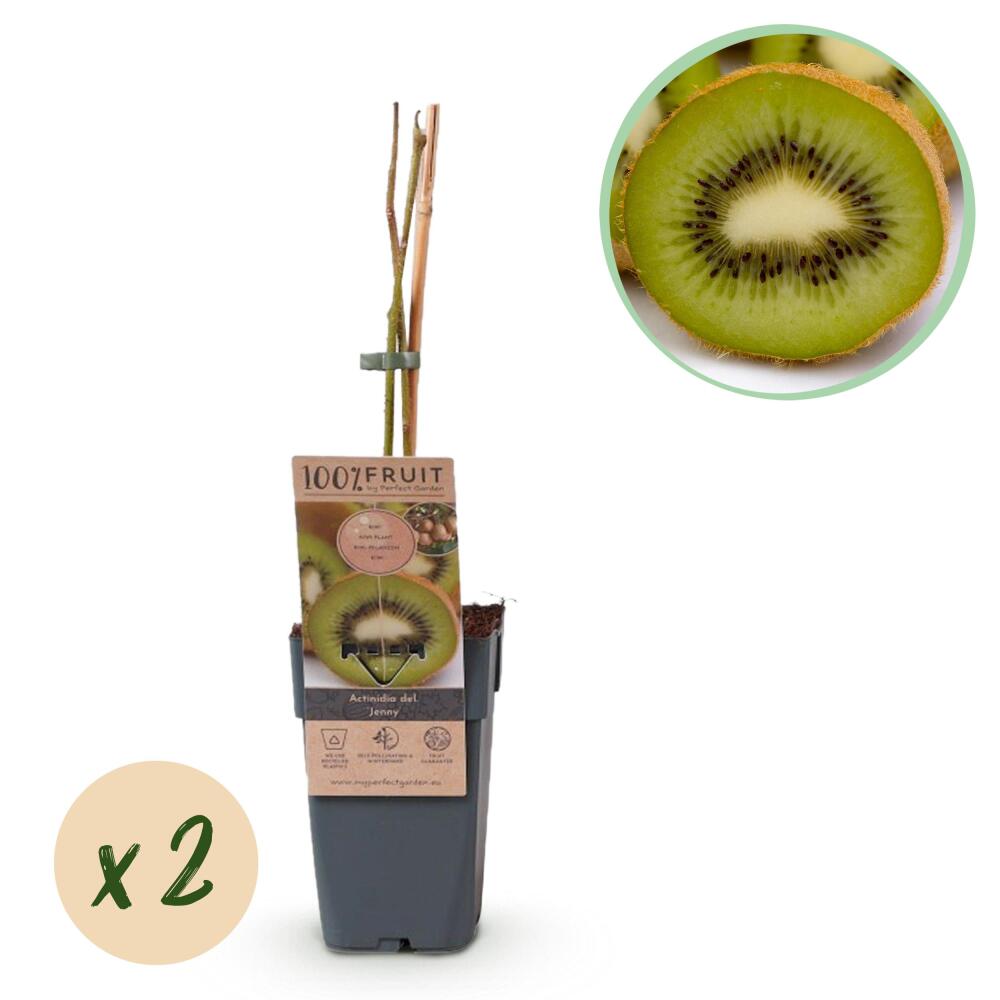
According to the offer, two plants are supplied in 15 cm pots at about 50 cm overall height. The original image shows a young leafless shoot with a support and a separate fruit inset. The depiction does not promise an already fruiting plant. Both Jenny plants can be grown separately; they are not a male-female pair. Allow enough space for each, since the slender young shoot can become a climber several metres long. A small pot support helps at the beginning but is not a permanently sufficient framework.
A sunny position with a strong framework
A warm sunny, wind-sheltered outdoor position suits fruit growing. The plant can grow in partial shade, but sufficient sun matters for ripening and yield. A stable trellis, strong wires or suitable pergola will later carry shoots, foliage and fruits. Set up the fixings before vigorous growth and do not let ties constrict stems. Soil should be humus-rich, nutrient-containing and well-drained. A permanently small container strongly restricts the vigorous plant; larger containers still require intensive supply.
Supply roots and protect spring shoots
Regularly check root-ball moisture in newly planted kiwis and water thoroughly during dryness. Avoid constant wetness. An organic covering around the root area can retain moisture but should remain away from the trunk. In well-supplied garden soil, extra feed is not automatically needed at short intervals; act according to actual need and product instructions. Young shoots are sensitive to late frost. When cold is forecast, provide suitable temporary protection in good time, then remove it again so light and air reach the plant.
Order in the framework makes later harvest easier
First establish a clear main stem and suitable lateral framework branches. Tie young shoots loosely and check regularly. Later, winter and summer pruning help keep the plant accessible. New fruiting shoots arise on previous-year wood; do not remove all young side branches indiscriminately. When summer pruning, retain several healthy leaves beyond existing fruits. Plan larger training work according to a pruning scheme suited to the framework. Targeted structure from the beginning is easier than radically untangling a kiwi that has overgrown for years.
Ripening, winter rest and patience are part of it
Several years may pass before young plants fruit. A warm long season improves the chances of well-developed fruits. Before stronger autumn frost, sufficiently developed fruits can be picked and left to ripen indoors. One weak season does not immediately mean the variety is wrong. Jenny is leafless in winter; young container plants need additional root protection. If new growth fails to appear, also check frost damage and water balance. Vigorous growth should not obscure how sensitive young spring shoots in particular can be.
One plant, several views
Good to know
Does Jenny need a male kiwi?
No, Jenny is self-fertile. The set contains two plants of the same variety, not a required pollinating pair.
Can the kiwi remain permanently on its small bamboo stake?
No. Its vigorous shoots will later need a stable trellis or suitable pergola.
Why does my young kiwi not have fruits yet?
Several years may pass before fruiting. Warmth, light, pruning and late frost also influence yield.
Is leafless wood normal in winter?
Yes. Jenny is deciduous. In spring protect fresh growth especially against late frost.
Sources and editorial note
- Product and delivery contents: Exotenherz
- NC State Extension: plant profile
- Royal Horticultural Society: plant and care knowledge
- Royal Horticultural Society: plant and care knowledge
Sources checked: 15 September 2026. Product information and delivery contents follow the linked shop offer. Care has been checked against the stated specialist sources and remains subject to plant condition, position and season.