
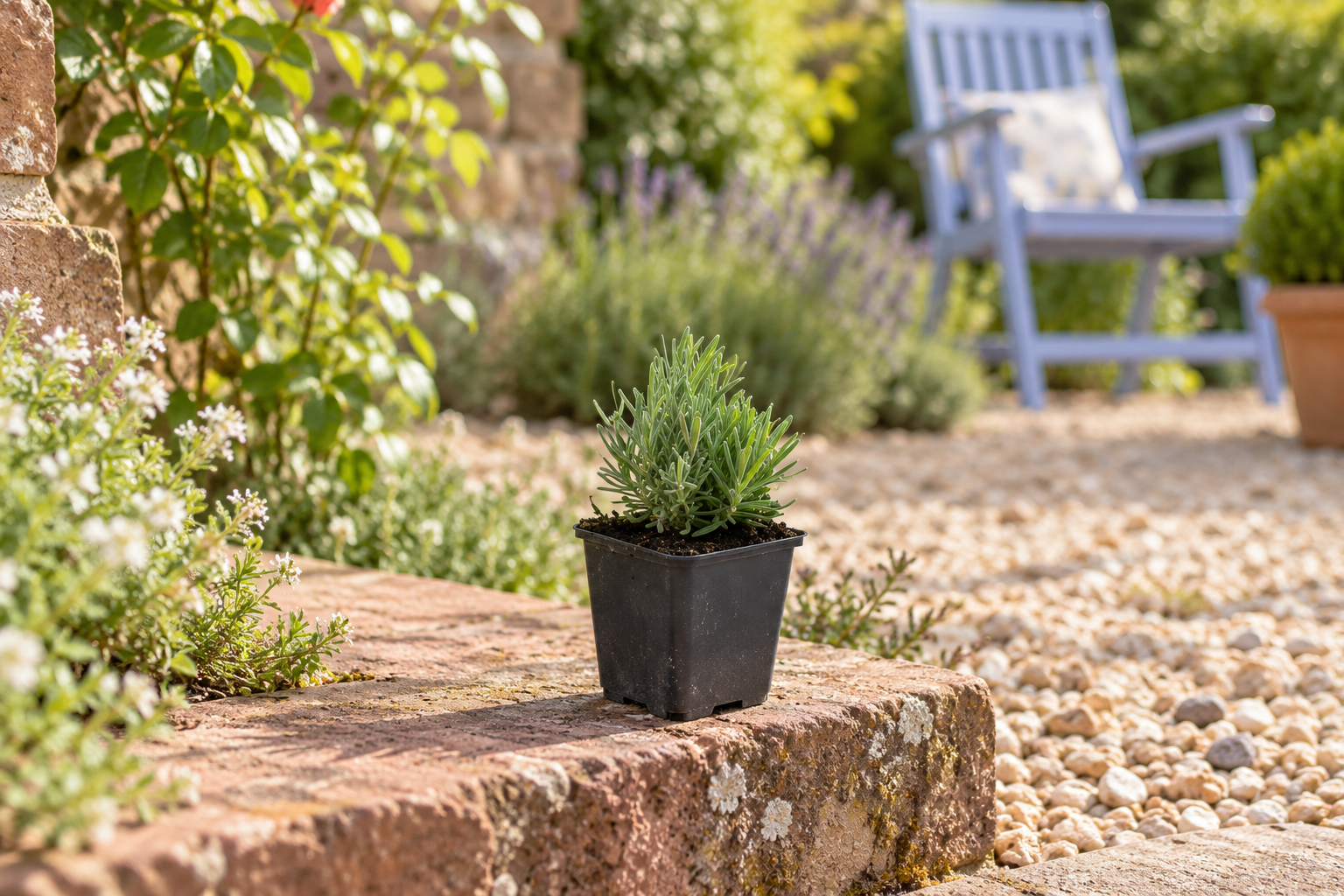
This plant at Exotenherz
Check the shop offer for current availability, price and what is included.
Check the shop for the current price, availability and offer contents.
Your care table
| Topic | What to do | Why it helps |
|---|---|---|
| Position | Choose a sunny warm garden edge. | Small lavenders need just as much light as larger cultivars. |
| Soil | Ensure draining soil and free flow below the rootball. | Winter moisture increases strain on roots. |
| Starting | Moisten the 9 cm rootball before planting and maintain its old height. | A young plant set dry cannot yet use the garden soil. |
| Water | Water as needed during establishment; later watch moisture and weather. | Small root space dries faster than older planting. |
| Feeding | Use additional feed sparingly and only when needed. | High nitrogen can loosen the compact structure. |
| Pruning | Remove spent stems and a little green growth after flowering. | Small yearly corrections are easier than deep cuts into bare wood. |
| Pots | Use a stable outdoor container with drainage holes. | Low growth replaces neither root volume nor drainage. |
| Winter | Provide shelter and suitable root protection; prevent rainwater accumulating. | The cultivar source recommends winter care; a general frost threshold would be too narrow. |
Check the compost and pot weight. The care table explains how far the compost may dry.
Water only when needed. The water should reach the root ball without spilling over the rim.
Remove surplus water from the saucer or cachepot. Then return the plant to a suitable position.
Low growth for a close look
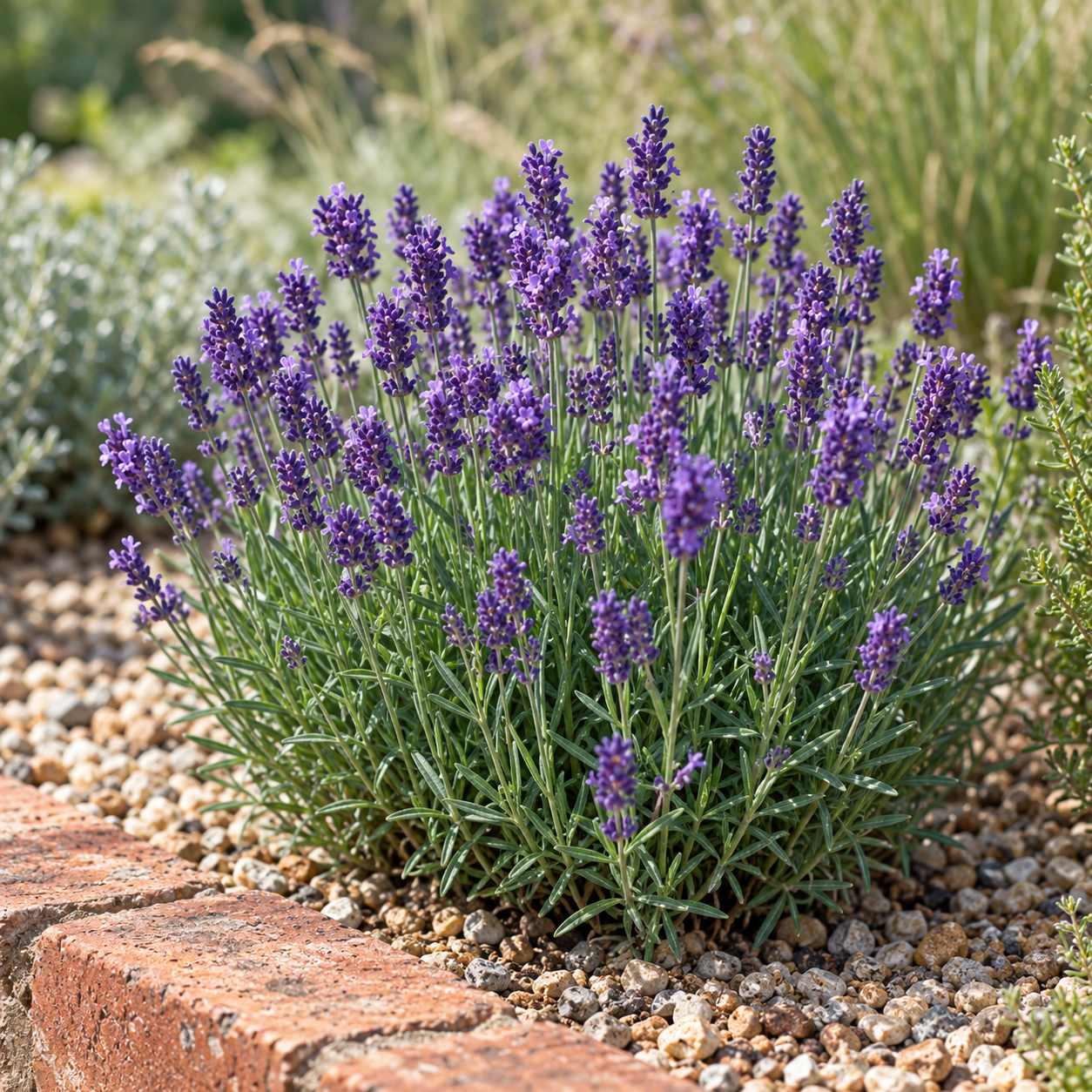
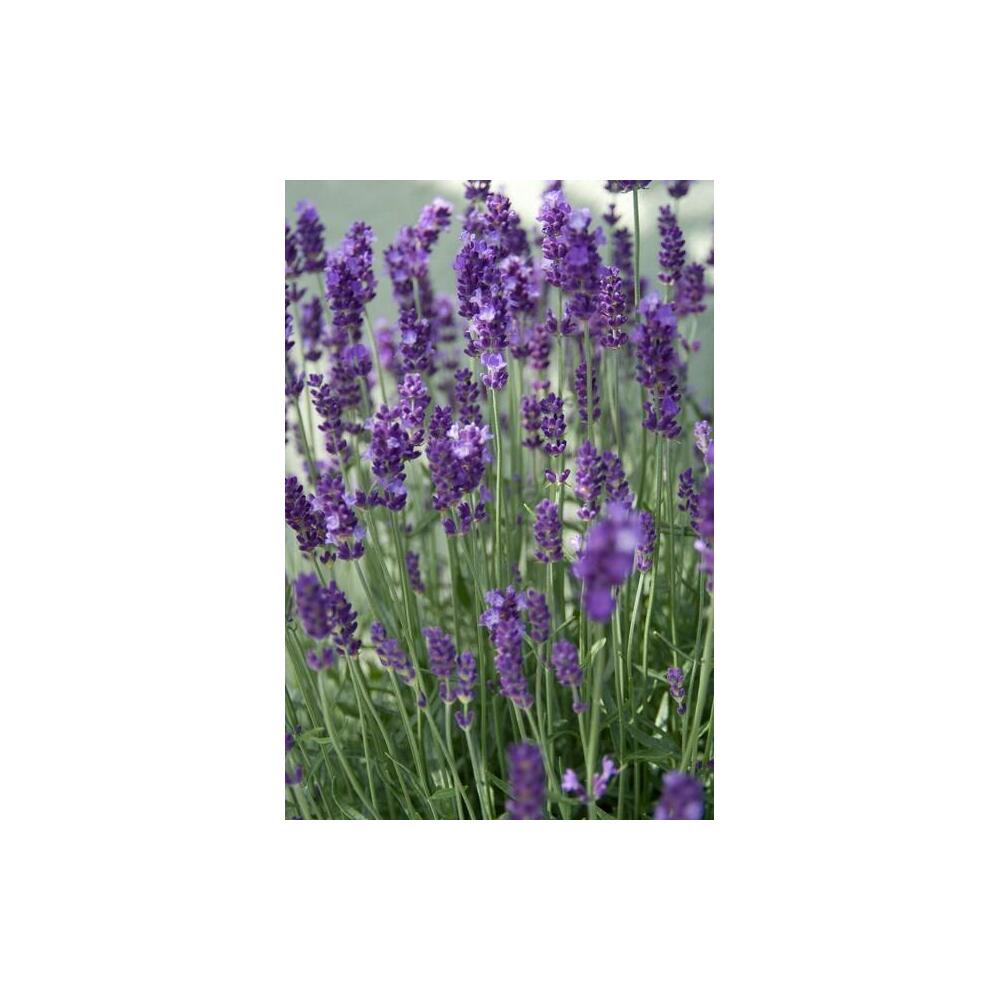
Dwarf Blue is offered as a blue dwarf. Its later flower spikes create a bluish-purple to grey-blue impression above the narrow foliage. The young original plant initially shows many upright fine leaves in a small pot. Flower stems and a wider woody framework develop later. This is compact lavender, not an unchanging miniature. At a small sunny border edge, it can draw attention to a clear section. Position it so you can look closely at leaves and spikes without the path becoming overgrown later.
Dwarf does not mean no space requirement
Sets contain plants in 9 cm pots, approximately 10–25 cm tall overall including the pot. Older Dwarf Blue reaches about 40 cm high and 50 cm wide; these are cultivar guidelines for garden development. The shop gives 20–30 cm spacing for a dense area or row. Mature plants set closely will then touch. If each mound should remain individually visible, allow more side space. Lay out the pots before planting and look at the path edge. Ordered quantity defines delivery contents, while spacing and later interaction remain decisions for your garden.
Warm and sunny, without wet feet
Choose a warm sunny position with a freely draining root zone. An attractive gravel surface alone tells you nothing about drainage below. In heavy soil, check the whole planting area rather than just the small hole. A suitable raised bed or outdoor container can make drainage easier to monitor. Do not leave the small lavender permanently in a shady terrace corner simply because its pot looks good beside the bench. In containers, use a structurally stable draining substrate and empty saucers after watering. A low plant mound may enjoy plenty of sun yet suffer from constant wetness.
The first season establishes the connection
Plant preferably in spring after hard frosts when soil is workable and has dried sufficiently. Thoroughly moisten the delivered rootball first. Unpot, set at its previous height, gently bring soil around it and water in. Monitor the young root zone over the following weeks. Heat or wind can dry the rootball faster than occasional glances at the border surface suggest. Water according to need and let surplus drain away. Drought tolerance describes an established lavender, not permission to leave small set plants to themselves immediately after planting.
Enjoy the blue and retain green cutting points
The cultivar source gives June–July as flowering time. Weather and garden position can shift this; a young delivery plant need not yet flower abundantly then. After the main flowering, shorten spent spikes and some leafy growth. Do not rely on strong cutting into bare woody stems producing dependable regrowth. Check each plant and retain green sections. Avoid strong late-autumn pruning in wet or cold regions. Regular small interventions maintain the desired shape, while frequent feeding cannot replace missing pruning.
A small potted mound needs accessible roots
A suitable outdoor container can show the compact shape of an individual Dwarf Blue well. The later shrub still needs more root space than a 9 cm sales pot. When changing pots, check the rooted ball and maintain planting height. A pretty stone layer cannot compensate for planting the woody base too deeply. Water should drain after watering; under a roof, rain may barely reach the rootball. Reassess the pot position after sunny windy days. Roots remain limited to the available soil reserve. A small low shrub makes monitoring manageable, but does not replace checking moisture.
The flowering mound changes through the year
In summer, some spikes may fade earlier than their neighbours. Remove spent stems individually if you want a tidy mound, keeping the green shoot sections. Such differences are normal in a living plant. Compare leaf shape and general structure with the original photograph instead of judging every spike against a uniform image. If the whole plant declines, first check the soil: persistent wetness in a small container differs from lack of water after heat. More fertiliser is not the right first answer to either. Note instead when rain, wind or a change of position altered conditions.
Compact cultivation through the cold season
Winter position and drainage belong together in borders and especially containers. Shelter pots and prevent prolonged wet rootballs. Suitable root protection helps against sharp temperature changes while free drainage remains necessary. The cultivar is described with winter care, so no general frost temperature is stated as a guarantee. In spring, wait for live tips and fresh foliage before carefully assessing damaged areas. An older shrub may have a woody base. If it also falls apart widely, examine pruning history, light and wetness. Small growth makes this easier to see but does not remove the need to observe.
One plant, several views
Good to know
How big does Dwarf Blue grow?
About 40 cm tall and 50 cm wide are cultivar guidelines. The 10–25 cm delivery height including the pot describes the start.
Are the flowers pure blue?
Spikes appear bluish-purple to grey-blue. Vivid pure blue is not promised.
When does it flower?
The cultivar source gives June–July. Weather, position and development alter the actual course.
How closely can sets be planted?
The shop gives 20–30 cm for dense planting. Allow more side space for visible individual older mounds.
Does dwarf lavender need less light?
No. This compact cultivar also needs a sunny warm position.
May I cut into old wood?
Keep moderate pruning within leafy areas. Bare wood does not reliably regrow.
Sources and editorial note
- Exotenherz: currently read parent offer (03.10.2026)
- Exotenherz: currently orderable child offer (03.10.2026)
- Kurowski nursery: directly read Dwarf Blue cultivar profile (accessed 03.10.2026)
- RHS: lavender care and drainage (accessed 03.10.2026)
Identity, parent offer and selectable child offers publicly read on 03.10.2026. Specialist sources read directly; quantity variants belong to this one portrait. Cultivar source: approximately 40 × 50 cm, June–July, sunny/warm/sheltered; winter care without an absolute frost promise. Dense 20–30 cm shop row separated from free-standing individual plant width.