
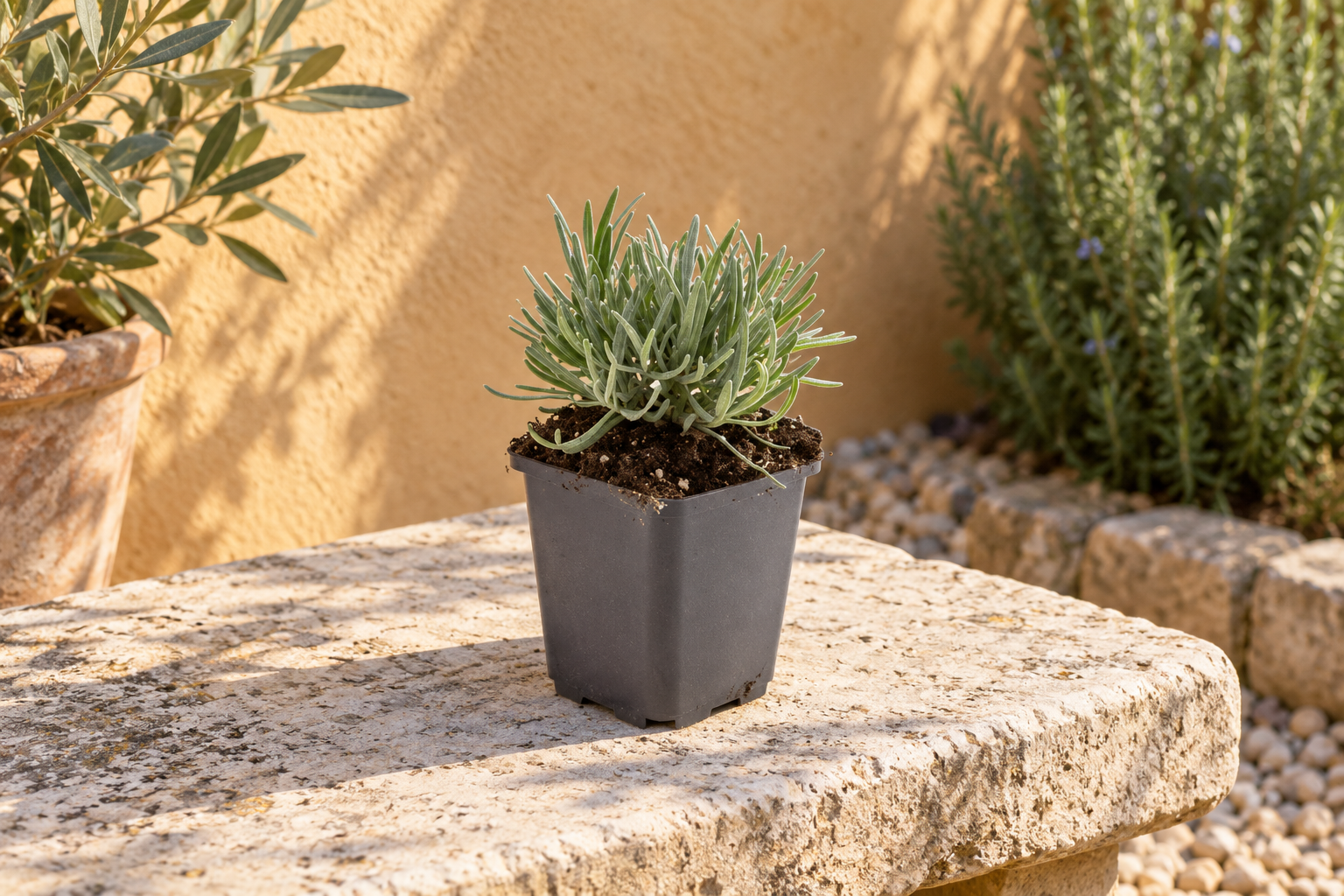
This plant at Exotenherz
Check the shop offer for current availability, price and what is included.
Check the shop for the current price, availability and offer contents.
Your care table
| Topic | What to do | Why it helps |
|---|---|---|
| Light | Choose a sunny outdoor spot for the pale flowers. | White lavender needs the same light as darker cultivars. |
| Soil | Ensure drainage throughout the root space. | Pale gravel on top does not prevent wetness below. |
| Establishment | Moisten the small rootball and plant at its previous height. | The young plant must first gain access to garden soil. |
| Water | Initially water according to moisture; later check rootball and weather. | Drought tolerance starts with a developed root system. |
| Feeding | Feed sparingly only as needed. | High nitrogen can encourage soft loose growth. |
| Pruning | Shorten spikes and a little leafy growth after flowering. | Green areas offer better control than bare old wood. |
| Pot | Choose enough root space and open drainage holes. | A small sales pot is not a permanent solution for an older shrub. |
| Winter | Shelter outside and limit persistent rain moisture around the roots. | Cold and wetness affect potted roots particularly directly. |
Check the compost and pot weight. The care table explains how far the compost may dry.
Water only when needed. The water should reach the root ball without spilling over the rim.
Remove surplus water from the saucer or cachepot. Then return the plant to a suitable position.
White changes the lavender view
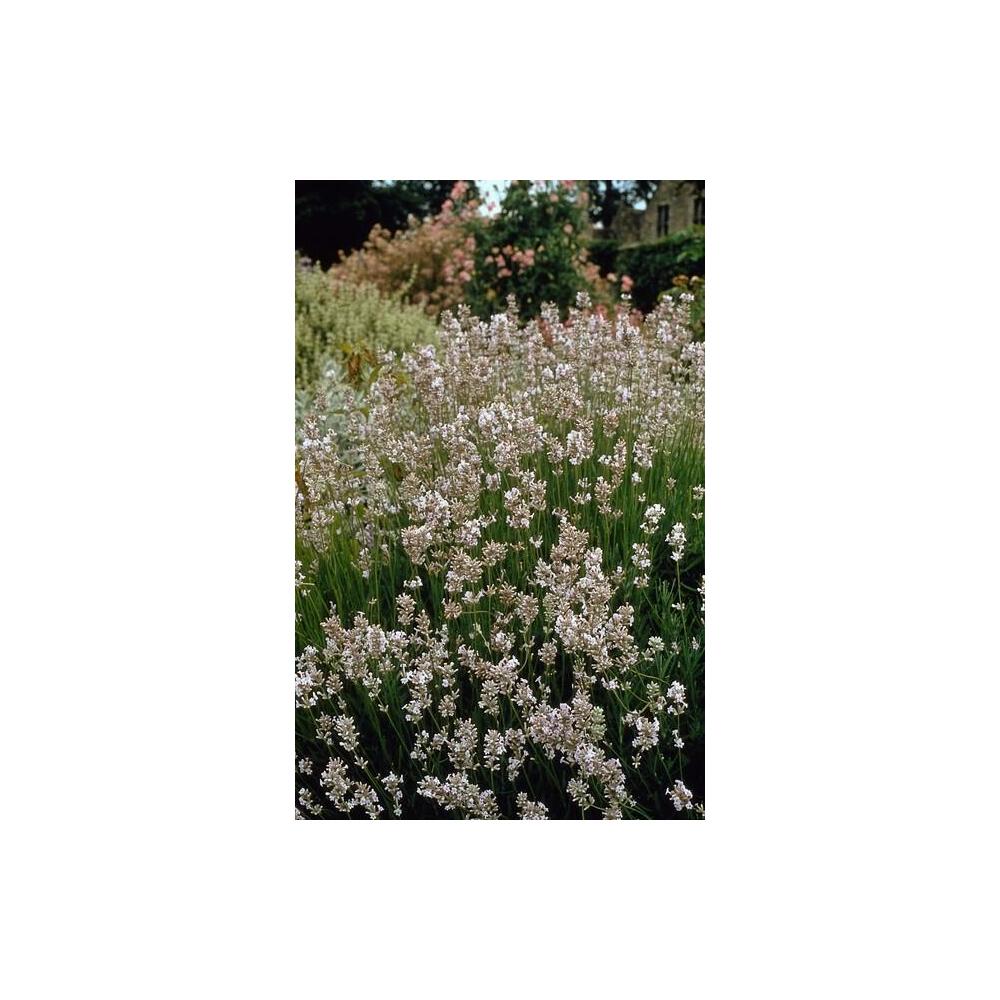
The pale flower colour is the first thing noticed in Edelweiss. Small white flowers form spikes above narrow aromatic leaves. Instead of a dark violet block, summer brings a soft pale accent. A sunny garden path with darker foliage behind can show this contrast well. The lavender itself remains the subject; large white decorative objects are unnecessary. It is a perennial small shrub with a woody base. A young potted plant without flower stems is the start of that structure, not the complete later garden view.
The name denotes a cultivar, not a mountain plant
The offer lists Edelweiss as white Provence lavender under Lavandula intermedia. The multiplication sign in the botanical name marks the hybrid group. This is therefore not alpine edelweiss. Various older commercial and botanical name versions occur in lavender; the specific assignment here follows the checked shop offer and same-named herbarium record. Garden planning should use this white-flowering cultivar rather than a general size for all Provence lavenders. A developed shrub may reach about 50 cm. An older plant can develop differently with light, soil and pruning without meeting that measurement exactly.
Develop a pale edge from small sets
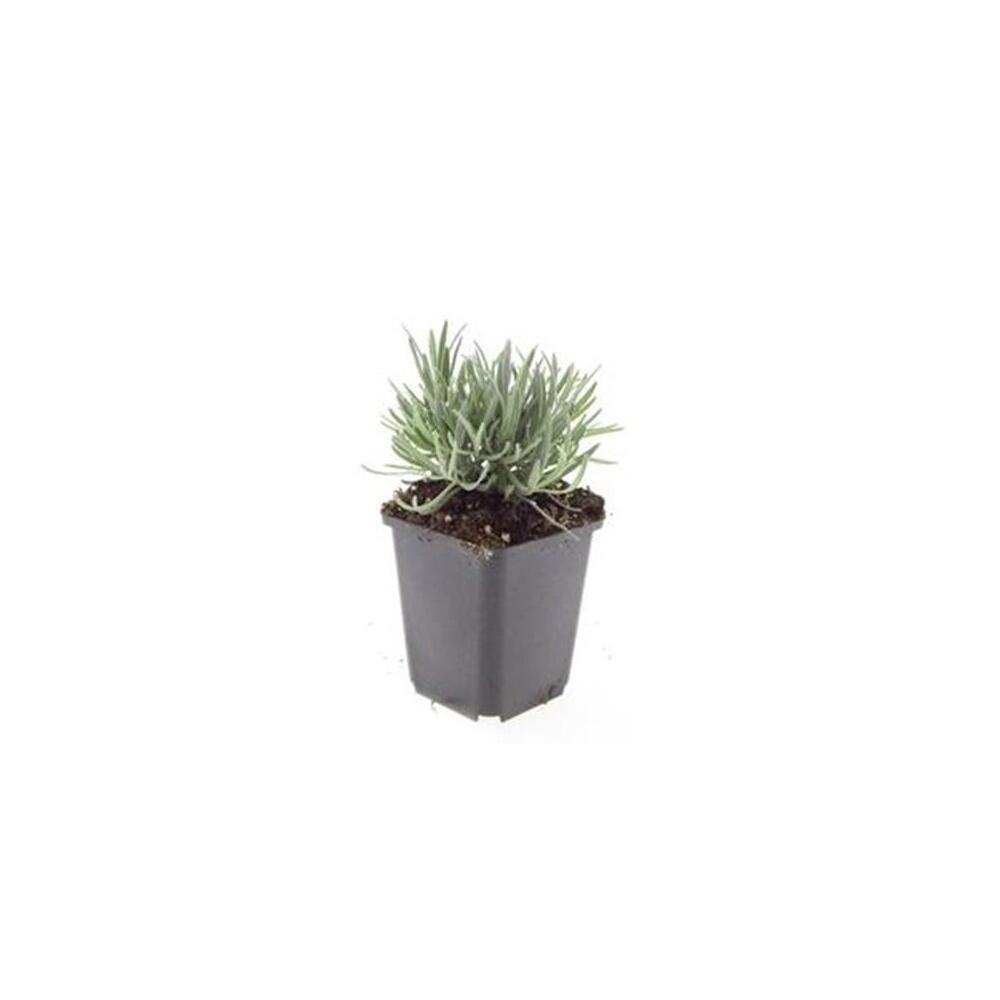
Delivery plants each come in a 9 cm pot at about 10–25 cm total height including the pot. Quantity depends on the selected set. The shop gives 30–40 cm spacing for a row. Lay out pots first and check where later flower stems may stand. A narrow edge directly beside a path can become difficult through sideways development. Older row plants may touch; more space is useful for visibly separate shrubs. Visible soil between plants initially belongs to young planting. The white flower display follows development and care rather than a large ordered quantity alone.
Bring sunshine and drainage together first
White lavender also needs full sun. A shaded bed does not become suitable because white flowers might look especially bright there. Check the soil after rain too. Persistently wet soil below a dry surface can harm roots. In heavy soil, consider a suitable raised area or easily monitored outdoor container. Use structurally stable well-drained soil and open drainage holes. Remove collected water after watering. A purely decorative layer of small stones does not replace drainage. This becomes even more important in winter, when cold wet roots face greater strain than a sunny summer position suggests.
Guide the young rootball through its first season
Spring after hard frosts is often favourable once the soil has dried sufficiently. Thoroughly moisten the rootball before planting, unpot carefully and retain its previous height. Then water the planting spot. Over the following weeks, check moisture where the young roots are. Established lavender with access to garden soil has greater reserves than a small delivery rootball. Watering according to need during establishment therefore does not contradict later drought tolerance. Moisture checks remain necessary for container plants. Follow soil and plant condition rather than a fixed weekly rhythm.
Feed moderately and shape the shrub
Edelweiss flowers white in summer; no exact month sequence is promised for this specific delivery assignment. If flowering is weak, check light and roots before feeding heavily. Extra nutrients are often unnecessary in adequately supplied garden soil. High nitrogen can encourage soft growth. After main flowering, shorten spent spikes and some young leafy growth. Look inside the shrub before pruning: old bare branches are not dependable reserves for a radical restart. Regular moderate pruning makes the shape easier to manage. Avoid strong late-autumn cutting in cold or wet positions.
Support the winter pause in the right place
Edelweiss remains an outdoor plant in winter. A suitable sheltered pot position with free drainage and limited rain moisture is more helpful than a warm living room. The small sales pot offers little long-term root protection or space; choose a larger suitable container in good time for permanent pot cultivation. Check the rootball on frost-free days and water only as needed. In spring, watch for new leafy tips before correcting damaged parts individually. A woody base is normal for lavender. A persistently collapsing shrub, however, calls for examining pruning, shade and wetness. This keeps the white summer accent part of an understandable perennial garden development.
One plant, several views

Good to know
Is this alpine edelweiss?
No. Edelweiss here is a white-flowering lavender cultivar, listed by the shop as Lavandula × intermedia.
Does Edelweiss flower white?
Yes, white summer spikes are its documented cultivar feature. The young delivered plant need not yet carry open flowers.
How big does it grow?
The read cultivar profile describes about 50 cm height. The 10–25 cm delivery height including pot is separate.
Can white lavender grow in shade?
Full sun is suitable for this cultivar. Pale flower colour does not change its light requirement.
When do I prune?
After main flowering, moderately within leafy growth. Bare old wood does not reliably regrow after deep cutting.
What matters most in winter?
Sheltered outdoor position, free drainage and no persistently wet rootball, especially in containers.
Sources and editorial note
- Exotenherz: currently read parent offer (03.10.2026)
- Exotenherz: currently orderable child offer (03.10.2026)
- RHS: Edelweiss, flower colour and cultivar growth (accessed 03.10.2026)
- RHS herbarium: Lavandula × intermedia Edelweiss (accessed 03.10.2026)
- RHS: lavender, planting and seasonal care (accessed 03.10.2026)
Identity, parent offer and selectable child offers publicly read on 03.10.2026. Specialist sources read directly; quantity variants belong to this one portrait. RHS sometimes uses Edelweiss without species classification and with several historical synonyms. The shop’s specific × intermedia classification is confirmed by the directly read RHS herbarium; generic 1 m Provence lavender values are not transferred to this cultivar.