
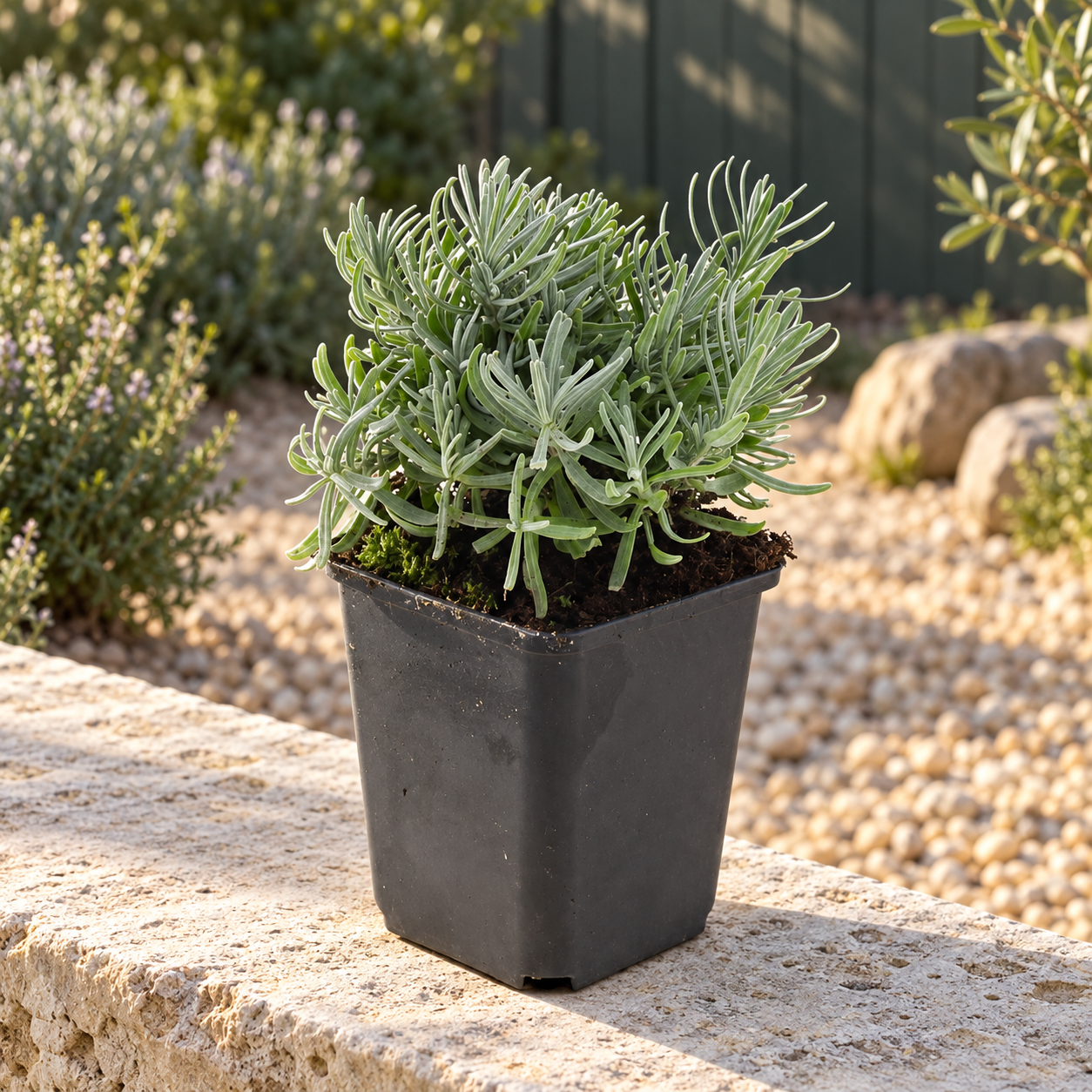
This plant at Exotenherz
Check the shop offer for current availability, price and what is included.
Check the shop for the current price, availability and offer contents.
Your care table
| Topic | What to do | Why it helps |
|---|---|---|
| Light | Choose a full-sun garden position. | Dense dark-violet spikes need good light. |
| Soil | Check drainage before planting; avoid heavy wet spots. | Winter wetness can strain roots more than a dry surface suggests. |
| Establishment | Moisten the small rootball and plant at its previous height. | Even later drought-tolerant lavender must first grow roots. |
| Water | Supply new plants as needed; check established planting less often and water deliberately. | Weather and root space determine need, not fixed weekdays. |
| Feeding | Usually omit extra fertiliser on very nutrient-rich soil. | High nitrogen encourages soft growth rather than firm compact structure. |
| Pruning | Shorten spikes and some leafy growth after flowering. | Moderate yearly pruning keeps the shrub branched. |
| Old wood | Do not cut deeply into bare woody branches. | Lavender does not reliably regrow there. |
| Winter | Shelter containers from wind and persistent rain around the rootball. | Free drainage and root protection belong together in overwintering. |
Check the compost and pot weight. The care table explains how far the compost may dry.
Water only when needed. The water should reach the root ball without spilling over the rim.
Remove surplus water from the saucer or cachepot. Then return the plant to a suitable position.
Dark violet needs no large area
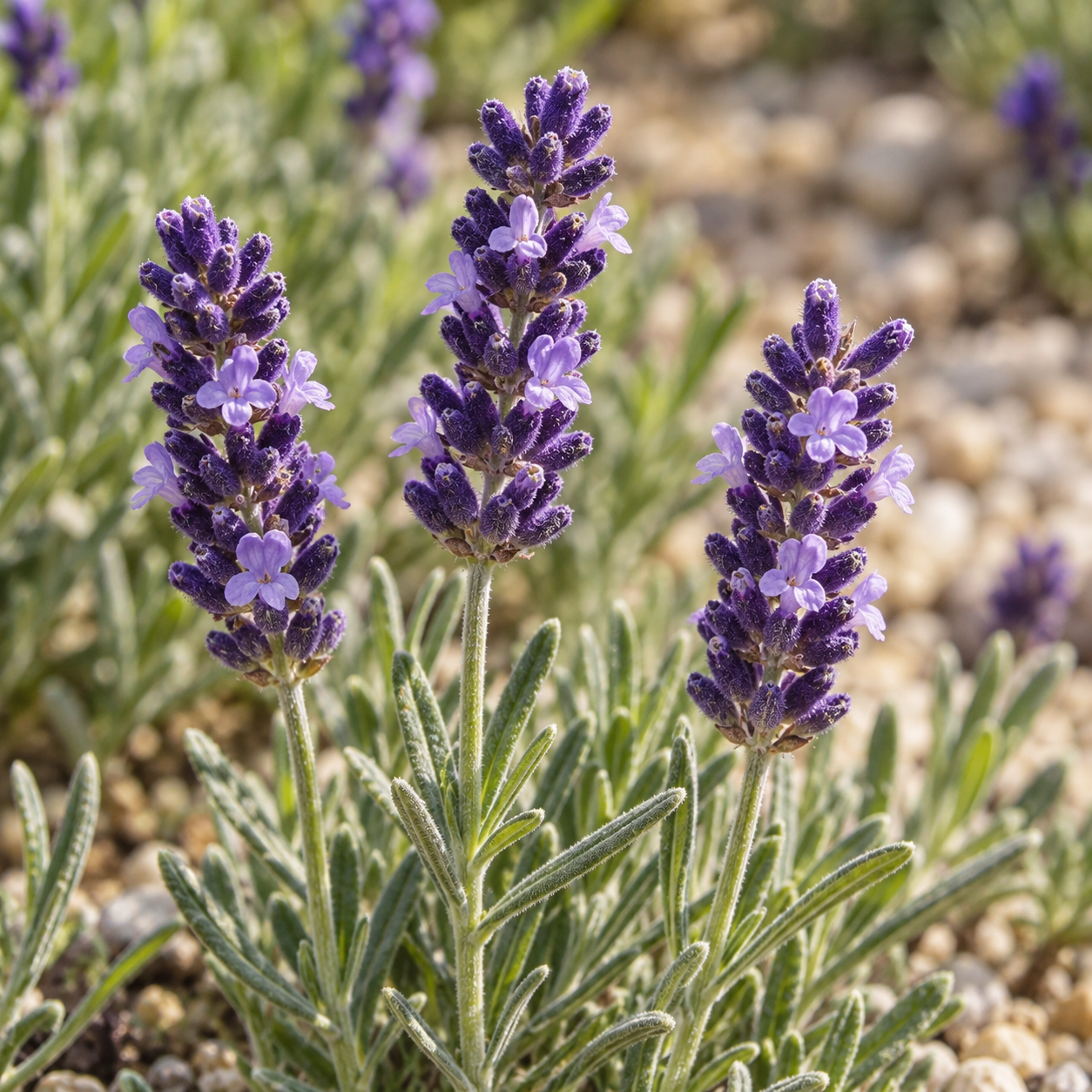
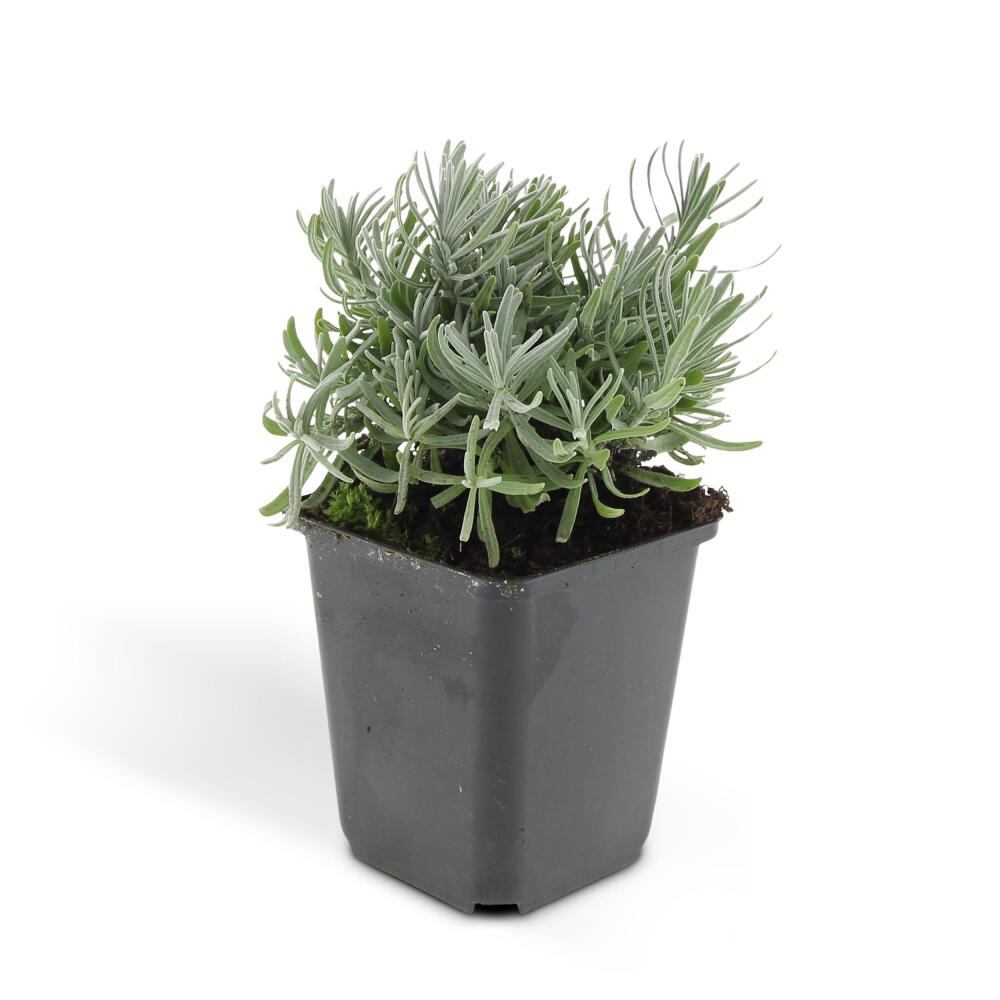
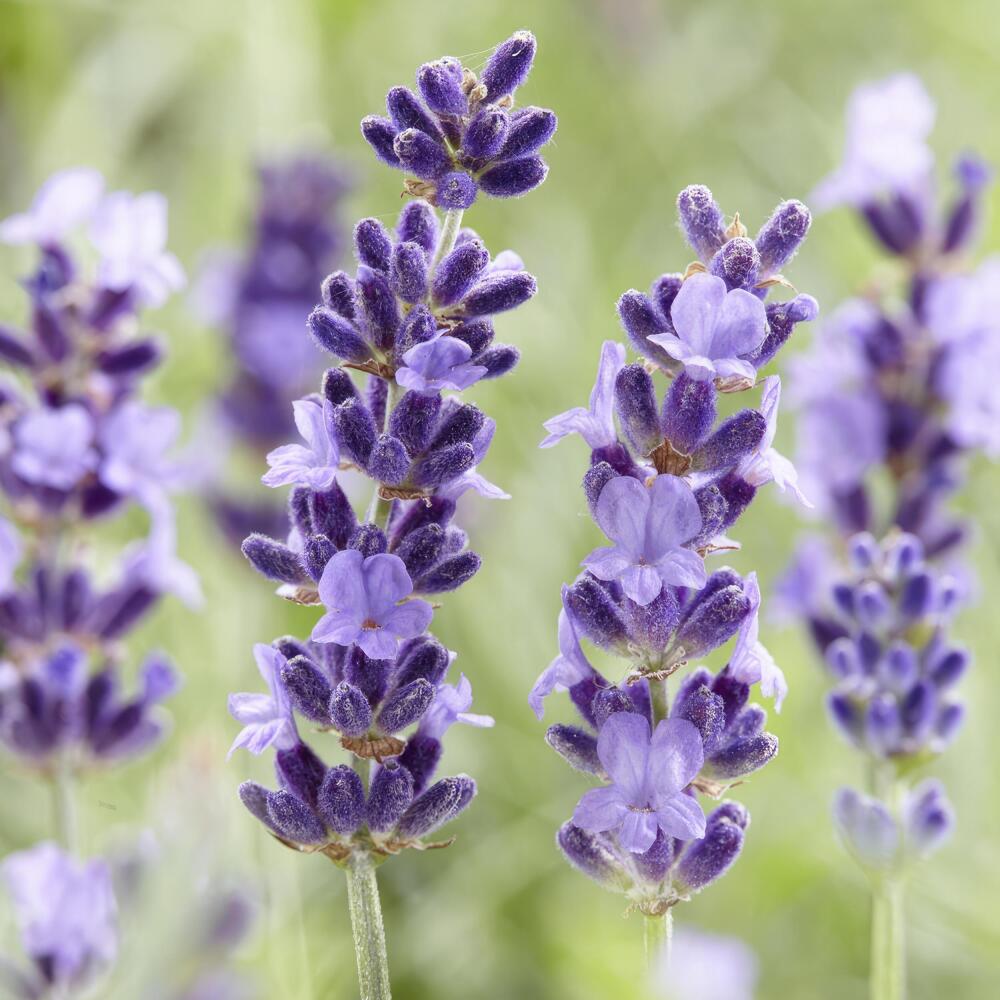
Hidcote places strong summer colour above paler leaves. Small flowers sit densely in short spikes, while narrow silver-grey foliage forms a calm contrast beneath. A row along a sunny path shows this relationship well. The cultivar also has its own character as an individual little mound between stones. Its defining feature is a compact woody small shrub, not a perennial rosette that stays soft forever. The original shows the young plant without large flower stems. Later flower images describe garden development and do not promise a flowering delivery.
Make a row with room for older plants
Depending on the set selected, you receive young plants each in 9 cm pots at about 10–25 cm total height including pot. Around 40–60 cm including flower stems is horticultural guidance for older Hidcote; exact structure also depends on pruning. The shop recommendation of about 30 cm spacing aims at a dense row. Older free-standing plants may develop wider. Before planting, check where later flower stems might reach into a path. A still-visible gap is not a mistake: it allows young plants to establish while the lasting border develops.
Give water a way out of the border
Full sun belongs to Hidcote, but brightness alone cannot compensate for heavy permanently wet soil. Watch after rain for standing water and check structure below the surface too. A raised planting area or suitable outdoor container may be easier to monitor where soil is problematic. Loosen the whole future root zone appropriately instead of making a small hole in dense wet earth. Containers require structurally stable well-drained soil and free drainage holes. Gravel on top counts for little if water is trapped deeper around the roots. Persistent wetness calls for correcting the position, not adding fertiliser.
Let young lavender root in spring
Spring planting after hard frosts gives the shrub time to establish roots before the cold season. Soil should have dried sufficiently. Moisten the delivered rootball, gently release it from the pot and retain its previous planting height. Woody bases must not disappear under thick new soil. After watering in, check moisture precisely around the small rootball. Water as needed during early growth; newly planted Hidcote is not yet an established lavender with broad root space. Check more often in heat. As new roots work into surrounding soil, reserves change and moisture checks can encompass the whole position.
Firm growth instead of constant extras
Lavender often needs no extra fertiliser in already adequately supplied garden soil. High nitrogen or generous nutrient-rich additions can encourage soft unstable growth. Check existing soil before automatically interpreting weak flowering as nutrient deficiency. Light, wet roots, pruning time and age also matter. Container reserves are limited; necessary feeding stays moderate and follows product dosage. Do not sprinkle small amounts of water around the base daily. When water is genuinely needed, let it reach the root zone and check drainage. The silver-grey appearance of leaves is normal, not an invitation to feed them greener.
Recognise the green pruning boundary
After main flowering, shorten spent spikes and some young leafy growth. Before every cut, check where leaves remain on shoots. Bare old wood is not a reliable basis for strong regrowth. Regular moderate pruning is therefore easier to control than a late rescue attempt on a largely woody shrub. Avoid strong late-autumn pruning in cold or wet regions. In spring, carefully correct untidy or frost-damaged tips when living new growth is visible. Patience keeps the compact mound visible. Do not immediately cut every young delivery plant to an imagined standard height.
Watch winter moisture on the terrace too
Hidcote remains outdoors as a garden plant. Cold and wet soil reach container roots faster than those in a suitable border. Shelter an appropriate pot, keep drainage holes open and avoid prolonged standing water. A rain-sheltered spot may help if moisture is still checked. Grey winter foliage alone is not evidence of damage. With clear wilting or dead shoots, assess weather, root condition and drainage together. A dry warm interior does not replace a sunny outdoor position. In spring, new growth reveals which tips are alive and where a small corrective cut is useful.
One plant, several views
Good to know
What identifies Hidcote?
Narrow silver-grey foliage and dense dark-violet to purple-violet flower spikes define the cultivar.
Can lavender grow in heavy wet soil?
Persistent wetness is unsuitable. Prepare a draining root zone or use a suitable outdoor container.
Must the young plant manage without water?
No. The small delivered rootball needs moisture checks and appropriate water during establishment.
How deeply may I prune?
Keep moderate pruning within leafy growth. Deep cuts into bare wood do not reliably produce new shoots.
Is 25 cm its final height?
No. The 10–25 cm refers to the delivered plant including pot; older Hidcote grows considerably larger.
Does Hidcote regularly need much fertiliser?
Usually not in adequately supplied soil. High nitrogen is unsuitable for firm compact growth.
Sources and editorial note
- Exotenherz: currently read parent offer (03.10.2026)
- Exotenherz: currently orderable child offer (03.10.2026)
- RHS: Hidcote, cultivar features and position (accessed 03.10.2026)
- RHS: planting, watering and pruning lavender (accessed 03.10.2026)
Identity, parent offer and selectable child offers publicly read on 03.10.2026. Specialist sources read directly; quantity variants belong to this one portrait. Cultivar profiles give differing heights: about 40–60 cm as a horticultural range; no cultivar-specific calendar start of flowering or frost threshold promised.