
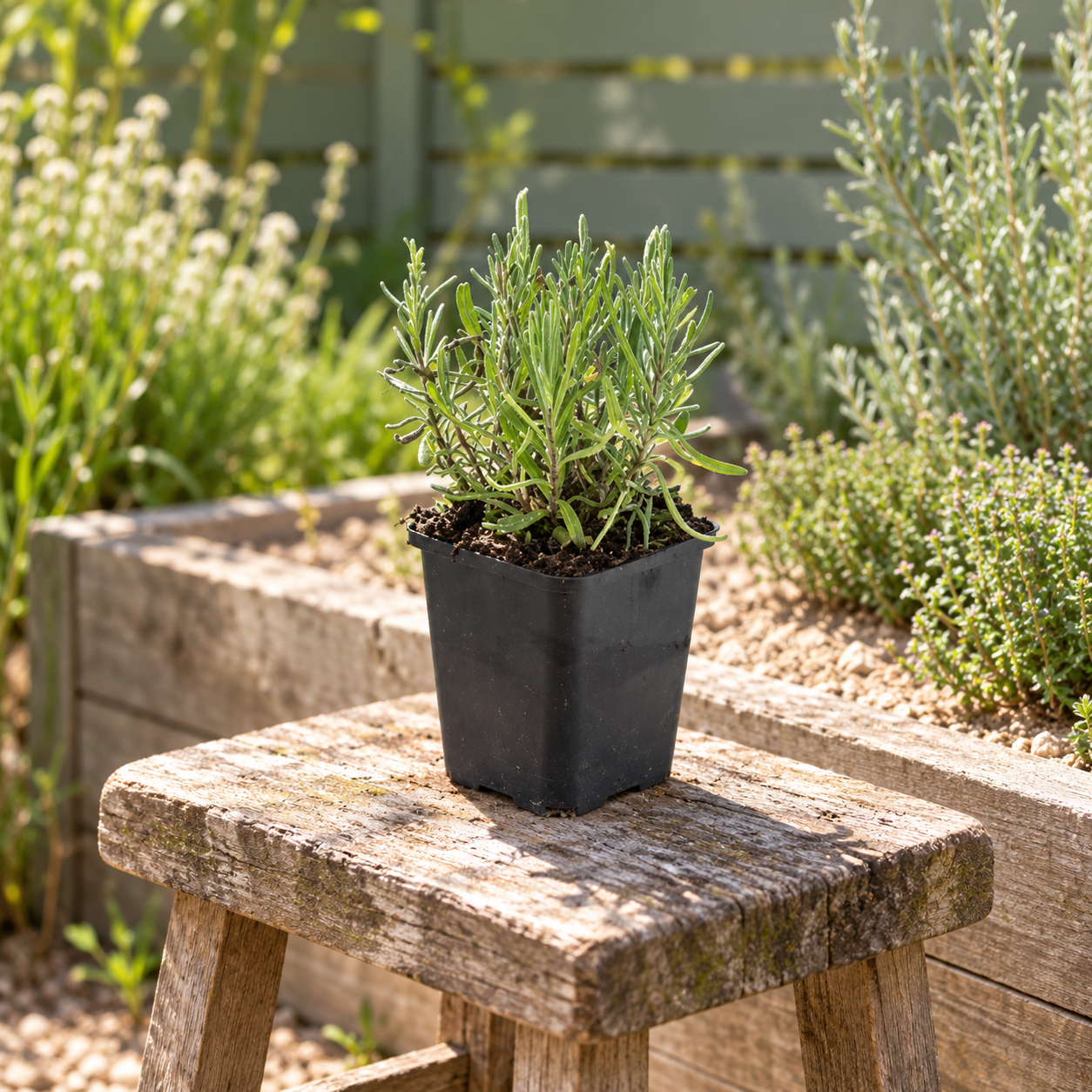
This plant at Exotenherz
Check the shop offer for current availability, price and what is included.
Check the shop for the current price, availability and offer contents.
Your care table
| Topic | What to do | Why it helps |
|---|---|---|
| Light | Choose a sunny outdoor spot and observe the course of the day. | Persistent shade makes compact growth and flowering harder. |
| Soil | Prepare airy well-drained soil. | Lavender roots tolerate persistent waterlogging poorly. |
| Water | Check young plants at the rootball; water older planting thoroughly as needed. | Reserves change with root space. |
| Feeding | Avoid strongly nitrogen-focused extra feed. | Soft growth can loosen the calm mound shape. |
| Pruning | Remove spikes and a little leafy growth after flowering. | Regular care preserves young branched shoot areas. |
| Old wood | Do not treat bare branches as reliable pruning reserves. | Lavender does not reliably regenerate there after strong cutting. |
| Propagation | Use cuttings from healthy young shoots for cultivar-like offspring. | Seedlings can differ from the named cultivar. |
| Winter | Protect containers from accumulating rain and shelter cool outdoors. | Wet cold roots face greater strain in small containers. |
Check the compost and pot weight. The care table explains how far the compost may dry.
Water only when needed. The water should reach the root ball without spilling over the rim.
Remove surplus water from the saucer or cachepot. Then return the plant to a suitable position.
A mound of fine individual flowers
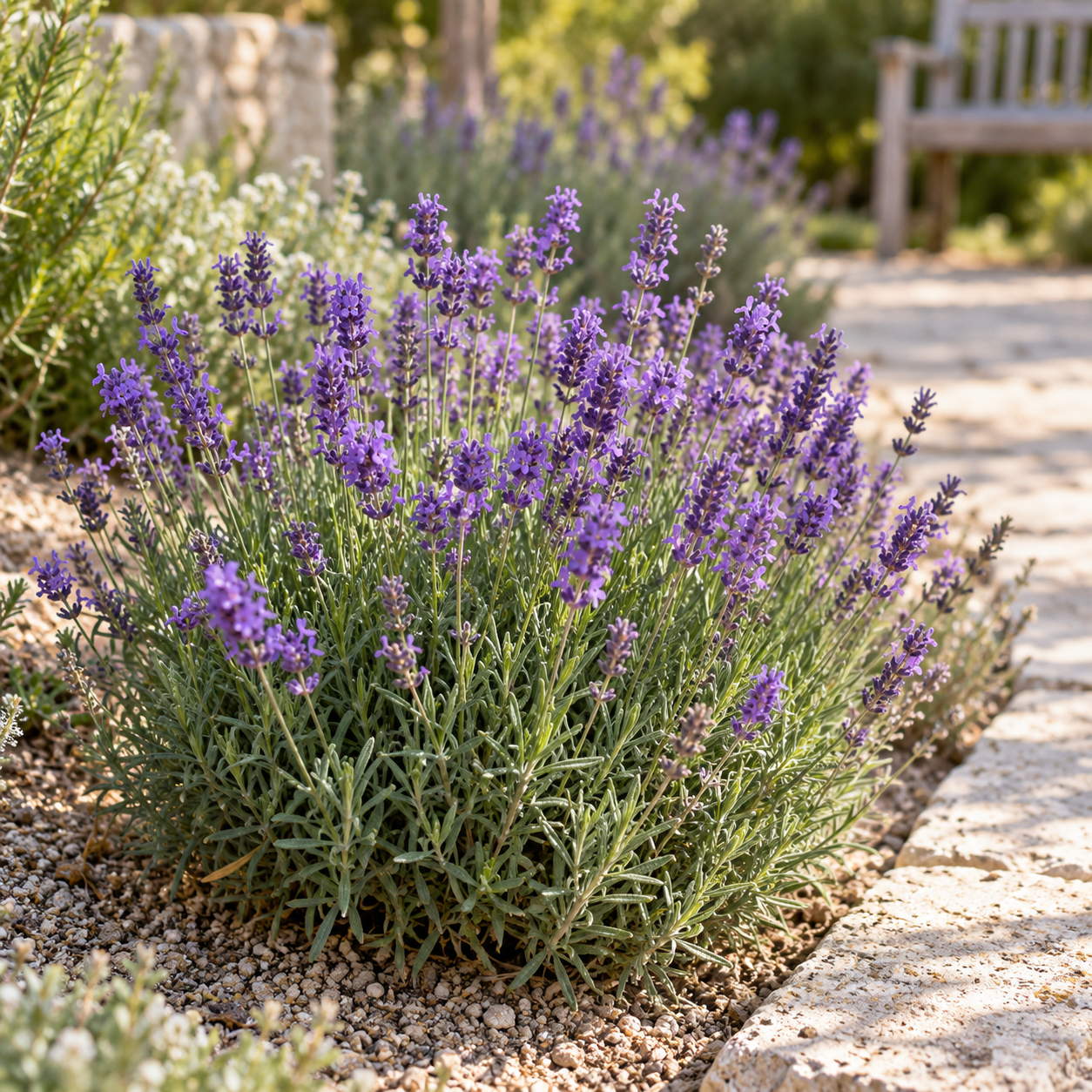
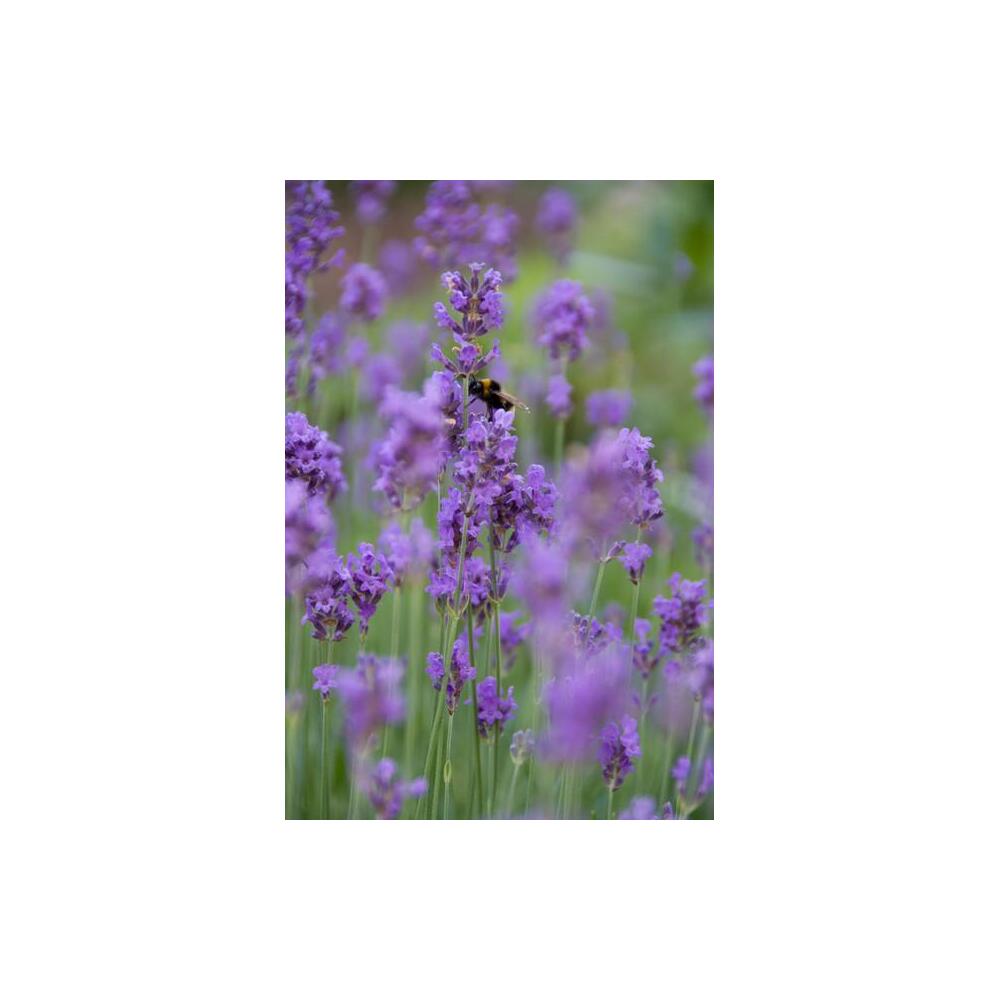
Munstead develops its summer effect above many narrow grey-green leaves. Small blue-violet flowers form spikes on upright stems. From a distance they make a calm colourful mound; close up their fine structure becomes visible. This cultivar belongs to English lavender and remains a small shrub with a woody base for several years. The young original plant is still in its sales pot without a large flowering structure. Its later garden appearance develops after rooting with suitable care. A bench beside an open garden path offers a lovely view, as long as the plant itself receives enough sun.
Measure spacing by the later mound
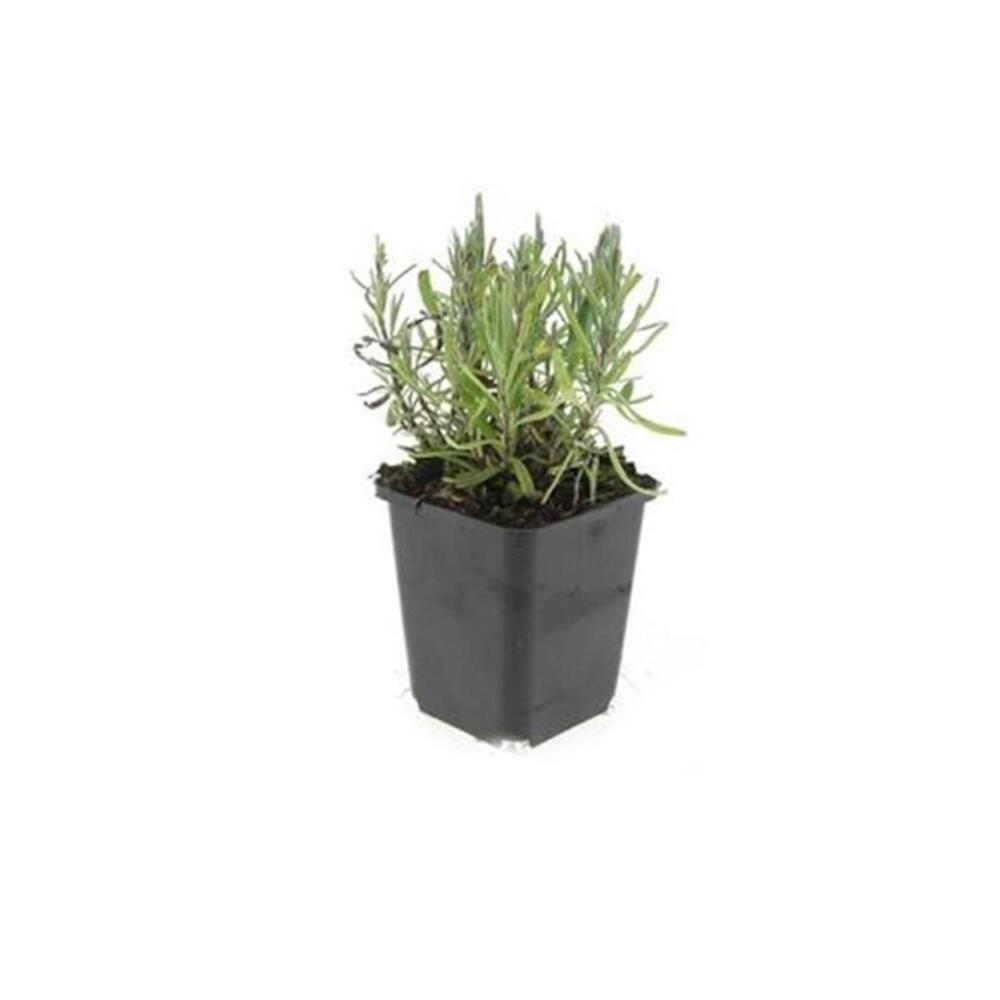
A 9 cm pot diameter and approximately 10–25 cm total height including pot are the documented delivery dimensions. Munstead later reaches about 45 cm tall; sideways an older shrub may occupy roughly half a metre to a metre depending on care. The shop’s 30–40 cm spacing guidance makes a dense row where older plants may touch. Allow more space for visibly separate mounds. Plan flower-stem height beside the path and retain access for annual pruning. Initially visible soil between small delivery plants shows an open developing structure, not a deficiency in the set.
Find sunshine and take soil seriously
Watch the position through the day. A place can be bright in the morning then spend hours under dense woody shade. Munstead needs a sunny outdoor position; good light and airy root space go together. In heavy wet soil, first check whether water really drains away. A suitable raised area or container with open holes may be easier to care for than a narrow hollow. Use draining structurally stable soil for pots. A decorative stone layer cannot replace that structure. If the border stays wet long after rain, changing fertiliser bottles does not solve the underlying position problem.
Use spring to build roots
Plant young Munstead preferably in spring after hard frosts into soil that has dried sufficiently. Moisten small rootballs first without pulling shoots when unpotting. Plant at the previous height and water slowly. The young root zone should not dry completely in its first season. Check moisture there, particularly in warm wind or near heated path edges. Older established lavenders have different reserves from the delivery rootball. Containers still require controlled watering later because roots cannot move into wider garden soil. Water thoroughly when needed and remove collected water rather than rigidly distributing small amounts on certain days.
Not every small flowering pause needs fertiliser
Munstead flowers in summer. Garden position, weather and age affect the exact course; no fixed first calendar week is promised. Young plants need not arrive in bloom. If planting is weak, first check light, moisture and roots. Large extra nutrient doses are usually unnecessary in well-supplied garden soil. High nitrogen may promote soft growth and loosen the mound. In pots, account for existing starter fertiliser and add only as needed according to the label. Grey-green foliage is normal. Trying to turn it lush dark green through heavy feeding misses the cultivar’s character.
Keep young green growth on the shrub
After main flowering, shorten spent spikes and a little leafy growth. Look into the mound: branches farther inside may already be bare and woody. These do not reliably regrow after deep cutting. A moderate annual trim is therefore easier to manage than later cutting back an old collapsed plant. Avoid stronger late-autumn cuts in cold or wet positions. In spring, assess untidy or frost-damaged tips only when living growth is evident. If you want new plants with the cultivar’s traits, cuttings from healthy young growth are more useful than expecting every seedling to produce exactly Munstead again.
The terrace needs a winter plan
A stable outdoor container with enough root space can display its compact shape well. Shelter it in winter, keep drainage open and avoid excessive rain around the rootball. A small pot cools more than a suitable border, and its soil must not remain wet. Check on frost-free days. A bright dry outdoor spot sheltered from rain can help monitoring, provided an overly dry rootball is also noticed. The shrub should not permanently move into a warm living room. In spring, fresh foliage shows where the mound continues to grow. This gives the low cultivar a recognisable form that may still change with season and age.
One plant, several views
Good to know
How tall does Munstead grow?
About 45 cm is cultivar guidance. The 10–25 cm delivery height includes the sales pot.
Is 30–40 cm spacing right for every shape?
It is the shop’s recommendation for a row. Older individual plants become wider; allow more room for separate mounds.
Do I need much fertiliser?
Usually not in well-supplied soil. High nitrogen can encourage soft loose growth.
Why is my lavender woody below?
The base of a perennial lavender shrub becomes woody. Moderate regular pruning helps preserve young leafy shoots.
Can I sow true-to-cultivar plants?
Seedlings can differ from the cultivar. Cuttings from healthy young shoots are more likely to preserve its traits.
Does a flower photograph guarantee the delivery?
No. It shows possible later garden development, not guaranteed flowering in the young delivered plant.
Sources and editorial note
- Exotenherz: currently read parent offer (03.10.2026)
- Exotenherz: currently orderable child offer (03.10.2026)
- RHS: Munstead, compact growth and flowers (accessed 03.10.2026)
- RHS: lavender, planting and seasonal care (accessed 03.10.2026)
Identity, parent offer and selectable child offers publicly read on 03.10.2026. Specialist sources read directly; quantity variants belong to this one portrait. Munstead listed in the RHS profile via synonymous entry Dwarf Munstead. About 45 cm tall, 0.5–1 m wide; summer rather than an invented cultivar-specific first month.