
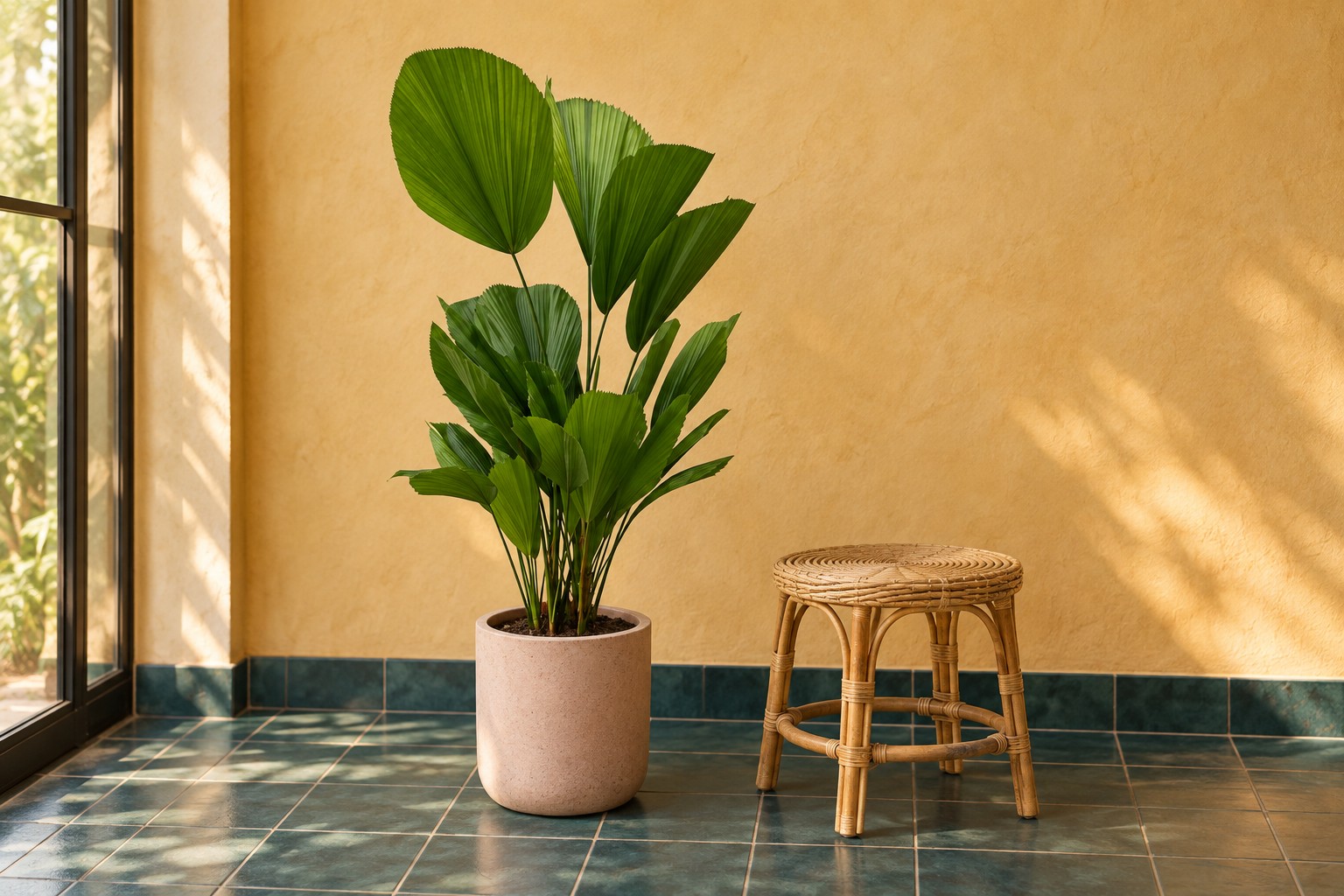
This plant at Exotenherz
Check the shop offer for current availability, price and what is included.
The linked shop is in German. Product details, availability and delivery information are provided in that shop.
Your care table
| Topic | What to do | Why it helps |
|---|---|---|
| Light | Bright indirect light to partial shade. | Protect this understorey palm from hot direct sunlight. |
| Water | Keep evenly slightly moist, allowing the surface to dry a little. | Do not let the root ball dry completely and remove remaining water. |
| Compost | Humus-rich, well-drained potting mixture. | Keep moist roots aerated at the same time. |
| Feed | Feed moderately during growth according to the product instructions. | Do not try to accelerate slow growth with heavy feeding. |
| Temperature | Around 18–26 °C according to the shop recommendation. | Avoid cold draughts and chilled roots. |
| Leaf protection | Protect fans from rubbing, wind and heavy rain. | The broad pleated leaf surface is sensitive. |
| Palm heart | Let new fans unfold on their own. | Do not cut at the central growing point. |
| Repotting | Only repot when clearly needed, disturbing roots as little as possible. | An oversized container holds water unnecessarily long. |
Check the compost and pot weight. The care table explains how far the compost may dry.
Water only when needed. The water should reach the root ball without spilling over the rim.
Remove surplus water from the saucer or cachepot. Then return the plant to a suitable position.
A fan formed from a continuous surface
Licuala grandis has particularly striking, almost undivided leaf surfaces. Fine regular pleats run outwards from the leaf base; the notched edge has a fan-like appearance. This clearly distinguishes it from palms with many separate leaflets. The species belongs to the palm family and comes from rainforest regions of the south-western Pacific. It grows slowly. Its leaf shape is the focus indoors, rather than a rapid rise to an enormous crown on a tall trunk.
Understanding young fans
The offered plant is approximately 90 cm tall and stands in a 24 cm pot. Younger leaves can look smaller and narrower than the large rounded fans of older specimens. The shop photograph shows these developmental stages; the scene retains the young structure. Give the crown free space at the sides so that the pleated surfaces do not rub against furniture. A low stool helps convey its size. The name giant fan palm does not mean that the delivered plant already has leaves several metres wide.
Translate rainforest shade into indoor light
As an understorey palm, Licuala prefers sheltered light. Indoors, this means bright indirect daylight to partial shade. Hot direct sunshine can damage the fans. The shop recommendation of around 18–26 °C offers a guide for warm cultivation. Avoid draughts, strong wind and cold windowpanes. Heavy rain can also put strain on the sensitive leaf surfaces. For reliably sheltered care, the offered form therefore stays initially in a suitable indoor space or warm conservatory.
Slightly moist roots with free drainage
Check the compost regularly and keep it evenly slightly moist. Allow the surface to dry a little, but do not let the whole root ball become completely dry. Water the compost slowly as needed and let excess drain away. A closed outer pot must not hide a reservoir of water. Slow growth does not mean that the plant generally needs very little water; leaf area, warmth and position influence consumption. In winter, with less light, adjust quantities more carefully and continue regular checks.
Preserve fans and the palm heart gently
A humus-rich, well-drained potting mixture suits moist but aerated root cultivation. Repot only when there is a clear need for space and disturb the roots as little as possible. During growth, feed moderately according to the fertiliser instructions. Do not open new leaf fans by hand: they unfold themselves. Keep green leaves; fully dead ones can be removed carefully. Remove dust gently without pressing the pleats flat. The central growing point is particularly sensitive and must not be injured during care.
A calm position makes checks easier
Brown edges can appear after excessive sun, water stress or unsuitable room conditions. Check light and temperature as well as the amount of water. Regularly inspect undersides and petiole bases for sap-feeding pests. Damaged old surfaces will not become flawless again; the quality of newly emerging fans matters. A slow-growing palm needs patience. Even growing conditions help more than frequent repotting, heavy feeding or changing positions that continually require new adjustment.
One plant, several views

Good to know
Why are the leaves not all perfectly round?
Young leaves differ in size and shape from later large fans. The offer shows a young potted plant.
Does the palm need direct sun?
No. Sheltered indirect light better matches its habitat as an understorey palm.
Can I open a new fan by hand?
No. It should unfold undisturbed, with the palm heart protected.
How large is the delivered form?
Approximately 90 cm in overall height in a 24 cm pot, with natural differences in leaf number and fan size.
Sources and editorial note
- Product and delivery contents: Exotenherz
- National Parks Board Singapore: plant profile
- Royal Horticultural Society: plant and care information
Sources checked: 15 September 2026. Product information and the contents of delivery follow the linked shop offer. Care advice was checked against the cited specialist sources and should still be adapted to the plant’s condition, position and season.