
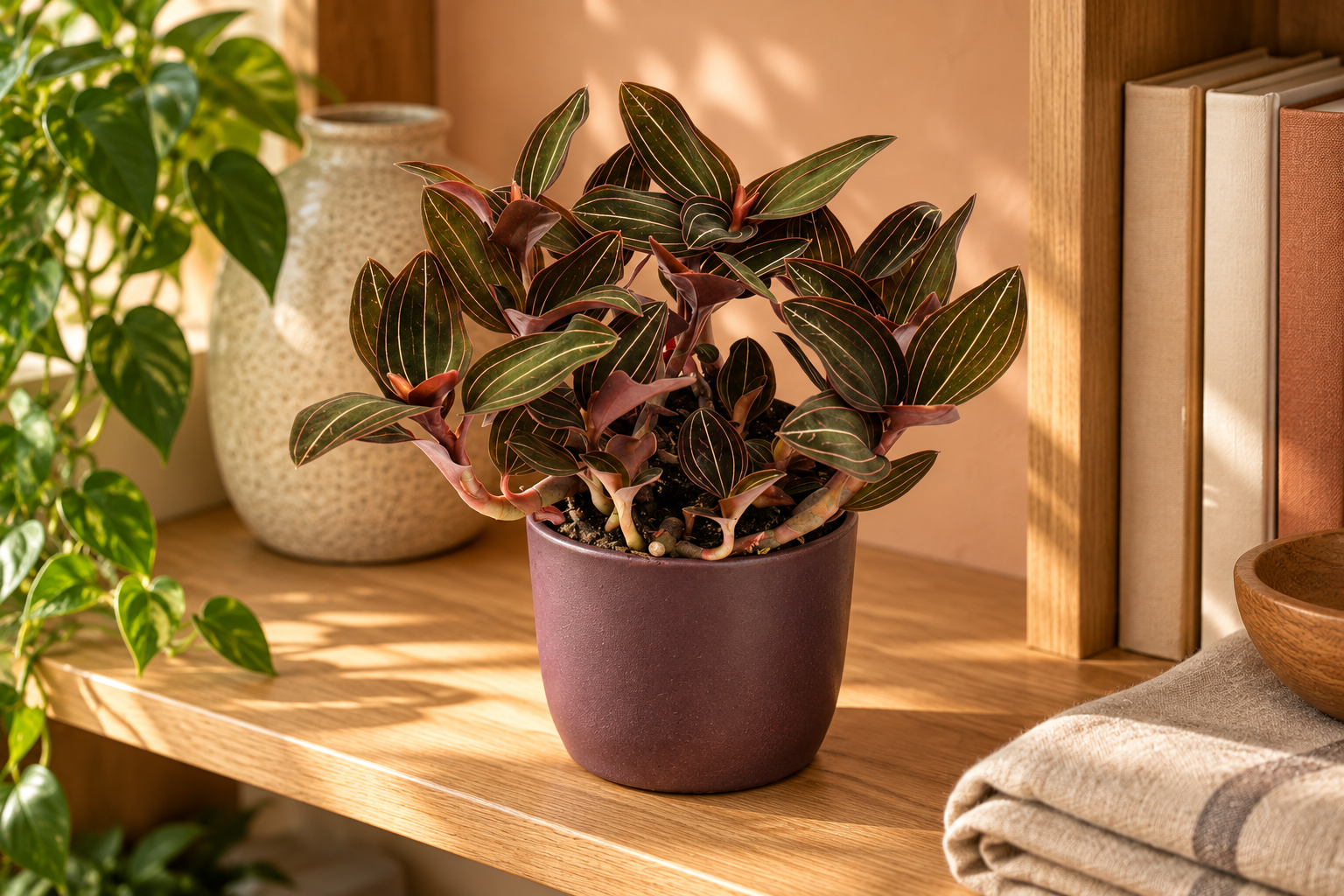
This plant at Exotenherz
Check the shop offer for current availability, price and what is included.
Product and delivery details are given in the individual offer.
Your care table
| Topic | What to do | Why it helps |
|---|---|---|
| Light | Keep bright to partially shaded with filtered daylight. | Hot direct sunlight can damage velvety leaves. |
| Water | Water when surface drying begins; do not let the root ball dry completely. | This terrestrial orchid needs an even airy supply. |
| Drainage | Let excess drain fully and empty the cachepot. | Standing water can rot fleshy shoots and roots. |
| Compost | Keep loose and moisture-retentive; fine structure rather than only coarse bark. | Ludisia grows terrestrially and is treated differently from a mounted orchid. |
| Room climate | Place warmly, protected from radiator heat and cold draughts. | Dry hot air and cold strain young foliage. |
| Feeding | Feed lightly during growth according to a suitable fertiliser label. | The small plant needs no high salt concentration in its root ball. |
| Repotting | When needed, choose a slightly larger, rather wide container. | Creeping shoots need sideways space; a deep reserve pot stays wet a long time. |
| Leaf care | Handle foliage and shoots gently and allow air exchange. | Fleshy shoots break easily, and permanently wet leaves are unfavourable. |
Check the compost and pot weight. The care table explains how far the compost may dry.
Water only when needed. The water should reach the root ball without spilling over the rim.
Remove surplus water from the saucer or cachepot. Then return the plant to a suitable position.
A jewel made of leaf lines
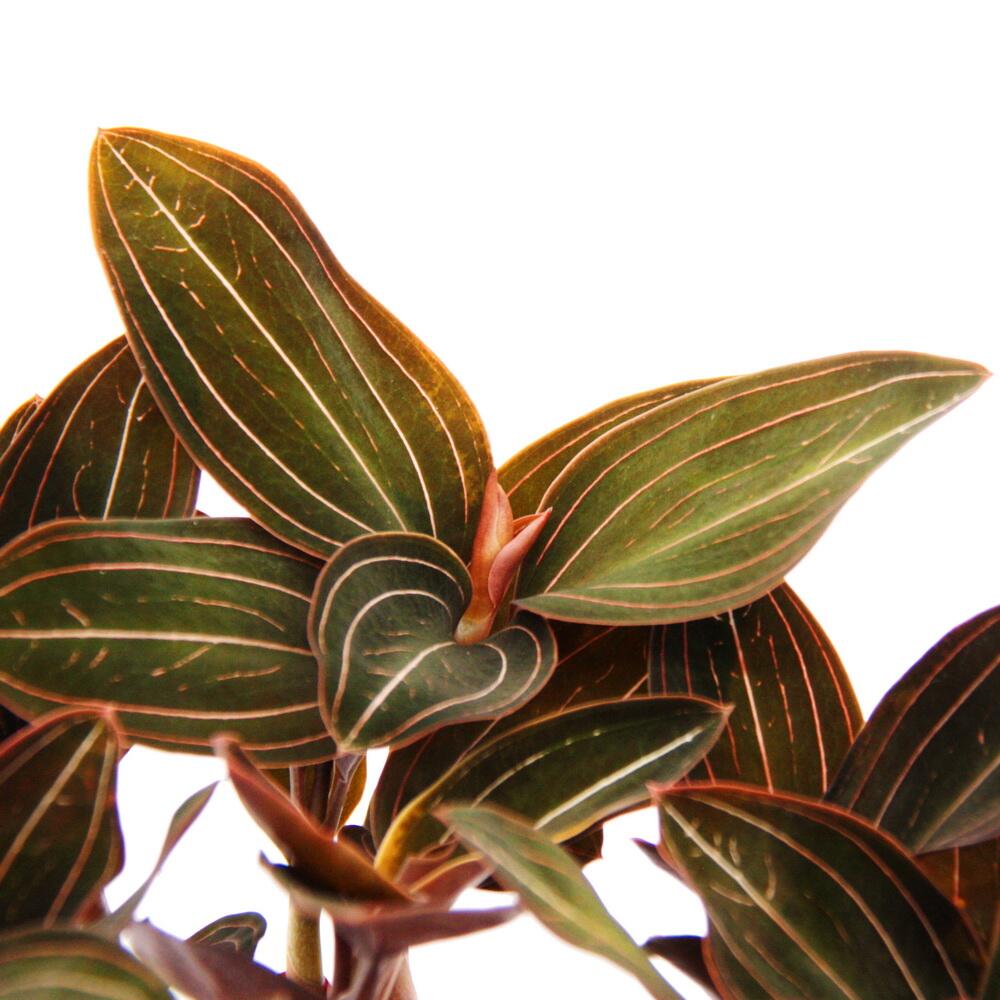
The jewel orchid’s fine pattern is the first thing to notice. Pale lines run over dark, velvety-looking leaf surfaces, appearing yellowish, whitish or pink according to viewing angle. Reddish shoots complete the quiet colour interplay. We enjoy studying Ludisia discolor on a bright sideboard or open bookshelf where its leaves can be seen close up. Light supply remains more important than decoration. A dark room corner does not become a suitable orchid position simply because the little container looks particularly attractive there.
An orchid that grows in soil
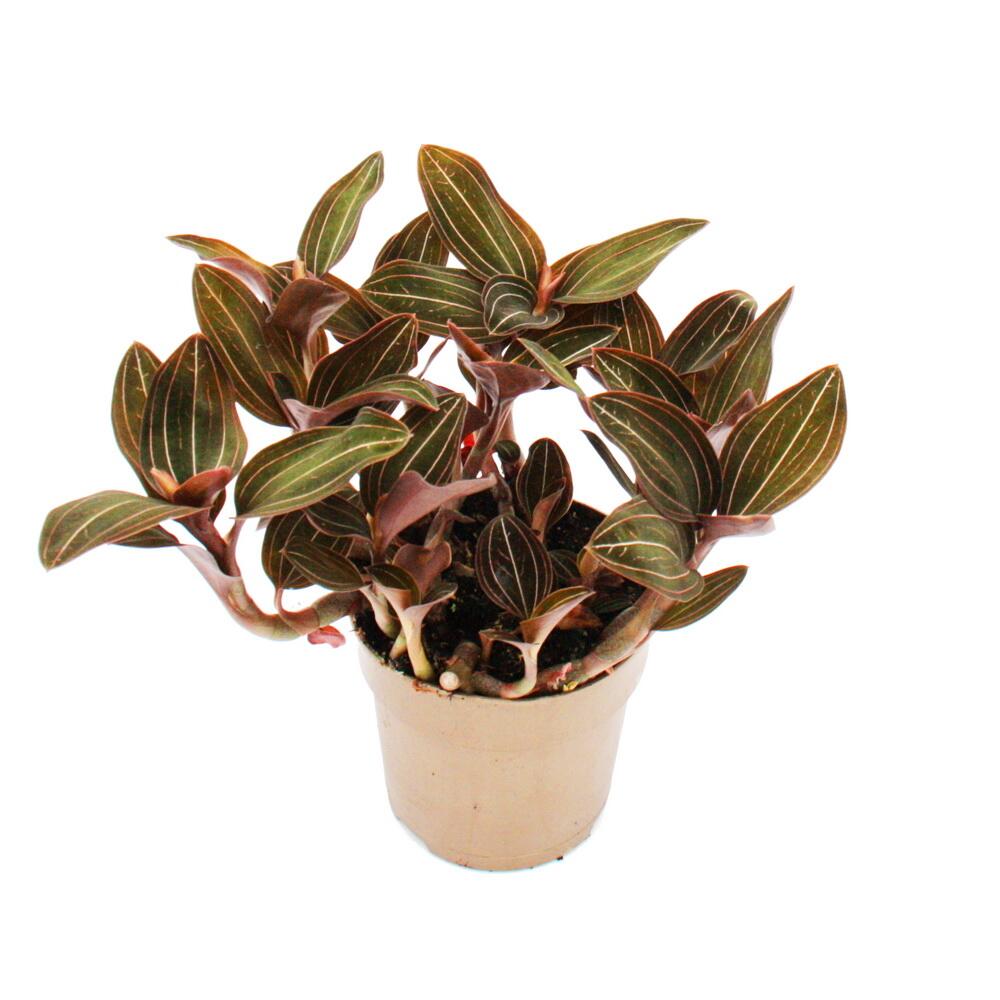
Ludisia belongs to orchids but lives terrestrially. It is not an ordinary moth orchid whose roots should hang among coarse bark pieces. The offer describes a strong plant with at least six to eight shoots in a 12 cm pot and about 15 cm total height. Its fleshy stems can grow sideways and gradually form a low clump. This development differs from later flower stems, which may rise considerably above it. Delivery height, foliage growth and flowering height therefore stay separate. The young plant need not show flowers at shipping time.
Soft daylight preserves its character
A bright to partially shaded position with filtered light suits it well. Avoid hot direct sun through glass, especially immediately after transport. Beside a window or behind a light curtain, the plant can be observed without unnecessarily heating its dark leaves. Check light even when larger neighbouring plants later grow and cast shade. When unpacking, carefully hold the pot: fleshy shoots are more sensitive to bending than their compact shape first suggests. A quiet plant position helps acclimatisation.
Even supply does not mean constantly wet
The soil surface may dry slightly between waterings, but the entire root ball is not regularly kept completely dry. Water slowly and then let excess drain. In a decorative cachepot, we check particularly carefully for remaining water. Fleshy shoots are no invitation to keep a permanent water reserve at the bottom. With less light, the same pot can stay moist considerably longer. Feel before every new supply and watch weight. A limp leaf in wet soil first calls for checking the root situation, not automatically watering again.
Loose soil for creeping shoots
Airy compost that retains moisture yet drains well is suitable. A fine terrestrial orchid mix or appropriate loose potting soil makes more sense than exclusively coarse orchid bark. During later repotting, support shoots carefully and do not unnecessarily pull them apart. A rather wide, slightly larger container can provide sideways growing space without creating much unused wet soil. Do not plant below its previous surface level. While it is still settling after shipping, there is no need to divide every shoot or immediately cut cuttings.
Flowers as an addition to foliage
Well-developed plants may form small white flowers with yellowish centres on upright stems. This is a lovely addition, not a standard for judging every new leaf. Even without flowers, Ludisia remains a strongly decorative foliage plant. During visible growth, feed lightly according to the label, account for fresh pre-fertilised soil and become more restrained when winter growth stalls. Occasional photos of one shoot show how new leaves unfold their patterns. Real change becomes easier to notice than through constant comparison with a flowering example image.
Warmth, air and a close look
A warm frost-free spot away from the radiator supports cultivation. More humid surrounding air helps; a wet root ball does not replace it. Even in a glass planter, the plant needs controllable moisture and air exchange; an unchecked closed container can trap heat and wetness. Check leaf undersides and shoot bases for pest traces. Soft rotting areas, dry edges and individual older leaves are assessed differently. First review location and water balance, then adjust gently. The loveliest sign of good care remains a healthy growing shoot with its fine leaf veins.
One plant, several views
Good to know
Is Ludisia an ordinary orchid for coarse bark?
No. It is a terrestrial orchid needing loose, moisture-retentive, well-drained compost with finer structure.
Why has it not flowered yet?
Development and cultivation conditions contribute. The offer is no promise of current flowering; decorative foliage remains its main appeal.
Is the pale leaf pattern damage?
Fine pale veins belong to the plant. New irregular dry or soft spots should be checked separately.
Can it stay completely dry like a cactus?
No. The surface may dry slightly, but the root ball should not regularly dry completely. Avoid standing water too.
Why do shoots break easily when moved?
Ludisia has fleshy sensitive shoots. Always carry the pot and gently support the plant when moving into another container.
Does a bookshelf suit it?
An open sufficiently bright shelf can suit it. A dark compartment with little daylight is no appropriate permanent solution.
Sources and editorial note
- Exotenherz: offer and original images (02/10/2026)
- NC State Extension: Ludisia discolor (02/10/2026)
- NParks: jewel orchid (02/10/2026)
Shop offer, article number, GTIN, availability and original images checked directly on 02/10/2026. Specialist sources read directly. No contradictory NParks height figure adopted. Terrestrial cultivation and sensitive fleshy shoots accounted for. Flowers described only, not promised.