
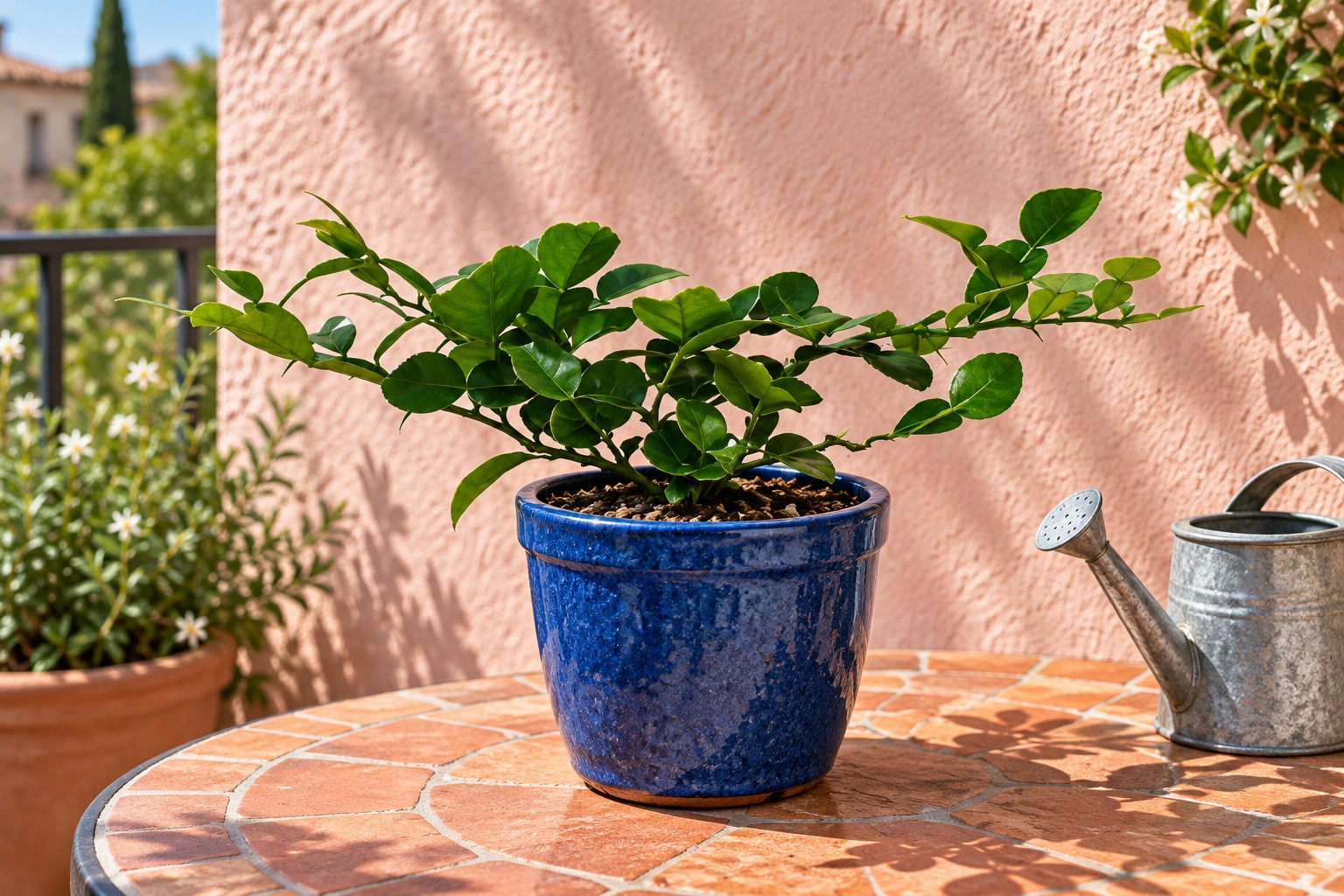
This plant at Exotenherz
Check the shop offer for current availability, price and what is included.
The linked shop is in German. Product details, availability and delivery information are provided in that shop.
Your care table
| Topic | What to do | Why it helps |
|---|---|---|
| Light | Keep sunny and warm, acclimatising slowly to outdoor light. | Citrus plants need plenty of energy for healthy growth. |
| Water | Let the surface compost dry slightly and supply the root ball evenly. | Strong swings between dry and wet stress the roots. |
| Drainage | Remove leftover water and keep drainage holes clear. | Waterlogging damages root function. |
| Compost | Use a freely draining citrus mix with a stable structure. | Moisture and air must remain balanced. |
| Feeding | During growth, follow a suitable citrus fertiliser label. | The plant needs balanced nutrients. |
| Harvesting | Harvest young plants sparingly and follow usage instructions. | Enough healthy foliage must remain for growth. |
| Winter | Keep bright and frost-free, preferably above about 10 °C for limes. | Tropical limes are sensitive to cold. |
| Monitoring | Watch for thorns and check leaves for sap-sucking pests. | A safe position and early checks make care easier. |
Check the compost and pot weight. The care table explains how far the compost may dry.
Water only when needed. The water should reach the root ball without spilling over the rim.
Remove surplus water from the saucer or cachepot. Then return the plant to a suitable position.
Understanding the apparent double leaf
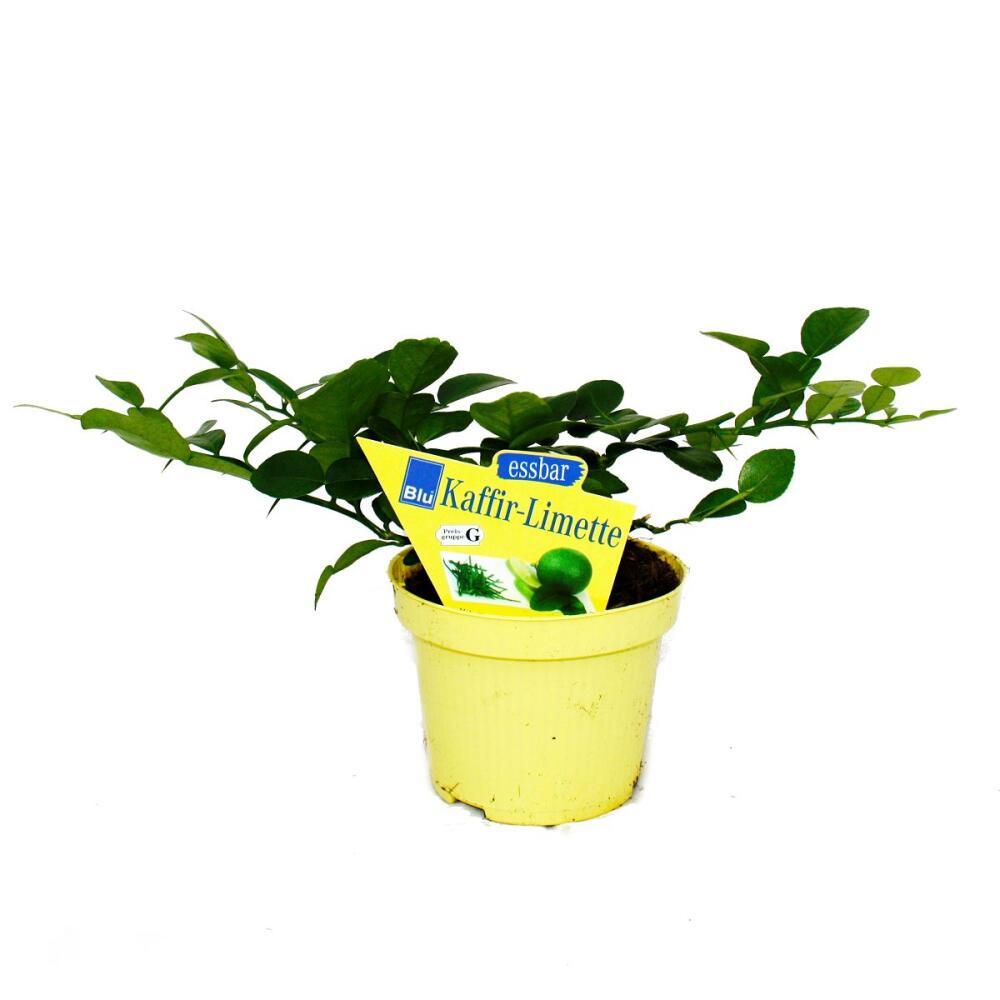
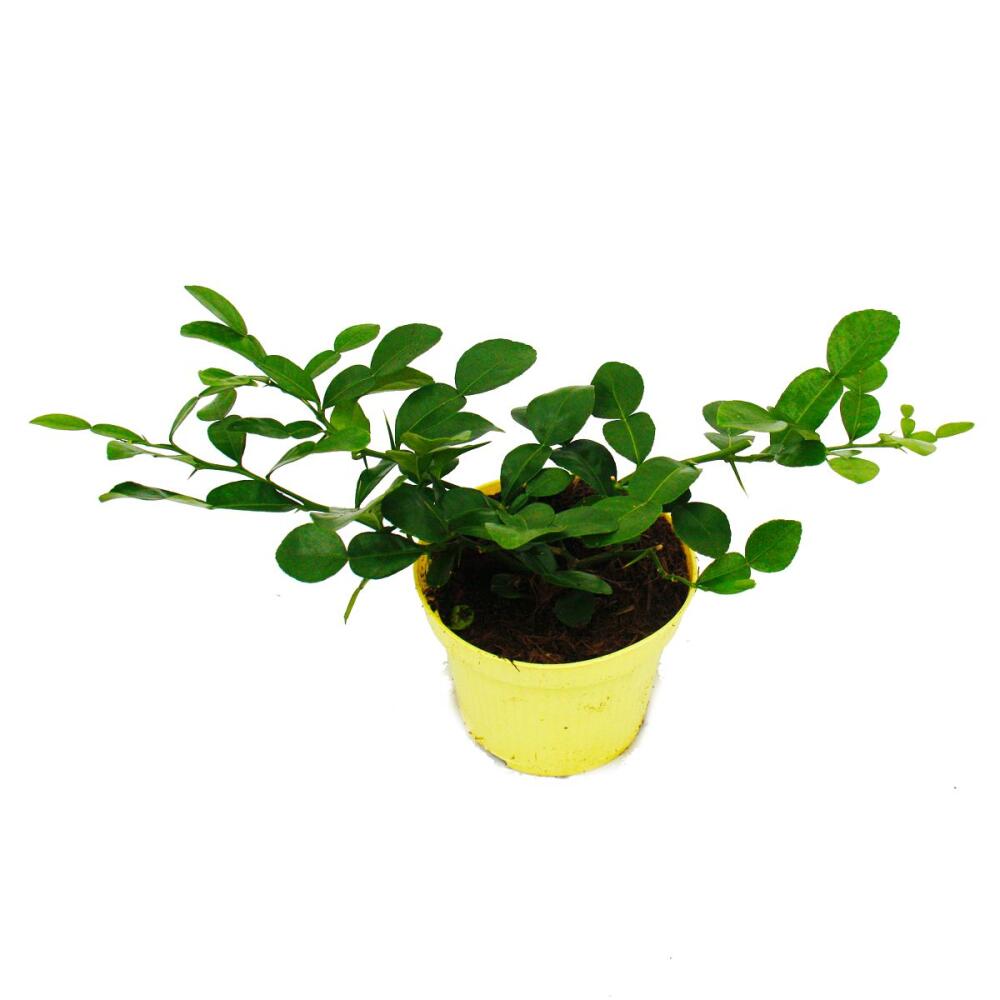
In Citrus hystrix, a strikingly broad, winged leaf stalk sits below the actual leaf blade. This often makes the leaf look like two parts placed one behind the other. The aromatic leaves are valued in Southeast Asian cooking. The shop lists the plant under the trade name Kaffir-Limette; here we use makrut lime. Wrinkled fruits on older plants are another feature, but are not assumed to be present on this young shop specimen.
A young culinary plant in a pot
The linked offer states a plant in a 12 cm pot with approximately 20 cm total height. This is not a large, fruit-bearing citrus tree. The scene shows young side shoots and deliberately no invented fruit. A warm, sheltered balcony position may suit it. Branches can carry thorns, so maintain a safe distance from walkways. The outer pot and decoration are examples; current delivery details and usage instructions are in the shop.
Sun and warmth, with acclimatisation
Citrus plants need plenty of light. Introduce direct sunshine gradually after winter or transport. A warm, sheltered outdoor position is beneficial. In a small pot, the root ball can dry quickly in sun and wind. Bring the plant indoors in good time before cool autumn nights. For limes, the RHS recommends bright, frost-free winter quarters with temperatures above about 10 °C. A dark cellar is unsuitable.
Watering without extreme swings
Check the surface compost and the pot’s weight. Once the surface has dried slightly, water the root ball thoroughly when needed. Excess water must drain away. Neither repeated complete drying nor constant waterlogging is beneficial. Consumption is considerably lower in winter, depending on light and temperature. Do not automatically treat yellow leaves with iron fertiliser: root problems, water quality, light and other nutrient issues may also be involved.
Compost, nutrients and gentle harvesting
Use a freely draining, structurally stable citrus or container-plant mix. During active growth, follow a suitable citrus fertiliser label. Repot only when clearly needed, without creating an oversized volume of wet compost. Initially take only a few healthy leaves from a small plant, leaving enough foliage for further growth. Use only positively identified leaves suitable for cooking and grown in accordance with product and treatment instructions; wash them before use.
Staying attentive in winter
Check leaf undersides and branches for scale insects, mealybugs and spider mites. Regular, brief observations help detect problems early, particularly in winter quarters. Ventilate appropriately without exposing the plant directly to cold draughts. Avoid hard pruning or heavy harvesting from a weakened plant. Fruit formation is a possible later development, not a measure of whether the young plant can already be enjoyed.
One plant, several views
Good to know
Why do the leaves look doubled?
The leaf stalk is broadly winged and looks like a second leaf beneath the actual leaf blade.
Does the young plant already carry fruit?
This is not promised. The offer shows a young culinary plant approximately 20 cm tall.
Can it stay outside in winter?
No. It needs a bright, frost-free position; limes are preferably kept above about 10 °C.
Can I harvest lots of leaves straight away?
Harvest a small plant sparingly at first and follow instructions for culinary use. It needs enough foliage for further growth.
Sources and editorial note
- Product and delivery contents: Exotenherz
- University of California Riverside: Citrus hystrix
- Royal Horticultural Society: plant and care information
Sources checked: 15 September 2026. Product information and the contents of delivery follow the linked shop offer. Care advice was checked against the cited specialist sources and should still be adapted to the plant’s condition, position and season.