
This plant at Exotenherz
Check the shop offer for current availability, price and what is included.
The linked shop is in German. Product details, availability and delivery information are provided in that shop.
Your care table
| Topic | What to do | Why it helps |
|---|---|---|
| Position | Sun to partial shade; protect a small pot from extreme heat. | Mint grows well with light and reliable moisture. |
| Water | Check the root ball regularly and water thoroughly as needed before it dries out completely. | Abundant foliage and summer warmth can rapidly use up the small water reserve. |
| Pot | Choose a sufficiently large container with drainage holes and fresh, humus-rich compost. | Roots and runners need room, and leftover water must be able to drain. |
| Spread | Preferably keep mint in its own pot and monitor runners. | Its underground shoots can crowd other herbs in a shared container. |
| Harvest | Cut healthy young shoot tips with clean scissors above a pair of leaves. | Targeted cutting encourages branching and leaves foliage for continued growth. |
| Nutrients | During vigorous growth, feed moderately to suit the herb compost used. | Regular harvesting removes foliage but does not justify overfeeding. |
| Winter | Place the pot in a protected position, protect the root zone during hard frost and check moisture. | Above-ground shoots may die back; the root ball must neither become waterlogged nor dry out completely. |
| Rejuvenation | Divide an older, crowded clump in spring and replant in fresh compost. | Young, vigorous divisions make better use of limited pot space. |
Check the compost and pot weight. The care table explains how far the compost may dry.
Water only when needed. The water should reach the root ball without spilling over the rim.
Remove surplus water from the saucer or cachepot. Then return the plant to a suitable position.
A mint aroma with its own character
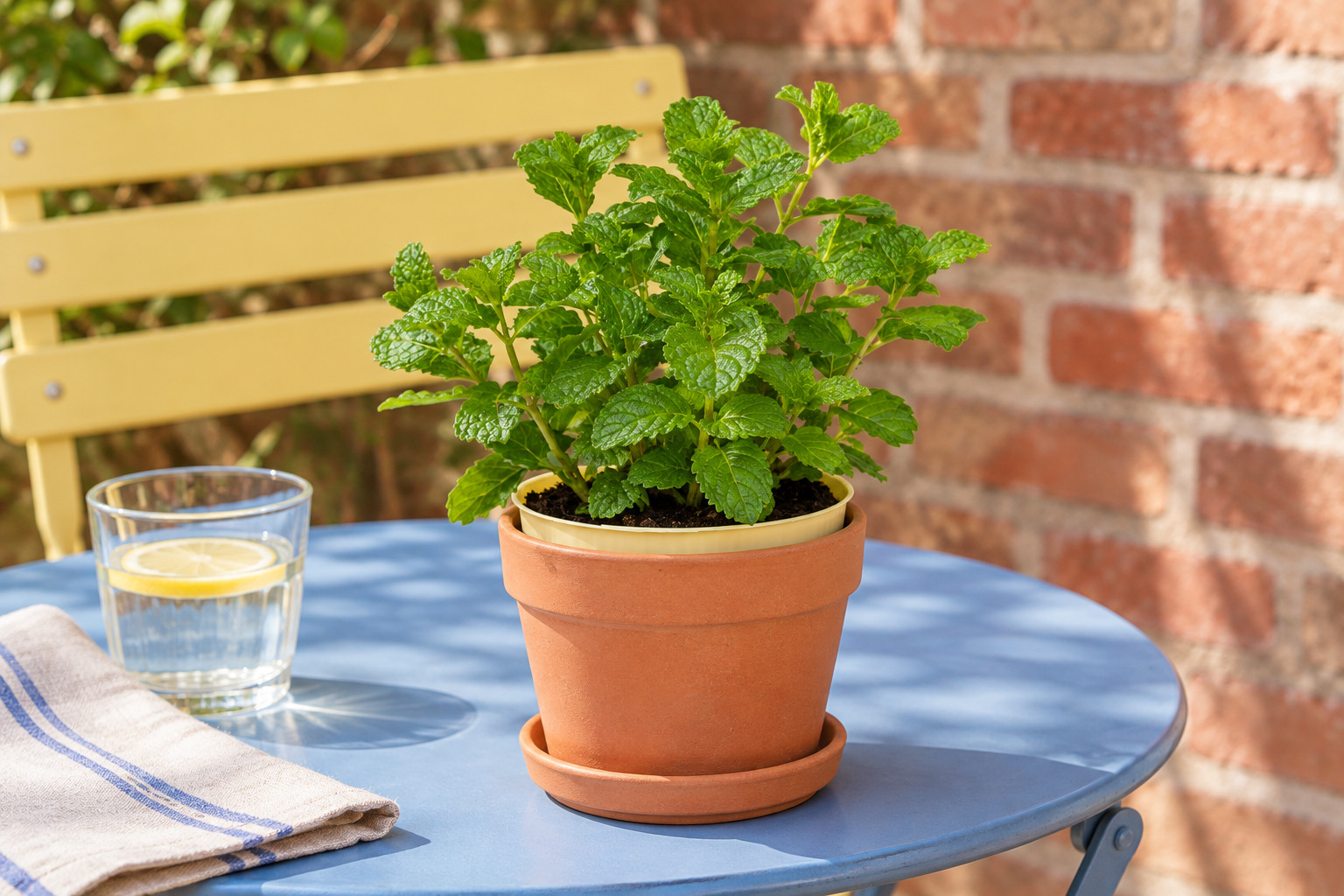
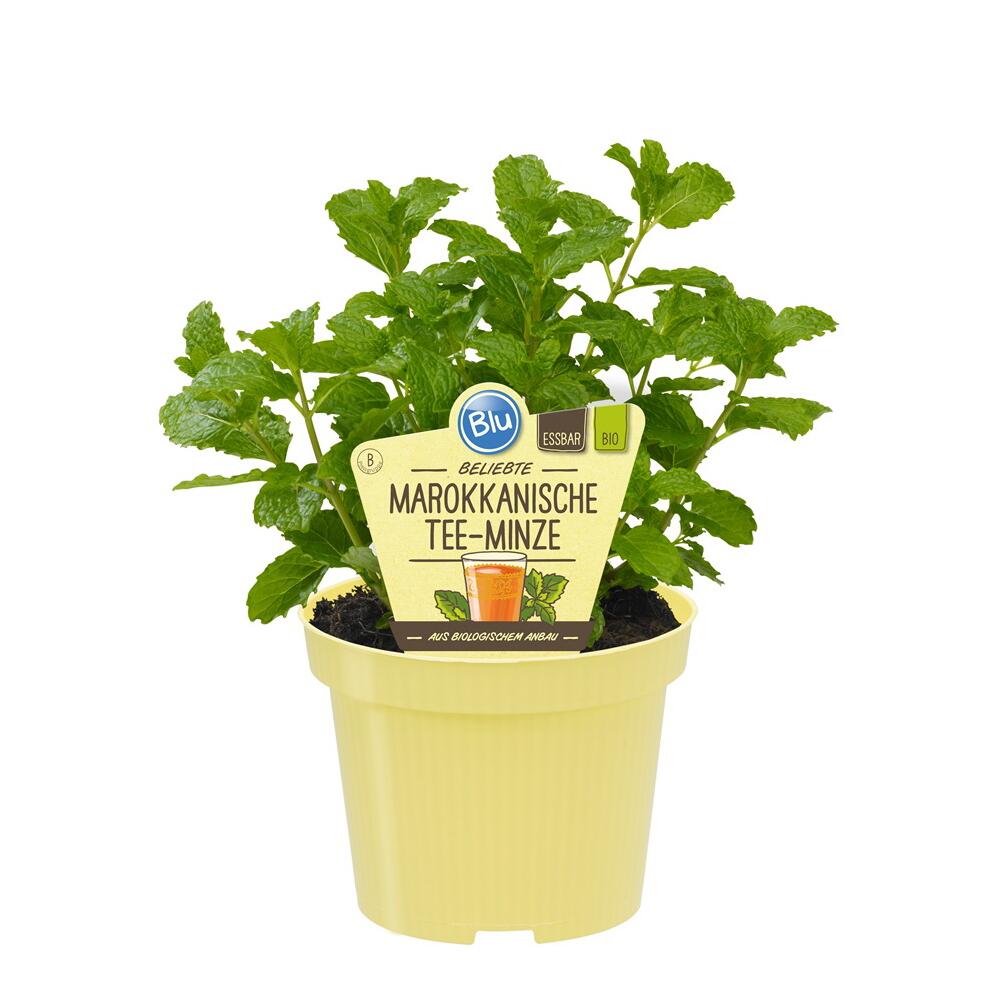
Moroccan tea mint is offered in the shop as Mentha spicata. Its green, toothed leaves sit in pairs along the shoots and release their characteristic aroma when touched. It belongs to the mint family and is grown as a perennial herb. The trade name describes a particular type of mint; other mints are not treated as the same plant solely because their scent is similar. In a bed or pot, it is particularly easy to observe how small spring growth develops into a much denser plant.
Distinguish delivery size from summer growth
You receive the herb in a 12 cm pot. The height of about 30 to 60 cm stated in the shop describes its possible development, not a guaranteed delivery height. Our scene therefore shows a compact young mint based on the original photograph. A larger pot will later give it room and a greater water reserve. The listing describes the plant as organic quality; the current product description and labelling are authoritative. The cachepot, glass and decoration in the scene are not included. For care, an accessible nursery pot matters more than a particularly large cachepot.
A good position between sunshine and water
Mint thrives in sun to partial shade. However, in a small pot on a hot south-facing balcony, the root ball can dry out quickly. Morning light or some protection during the hottest part of the day makes care easier. Place the plant where you can check it as you pass. A bright kitchen is temporarily suitable for harvesting and observation, but a permanently dark worktop is no substitute for a good growing position. If the mint grows outdoors, introduce it gradually to stronger sunshine after transport or time indoors.
Mint is best given its own pot
The plant spreads through underground shoots. In a shared herb planter, it can therefore crowd less vigorous neighbours. Its own pot makes care clearer and its spread easier to control. Choose a container with unobstructed drainage holes and fresh, humus-rich, well-drained compost. The nursery pot is a good starting point, but not an indefinitely sufficient root space. Repot when it becomes densely rooted or dries out very quickly. Continue checking whether runners grow over the rim or reach garden soil through openings.
Water and nutrients for continued growth
Check moisture more often on warm days. Mint is not treated like a rosemary plant that enjoys dryness. Water thoroughly according to need, but allow the excess to drain. A tightly closed cachepot permanently full of water is unsuitable even for a moisture-loving herb. Depending on the product, fresh compost already contains nutrients; account for this before feeding. During vigorous growth and regular harvesting, moderate feeding in accordance with the label may be useful. Limp shoots after heat are first a reason to check the root ball, not automatically a sign of nutrient deficiency.
Harvest without stripping the plant
Cut healthy young shoot tips with clean scissors above a pair of leaves. This leaves foliage and buds for the next growth. Take only a little from a newly received small plant at first and give it time to establish. Washed leaves can flavour food and drinks; this portrait describes horticultural and culinary use, not medicinal effects. Use only clearly identified herbs intended for this purpose and follow guidance on possible treatments. In its own pot, it is easy to choose healthy leaves and spread the harvest across several shoots.
Allow flowers or encourage young growth
In summer, mint can form flower spikes that are also visited by insects. Regular harvesting of shoot tips helps maintain tender leaves. You can let part of the plant flower and use other shoots in the kitchen. After flowering, cutting back is possible if the plant is healthy and still has enough growing time. Very weak or heat-stressed specimens are first given stable care. Pruning is a tool for developing the plant, not an obligation to maintain an endlessly perfect appearance.
Through winter and back into spring
The above-ground shoots may die back in the cold season. For a perennial mint, this does not automatically mean the plant has died. The specific listing recommends winter protection. Place the pot in shelter, prevent persistent waterlogging and protect the limited root zone during hard frost. On frost-free days, check whether a little water is still needed. New shoots signal a fresh start in spring. An older, crowded clump can then be divided. Strong divisions with healthy roots go into fresh compost, rather than simply adding more and more fertiliser to the old, cramped pot.
Healthy leaves deserve attention
Check leaf undersides when harvesting too. Spots, orange-brown pustules, conspicuous insects or distorted new growth deserve closer examination. Mint can be affected by rust and leaf spots, among other problems. Suspect leaves are not harvested; badly affected plants are separated from healthy herbs and the cause assessed. Allow enough space for air movement and water onto the compost where possible. Record in the plant book when you pruned, divided or changed the pot. This helps plan harvesting and care so the plant stays vigorous through the season.
One plant, several views

Good to know
Can mint grow beside rosemary in the same pot?
Its own pot usually makes care clearer. Mint grows vigorously, spreads and often needs more moisture than Mediterranean herbs adapted to dry conditions.
Is it already 60 cm tall on delivery?
No. The stated height describes later development. The specific listing gives a 12 cm pot and no fixed delivery height.
How should I harvest to encourage new growth?
Cut healthy tips above a pair of leaves and leave enough foliage on the plant. Treat newly received young plants gently at first.
Is the mint dead in winter if there are no leaves left?
Above-ground dieback can be normal. The protected rootstock can produce new shoots in spring if it overwinters healthily.
Should I keep increasing fertiliser if growth weakens?
Check root space, water and position first. An older, crowded clump often benefits from division and fresh compost.
Sources and editorial note
- Product, labelling and growth height: Exotenherz
- RHS: growing and harvesting mint
- RHS: herbs in pots and winter care
- NC State Extension: Mentha spicata
- RHS: different requirements of herbs
Sources checked: 14 September 2026. The specific plant presentation follows the shop listing; care follows the linked specialist sources. The plant’s condition, position and season determine the appropriate action.