
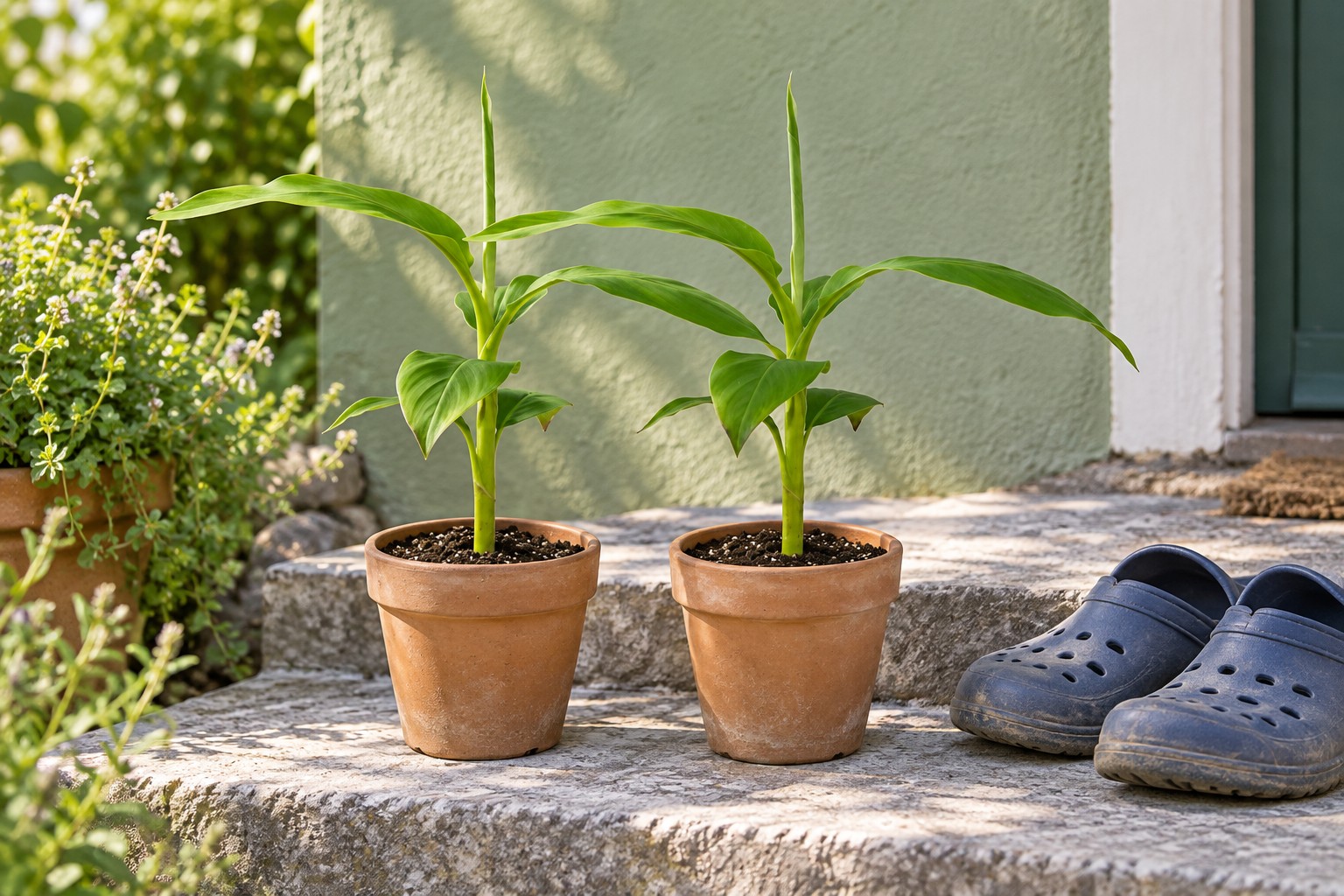
This plant at Exotenherz
Check the shop offer for current availability, price and what is included.
Link to the offer in German. Check the shop for the current price, availability and delivery contents.
Your care table
| Topic | What to do | Why it helps |
|---|---|---|
| Light | Warm, sunny to partly shaded and sheltered from wind. | Large leaves tear more easily in strong wind. |
| Water | Check regularly in summer and water thoroughly. | High demand still does not mean tolerance of waterlogging. |
| Soil | Humus-rich, nutrient-rich and well-drained. | Water and air must reach roots. |
| Fertiliser | Regularly during active growth following product instructions. | Reduce supply as autumn growth slows. |
| Leaves | Remove only dead or severely damaged parts. | A green torn leaf may remain useful. |
| Winter | Protect underground parts; keep small containers frost-free. | Leaves and pseudostems are not permanently frost-resistant. |
| Protection structure | Combine insulation with air exchange and protection from persistent wetness. | Airtight wet wrapping encourages rot. |
| Spring | Open protection gradually and observe regrowth. | Increase water and feed only as demand rises. |
Check the compost and pot weight. The care table explains how far the compost may dry.
Water only when needed. The water should reach the root ball without spilling over the rim.
Remove surplus water from the saucer or cachepot. Then return the plant to a suitable position.
Banana leaves on a pseudostem
Musa basjoo belongs to the banana family. Its strong upright structure looks tree-like but consists of overlapping leaf sheaths, not a woody trunk. New leaves emerge rolled from the centre, then unfold their surfaces. Lateral young shoots may form a group over time. The species is grown primarily for decorative foliage. Harvesting sweet dessert bananas is not a realistic goal with it; possible fruits are unsuitable for that purpose. Even the name Japanese fibre banana obscures its original Chinese origin.
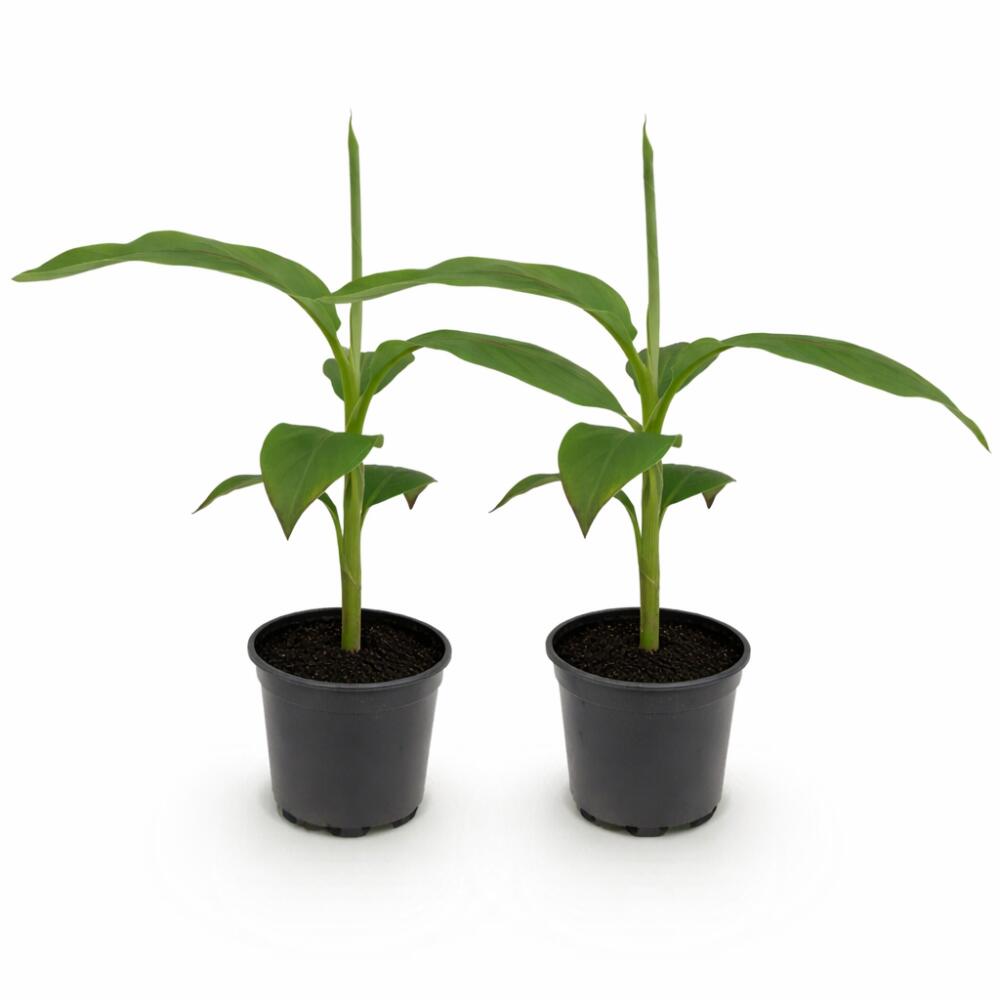
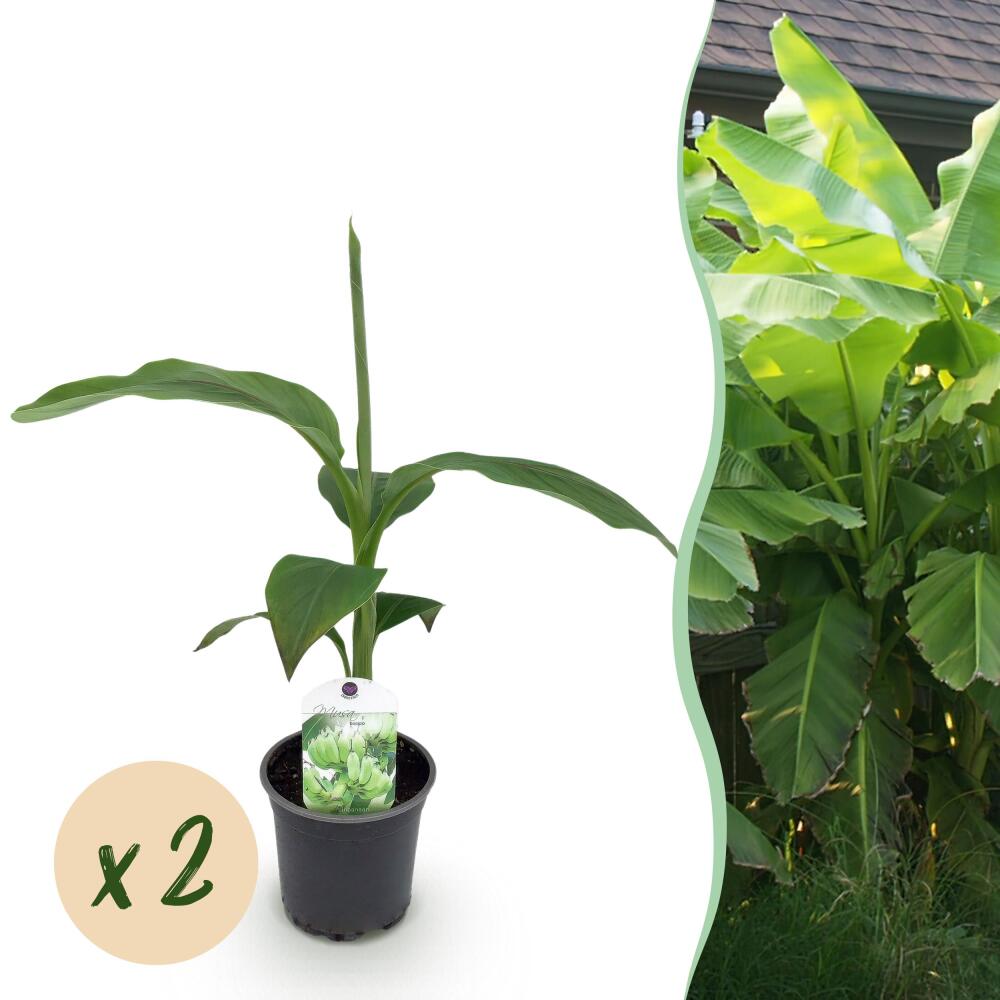
Two young plants with plenty of development potential
The offer contains two plants in 12 cm pots at about 30 cm overall height. Original images accordingly show narrow young leaves. Large mature leaf fans arise only later in suitable conditions. Both plants can be grown on individually or planned as a group with sufficient spacing. The scene stays at this small delivery stage and does not show an already mature garden setting as the product. Warmth, root space and supply matter for further development. A quick impression of lushness must not be confused with a guaranteed size by a fixed date.
Warmth, wind shelter and good soil
Choose a warm sunny to partly shaded position protected from strong wind. The later large leaves may split along their veins. Such tears are often mechanical and do not automatically make an otherwise green leaf useless. Humus-rich nutrient-rich soil should retain water while draining surplus. Gradually acclimatise young potted plants to direct sun after sheltered cultivation. In containers, provide room for expanding roots in good time; the small retail pot is not intended for years of vigorous growth.
Summer growth needs reliable supply
Check root-ball moisture regularly during warm growing phases. A vigorous banana can use much water, especially in a container. Water thoroughly when needed and avoid both complete drying and water left standing in the container. During active growth, feed regularly following fertiliser instructions. Falling temperatures and reduced growth require less nutrition and water. Yellow leaves do not automatically signal a need for more feed; first check leaf age, light, moisture and roots. Balanced supply supports healthy structure better than occasional very strong doses.
Hardy does not mean green in winter
Green leaves are frost-sensitive. The above-ground pseudostems may also die back in freezing weather. Protection of underground parts determines regrowth; well-established plants in suitable positions can overwinter outdoors with careful protection. Remove dead leaves after frost damage and cover the root area with insulation. To retain stem height as well, an airy insulated structure protected against persistent wetness entering is needed. Small young plants in pots overwinter more reliably frost-free. There is no blanket frost guarantee for every region and container.
Support the fresh start in spring
Gradually open and check winter protection as weather becomes milder so nothing stays persistently wet and airless. Increase supply to new shoots only once growth resumes. Carefully remove old brown leaf remains without injuring the young centre. A frost-killed pseudostem does not necessarily mean the whole plant is lost; healthy underground parts can regrow. In winter quarters, watch for mites, aphids or other sucking pests and soft rotten areas. Observing shoots and roots establishes when repotting, dividing or other care makes sense.
One plant, several views
Good to know
Can I harvest sweet bananas from Musa basjoo?
It is grown as an ornamental banana. Possible fruits are unsuitable as the usual sweet dessert bananas.
Do leaves stay green in winter?
Not in frost. Winter tolerance mainly concerns protected underground parts from which new growth can emerge.
How do I overwinter the small set plants?
Frost-free overwintering is more reliable in a small pot. Outdoor cultivation requires a suitable position, establishment and considered protection.
Must I cut off torn leaves?
Not while they remain mostly green and functional. Wind-related tears are common in large banana leaves.
Sources and editorial note
- Product and delivery contents: Exotenherz
- NC State Extension: plant profile
- Royal Horticultural Society: plant and care knowledge
Sources checked: 15 September 2026. Product information and delivery contents follow the linked shop offer. Care has been checked against the stated specialist sources and remains subject to plant condition, position and season.