
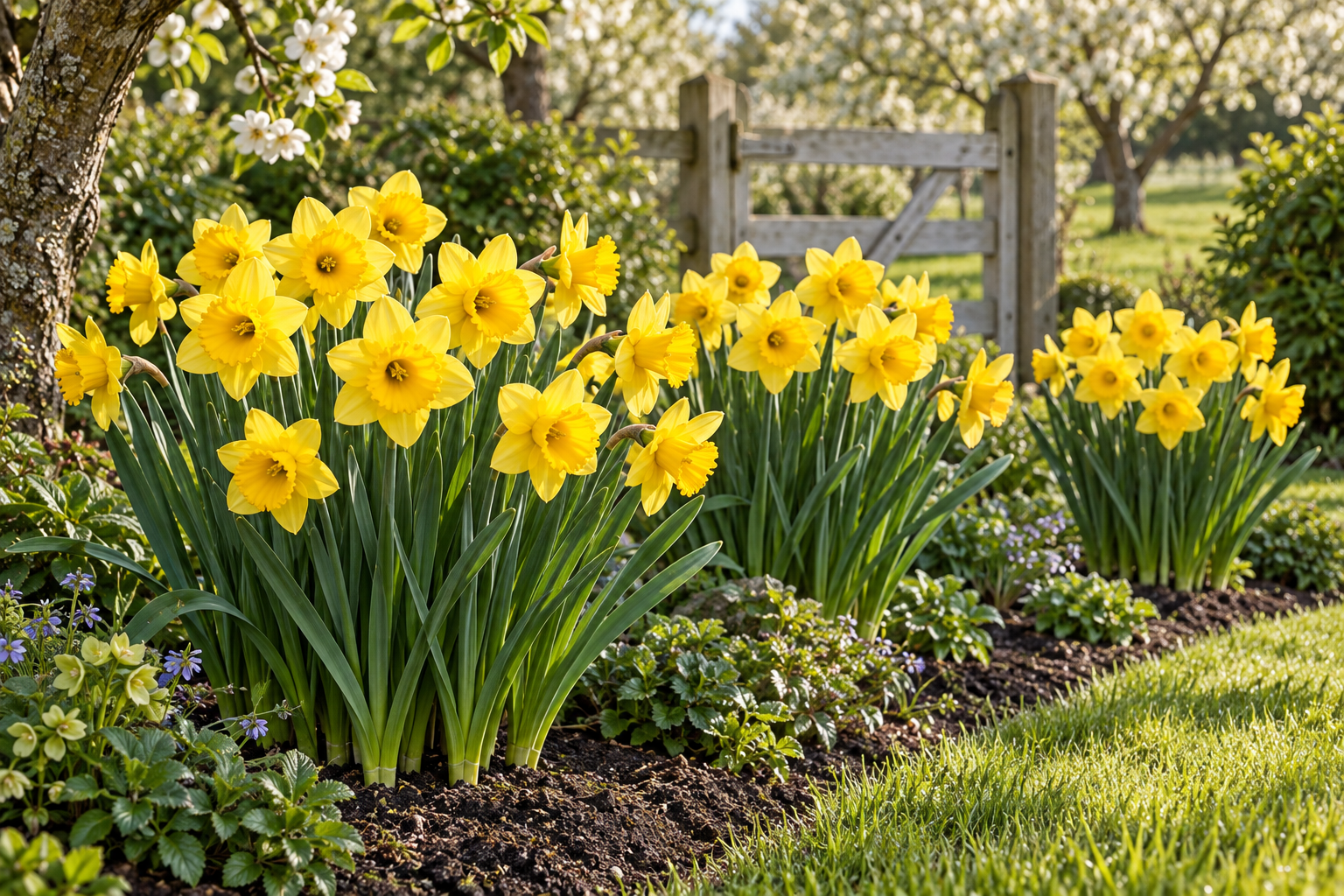
This plant at Exotenherz
Check the shop offer for current availability, price and what is included.
Product and delivery details are given in the individual offer.
Your care table
| Topic | What to do | Why it helps |
|---|---|---|
| Position | Choose sun or light partial shade with free-draining soil. | Dense shade and lasting wetness make garden growing harder. |
| Planting | Plant in autumn in unfrozen ground, tips upwards. | Early planting gives roots time before winter. |
| Depth | As basic guidance, about three times the actual bulb height from bulb base to soil surface. | Consider packaging and soil; trade size classes are not measured heights. |
| Spacing | Allow roughly 10–15 cm between bulbs in borders. | The group needs room for shoots and later offsets. |
| Water | Water during dry growing periods; check containers until leaves yellow. | Even after flowering, foliage continues working for the bulb. |
| Nutrients | Consider soil and compost; feed containers as needed according to the label. | Pre-fertilised soil does not automatically need an extra dose. |
| After flowering | Remove faded heads; keep leaves at least six weeks and until natural yellowing. | Do not cut, plait or tie green foliage. |
| Dormancy and winter | Maintain drainage; shelter containers from prolonged wetness and deep freezing. | A winter-hardy garden plant stays more exposed in a small pot. |
For young plants, feel the soil directly at the root ball. The surface and deeper soil may have different moisture levels.
Water thoroughly after planting; later, water according to the soil, weather and establishment rather than a fixed calendar.
Avoid standing water. For plants in containers, also check that water runs out of the drainage hole.
Yellow with a clear centre
Carlton belongs to the large-cupped daffodils. Six outer flower segments frame a broad yellow cup that stays shorter than in a pronounced trumpet daffodil. This clear shape stands out even from a distance. In spring it creates bright colour spots beside a path or among still-low perennials. Under suitable conditions, the flowering plant grows roughly 40 to 50 cm tall. That is its later garden height, not delivery condition. Carlton therefore stands visibly among small spring flowers without needing the space of a large shrub.
Fifteen bulbs in a quiet group
The offer contains 15 bulbs for planting. Flowering garden plants and companions in pictures are not included. First consider where you want to see the flowers from. A small group beside a path looks more connected than isolated, widely scattered bulbs. About 10 to 15 cm spacing is useful border guidance. Also allow room beside densely growing neighbouring perennials. Their summer foliage can accompany yellowing daffodil leaves later, but should not immediately shade all emerging spring growth. Mark the planting area before it appears empty above ground in summer.
A bright soil position with reliable drainage
Carlton grows in sunny to lightly partially shaded garden positions. A light area beneath deciduous shrubs can provide enough spring light. Deep shade beneath dense evergreen foliage is different. Check soil below the loose surface too: a firm wet layer is not reliably corrected with a handful of sand in the hole. Prepare the area as a whole and avoid places holding winter rain. A container needs open drainage holes and free-draining soil. Flowering is a brief annual phase; the bulb stays in its position much longer.
Next spring begins in autumn
Plant bulbs in autumn, preferably early from September while soil is unfrozen and workable. Tips point upwards. As general RHS guidance, the bulb base lies about three actual bulb heights below the soil surface. Also follow the delivered packaging and soil conditions. A trade size class is neither measured height nor automatically diameter. Settle soil carefully and water a little if dry. Tight or shallower container plantings for a spring display are planned differently from a perennial border planting.
Water follows shoots and foliage
Roots need moisture without waterlogging during growth. Natural rain often suffices in borders; water additionally during persistent spring dryness. Pots dry faster and need checks until natural leaf yellowing. Water demand does not disappear immediately after the last flower. Green foliage continues working particularly then. Consider existing nutrients in soil or compost. Containers can receive supplemental feeding as needed according to the label. More fertiliser replaces neither a bright position, healthy roots nor an adequate leaf phase.
Preserve leaves after flowering
Remove faded heads if you do not want seeds, and leave foliage standing. Keep it at least six weeks after flowering and until natural yellowing. Tying or plaiting green leaves may look tidier but reduces their open surface for light. Early mowing is not a suitable shortcut either. Later-emerging perennials can accompany the transition in a mixed border. Remove only dead remains. Daffodils are harmful if eaten; keep bulbs separate from food and wear gloves when handling if appropriate.
Perennial cultivation sometimes needs a fresh look
Carlton can remain in the garden for several years under suitable conditions. If a group becomes very dense and flowering decreases, check light, leaf care, wetness and competition first. Healthy overcrowded bulbs may later be divided and redistributed in an appropriate dormant period. A small container suffers more from wetness and cold than garden soil. Stand it sheltered and check that water drains. Record when shoots and flowers actually appear for you in the plant book. This creates a garden calendar suited to your own position.
One plant, several views
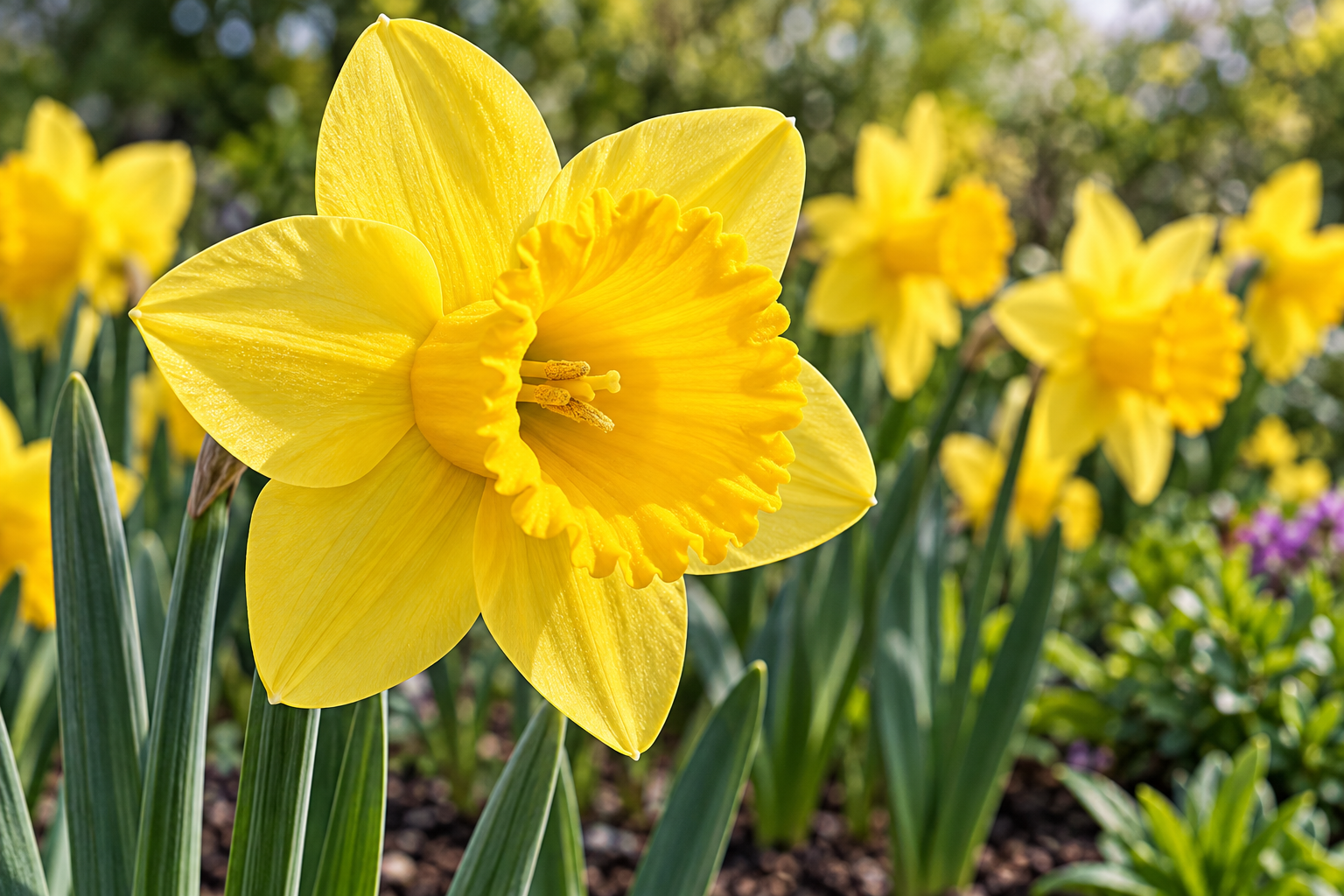
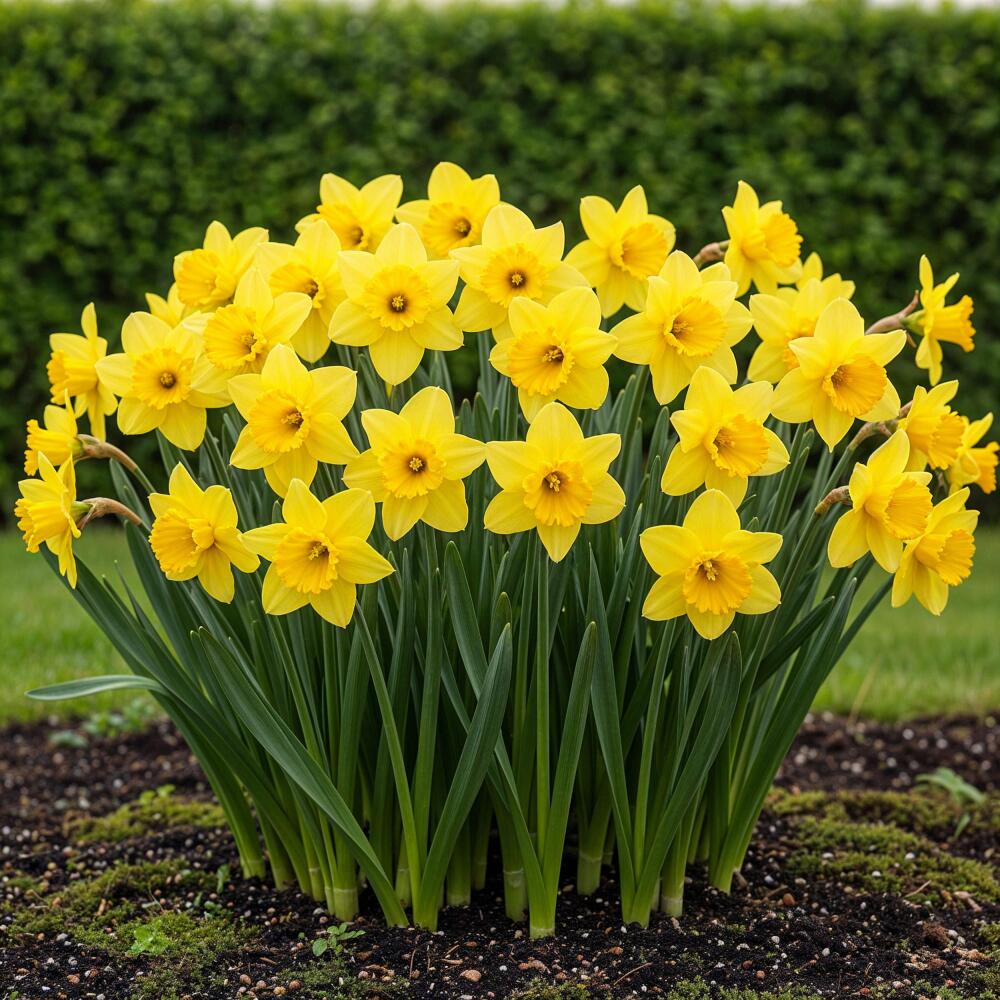
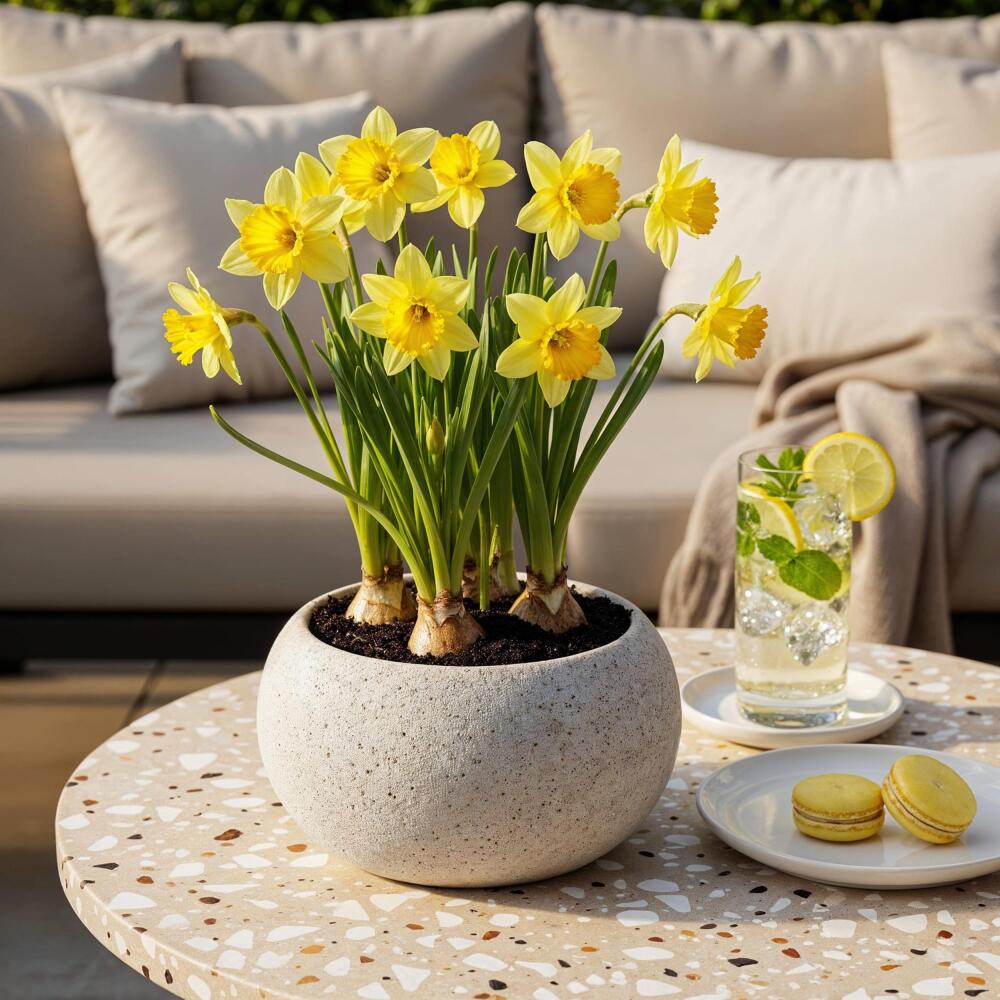
Good to know
What is delivered?
15 bulbs for planting. Pictures show later flowering.
How tall does Carlton grow later?
Roughly 40–50 cm when flowering, depending on position and development.
Is Carlton a trumpet daffodil?
It belongs to large-cupped daffodils. The central cup remains shorter than the outer flower segments.
When are bulbs planted?
In autumn, preferably early from September in unfrozen ground, following packaging instructions.
May I cut green leaves after flowering?
No. Keep them at least six weeks after flowering and until natural yellowing.
Can it grow in a container?
Yes, with drainage, suitable compost and care after flowering too; plan winter protection.
Sources and editorial note
- Exotenherz: offer and original photographs (03.10.2026)
- Specialist source – variety characteristics and later height (03.10.2026)
- RHS – planting, caring for and preserving daffodils after flowering (03.10.2026)
- RHS Plants – Carlton, height and garden cultivation (03.10.2026)
Shop offer, article number, GTIN, availability and original images checked directly on 02.10.2026; specialist acceptance on 03.10.2026. Specialist sources read directly. Shop offer, SKU, availability and both original shop images checked directly on 03.10.2026. Bulbs are delivered; pictures show later flowering. General heights in the shop description are not delivery height for a bulb. Variety-specific later height from directly read specialist sources. Contradictory trade size classes are not reinterpreted as measured diameters. No Wawi or tool changes. Specialist and image acceptance against published Pflanzenwelt portraits.