
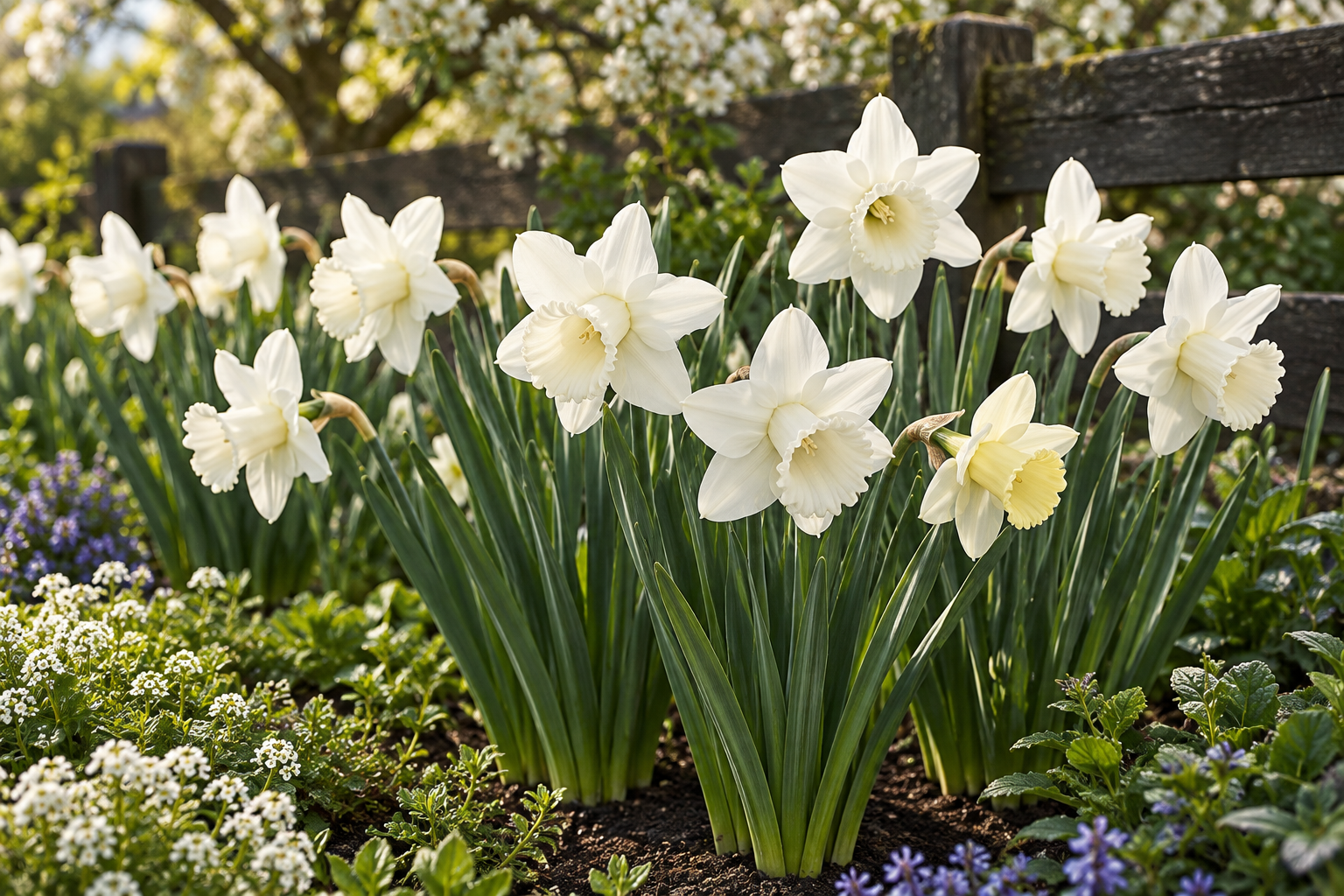
This plant at Exotenherz
Check the shop offer for current availability, price and what is included.
Product and delivery details are given in the individual offer.
Your care table
| Topic | What to do | Why it helps |
|---|---|---|
| Position | Choose sun or light partial shade with free-draining soil. | Dense shade and lasting wetness make garden growing harder. |
| Planting | Plant in autumn in unfrozen ground, tips upwards. | Early planting gives roots time before winter. |
| Depth | As basic guidance, about three times the actual bulb height from bulb base to soil surface. | Consider packaging and soil; trade size classes are not measured heights. |
| Spacing | Allow roughly 10–15 cm between bulbs in borders. | The group needs room for shoots and later offsets. |
| Water | Water during dry growing periods; check containers until leaves yellow. | Even after flowering, foliage continues working for the bulb. |
| Nutrients | Consider soil and compost; feed containers as needed according to the label. | Pre-fertilised soil does not automatically need an extra dose. |
| After flowering | Remove faded heads; keep leaves at least six weeks and until natural yellowing. | Do not cut, plait or tie green foliage. |
| Dormancy and winter | Maintain drainage; shelter containers from prolonged wetness and deep freezing. | A winter-hardy garden plant stays more exposed in a small pot. |
For young plants, feel the soil directly at the root ball. The surface and deeper soil may have different moisture levels.
Water thoroughly after planting; later, water according to the soil, weather and establishment rather than a fixed calendar.
Avoid standing water. For plants in containers, also check that water runs out of the drainage hole.
White develops with the flower
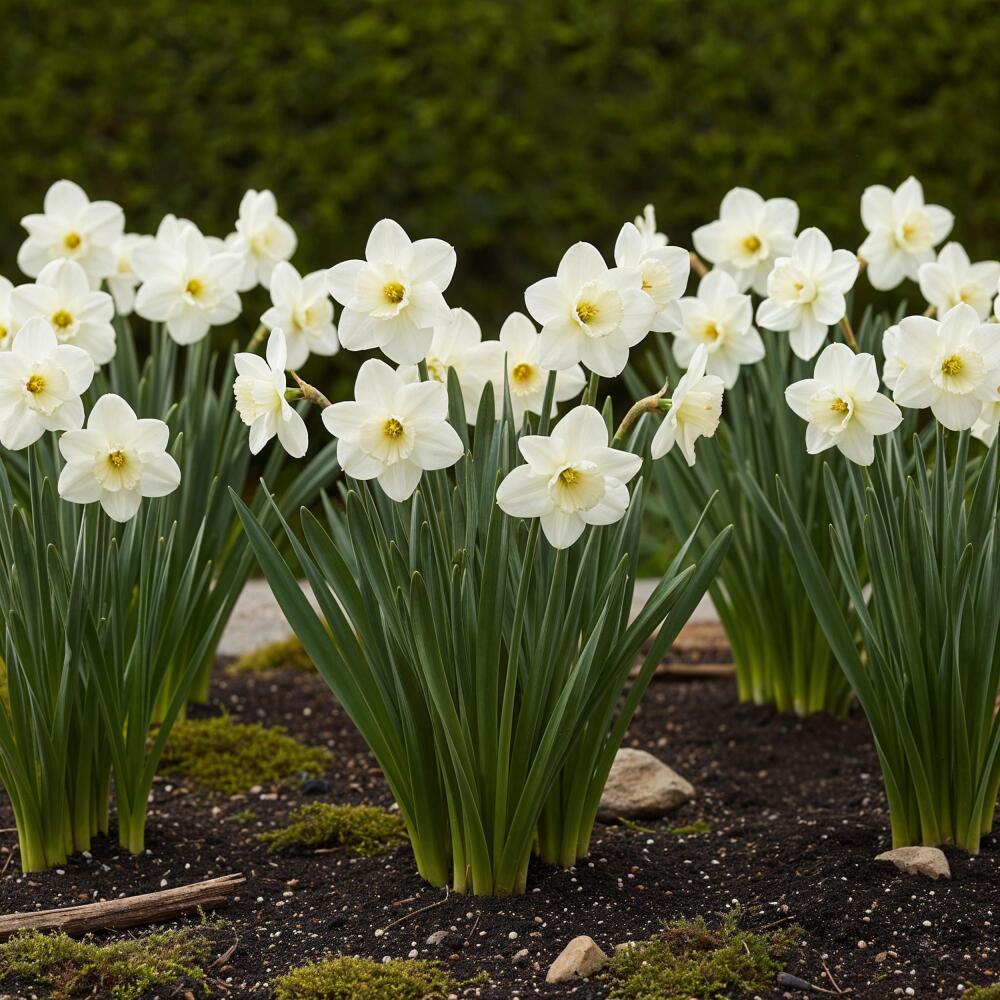
Mount Hood carries broad pale flower segments and a long central trumpet. This may still be pale yellow as it opens; it becomes white as the flower ages. A young and an older flower therefore need not have exactly the same shade. This quiet transition makes the variety interesting. Pale shapes stand out against a darker fence or among newly emerging perennials. Later height is roughly 40 to 45 cm. In suitable spring conditions, flowers usually appear in March and April.
Fifteen bulbs rather than ready-made spring decoration
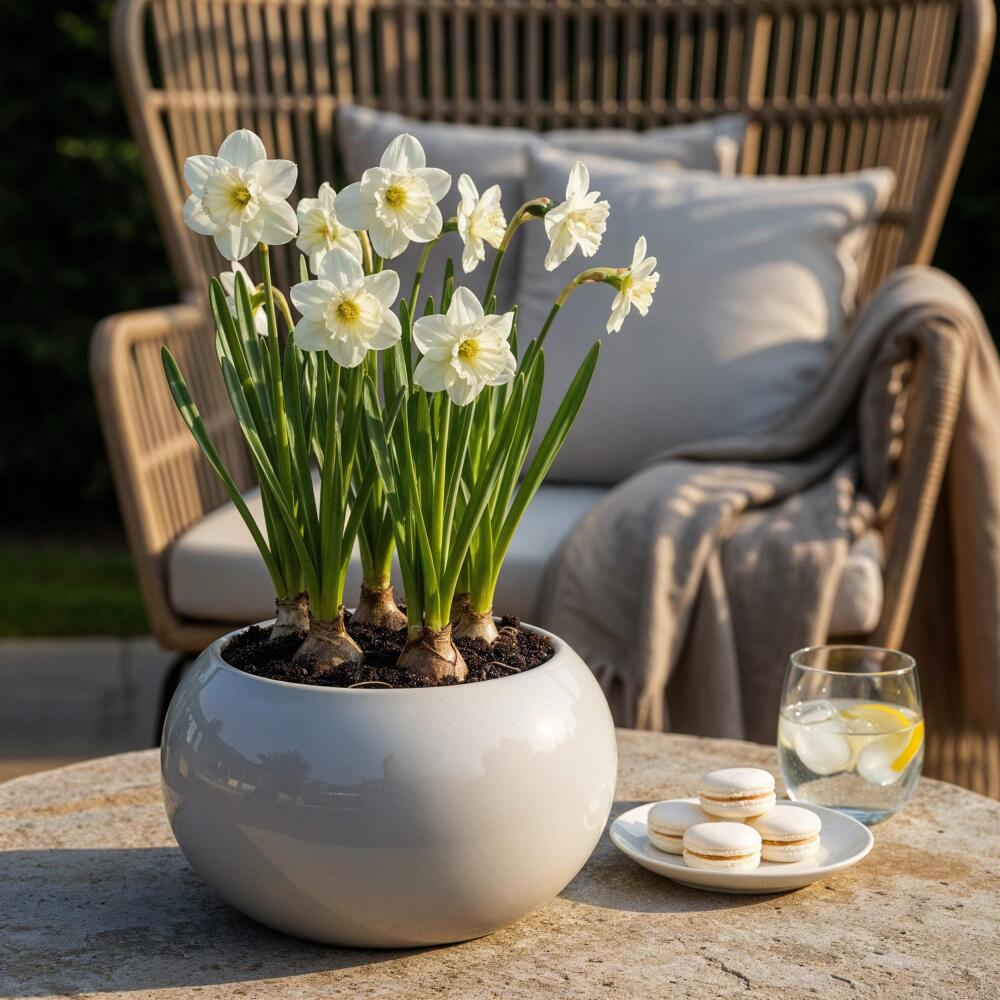
15 bulbs are delivered. Scenes and shop images show later garden flowering, not flowering pot plants. Plan a loose group visible from a seat or path too. About 10 to 15 cm border spacing gives bulbs a manageable start. Allow sufficient surrounding room for the green leaf phase. A spot beneath deciduous shrubs may be bright early in the year and shaded in summer. Before planting, consider whether it will later be dug or mown early.
A bright corner must not become a wet hollow
Sun to light partial shade and well-drained ground suit Mount Hood. A bright position beside a terrace can still be troublesome if rainwater runs from paving into the planting. Check actual water routes and prepare soil as a whole. Fertile loose soil holds some moisture without staying waterlogged. Free holes are crucial in containers; water at the base of an outer pot changes the situation. Among taller-growing neighbours, daffodils need spring light, not merely a free spot on a planting plan.
The long trumpet begins with autumn planting
Plant in autumn in unfrozen ground, preferably early. The specialist grower gives roughly 10 to 15 cm planting depth for this variety; the general RHS rule follows three actual bulb heights down to the bulb base. Packaging, real bulb size and soil help with the specific decision. Plant tips upwards and settle soil carefully. Water a little if dry. Trade size classes from an offer are not adopted as measured diameters. Markers avoid accidentally digging up dormant bulbs during later border work.
Look beyond the open flower in spring
Water needs follow shoots, weather and the leaf phase. With sufficient rain, borders often need no additional watering. During prolonged dryness in active growth, check soil beneath the surface too. Containers dry faster and need attention until leaves naturally die back. Nutrients come from soil and compost. If container growing needs supplemental supply, follow the fertiliser label and consider pre-fertilised soil. A blanket frequent watering calendar suits neither a rainy spring nor a sunny, dry terrace.
The change to white is not a care fault
A fresh pale yellow trumpet and an older white flower belong to the variety’s development. After flowering, remove heads so energy does not go into unwanted seed production. Green foliage remains at least six weeks and until complete natural yellowing. Do not cut it early or plait it together. Later-emerging neighbouring perennials may conceal the transition without replacing leaf care. Wear gloves as needed when handling bulbs and plant parts; daffodils are harmful if eaten and are not food plants.
A pale group for several spring years
Mount Hood is a perennial bulb plant. Good cultivation can allow a returning group but does not guarantee the same flower count every year. If growth becomes dense or flowering weakens, consider light, wetness, leaf care and competition together. Redistribute healthy bulbs during suitable dormancy. A container needs a sheltered winter position with drainage still free. Pictures of different flowering stages in the plant book show the colour change beautifully. Record position and actual dates so next spring is not judged only by a general calendar.
One plant, several views

Good to know
Does the trumpet always stay white?
It often opens pale yellow and becomes white as the flower ages.
How tall does Mount Hood grow?
Under suitable conditions, roughly 40–45 cm when flowering; bulbs are delivered.
When does this variety flower?
Usually in March and April, depending on position and spring weather.
How many bulbs are in the offer?
15 bulbs for planting, not an already flowering group.
Does light partial shade suit it?
Yes. Deep shade and permanently wet soil, however, are unfavourable.
When may foliage be removed?
After at least six weeks following flowering and only once it has naturally yellowed.
Sources and editorial note
- Exotenherz: offer and original photographs (03.10.2026)
- Specialist source – variety characteristics and later height (03.10.2026)
- RHS – planting, caring for and preserving daffodils after flowering (03.10.2026)
Shop offer, article number, GTIN, availability and original images checked directly on 02.10.2026; specialist acceptance on 03.10.2026. Specialist sources read directly. Shop offer, SKU, availability and both original shop images checked directly on 03.10.2026. Bulbs are delivered; pictures show later flowering. General heights in the shop description are not delivery height for a bulb. Variety-specific later height from directly read specialist sources. Contradictory trade size classes are not reinterpreted as measured diameters. No Wawi or tool changes. Specialist and image acceptance against published Pflanzenwelt portraits.