
This plant at Exotenherz
Check the shop offer for current availability, price and what is included.
Product and delivery details are given in the individual offer.
Your care table
| Topic | What to do | Why it helps |
|---|---|---|
| Position | Choose sun or light partial shade with free-draining soil. | Dense shade and lasting wetness make garden growing harder. |
| Planting | Plant in autumn in unfrozen ground, tips upwards. | Early planting gives roots time before winter. |
| Depth | As basic guidance, about three times the actual bulb height from bulb base to soil surface. | Consider packaging and soil; trade size classes are not measured heights. |
| Spacing | Allow roughly 10–15 cm between bulbs in borders. | The group needs room for shoots and later offsets. |
| Water | Water during dry growing periods; check containers until leaves yellow. | Even after flowering, foliage continues working for the bulb. |
| Nutrients | Consider soil and compost; feed containers as needed according to the label. | Pre-fertilised soil does not automatically need an extra dose. |
| After flowering | Remove faded heads; keep leaves at least six weeks and until natural yellowing. | Do not cut, plait or tie green foliage. |
| Dormancy and winter | Maintain drainage; shelter containers from prolonged wetness and deep freezing. | A winter-hardy garden plant stays more exposed in a small pot. |
For young plants, feel the soil directly at the root ball. The surface and deeper soil may have different moisture levels.
Water thoroughly after planting; later, water according to the soil, weather and establishment rather than a fixed calendar.
Avoid standing water. For plants in containers, also check that water runs out of the drainage hole.
Many flower parts rather than a simple trumpet
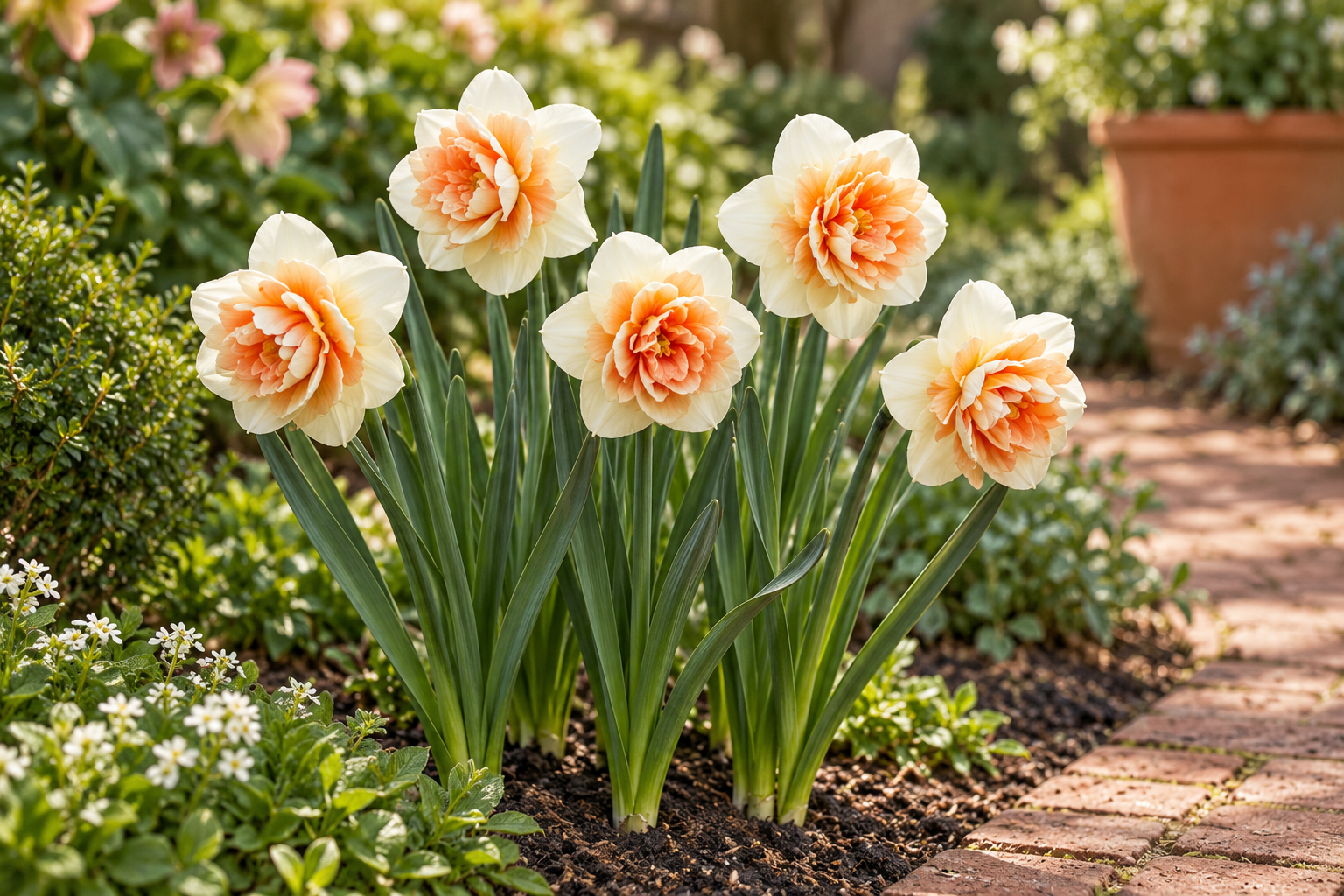
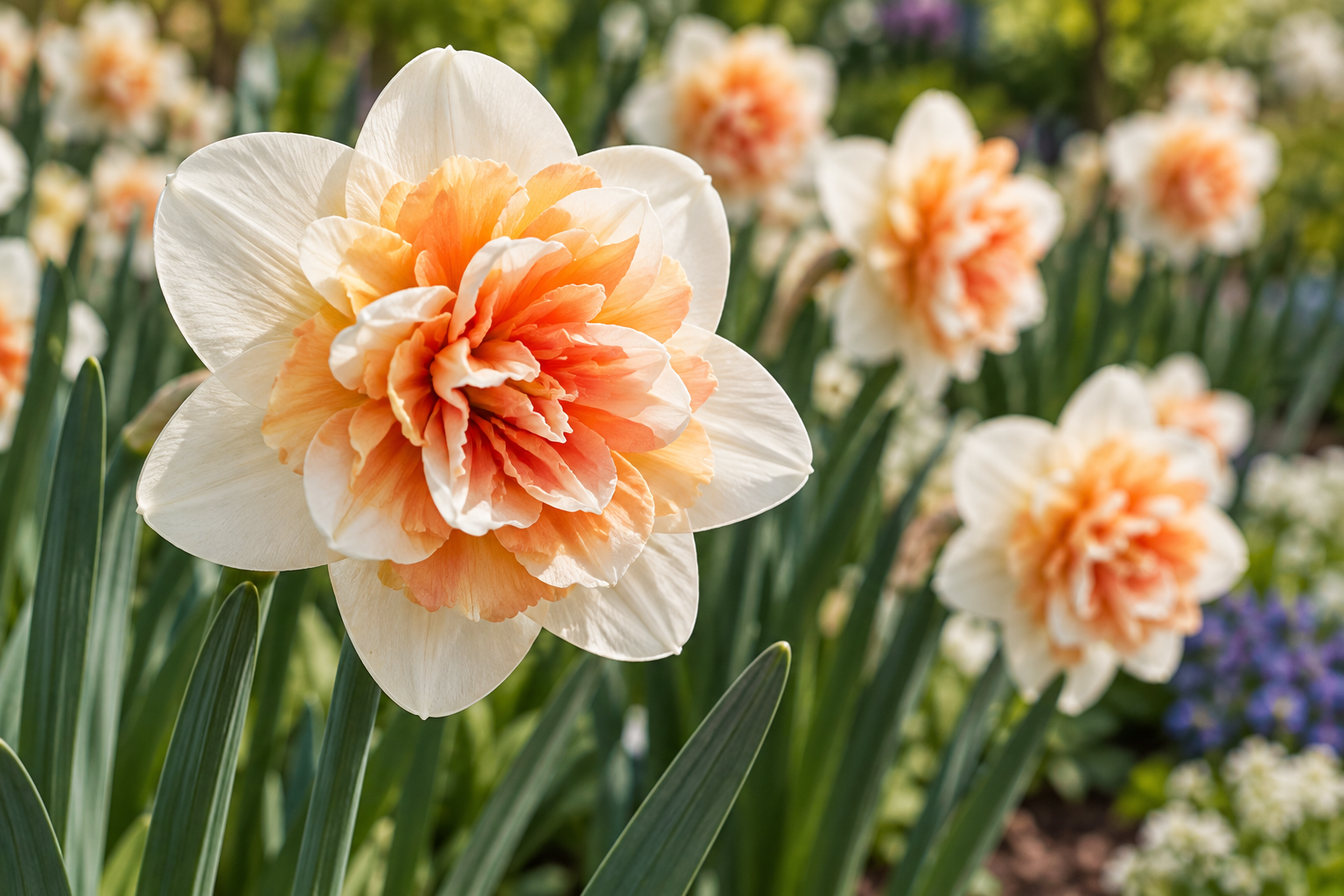
Replete shows how different daffodils can look. White flower segments surround crinkled pink-orange to apricot parts of the cup. The double form looks soft and layered, not like a single long cup. Under suitable conditions, flowers may reach roughly 10 cm across. The plant later grows about 45 cm tall. Beside a spring border, the form can be viewed close up; a few steps away, it creates pale spots with a warm centre. Colour and fullness show with varying clarity depending on developmental stage and light.
Ten bulbs with room for broad flowers
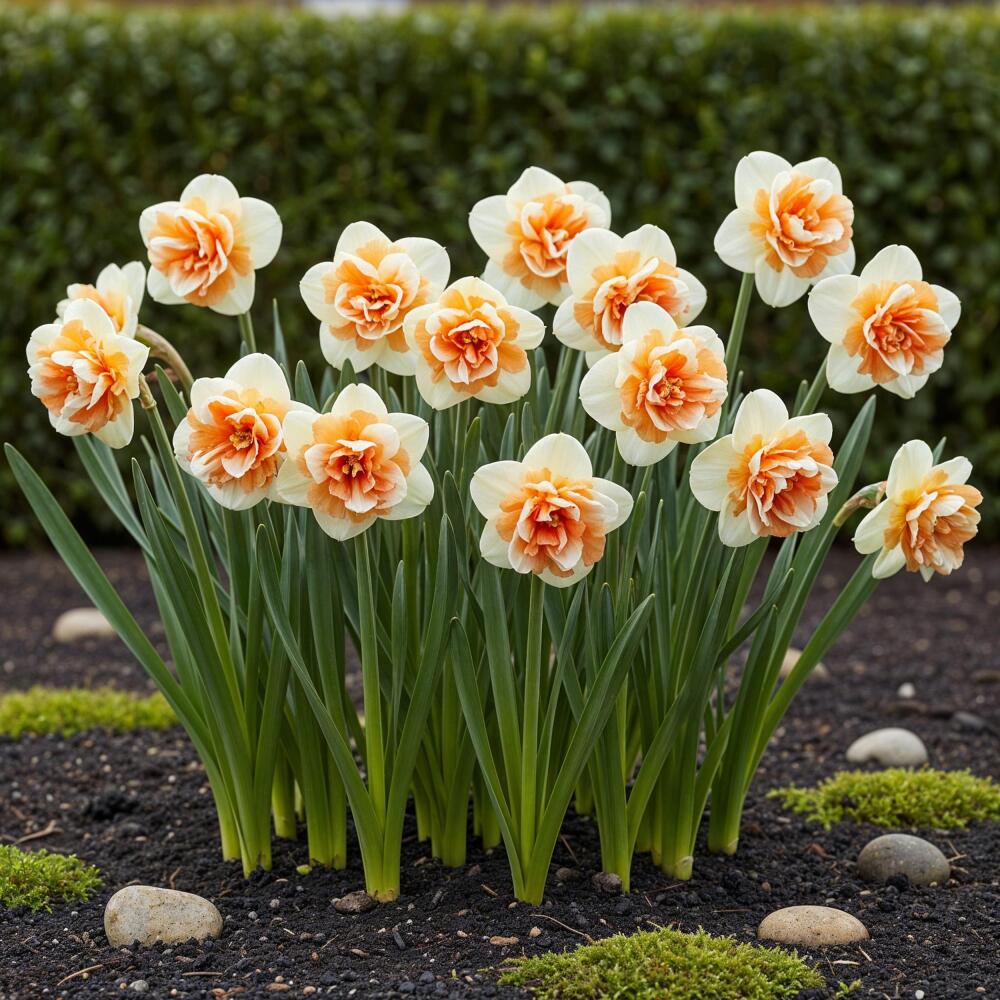
The offer contains ten bulbs for planting. Pictures represent a later flowering phase, not a promise of a ready-flowering delivery. Lay out the planned group before planting. About 10 to 15 cm spacing is border guidance; allow extra room beside the path for later flower heads. Leaves must also find space among dense perennials. A loose group against a quiet background often shows doubleness better than planting among many similarly sized flowers. Consider existing perennials and future garden work when planning.
A protected bright position helps the form
Sun to light partial shade suits Replete. Choose a well-drained position, preferably without constant mechanical pressure from a narrow passage. Large double flowers can seem heavy after strong rain. A sheltered border edge lets you admire them without continually brushing past. Soil should hold moisture during growth but not form a wet hollow. Check container drainage holes and saucers. A sheltered position does not replace good soil, though, and is no reason to keep plants permanently in a dark corner.
Autumn planting according to real bulb size
Plant in autumn, preferably early from September in unfrozen ground. Tips point upwards. As general guidance, the daffodil bulb base lies about three actual bulb heights below the soil surface. Delivered packaging and soil conditions inform the decision. A trade size class is not interpreted as a measured diameter. Loosen a connected area rather than merely making narrow holes in compacted soil. Water a little after planting if ground is dry. A small marker helps identify the summer-dormant group later.
Moisture needs air in the root area
In spring, watering follows rain, soil and growth. Additional water is needed in borders mainly during prolonged dryness. Check a container planting more often, even after flowering. Green foliage continues working for the bulb and must not immediately be abandoned to dryness. Water must drain freely at the same time. Consider nutrients in the soil and supplement only as needed according to the label. More fertiliser makes neither the double flowers tidier nor wet ground permeable. Consider position and root conditions together before increasing supplies.
After flowering, quiet care begins
Faded heads may be removed; green leaves remain. They need light for at least six weeks after flowering and until natural yellowing. Do not cut early, plait or tie them together. Later neighbouring foliage in a perennial border helps absorb this transition visually. A flowering detail photograph and a short position note are worthwhile for the plant book. The double form is easier to compare there than in a general monthly list. Daffodils are harmful if eaten; store bulbs separately from food and use gloves for sensitive skin.
A double variety remains part of the garden year
Replete is perennial and dies back above ground after its leaf phase. Dormancy does not mean the planting spot may be dug arbitrarily. Preserve markers and check drainage particularly in winter. Shelter containers from prolonged wetness and deep freezing. If flowering weakens, first check light, leaf care and density. Redistribute healthy overcrowded bulbs during suitable dormancy. Flower count and size depend on cultivation and development. A photographed spring scene is therefore a design idea, not an unchanging delivery content.
One plant, several views
Good to know
What colour is Replete?
White flower segments with crinkled pink-orange to apricot parts in the double centre.
Is this a simple trumpet daffodil?
No. Replete belongs to the double daffodils.
How large can the flower become?
Under suitable conditions, roughly 10 cm across, at about 45 cm plant height.
What is delivered?
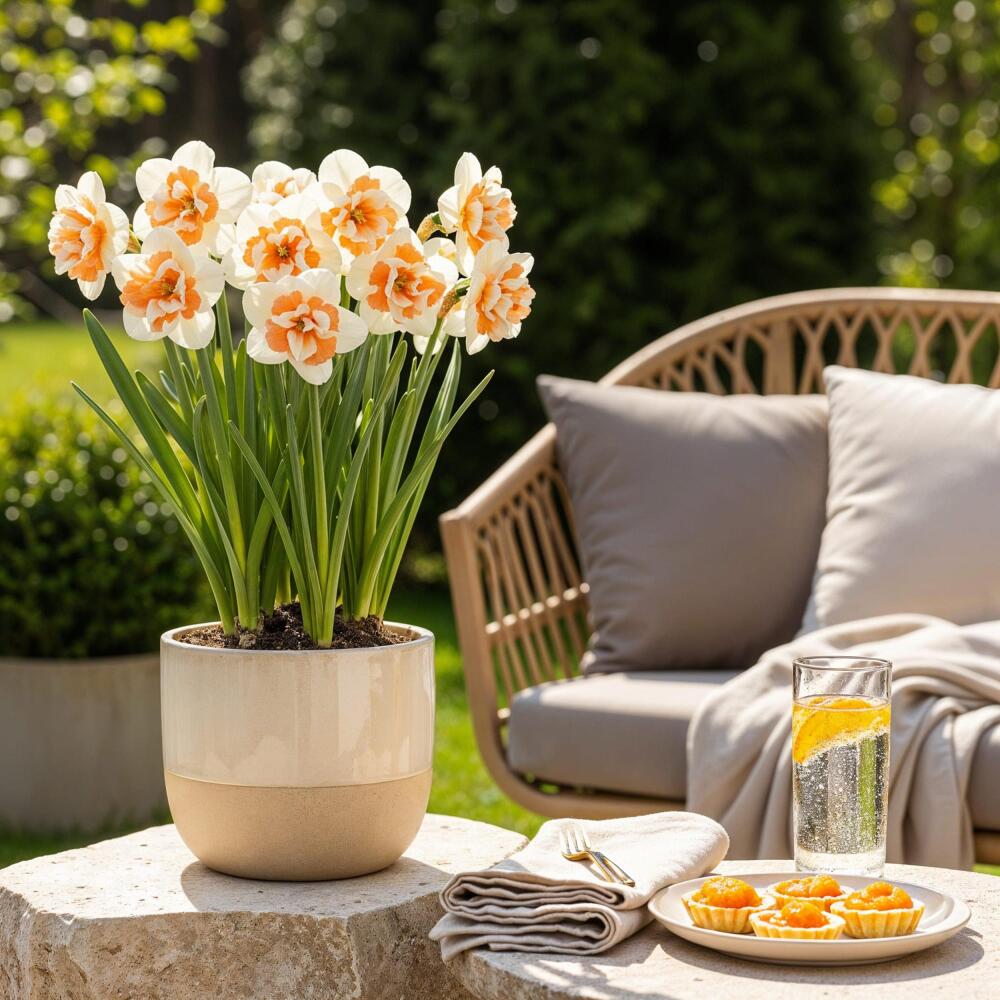
Ten bulbs for planting. Pictures show a later flowering phase.
Should I tie foliage together after flowering?
No. Leave green foliage free and remove only after natural yellowing.
Can it remain in the border for several years?
Yes, if position, drainage and care are suitable; redistribute healthy bulbs later if overcrowded.
Sources and editorial note
- Exotenherz: offer and original photographs (03.10.2026)
- Specialist source – variety characteristics and later height (03.10.2026)
- RHS – planting, caring for and preserving daffodils after flowering (03.10.2026)
Shop offer, article number, GTIN, availability and original images checked directly on 02.10.2026; specialist acceptance on 03.10.2026. Specialist sources read directly. Shop offer, SKU, availability and both original shop images checked directly on 03.10.2026. Bulbs are delivered; pictures show later flowering. General heights in the shop description are not delivery height for a bulb. Variety-specific later height from directly read specialist sources. Contradictory trade size classes are not reinterpreted as measured diameters. No Wawi or tool changes. Specialist and image acceptance against published Pflanzenwelt portraits.