

This plant at Exotenherz
Check the shop offer for current availability, price and what is included.
Product and delivery details are given in the individual offer.
Your care table
| Topic | What to do | Why it helps |
|---|---|---|
| Position | Choose sun or light partial shade with free-draining soil. | Dense shade and lasting wetness make garden growing harder. |
| Planting | Plant in autumn in unfrozen ground, tips upwards. | Early planting gives roots time before winter. |
| Depth | As basic guidance, about three times the actual bulb height from bulb base to soil surface. | Consider packaging and soil; trade size classes are not measured heights. |
| Spacing | Allow roughly 10–15 cm between bulbs in borders. | The group needs room for shoots and later offsets. |
| Water | Water during dry growing periods; check containers until leaves yellow. | Even after flowering, foliage continues working for the bulb. |
| Nutrients | Consider soil and compost; feed containers as needed according to the label. | Pre-fertilised soil does not automatically need an extra dose. |
| After flowering | Remove faded heads; keep leaves at least six weeks and until natural yellowing. | Do not cut, plait or tie green foliage. |
| Dormancy and winter | Maintain drainage; shelter containers from prolonged wetness and deep freezing. | A winter-hardy garden plant stays more exposed in a small pot. |
For young plants, feel the soil directly at the root ball. The surface and deeper soil may have different moisture levels.
Water thoroughly after planting; later, water according to the soil, weather and establishment rather than a fixed calendar.
Avoid standing water. For plants in containers, also check that water runs out of the drainage hole.
Small daffodils for a close view
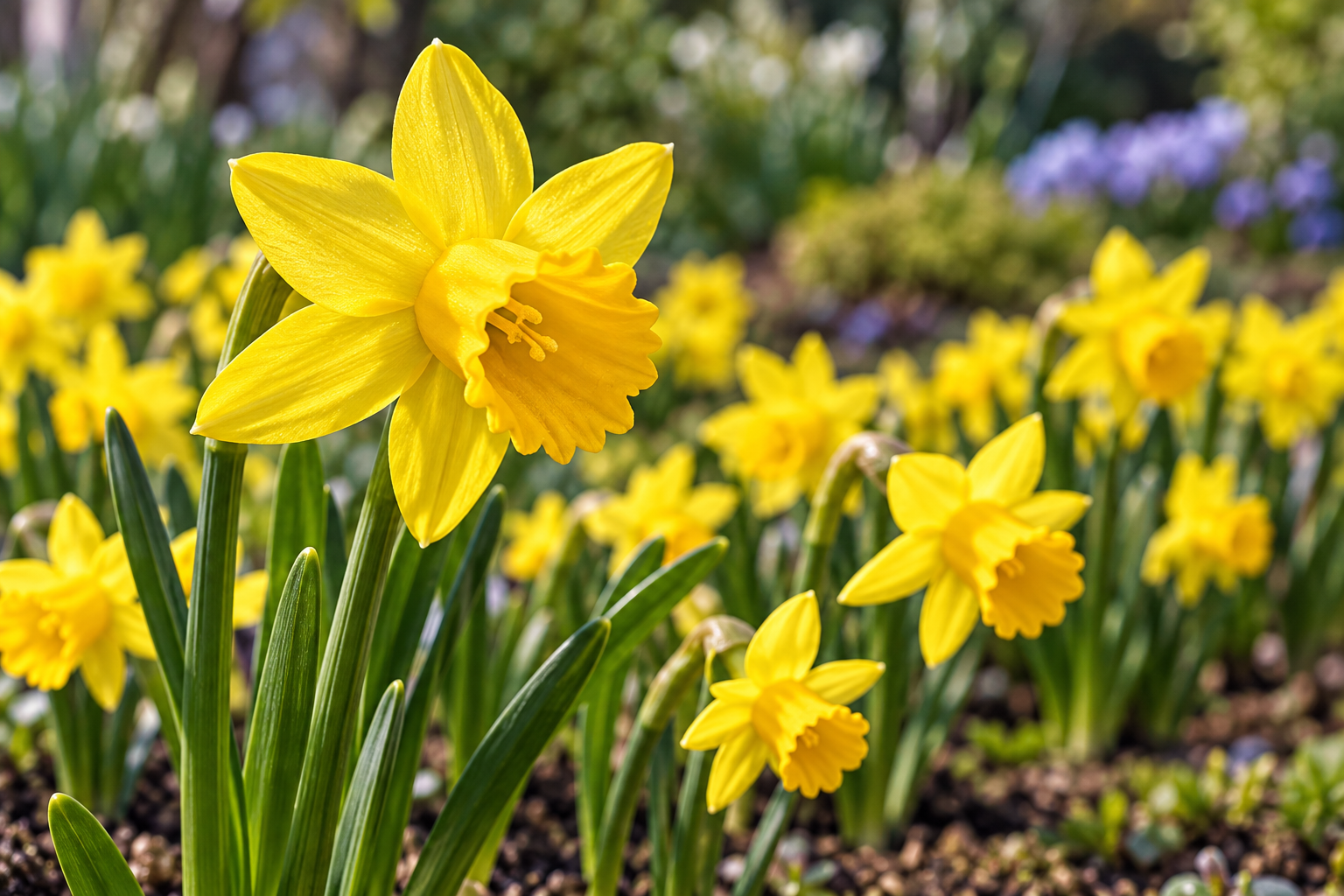
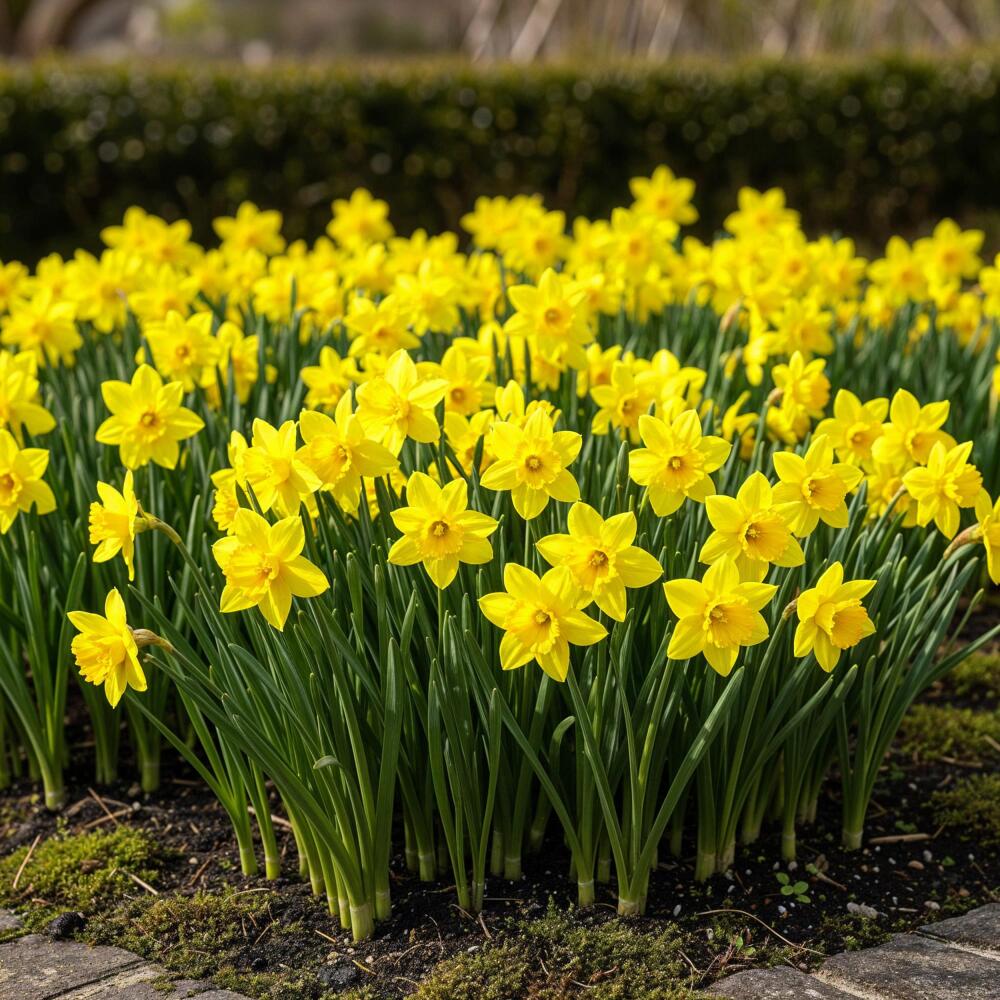
Tête-à-tête stays noticeably lower than many large garden daffodils. Yellow trumpets stand above narrow green leaves; outer flower segments may be slightly swept back. The plant reaches roughly 15 to 20 cm when flowering. This makes it interesting for low border edges and spring containers viewed close up. Strong yellow makes a clear accent in early spring. A tall dense neighbour, however, can quickly hide the small flowers. Choose a position where low height is a deliberate part of the design.
Twenty-five bulbs can be divided up
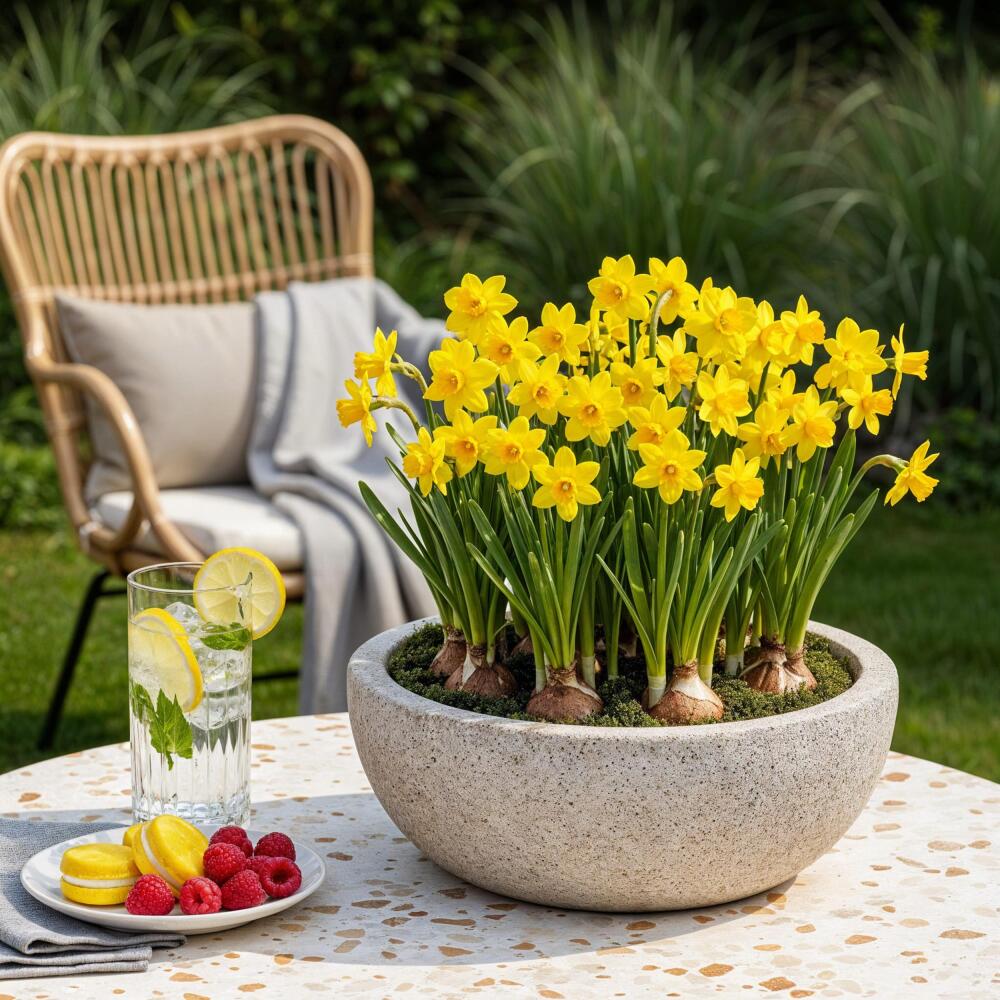
The offer contains 25 bulbs. Flowering pot plants, terracotta containers or companion plants in images are not delivered. Plan several small border groups or use some for a suitable spring container. Roughly 10 to 15 cm spacing is border guidance. A denser container display needs its own planning of root space, moisture and later cultivation. Not every bulb must fit in one small container. Think before planting about where the leaf phase may remain after flowering.
At the border edge, light at plant height matters
A sunny to lightly partially shaded position with good drainage suits this small variety. Low flowers at the foot of a tall hedge can be deeply shaded despite bright surroundings. Check light where shoots actually grow. Beneath deciduous shrubs it may be sufficiently bright in early spring. Keep drainage holes free in a container on a step or beside the front door. Do not stand it in permanently collected rainwater. A dry windy place calls for more frequent soil checks, as the small volume dries faster.
Small height does not mean arbitrary planting depth
Plant in autumn in unfrozen ground, preferably early from September. Base depth on the real bulb and packaging instructions, not later flower height. The RHS gives roughly three actual bulb heights down to the bulb base as a general rule. Tips point upwards. Settle soil carefully and water a little if dry. A shallower dense container presentation for one spring differs from a permanent border group. Trade size classes are not adopted as measured diameters. Mark small groups to preserve them during later garden work.
Keep supplying containers after flowering too
Normal spring rain often supplies enough border moisture. Water during prolonged dryness in growth. In containers, check soil regularly until leaves naturally die back. The plant is not dormant after the last yellow flower. Green leaves continue supplying the bulb and need light and suitable moisture. Consider pre-fertilised compost and existing nutrients. If supplemental container feeding is needed, follow the label. Neither daily watering without soil checks nor a fixed high fertiliser dose is a useful replacement for observation.
A friendly spring greeting needs a leaf phase
Remove faded heads if desired, but keep green foliage for at least six weeks after flowering and until yellowing. Do not cut it early or tie it together. A spring container must therefore retain a bright care position after display. A suitable garden planting may continue perennial cultivation later; moving respects roots and developmental phase. Bulbs are not kitchen supplies. Daffodils are harmful if eaten, and gloves are sensible for handling plant parts depending on skin sensitivity.
A small group for coming springs
The low variety is perennial and dies back above ground in summer. Garden markers preserve an overview. Protect pots from prolonged wetness and deep freezing without closing drainage. Weaker flowering may relate to shade, premature foliage removal or density. Check these points before merely adding fertiliser. Redistribute healthy bulbs if needed during suitable dormancy. A few notes on emergence, flowering and yellowing in the plant book help understand the small group better each year.
One plant, several views
Good to know
How tall does Tête-à-tête grow?
Roughly 15–20 cm when flowering. It is a low daffodil variety.
Is it a permanent houseplant?
No. A temporary indoor spring display does not replace suitable further bulb cultivation.
How many bulbs belong to the offer?
25 bulbs for planting, not a ready-planted bowl.
When do flowers appear?
In early spring; exact timing depends on weather and position.
May I stop watering after the last flower?
Continue supplying containers as needed while foliage remains green.
Does the variety suit a border edge?
Yes, in a bright position with drainage and without dense tall neighbours immediately in front.
Sources and editorial note
- Exotenherz: offer and original photographs (03.10.2026)
- Specialist source – variety characteristics and later height (03.10.2026)
- RHS – planting, caring for and preserving daffodils after flowering (03.10.2026)
Shop offer, article number, GTIN, availability and original images checked directly on 02.10.2026; specialist acceptance on 03.10.2026. Specialist sources read directly. Shop offer, SKU, availability and both original shop images checked directly on 03.10.2026. Bulbs are delivered; pictures show later flowering. General heights in the shop description are not delivery height for a bulb. Variety-specific later height from directly read specialist sources. Contradictory trade size classes are not reinterpreted as measured diameters. No Wawi or tool changes. Specialist and image acceptance against published Pflanzenwelt portraits.