
This plant at Exotenherz
Check the shop offer for current availability, price and what is included.
Check the selected shop offer for price, availability and delivery contents.
Your care table
| Topic | What to do | Why it helps |
|---|---|---|
| Light | Choose a sunny garden position and accustom young plants gradually to sun. | Light supports development and later flowering. |
| Planting | Once frost danger has ended, plant the watered root ball at its existing level. | The annual does not tolerate frosty nights. |
| Soil | Use loose, well-drained soil that is not excessively nutrient-rich. | Very rich soil may promote foliage at the expense of flowers. |
| Water | Check regularly during establishment and water thoroughly if needed. | The young root ball initially reaches only a small soil area. |
| Pot cultivation | Secure drainage and check deeper in the root ball during warmth too. | Small containers hold less water reserve than a bed. |
| Feeding | Remain sparing in beds; in containers, adjust supplies to soil and development. | Extra fertiliser does not replace a suitable position. |
| Harvest | Take suitable reliably identified leaves and flowers sparingly and clean them. | Enough healthy foliage remains for further growth. |
| Checks | Look at leaf undersides and buds for aphids or caterpillars. | An infestation noticed early can be assessed selectively. |
For young plants, feel the soil directly at the root ball. The surface and deeper soil may have different moisture levels.
Water thoroughly after planting; later, water according to the soil, weather and establishment rather than a fixed calendar.
Avoid standing water. For plants in containers, also check that water runs out of the drainage hole.
Little umbrellas between the herbs
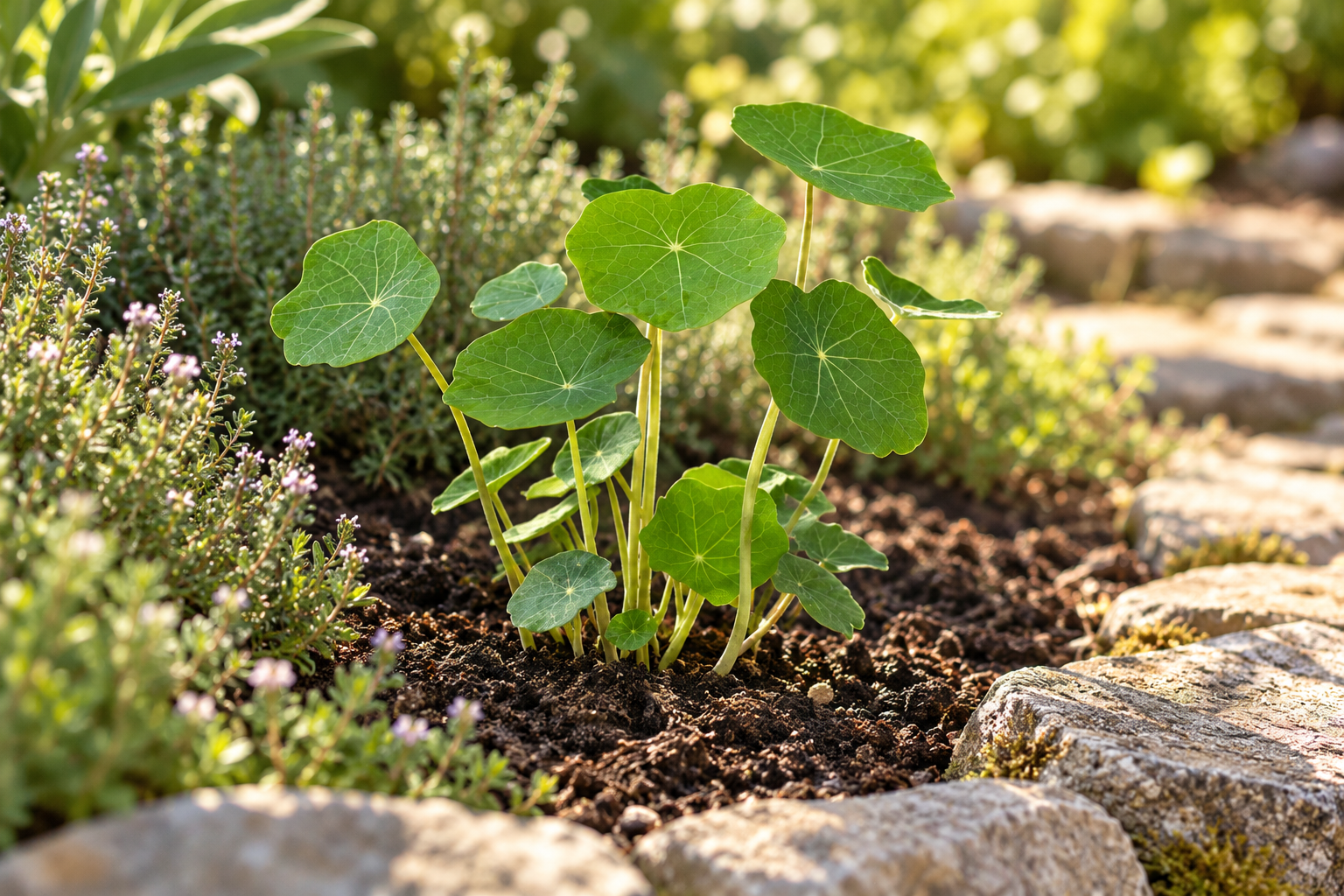
Nasturtium has a shape that stands out immediately in a bed. Its round leaves stand on long stalks; fine veins run from the attachment through the green surface. Between narrow thyme foliage or beside a simple stone edge, this looks particularly lively. We also like it at the edge of a large container where new stems can find their way. The young plant in the original image carries foliage, not open flowers. Our garden scene therefore shows this green beginning too rather than anticipating abundant flowers as delivery condition.
From the small offer to a summer position
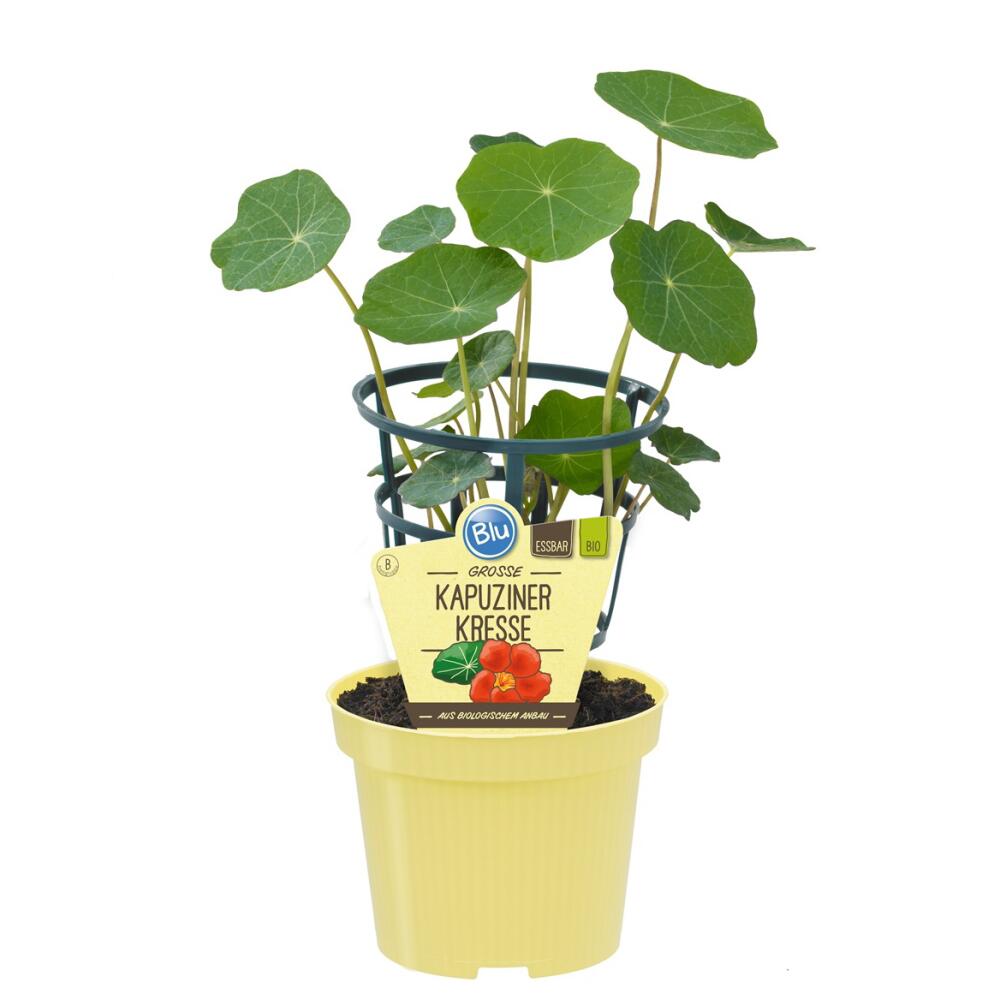
The offer describes Tropaeolum majus in a 12 cm pot; no specific delivery height or variety name is given. This matters because nasturtiums may grow differently. Bushy varieties stay about 30 cm tall, climbing forms develop considerably longer stems, up to about 2.5 m depending on variety. No fixed final height can therefore be derived for this offer. Observe new growth and leave side space free. If creating a whole row, plan distance by confirmed growth form rather than planting small delivery pots close together.
Plant only after cold nights
In our garden cultivation, nasturtium accompanies one season. After the last frosts, a sunny place in a bed or container is interesting. First gradually accustom a plant from protected cultivation to wind and sun. Supply the root ball before planting, do not bury it deeply, and water in well afterwards. A fine support may be ready for climbing stems. A photograph at planting helps later comparison: how far have stems developed, and does light still reach lower leaves?
Consider water and soil together
Well-drained soil suits better than a position where water stands long after rain. During establishment, we check the original root ball particularly carefully; a moist bed surface does not yet prove its interior is supplied. Water slowly and thoroughly if needed. Later, weather remains decisive. Reserves may drop quickly in a sunny planter while a bed stays sufficiently damp after rain. Assess limp leaves together with soil first. One warm midday does not create an unchanging daily watering plan.
Flowers and foliage can work together
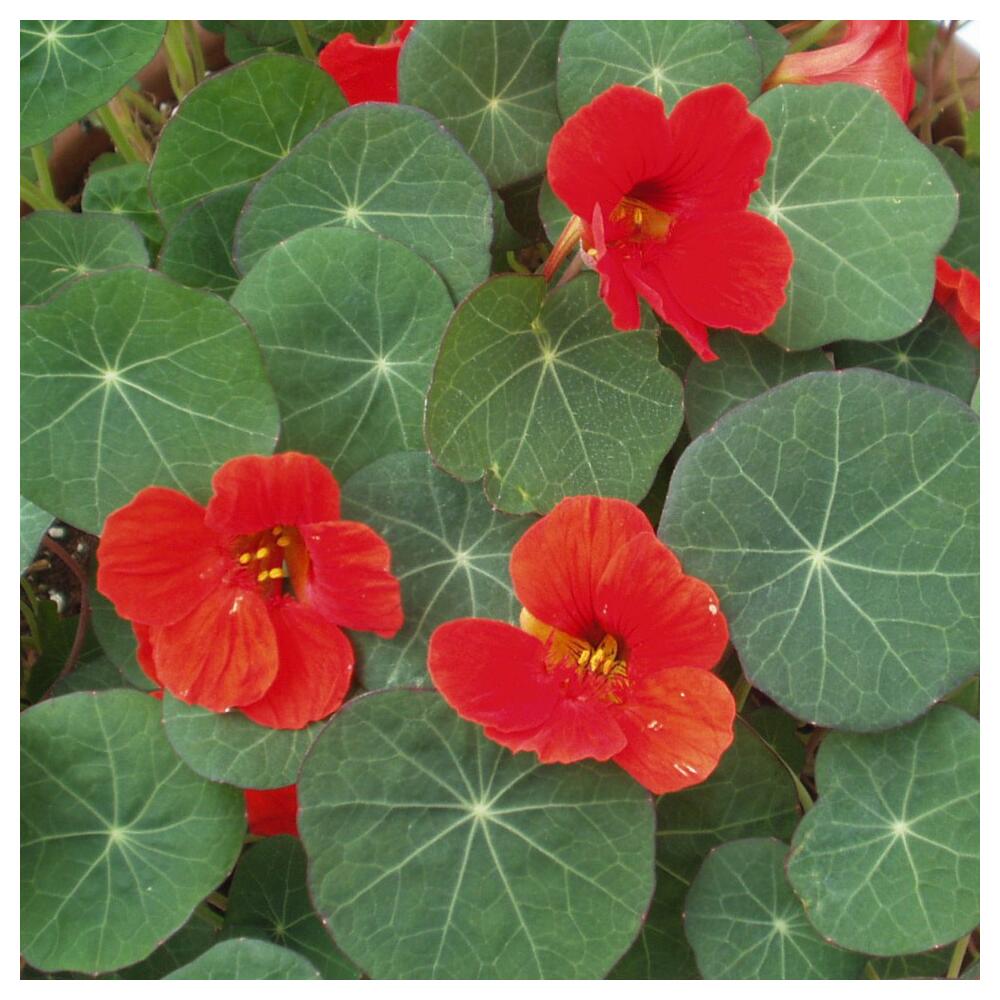
The species and its varieties may flower from summer into autumn, including in yellow, orange or red. The specific plant’s colour is not fixed in the offer. Missing flowers immediately after delivery are no care error. Very nutrient-rich soil may encourage plenty of foliage without proportionately more flowers. We therefore feed sparingly and account for potting soil already supplied. Spent flowers can be removed gently when further flowers are the focus; healthy new stems remain.
A spicy harvest with a precise look
Leaves and flowers of reliably identified nasturtium can bring a peppery note to the kitchen. Use only suitable plant parts in accordance with treatment instructions, clean before use and leave the young plant enough leaf area. Small quantities are enough to discover the flavour. During harvest, we inspect undersides too: aphids like gathering on young parts, and caterpillars may leave holes. Check a suspicious leaf selectively rather than precautionarily cutting the whole plant back hard. Harvest remains a supplement to the cared-for plant.
Accompany a season consciously
In autumn, the plant changes with shorter days and cool nights. It is not a hardy permanent woody plant here. Ripe seeds may later produce new plants; their characteristics need not be identical with an unnamed variety. Instead note how much room your plant actually used and where light suited it. This is more helpful next season than a rigid number on a label. Fresh round leaves standing above soil in the morning already give pleasure, connecting the herb garden with their individual silhouette.
One plant, several views
Good to know
Is this nasturtium perennial?
In our garden cultivation, Tropaeolum majus is grown as an annual. A new seedling next year is not the same overwintered plant.
Which flower colour do I receive?
The specific offer fixes no colour. Yellow, orange and red occur among the species and its varieties.
How tall does it grow?
It depends on variety. Bushy forms are much shorter than climbing ones. No variety name is given for this offer.
When can it go into the bed?
After the last frosts and gradual acclimatisation to outdoor conditions.
Why lots of foliage but hardly any flowers?
Check development stage, light and very nutrient-rich soil. More fertiliser is not automatically the solution.
Are the round leaves suitable for the kitchen?
Leaves and flowers of reliably identified Tropaeolum majus are edible. Observe treatment instructions and clean suitable parts before use.
Sources and editorial note
- Exotenherz: offer and original images (02.10.2026)
- RHS: Tropaeolum majus (02.10.2026)
- RHS: growing annual nasturtiums (02.10.2026)
- NC State Extension: Tropaeolum majus (02.10.2026)
Shop offer, article number, GTIN, availability and original images checked directly on 02.10.2026. Specialist sources read directly. No variety, delivery height, fixed flower colour or general numerical spacing invented. Scene without flowers in line with the original. Size ranges of growth forms explicitly separated.