

This plant at Exotenherz
Check the shop offer for current availability, price and what is included.
Product and delivery details are given in the individual offer.
Your care table
| Topic | What to do | Why it helps |
|---|---|---|
| Light | Position very brightly, acclimatise to stronger sun. | Watch fresh stem sections. |
| Stability | A secure container with space around the spines. | Avoid a narrow spot where it is frequently touched. |
| Moisture | Let the root ball dry substantially. | Consider moisture inside the larger pot too. |
| Watering | Water slowly onto soil, let excess drain. | Do not store water in the outer pot. |
| Substrate | Airy cactus compost with mineral structure. | Keep the root zone manageable. |
| Repotting | When space is needed, with suitable gripping aids. | Support columns and root ball together. |
| Feeding | Sparingly during growth according to the label. | More fertiliser does not replace a bright position. |
| Winter | Bright and frost-free, adjust water to dormancy. | Garden frost hardiness is not promised. |
Check the compost and pot weight. The care table explains how far the compost may dry.
Water only when needed. The water should reach the root ball without spilling over the rim.
Remove surplus water from the saucer or cachepot. Then return the plant to a suitable position.
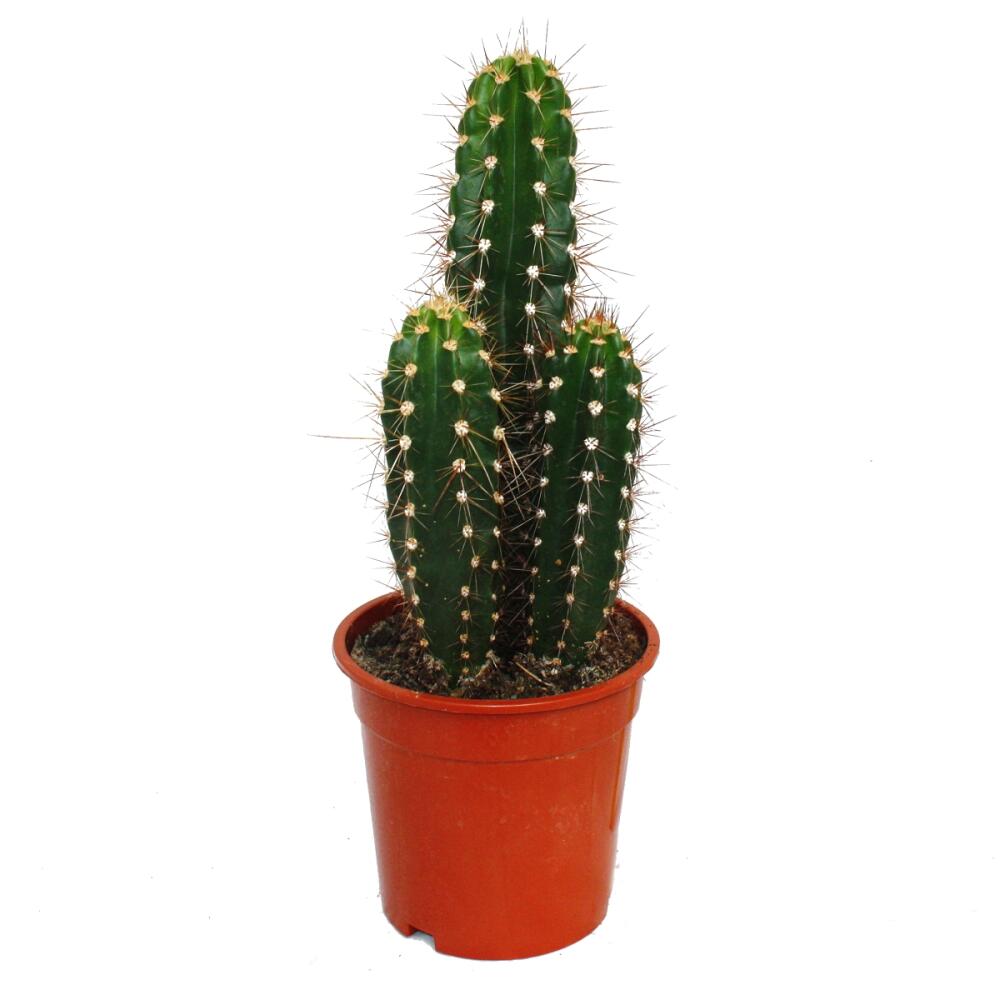
The longest column gives the small ensemble a direction
The original photograph shows several upright green columns in one pot. A longer centre rises above two shorter sections; pale areoles and radiating spines trace the ribs. The shop names Neocardenasia herzogiana and also uses the name baseball-bat cactus. This portrait concerns the particular young shape, not a schematic single stick. Botanically, the RHS lists Neoraimondia herzogiana and names Neocardenasia herzogiana as a synonym. The connection between both names therefore remains clear.
Fifty centimetres of total height need a secure footing
With a 17-cm pot and roughly fifty centimetres of total height, this plant takes more space than a tiny table cactus. Support the container when carrying it and plan clearance from curtains, pet routes and frequently used handles. The column ensemble should not be touched whenever someone passes. A low bright console or a secure floor position can work well. The larger outer container must nevertheless stay accessible for watering. A heavy outer pot improves stability, but must not become a hidden reservoir for water.
Choose a bright position before the decoration
Care starts with a very bright position. Increase stronger direct sun gradually after transport or a change of position. Observe the uppermost fresh areoles and the relationship of new growth to existing stems. A long thin extension may be a reason to examine lighting more closely. In a dark corner, extra fertiliser alone cannot achieve good growth. Put the plant first where light and access suit it; arrange furniture and decorative neighbours afterwards around this actual cultivation position.
The larger root ball dries differently from what the tip suggests
Let the substrate dry substantially between waterings. Check soil beneath any surface covering and consider pot weight. A larger root ball can stay moist inside even when the surface already looks dry. During active growth, water slowly and directly onto the soil, then allow excess to drain freely. A crown of several columns is no reason to automatically leave more water standing in the outer pot. When consumption is low, wait for the suitable root-ball condition rather than trusting a fixed sequence of days.
Protect roots and columns together
Structurally stable cactus compost with mineral components and a draining container support a manageable root zone. When repotting, support the root ball, use suitable gripping aids and do not squeeze between spiny columns. Choose the next container according to roots and stability, not merely a particularly large outer shell. During active growth, feed sparingly according to a cactus fertiliser label. Look into the spaces around the base too. A change is easier to miss there than at the clearly visible upper centre.
The young shape remains a beginning
In winter, cultivate brightly and frost-free, with restrained watering adjusted to dormancy. The portrait promises neither garden overwintering nor current flowering. Delivery height is not a later final size either. Photograph the whole ensemble for the plant book, then a detail showing ribs and areoles. Note the position and new growth sections. This makes the particular character of this plant visible: not every young column develops equally quickly, and a good starting shape only becomes its own further form over time.
One plant, several views


Good to know
Why do I also find Neoraimondia?
The RHS names Neoraimondia herzogiana and lists Neocardenasia herzogiana as a synonym.
Does the original show just one column?
The associated photograph shows an ensemble of several upright columns in one pot.
Do 50 cm mean only the green plant?
The offer states total height, meaning the plant including its container.
May water remain in the decorative pot?
Remove excess; the root ball should not stand permanently wet.
Must I prune the columns?
Healthy columns are not routinely shortened; the portrait accompanies their natural development.
Sources and editorial note
- Exotenherz: offer and original photographs (03.10.2026)
- RHS – container cacti, light and care according to need (03.10.2026)
- RHS – Neoraimondia herzogiana and botanical synonym (03.10.2026)
Shop offer, article number, GTIN, availability and original images checked directly on 02.10.2026; specialist acceptance on 03.10.2026. Specialist sources read directly. SKU, original images, measurements and orderability checked directly in the shop on 03.10.2026. Relevant specialist passages read. Shop name and botanical reference remain distinguishable. Images checked against the original photographs; no Wawi, server or tool changes. Currently not orderable: knowledge portrait without a purchase link; social drafts are not authorised for sending.