
This plant at Exotenherz
Check the shop offer for current availability, price and what is included.
Check the selected shop offer for price, availability and delivery contents.
Your care table
| Topic | What to do | Why it helps |
|---|---|---|
| Light | Choose a sunny position; account for light partial shade in planning. | Deep shade lacks an important part of the plant’s preferred growing conditions. |
| Soil | Prepare well-drained soil that is not excessively rich. | Lasting wetness stresses roots; rich soil can encourage looser larger growth. |
| Planting | Moisten the root ball, plant at its previous height and water in well. | The young plant first needs contact with surrounding soil and a secure water start. |
| Spacing | Use 35–40 cm from plant centre to plant centre as shop guidance. | The small delivery plant later grows into a noticeably wider planting. |
| Water | Supply new plants during drought; water established plantings as needed. | A perennial tolerant of drought later is not deeply rooted immediately after planting. |
| Cutting | After first flowering, cut back spent shoots and spare young basal leaves. | Appropriate cutting keeps the planting tidier and may promote more flowers. |
| Winter | Avoid waterlogging; remove dead shoots by spring at the latest. | Hardiness does not protect against unfavourably wet soil. New growth comes from the base. |
| Rejuvenation | Divide older clumps in spring or autumn and water in again. | Healthy rooted portions help rearrange the planting and renew bare areas. |
For young plants, feel the soil directly at the root ball. The surface and deeper soil may have different moisture levels.
Water thoroughly after planting; later, water according to the soil, weather and establishment rather than a fixed calendar.
Avoid standing water. For plants in containers, also check that water runs out of the drainage hole.
A soft edge rather than a strict line
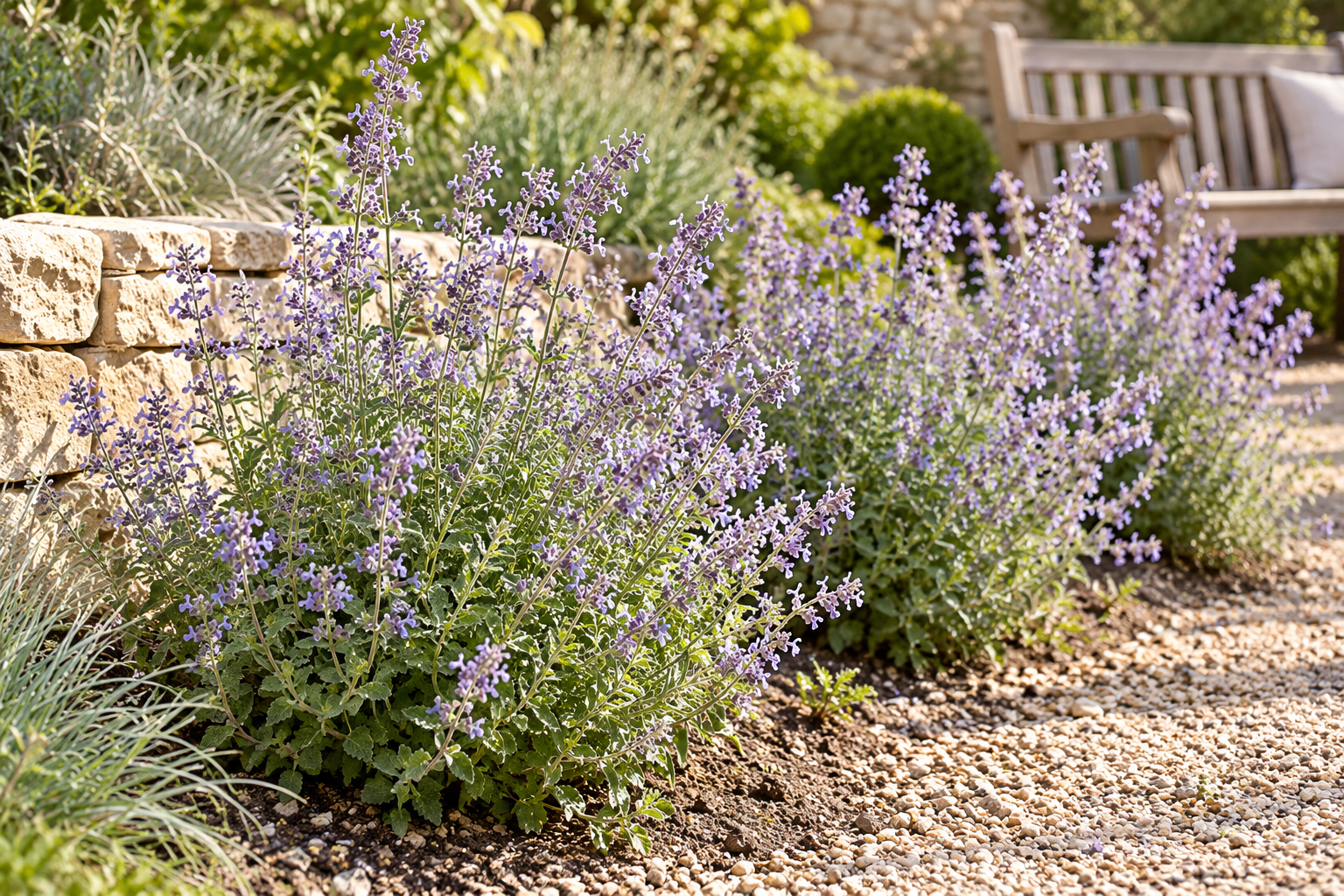
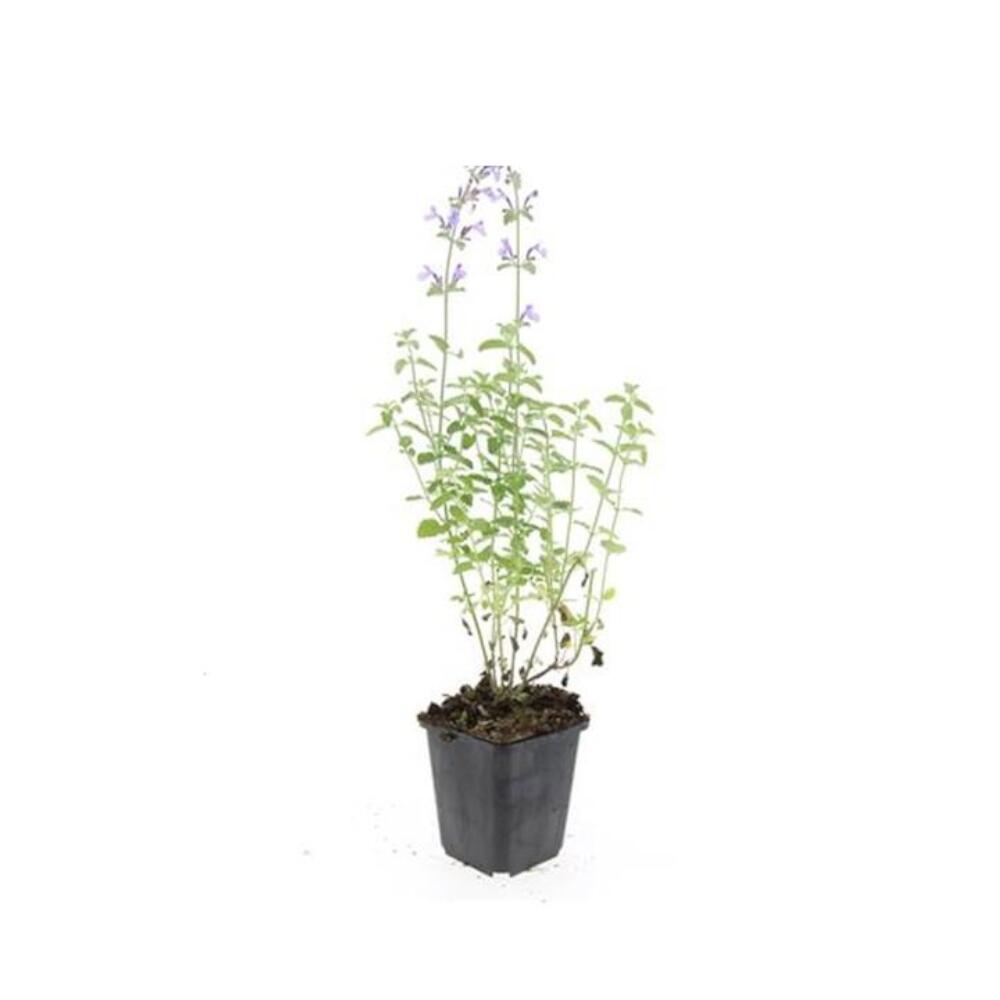
For me, Walker’s Low belongs among plants that soften a bed’s hard edge. Its branched shoots carry small lavender-blue flowers with soft grey-green foliage beneath. By a garden path, individual branches may reach loosely outwards. Beside a straight stone or wooden edge, this feels pleasantly alive. I allow some room and do not plant exactly where feet or a garden hose continually pass. The later planting should be able to express its form. Young set plants in 9 cm pots do not yet show that full garden picture; their first task is rooting.
The name Low is no fixed height
I would not infer a promised mature height from a cultivar name. The offer specifies about 60–80 cm for the developed plant; delivery is about 10–25 cm. How tall and loose a clump becomes depends partly on soil and position. Growth may be lusher and less firm on very rich soil. I therefore give Walker’s Low enough room among neighbours. This cultivar can also be found under Nepeta racemosa. The shop’s Nepeta faassenii remains the reference for ordering; the different botanical classification here refers to the same cultivar name.
Sun needs soil that releases water
For a new catmint position, I look at light and drainage together. A sunny bed edge with well-drained soil suits it better than a dark hollow wet through winter. Rain particularly reveals where water stands for a long time. In heavy soil it is not enough to fill one small planting hole with loose soil while leaving the rest of the site wet. Excess water must also drain reliably in a container. The plant needs no especially generous feeding to look attractive. More nutrients do not automatically mean better stability or a denser prettier flowering border.
Look at the whole row before planting
For larger quantities, I first set the pots across the intended area. Roughly 35–40 cm from centre to centre is the shop guidance, approximately six to eight plants per square metre. At a narrow path I also consider where later shoots should reach. Moisten the root ball, plant at its previous pot height and water in afterwards. Spring or early autumn often make the start easier than a hot dry week. Different set sizes are linked in the offer. Not every quantity is deliverable at all times; choice follows the actually available child offer, not only the collective page.
A new beginning after the first flowers
When many flowering shoots are spent and the row looks tired, I cut back old flowers and overlong shoots. I look for fresh basal foliage and protect it. Suitable cutting can make another flowering possible, but is no promise of a fixed second date. Weather, water and plant condition contribute. A young newly planted specimen does not need the same strong shaping as an established planting. I like being able to restore order with a manageable care step without constantly picking every individual faded flower from the whole bed.
Distinguish establishment from later drought
With freshly planted catmint, I check root balls during the first weeks. They do not yet reach far into garden soil and can dry out despite the plant’s later modest demands. An older established planting usually handles drier spells better. Soil remains limited in a container, so it needs attention more often there. Water into the root zone according to actual need. I would not set one fixed rhythm for every weather condition. If young shoots disappear, I also look for feeding damage. If leaves carry an unusual coating, I examine it before treating the problem broadly as water shortage.
A living garden has different visitors too
Visiting insects can often be observed on flowering catmint. Some cats also take an interest in the aromatic foliage and roll in a planting, while others barely react. I therefore do not plan on a fixed effect on every cat or sell the garden perennial as pet food. If a small new planting keeps being flattened, temporary protection keeping visitors at a distance can help. Above-ground parts die back in winter; in spring I watch for shoots at the plant base. Catmint thus has a place as a real perennial garden plant with its own yearly cycle, rather than having to look like a summer photograph all year.
One plant, several views
Good to know
Why does Walker’s Low grow taller than expected?
Soil, light and nutrition influence growth. The cultivar name is no fixed height, and delivery size is no mature size either.
When should I cut catmint?
After the first flowers, spent and long shoots can be cut back. Protect fresh basal foliage; repeat bloom is possible but not guaranteed.
How densely are set plants planted?
The shop specifies 35–40 cm spacing and roughly six to eight plants per square metre. Beside a path, allow for later width too.
Can it grow in a container?
Yes, in a suitable bright position with drainage holes. Limited soil needs different water checks from an established garden planting.
Must new plants be watered despite drought tolerance?
Yes. Small delivery root balls need water while establishing until roots reach surrounding soil.
Does foliage remain in winter?
Walker’s Low is deciduous. Above-ground parts die back; fresh growth follows in spring.
Is Nepeta racemosa a different order?
The cultivar is also botanically listed that way. For the specific offer, shop name Walker’s Low and the selected article number remain decisive.
Sources and editorial note
- Exotenherz: five child offers, delivery size and spacing (01.10.2026)
- RHS: cultivar Walker’s Low, synonyms, variable growth and cutting (01.10.2026)
- RHS: catmints, position, soil and garden use (01.10.2026)
Shop parent 1444020032025; all five child offers confirmed separately. 6/12/60 available, 20/40 inactive. Shop faassenii retained in name; RHS racemosa with faassenii as synonym. RHS description 60 cm on poorer soil to 90 cm on rich soil, general size field differs; shop 60–80 cm as clear offer guidance without promising exact mature height. Shop spacing 35–40 cm. Original photo 2 without advertising print; photos 1/3 internal identity references only. No general non-toxicity or environmental/recycling promises adopted from shop description. Scene acceptance: later established garden scene with suitable lavender-blue interrupted flower spikes and small grey-green leaves accepted against original.