
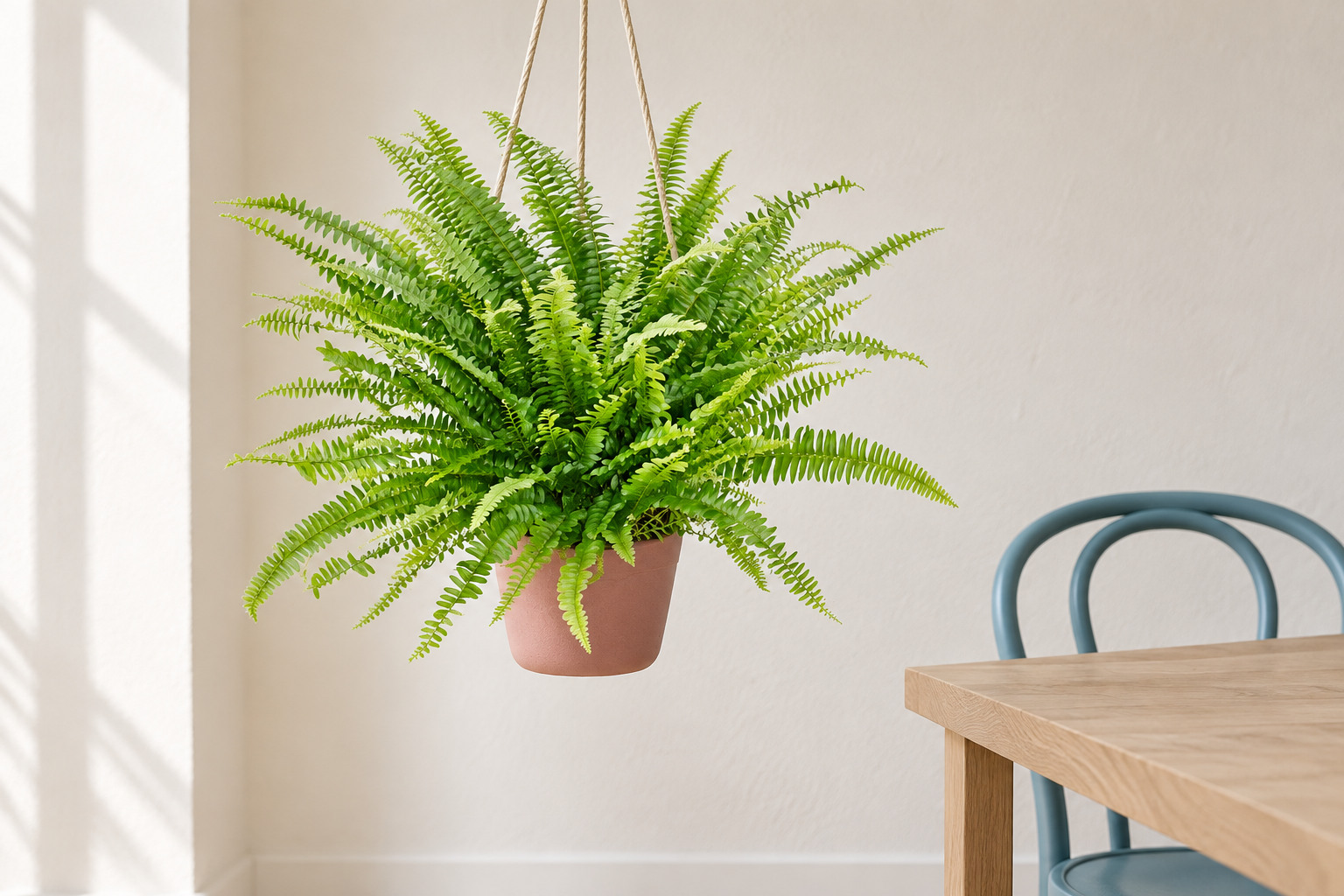
This plant at Exotenherz
Check the shop offer for current availability, price and what is included.
The linked shop is in German. Product details, availability and delivery information are provided in that shop.
Your care table
| Topic | What to do | Why it helps |
|---|---|---|
| Light | Bright, filtered daylight, protected from harsh midday sun. | Delicate fronds need good light without excessive heat or solar exposure. |
| Watering | Keep the root ball evenly, slightly moist and check before every watering. | Drying out completely can damage many small leaflets. |
| Drainage | Allow to drain after watering and check the hanging pot or cachepot. | Hidden leftover water can be as troublesome as dryness. |
| Air | Avoid direct heated air; provide moderate to higher humidity and gentle air movement. | This supports the delicate fronds without keeping them constantly wet. |
| Feeding | Feed sparingly during active growth, following the label. | High salt concentrations put sensitive roots under strain. |
| Pruning | Remove completely dead fronds at the base; preserve young growth. | Targeted tidying is more useful than shortening every tip. |
| Repotting | When roots crowd the pot, move into loose, moisture-retentive, well-drained compost. | An appropriate pot maintains a balance of water and air. |
| Winter | Keep bright and frost-free; as growth slows, adjust watering to need, often less frequently. | The root ball uses less water but must not dry out completely. |
Check the compost and pot weight. The care table explains how far the compost may dry.
Water only when needed. The water should reach the root ball without spilling over the rim.
Remove surplus water from the saucer or cachepot. Then return the plant to a suitable position.
Many small leaflets make one frond
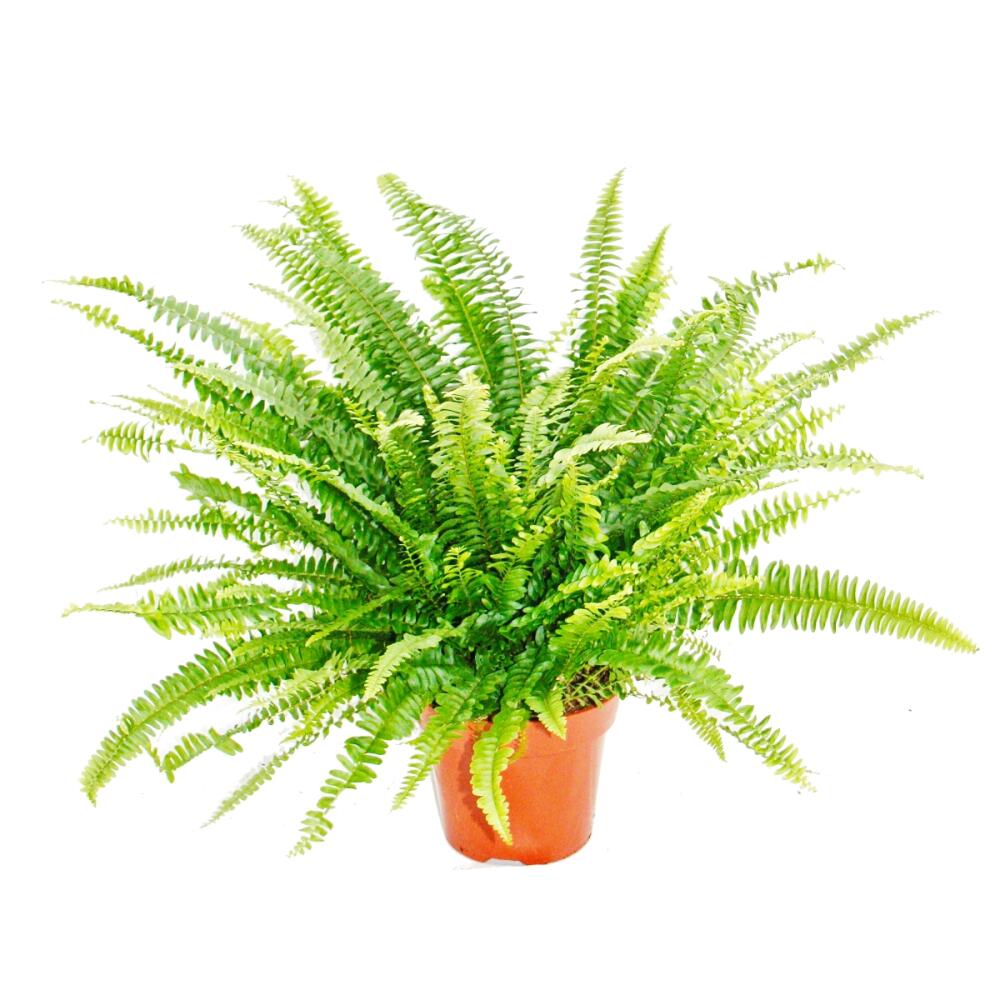
A Boston fern frond consists of an axis bearing numerous lateral leaflets. Together they create the narrow, arching shape that gives the plant its German name, sword fern. Nephrolepis exaltata comes from tropical and subtropical regions. Depending on their stage of development, fronds initially stand upright and later lean outwards. This creates movement without the plant needing to flower. Ferns produce spores. Regular patches of spore cases on the undersides are therefore part of their development and should not hastily be treated as a pest infestation.
The shop size remains clear in a hanging display
The plant presented here is offered in a 17 cm pot with a total height of about 40 to 45 cm. The hanging structure in the scene is part of the styling; it does not increase the plant’s botanical size. The fern needs additional space to the sides for its fronds. An older specimen can become considerably wider. The original photograph shows the basis for the illustration. If the fern is temporarily unavailable in the shop, the care information remains useful; check current stock directly in the linked listing.
A hanging position must remain accessible
A bright spot by a dining area or in a living room can show the overhanging fronds beautifully. Hang the plant so you can safely remove its nursery pot and check the root ball. Directly under a warm ceiling or far above eye level, care becomes needlessly difficult. The suspension must be suitable for the weight of the watered plant. Allow clearance from doors, chair backs and frequently used walkways. A long frond tip should not brush against things with every movement. Good indirect daylight remains the foundation, even in a decorative hanging position.
Consistency protects the delicate fronds
Feel the compost and occasionally lift the pot. An evenly, slightly moist root ball is better than alternating between complete dryness and prolonged standing water. For watering, the plant can be moved somewhere that will not be damaged by water. Let it drain fully there before hanging it back up. Leftover water is particularly easy to miss inside a closed hanging cachepot. Also consider the difference between the surface and the deeper root ball. A dry patch on top alone does not mean there is no water below.
What brown leaflets can tell you
Dry air, a dried-out root ball, direct sun or damaged roots can contribute to brown areas on the fronds. Check these conditions together. If the compost is wet, do not water again simply because the tips are dry. If individual old fronds are affected while the centre is producing healthy growth, ageing may play a part. Remove completely dead fronds cleanly near the base. Do not cut the remaining healthy fronds to the same length. Their natural arches are part of their appeal and cannot be improved by an even trim all round.
Higher humidity does not mean constantly wet fronds
A Boston fern benefits from an appropriate indoor climate. A bright bathroom position may be more suitable than a spot directly above a radiator. At the same time, the fronds need air movement and should not stay wet continuously. Misting is no substitute for watering the root ball and no solution to a dark corner. If a humidifier is used, cleaning it belongs in the routine. Avoid hard-water deposits on the small leaflets. Support the delicate fronds during a gentle shower and allow the plant to drip thoroughly afterwards.
Repot without tearing the clump apart
A densely rooted fern may need a slightly larger pot and fresh, loose compost. Spring is a favourable time. Carefully release the old pot and support the root ball. A sufficiently vigorous clump can be divided, but this should be done deliberately. Each division should retain enough healthy roots and growth. Newly divided pieces receive even moisture and a protected, bright position. Heavy feeding immediately after the operation is no substitute for intact roots and good conditions for establishment.
Do not confuse runners with dead fronds
Boston ferns can form slender runners on which young plants develop under suitable conditions. These shoots are not automatically a sign of neglected care. A rooted young offset can later be carefully separated and placed in its own small pot. Without sufficient development, patience is more useful. When tidying, identify what is actually in front of you. A dead frond, a healthy runner and a newly unfurling frond tip fulfil different roles. Close observation protects the young plants.
Care for the fern through the darker season
In winter, keep the Boston fern bright and frost-free. Water requirements may fall while heated air dries out individual fronds more strongly. Continue checking regularly rather than maintaining summer care unchanged or stopping watering altogether. If you notice conspicuous pale dots, webs or firmly attached insects, check for possible pests. The centre of the plant, with its new growth, is a useful observation point. Note in the plant book when the fern was repotted and which hanging position worked well. This small record helps explain changes over several months.
One plant, several views
Good to know
Does a Boston fern need a bathroom position?
No. A bright living room can be equally suitable. Light, water balance, air and a protected position are what matter.
Can dried-out fronds become green again?
Already brown, dead parts will not turn green again. Better care should primarily allow healthy new growth.
Are the long, thin shoots over the pot rim waste?
They may be runners that produce young plants. Check them before removing them.
Why must the hanging pot not remain full of water?
Leftover water can damage roots. The root ball should be moist but able to drain well after watering.
Is the suspension included in the listing?
The listing linked here describes a 17 cm pot. The hanging container and suspension in the AI scene are decoration and are not part of this offer.
Sources and editorial note
- Product and delivery size: Exotenherz
- NC State Extension: Nephrolepis exaltata
- RHS: growing Boston fern
- RHS: ferns as houseplants
- RHS: understanding and dividing ferns
Sources checked: 14 September 2026. The specific plant presentation follows the shop listing; care follows the linked specialist sources. The plant’s condition, position and season determine the appropriate action.