
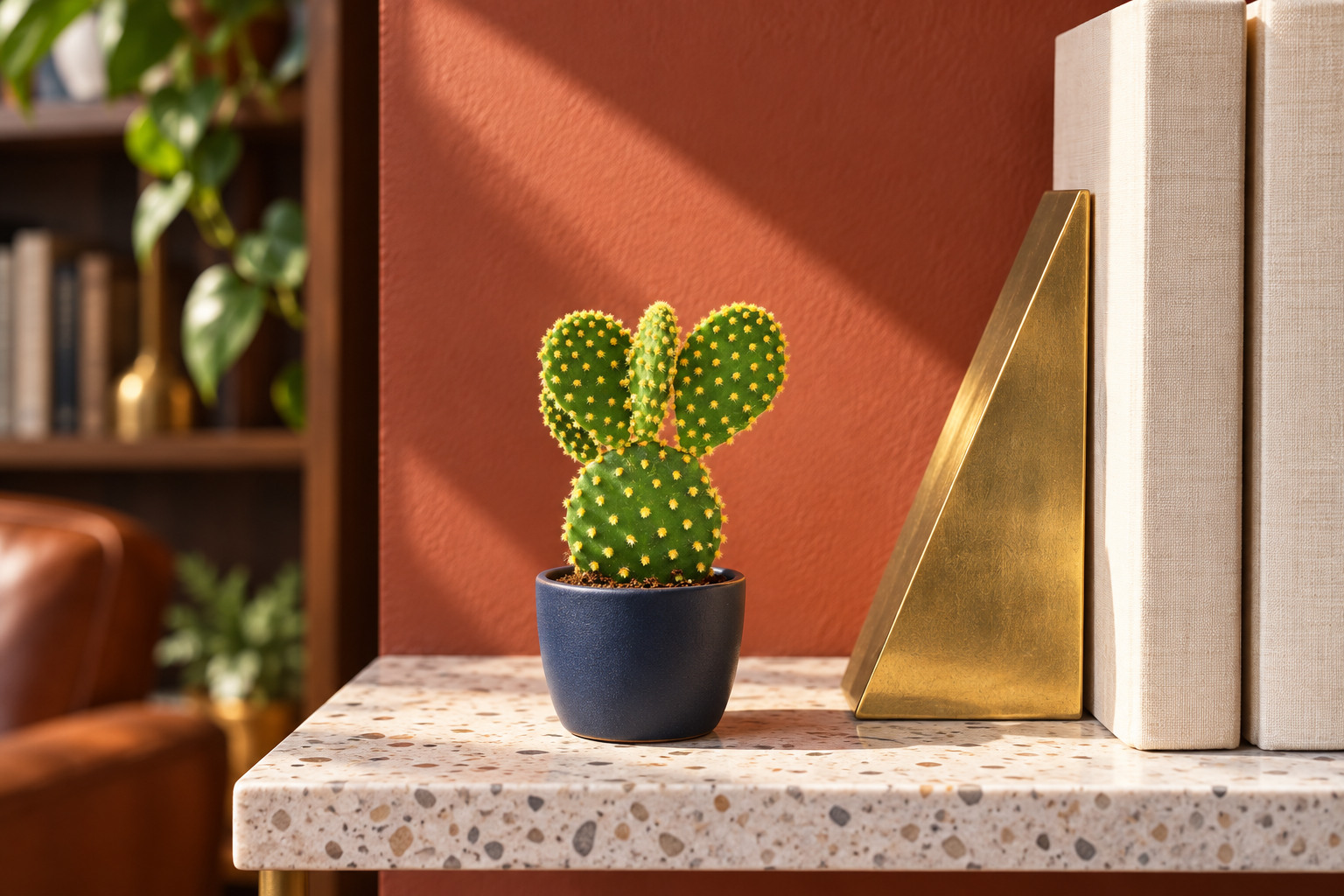
This plant at Exotenherz
Check the shop offer for current availability, price and what is included.
The linked shop is in German. Product details, availability and delivery information are provided in that shop.
Your care table
| Topic | What to do | Why it helps |
|---|---|---|
| Light | Very bright to sunny; introduce stronger sunshine gradually. | Narrow, unusually long new segments can develop in insufficient light. |
| Watering | During the growing season, water again only once the compost has dried completely. | The stem segments store water; constantly damp compost endangers the roots. |
| Drainage | Use cactus compost with a high mineral content and clear drainage holes. | The small root ball should be able to dry well after watering. |
| Feeding | During active summer growth, feed moderately with cactus fertiliser according to the label. | A small cactus does not need heavy nutrient applications. |
| Touch | Do not stroke the surface; use suitable handling tools and protection when moving it. | Glochids detach easily and can reach skin or eyes. |
| Winter | Keep bright, frost-free and preferably cooler than in summer. | A quieter, dry winter period suits this species. |
| Winter water | During cool rest, keep largely dry while continuing to observe its condition. | Water consumption and growth decline; persistently wet, cold compost is avoided. |
| Repotting | If needed, move into a slightly larger container in spring. | Too much unrooted, damp compost increases the risk of rot. |
Check the compost and pot weight. The care table explains how far the compost may dry.
Water only when needed. The water should reach the root ball without spilling over the rim.
Remove surplus water from the saucer or cachepot. Then return the plant to a suitable position.
Ears made from living stem segments
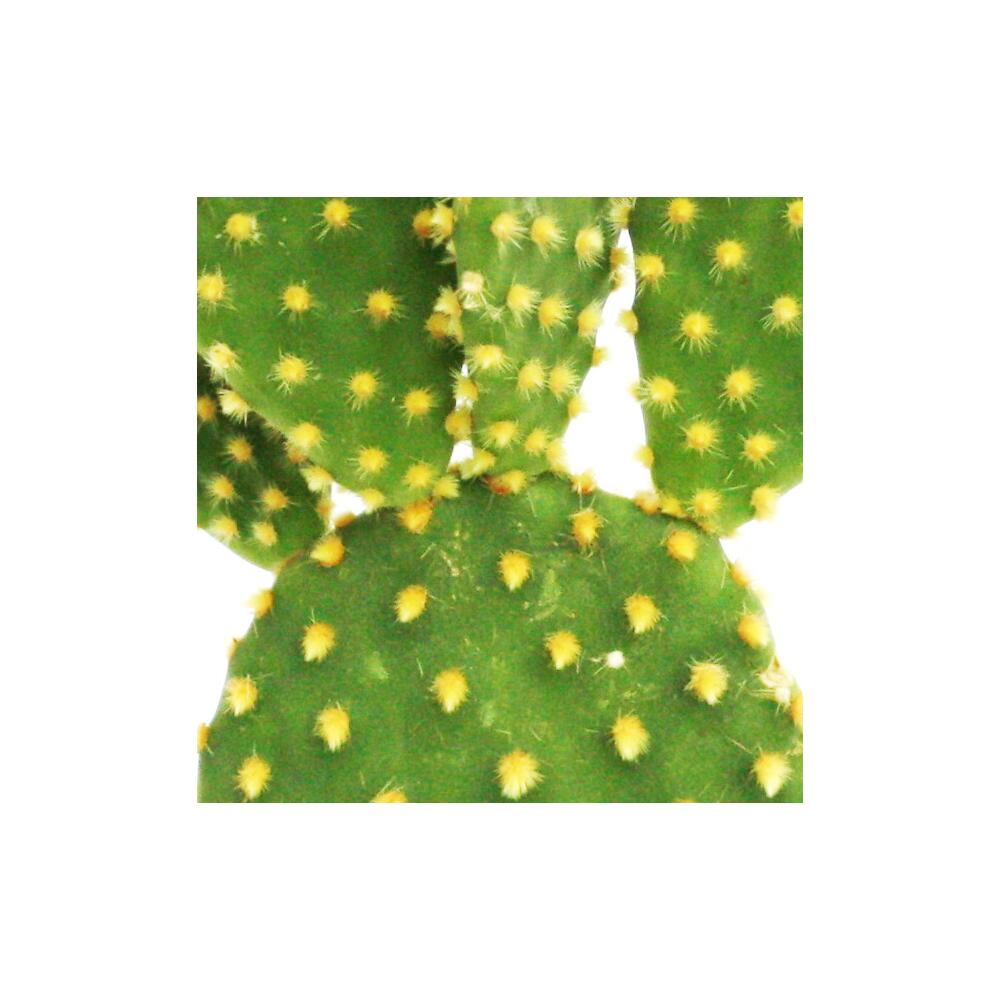
The flat green pads are stem segments. The cactus stores water in them and forms new segments that build its branching shape. In this presentation, the dotted areoles carry yellowish tufts of bristles. Opuntia microdasys comes from Mexico and belongs to the cactus family. Its small format makes its structure easy to observe: you can see where a young segment starts and how it gradually strengthens. Not every specimen forms a symmetrical pair of ears. Different branching patterns are part of a living plant.
The small size stays clear in the picture
The illustrated listing has a 5.5 cm pot and about 8 to 10 cm total height. A second linked size has an 8.5 cm pot and about 15 to 20 cm total height. Both belong to the yellow-bristled presentation and are therefore included in this portrait together. White or reddish-brown forms are not added without checking simply because a name is similar. Books provide a size reference in our scene. The small blue cachepot and the remaining furnishings are not included. The original shop photographs and selected size remain authoritative for the actual delivery form.
Looking soft does not mean feeling soft
The fine bristles are called glochids. They have barbs and can detach even with a light touch. The cactus is therefore not stroked, rubbed or placed beside frequently used everyday objects. Choose a stable position beyond the reach of children and pets. Suitable gripping tools and a thick folded paper sleeve help when moving it; hold the pot rather than the segments whenever possible. Gloves alone are no guarantee that fine bristles will not catch in them. Clean the work surface carefully afterwards and avoid touching your face. The plant is wonderful to observe without touching it.
A bright position for compact segments
A very bright, sunny position is the foundation for typical growth. A shelf is suitable only if the plant actually receives sufficient daylight there. The decorative scene is therefore not a suggestion for a dark bookshelf compartment. Introduce the cactus gradually to stronger sun after time indoors. A sheltered spell outside is possible in summer if warmth and weather are suitable. Persistent rain should not continually soak the small pot. If new growth becomes conspicuously long and narrow, check brightness before adding more fertiliser.
Dry periods are part of care
Allow the compost to dry out completely between waterings. During active growth, then water so the root ball receives water and the excess can drain away. Tiny daily sips often keep only the surface damp and make assessment confusing. The calendar alone does not decide: a warm, sunny position dries differently from a cool room. Check a closed cachepot after watering. Do not press the segments to assess their water content. Pot weight, compost and visible condition provide clues without unnecessary contact with the bristles.
Prepare before repotting
If the root ball is densely rooted or the plant becomes unstable, plan repotting during a bright growing period. Prepare tools, the new pot and well-drained cactus compost in advance. Choose a container only moderately larger, with unobstructed drainage holes. Move the cactus gently so segments do not break off. After root damage, do not immediately soak it heavily. During summer growth, sparse feeding according to the fertiliser label is possible. The specific listing gives three to four weeks as an interval; concentration, fresh compost and actual growth are taken into account.
Winter rest without experimenting with frost
In winter, keep the bunny ears cactus bright and frost-free. A cooler position makes a largely dry rest period easier. The warmer and brighter its position, the more carefully you observe whether it needs water; a rigid instruction lasting months does not suit every room. Do not feed while growth is resting. This species is not equated with hardy opuntias for garden beds. Even a small pot directly against a cold windowpane can become colder than the rest of the room. Check the position, not only the room temperature setting.
New segments, cuttings and possible problems
A healthy, mature segment can in principle be used for propagation. Remove it with suitable protection, then let the wound dry and heal before placing it in very free-draining compost. A tiny, newly received specimen does not have to be taken apart immediately for this. Yellowish soft areas, rot at the base or permanently wet compost require attention. Small, firm bristly dots, however, are part of the plant; conspicuous cottony deposits or insects are checked for infestation. Flowers are not a certain annual expectation indoors. First record the healthy formation of new segments in the plant book.
One plant, several views
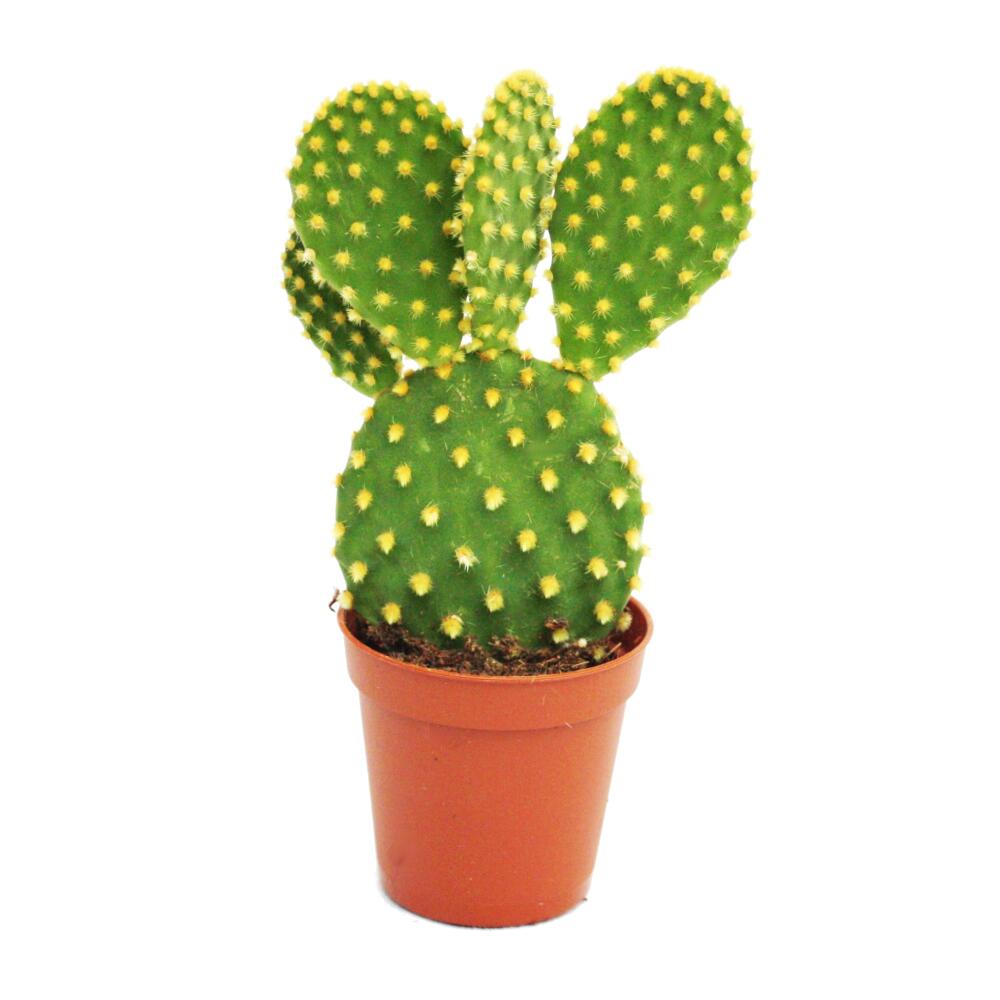
Good to know
Are the yellow dots soft?
They consist of fine, barbed glochids. Do not touch or stroke the surface.
Is the cactus only 8 to 10 cm tall?
That is the total height including the pot of the small shop presentation illustrated here. A larger variant is linked in the same portrait.
Can it go on a dark shelf?
No. Compact, healthy growth requires a very bright to sunny position.
Is Opuntia microdasys hardy?
This species is cared for frost-free here. Advice on hardy opuntias of other species is not transferred.
Why is a new ear growing so long and thin?
Too little light may be a cause. Check position and other conditions before increasing water or fertiliser.
Sources and editorial note
- Product and small delivery size: Exotenherz
- Opuntia microdasys in an 8.5 cm pot
- RHS: Opuntia microdasys
- NC State Extension: bunny ears cactus and glochids
- RHS: caring for and propagating indoor cacti
- RHS: light and water for bunny ears cactus
Sources checked: 14 September 2026. The specific plant presentation follows the shop listing; care follows the linked specialist sources. The plant’s condition, position and season determine the appropriate action.